
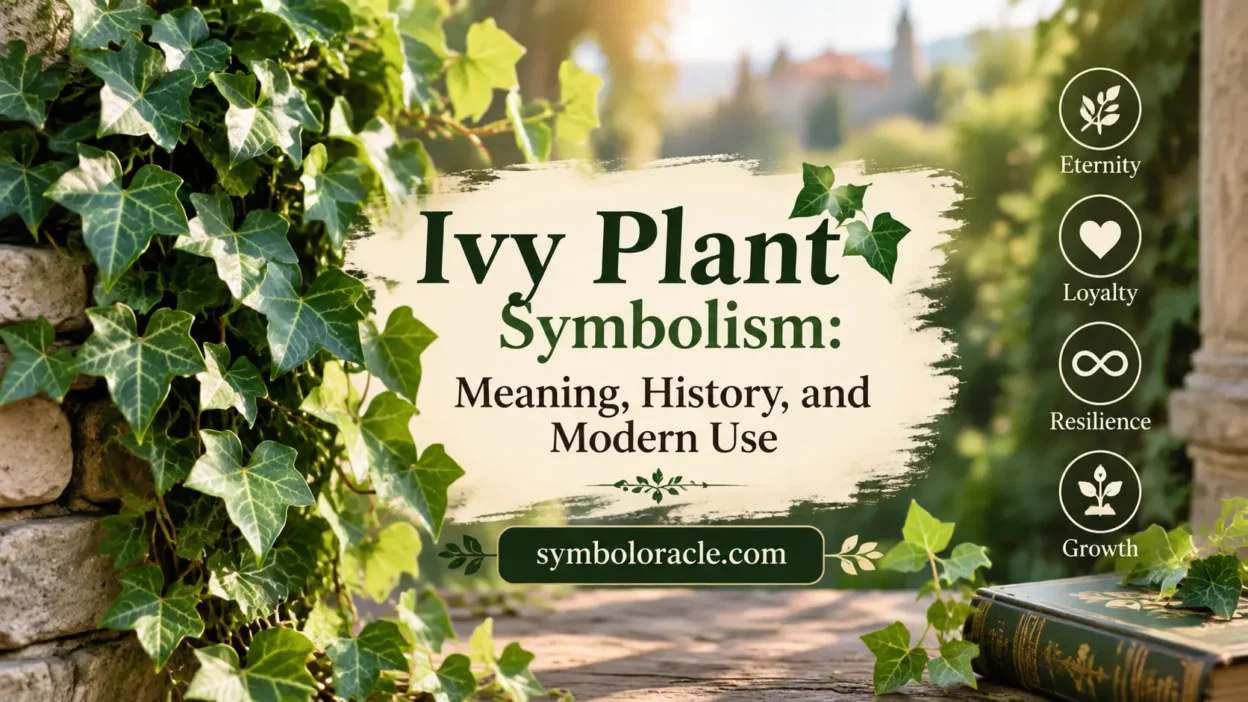
The ivy plant symbolism is often connected with loyalty, endurance, affection, and lasting relationships because ivy remains green throughout the year and grows by attaching itself firmly to surfaces. In modern American culture, people often view ivy as a symbol of commitment, connection, and resilience, whether it appears in gardens, wedding designs, artwork, or personal tattoos.
Ivy is a climbing evergreen plant recognized by its trailing vines and distinctive green leaves. Its ability to spread across walls, trees, and structures has made it a familiar sight in landscapes, historic buildings, and decorative designs. Beyond its appearance, ivy has collected meanings from ancient traditions, religious imagery, literature, and everyday life.
Understanding ivy’s symbolism helps explain why this plant continues to appear in ceremonies, home decoration, jewelry, and artistic expressions. Its meanings are not limited to one culture; they have changed as people have interpreted its growth, appearance, and relationship with the environment.
Quick Answer
Ivy plant symbolism commonly represents loyalty, lasting love, friendship, and resilience in modern American culture. Historically, ivy was associated with celebration, protection, devotion, and eternal connection in several European and Mediterranean traditions.
TL;DR
- Ivy symbolizes loyalty and enduring relationships.
- Ancient cultures linked ivy with celebration and devotion.
- Americans use ivy in weddings and home design.
- Evergreen leaves represent persistence and renewal.
- Ivy tattoos often express connection and commitment.
- Misuse sometimes links ivy with unwanted growth.
What the Ivy Plant Looks Like and Where It Appears
Ivy refers to several climbing plants, especially species from the genus Hedera. The most recognizable type is English ivy, which has dark green leaves with a distinctive pointed shape. Instead of growing upright like many plants, ivy spreads horizontally and climbs surfaces using small root-like structures.
People commonly encounter ivy growing on:
- Garden walls and fences
- Historic buildings
- Trees and woodland areas
- Home landscapes
- Decorative arrangements
- Artwork and architectural designs
Its physical characteristics strongly influence its symbolic meanings. The plant’s ability to survive in different conditions and remain green during colder months has contributed to ideas of endurance and stability.
At the same time, ivy’s climbing habit creates a more complex interpretation. Some people see its attachment and spreading nature as a sign of connection, while others view uncontrolled ivy growth as a symbol of dependence or invasion.
What Ivy Commonly Means in the United States
In the United States, ivy is most often associated with positive ideas connected to relationships, memory, and persistence. Its evergreen nature makes it a natural symbol of things that last.
Common American interpretations include:
| Context | Meaning in the USA | Common Associations | Notes |
|---|---|---|---|
| Weddings | Commitment and lasting love | Marriage, devotion, unity | Often used in floral designs |
| Home Decor | Stability and natural beauty | Comfort, tradition, growth | Popular in classic interiors |
| Tattoos | Personal bonds and resilience | Family, memories, strength | Meaning depends on design |
| Gardens | Endurance and connection | Nature, permanence, renewal | Requires careful maintenance |
| Memorials | Remembrance and continuity | Honor, lasting memories | Used symbolically in some designs |
Many Americans associate ivy with old universities, historic architecture, and traditional gardens. The plant often creates a feeling of age, reliability, and connection to the past.
The phrase “Ivy League” also influences cultural associations. Although the term refers to a group of prestigious universities, the ivy-covered buildings connected with these schools helped strengthen the plant’s association with knowledge, tradition, and achievement.
Ancient Roots and Early Symbolism of Ivy
Ivy has been valued symbolically for thousands of years, especially in ancient Mediterranean cultures. Because the plant stayed green even during colder seasons, many early societies connected it with life, persistence, and continuity.
In ancient Greece, ivy was associated with Dionysus, a deity connected with wine, festivals, theater, and celebration. Ivy wreaths were sometimes used in artistic representations and ceremonial settings. The plant’s association with celebration helped establish ideas of joy, creativity, and social connection.
Ancient Romans also adopted ivy symbolism. It appeared in decorative art and was connected with victory, celebration, and honor. Ivy wreaths were sometimes linked with poets and creative achievements, reflecting the belief that artistic accomplishments deserved recognition.
These early meanings influenced later European traditions, where ivy continued to represent attachment, devotion, and lasting relationships.
Ivy Symbolism in European Traditions
European cultures developed several interpretations of ivy based on its growth patterns and seasonal behavior. Because ivy could remain green while many other plants lost their leaves, it became associated with survival and continuity.
In some European traditions, ivy represented:
- Faithfulness between partners
- Friendship that survives challenges
- Protection of homes
- Connection between past and present
Ivy was sometimes used in decorations during winter celebrations because its evergreen leaves provided a reminder of life during darker months.
However, European interpretations were not always completely positive. The plant’s habit of covering surfaces led some people to associate it with attachment, secrecy, or uncontrolled growth. This contrast shows how the same natural feature can create different symbolic meanings.
Ivy Symbolism in Religious and Spiritual Traditions
Ivy appears in several religious and spiritual contexts, although meanings vary depending on the tradition.
In some Christian artwork and historical symbolism, evergreen plants have represented eternal life and spiritual endurance. Ivy’s ability to remain green contributed to associations with permanence and continuation beyond physical change.
Some older European customs also connected ivy with protection and household well-being. People sometimes brought evergreen plants indoors during winter as symbols of hope and renewal.
Modern interpretations are usually more personal than religious. Many people choose ivy imagery because it represents values such as:
- Faithfulness
- Family connection
- Personal growth
- Emotional strength
The meaning often depends on the individual’s cultural background and personal experiences.
Ivy Symbolism in American Culture Today
In the United States, ivy has developed a broad cultural identity that combines ideas of tradition, connection, education, and natural beauty. While some symbolic meanings come from older European customs, Americans often interpret ivy through everyday experiences such as gardens, architecture, celebrations, and personal expression.
One of the strongest American associations comes from ivy-covered college buildings. The image of ivy growing across historic campuses has created a connection between the plant and concepts such as:
- Education
- Achievement
- Tradition
- Knowledge
- Personal growth
The term “Ivy League” strengthened this connection, even though the original phrase refers to a group of universities rather than the plant itself. Over time, ivy became a visual symbol of academic heritage and long-established institutions.
Ivy also appears frequently in American landscaping and home design. Many homeowners use ivy-inspired patterns or plants to create a classic, natural appearance. In these settings, ivy often represents a connection between human spaces and the natural world.
At the same time, Americans have developed a practical understanding of ivy. While it can create a beautiful appearance, certain ivy species can damage structures or spread aggressively. This has created a more balanced modern interpretation: ivy can represent beauty and persistence, but also the importance of control and balance.
Why Ivy Represents Loyalty and Lasting Relationships
One of ivy’s most common meanings is loyalty. This association comes from the way ivy grows by attaching itself firmly to surfaces and continuing to spread over time.
People often compare this growth pattern to human relationships. A strong friendship, marriage, or family bond can be seen as something that develops slowly, remains connected, and survives changing circumstances.
Because ivy stays green throughout the year, it is often connected with relationships that continue through difficult periods. This is why ivy imagery appears in:
- Wedding decorations
- Anniversary gifts
- Family artwork
- Relationship tattoos
- Memorial designs
Unlike flowers that bloom for a short period, ivy represents consistency rather than temporary beauty. Its symbolism focuses less on a single emotional moment and more on the idea of continued connection.
Ivy Symbolism in Weddings and Love Traditions
Ivy has long been associated with romance and commitment, making it a popular choice in wedding-related designs. Its vines naturally intertwine, creating a visual representation of two lives becoming connected.
In modern American weddings, ivy may appear in:
- Bridal bouquets
- Table decorations
- Invitations
- Wedding arches
- Floral arrangements
Couples may choose ivy because it communicates ideas of:
- Faithfulness
- Partnership
- Long-term commitment
- Shared growth
Unlike some flowers with very specific romantic meanings, ivy provides a more subtle symbol. It does not represent a temporary feeling of attraction but rather the ongoing effort required to maintain a relationship.
For this reason, ivy is sometimes paired with flowers such as roses or lilies, combining romantic expression with ideas of endurance and stability.
Emotional and Psychological Meaning of Ivy
Plants often influence human emotions because they connect people with nature, memory, and personal experiences. Ivy’s symbolism is closely connected with feelings of security, attachment, and perseverance.
The emotional meanings people associate with ivy include:
Connection
Because ivy grows by attaching itself to other structures, many people interpret it as a symbol of human connection. It can represent relationships, family bonds, and a sense of belonging.
Persistence
Ivy survives in many environments and continues growing even when conditions change. This quality makes it a symbol of patience and adaptation.
Protection
Historically, evergreen plants were sometimes connected with protection because they remained alive during seasons when other vegetation disappeared. Ivy can carry a similar association in decorative and cultural contexts.
Memory
Because ivy is often found on old buildings, monuments, and historic locations, it can create feelings of remembrance and connection to the past.
The psychological meaning of ivy depends heavily on personal experience. For one person, it may represent love and commitment. For another, it may symbolize independence, survival, or personal transformation.
Why People Choose Ivy Tattoos
Ivy tattoos have become popular because the plant’s shape allows for elegant and meaningful designs. The winding vines can wrap around arms, shoulders, ankles, or other areas of the body, making ivy suitable for both simple and detailed artwork.
Common meanings behind ivy tattoos include:
| Tattoo Style | Symbolic Meaning | Personal Connection |
|---|---|---|
| Ivy Vine | Growth and persistence | Overcoming challenges |
| Ivy With Flowers | Love and beauty | Relationships or memories |
| Ivy Around Names | Loyalty and remembrance | Family or loved ones |
| Minimal Ivy Design | Natural connection | Personal values |
Many people choose ivy tattoos to represent something that remains important over time. The design can honor a relationship, remember someone special, or symbolize personal strength.
Unlike symbols with fixed meanings, tattoos are highly personal. The same ivy design may represent completely different experiences for different people.
Ivy in Home Decor, Fashion, and Design
Ivy continues to appear in modern design because its shape creates a natural, classic appearance. Designers often use ivy patterns to introduce feelings of warmth, tradition, and connection with nature.
In home decor, ivy appears in:
- Wallpaper patterns
- Fabric designs
- Wall art
- Ceramic decorations
- Garden arrangements
The plant’s association with historic homes and traditional architecture has made it popular in styles that emphasize elegance and nostalgia.
Fashion designers also use ivy-inspired patterns because the vine shape creates flowing, organic designs. Jewelry featuring ivy leaves or vines may symbolize connection, growth, or a personal appreciation for nature.
In digital culture, ivy imagery is often used in aesthetic communities focused on:
- Cottage-style design
- Nature themes
- Vintage inspiration
- Botanical artwork
These modern uses show how ivy has moved beyond traditional symbolism into personal identity and visual expression.
The Negative Side of Ivy Symbolism and Common Misunderstandings
Although ivy is usually viewed positively, it also has less favorable interpretations. Its ability to attach strongly and spread quickly has caused some people to associate it with dependence, restriction, or unwanted influence.
In literature and symbolism, ivy sometimes represents something that becomes difficult to separate from its surroundings. This interpretation comes from the plant’s physical behavior rather than from a universal symbolic meaning.
There are also practical concerns with certain ivy species. Some varieties can grow aggressively and may harm trees or damage buildings if not managed properly.
This has created two contrasting interpretations:
- Positive meaning: loyalty, endurance, and connection
- Negative meaning: attachment, overgrowth, and loss of control
Neither meaning is automatically correct. The interpretation depends on the context where ivy appears.
How Ivy Symbolism Has Changed Over Time
Ivy symbolism has evolved as societies changed their relationship with nature, art, and tradition. In ancient Mediterranean cultures, ivy was connected with celebration and honor. European traditions emphasized loyalty, protection, and continuity. Modern American culture often focuses on relationships, education, and personal identity.
The plant’s meaning changed because people noticed different qualities:
- Evergreen leaves suggested endurance.
- Climbing vines suggested connection.
- Historic buildings created associations with tradition.
- Decorative uses transformed ivy into a symbol of beauty and style.
Today, ivy represents a combination of old and new meanings. It can reflect ancient ideas about permanence while also expressing modern values such as personal growth and emotional connection.
Common Contexts and Meanings of Ivy
| Context | Meaning | Why It Is Used |
|---|---|---|
| Weddings | Commitment and loyalty | Represents lasting partnerships |
| Memorials | Remembrance and continuity | Honors lasting memories |
| Tattoos | Personal identity and connection | Allows individual interpretation |
| Architecture | Tradition and history | Creates a classic appearance |
| Gardens | Growth and endurance | Reflects natural persistence |
Frequently Asked Questions About Ivy Plant Symbolism
What does ivy symbolize in relationships?
Ivy often symbolizes loyalty, commitment, and lasting connection in relationships. Its ability to grow while remaining attached has made it a common image for strong emotional bonds.
Is ivy considered a positive symbol?
Yes, ivy is usually viewed positively as a symbol of endurance, affection, and growth. However, some interpretations connect uncontrolled ivy growth with dependence or unwanted attachment.
What does an ivy tattoo symbolize?
An ivy tattoo may represent loyalty, personal growth, family connections, memories, or resilience. The meaning depends on the person’s experience and the design elements included.
What does ivy symbolize in weddings?
In weddings, ivy commonly represents faithfulness, partnership, and a relationship that continues to grow over time. It is often used in decorations because of its connection with lasting bonds.
Does ivy have religious symbolism?
Ivy has appeared in some religious and cultural traditions, especially those that value evergreen plants as symbols of continuity and renewal. Its meaning varies depending on the specific tradition.
Why is ivy associated with old buildings and universities?
Ivy became connected with historic buildings because it naturally grows over walls and creates a traditional appearance. In the United States, ivy-covered campuses also contributed to associations with education and achievement.
Conclusion
Ivy has remained meaningful because its natural characteristics create clear connections to human experiences. Its evergreen leaves suggest persistence, while its climbing vines represent relationships, attachment, and continued growth.
In modern America, ivy plant symbolism is most commonly understood through ideas of loyalty, commitment, tradition, and resilience. Whether used in weddings, tattoos, gardens, or design, ivy continues to represent connections that people hope will last.
Rather than having one fixed meaning, ivy reflects the relationship between nature and human interpretation. Its symbolism changes depending on the person, culture, and context in which it appears.


