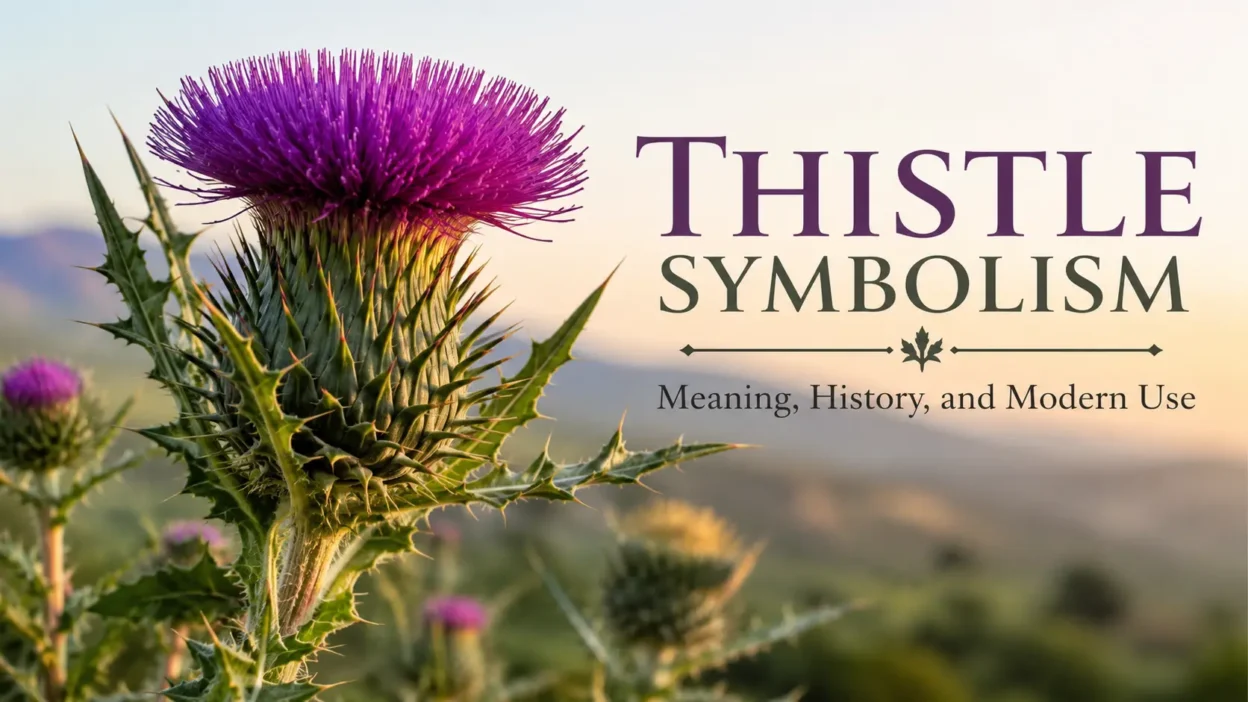
The thistle is one of nature’s most recognizable wild plants, admired for its sharp spines and vibrant purple blooms. Thistle symbolism has long been connected with resilience, protection, determination, and beauty that survives difficult conditions. Although many people know the plant as a stubborn weed, its symbolic meaning tells a far more interesting story.
In modern American culture, the thistle often represents the ability to thrive despite hardship. Its striking appearance reminds people that strength and grace can exist together, making it a popular symbol in gardens, artwork, tattoos, and personal expressions of perseverance.
The thistle has also carried important cultural and historical meanings across Europe, especially in Scotland, while continuing to find new interpretations in contemporary life.
Quick Answer
Thistle symbolism most commonly represents resilience, protection, and perseverance in modern American culture, especially as a reminder to stay strong through challenges. Historically, it has also symbolized courage, national pride, divine protection, and the idea that beauty can flourish even in harsh conditions.
TL;DR
- Represents resilience and determination.
- Symbolizes natural protection and boundaries.
- Closely linked with Scottish identity.
- Beauty can emerge from difficult environments.
- Popular in tattoos, gardens, and artwork.
- Modern meaning emphasizes personal growth.
What Is a Thistle?
A thistle is a flowering plant recognized by its prickly leaves, thorn-covered stems, and distinctive flower heads that are usually purple, pink, or white. While many species exist across North America, Europe, and Asia, they share a similar appearance that makes them instantly recognizable.
People encounter thistles in open fields, mountain landscapes, roadside meadows, prairie ecosystems, botanical gardens, and even decorative floral arrangements. Some species are native wildflowers, while others have been introduced and are considered invasive in certain regions.
Its combination of sharp defenses and colorful blossoms has inspired symbolic interpretations for centuries.
The Core Meaning of the Thistle Today
Today, the thistle most often symbolizes the ability to overcome hardship without losing one’s character. Because it grows in rocky soil, dry landscapes, and neglected places where many plants struggle, it has become a natural metaphor for endurance.
Common modern meanings include:
- Resilience
- Inner strength
- Protection
- Independence
- Survival
- Determination
- Self-respect
- Confidence
Unlike symbols that emphasize softness or comfort, the thistle reminds people that strength sometimes requires healthy boundaries and persistence.
Why Protection Became One of Its Strongest Meanings
The thistle’s sharp spines are impossible to ignore. They discourage grazing animals while protecting the delicate flower growing at the center.
This natural defense inspired people to see the plant as a symbol of protection—not only physical protection but also emotional resilience.
Today, this symbolism often reflects:
- Protecting personal values
- Defending loved ones
- Maintaining healthy boundaries
- Standing firm under pressure
- Guarding personal identity
Rather than representing aggression, the thistle suggests strength used wisely and only when necessary.
Ancient Roots and Early Symbolism
Long before modern symbolism developed, people noticed how the thistle survived in landscapes where other vegetation struggled. Ancient agricultural communities respected hardy plants because survival often meant food security and dependable ecosystems.
Over time, the thistle came to represent:
- Persistence during hardship
- Nature’s resilience
- Protection against danger
- Endurance through changing seasons
Although different cultures interpreted the plant differently, many shared the belief that difficult environments produced remarkable strength.
The Thistle and Scottish National Identity
Perhaps no country is more closely associated with the thistle than Scotland.
According to a well-known medieval legend, invading soldiers attempted to approach a Scottish camp at night. One stepped on a thistle and cried out in pain, alerting the defenders and preventing a surprise attack. Whether historically accurate or not, the story became an enduring symbol of vigilance and protection.
Today, the thistle appears in:
- National emblems
- Government insignia
- Military traditions
- Family crests
- Jewelry
- Ceremonial designs
For many Americans with Scottish ancestry, the thistle also serves as a symbol of family heritage and cultural pride.
What the Thistle Symbolizes in the United States
In the United States, people generally interpret the thistle less as a national emblem and more as a symbol of personal resilience.
Americans often associate it with:
- Overcoming adversity
- Independent thinking
- Rural landscapes
- Wild beauty
- Environmental restoration
- Personal perseverance
Gardeners may appreciate native thistles for supporting pollinators, while artists use the flower to represent strength hidden beneath a rugged exterior.
The symbolism fits well with values often celebrated in American culture, including determination, self-reliance, and optimism.
Symbolic Meanings Across Cultures
Although Scotland is most famous for embracing the thistle, the plant has appeared in several cultural traditions.
| Context | Meaning in the USA | Common Associations | Notes |
|---|---|---|---|
| Personal growth | Perseverance | Resilience, courage | Most common modern interpretation |
| Scottish heritage | National pride | Identity, loyalty | Strong cultural connection |
| Christianity | Protection and sacrifice | Endurance, suffering | Linked with Christ’s Passion in some traditions |
| Nature symbolism | Survival | Adaptability | Reflects harsh growing conditions |
| Modern design | Individuality | Authenticity | Popular in art and fashion |
Across cultures, one theme remains remarkably consistent: true strength often develops through challenge.
Religious and Spiritual Associations
Within Christian symbolism, the thistle has occasionally been associated with hardship, repentance, and the suffering experienced before spiritual renewal.
Because of its thorns, some traditions connected it to the difficulties of earthly life following humanity’s fall from grace. Others viewed the flowering bloom as a reminder that hope and goodness can emerge despite suffering.
Outside Christianity, modern spiritual interpretations often focus on:
- Emotional resilience
- Personal transformation
- Inner strength
- Protective energy
- Respect for natural cycles
These modern interpretations tend to be personal rather than tied to formal religious teachings.
Emotional and Psychological Meaning
Psychologically, the thistle represents emotional endurance.
People often connect it with experiences such as:
- Recovering after loss
- Building confidence
- Learning healthy boundaries
- Standing up for oneself
- Remaining kind without becoming vulnerable to exploitation
The flower growing among sharp spines creates a memorable image: kindness and strength do not have to compete with one another.
For many people, the thistle reflects the belief that difficult experiences can shape character without defining a person’s future.
Why the Thistle Appears in Tattoos
Thistle tattoos have grown steadily in popularity, especially among people seeking symbols with both visual beauty and meaningful stories.
Common tattoo meanings include:
- Personal resilience
- Recovery after hardship
- Scottish ancestry
- Independence
- Family loyalty
- Strength through adversity
Some tattoo designs feature a single flowering stem, emphasizing quiet determination, while others combine the thistle with Celtic knots, mountains, or animals to express heritage and identity.
Unlike symbols focused solely on victory, the thistle often honors the journey through life’s challenges.
Thistles in Home Décor, Fashion, and Art
Modern designers appreciate the thistle for its dramatic shape and natural elegance.
It appears in:
- Botanical illustrations
- Greeting cards
- Wedding stationery
- Home décor
- Fabric prints
- Jewelry
- Embroidery
- Seasonal floral arrangements
In interior design, dried thistles can add texture and rustic character. Their unique silhouette makes them popular in farmhouse, cottage, and nature-inspired decorating styles.
Artists are often drawn to the contrast between the plant’s delicate flowers and formidable defenses, using that balance to communicate resilience and authenticity.
The Role of Thistles in Nature Symbolism
Beyond human culture, the thistle has become an important symbol of ecological resilience.
Many native thistle species provide nectar for bees, butterflies, and other pollinators, while their seeds feed birds such as goldfinches. This ecological role has encouraged a growing appreciation for thistles as valuable components of healthy ecosystems rather than simply unwanted weeds.
As environmental awareness has increased, the plant has come to symbolize:
- Biodiversity
- Ecological balance
- Native habitats
- Respect for wild landscapes
- Sustainable conservation
This perspective reflects a broader shift toward valuing plants for their role in supporting wildlife.
Common Misunderstandings About the Thistle
One of the biggest misconceptions is that every thistle is an invasive weed.
In reality, some species are invasive and require management, while many native species are important parts of local ecosystems.
Another misunderstanding is that the thistle symbolizes hostility because of its spines. Historically and culturally, its defensive features have been interpreted as protection rather than aggression.
Separating biological facts from symbolic meaning helps explain why the thistle continues to be admired despite its prickly reputation.
How Thistle Symbolism Has Changed Over Time
The symbolic meaning of the thistle has gradually expanded.
Earlier interpretations focused on:
- Physical defense
- Survival
- National identity
- Religious hardship
Modern interpretations increasingly emphasize:
- Emotional resilience
- Mental strength
- Authenticity
- Personal growth
- Self-confidence
- Environmental appreciation
Rather than replacing older meanings, these newer interpretations build upon them, allowing the thistle to remain relevant in contemporary culture.
Frequently Asked Questions
What does a thistle symbolize?
A thistle most commonly symbolizes resilience, protection, determination, and the ability to overcome hardship. Its thorny exterior and colorful bloom together represent strength balanced with beauty and compassion.
Is the thistle a positive symbol?
Yes. Although it has sharp spines, the thistle is generally viewed as a positive symbol of perseverance, courage, and healthy boundaries. Most modern interpretations focus on endurance rather than conflict.
Why is the thistle important in Scotland?
The thistle became associated with Scotland through historical tradition and medieval legend, eventually becoming the country’s national flower. It represents vigilance, courage, and national identity.
What does a thistle tattoo mean?
A thistle tattoo often represents personal resilience, surviving difficult experiences, or honoring Scottish ancestry. Many people also choose it to symbolize independence and emotional strength.
Does the thistle have religious meaning?
In some Christian traditions, the thistle represents hardship, sacrifice, and hope that follows suffering. Modern spiritual interpretations often focus more broadly on resilience and personal growth than on formal religious symbolism.
Is the thistle considered lucky?
The thistle is not traditionally viewed as a universal good-luck symbol. Instead, it is more closely associated with protection, endurance, and the strength to face life’s challenges with confidence.
Conclusion
The enduring appeal of thistle symbolism comes from the plant’s remarkable balance of toughness and beauty. Its sharp defenses, vibrant flowers, and ability to flourish in difficult places have inspired generations to see it as a reminder that resilience often grows through challenge.
Whether admired as Scotland’s national emblem, appreciated as a valuable native wildflower, or chosen as a meaningful tattoo or decorative motif, the thistle continues to represent perseverance, protection, and authentic strength. In today’s American culture, it offers a grounded reminder that true resilience is not about avoiding hardship but about continuing to grow despite it.