The pomegranate has been admired for thousands of years, not only as a nutritious fruit but also as a symbol filled with cultural meaning. Today, pomegranate symbolism is commonly associated with abundance, fertility, prosperity, renewal, and the interconnectedness of life. Its many seeds, vivid red color, and long history have helped shape these interpretations across different societies.
In the United States, the pomegranate appears in seasonal foods, home décor, jewelry, tattoos, wellness branding, and artistic designs. Many Americans recognize it as a sign of health, celebration, and good fortune, even if they are unfamiliar with its ancient origins.
Although its symbolism varies between cultures and religions, certain themes have remained remarkably consistent. Ideas of life, growth, family, generosity, and hope continue to define how people interpret the fruit today.
Quick Answer
Pomegranate symbolism most commonly represents abundance, prosperity, fertility, and renewal in modern American culture. Historically, it has also symbolized life, sacred blessings, marriage, resurrection, and the cycle of death and rebirth in many ancient civilizations and religious traditions.
TL;DR
- Represents abundance and prosperity.
- Often symbolizes fertility and family.
- Connected with ancient myths and religions.
- Popular in tattoos and decorative art.
- Seen as a symbol of renewal and hope.
- Modern meanings emphasize health and positivity.
What Is a Pomegranate?
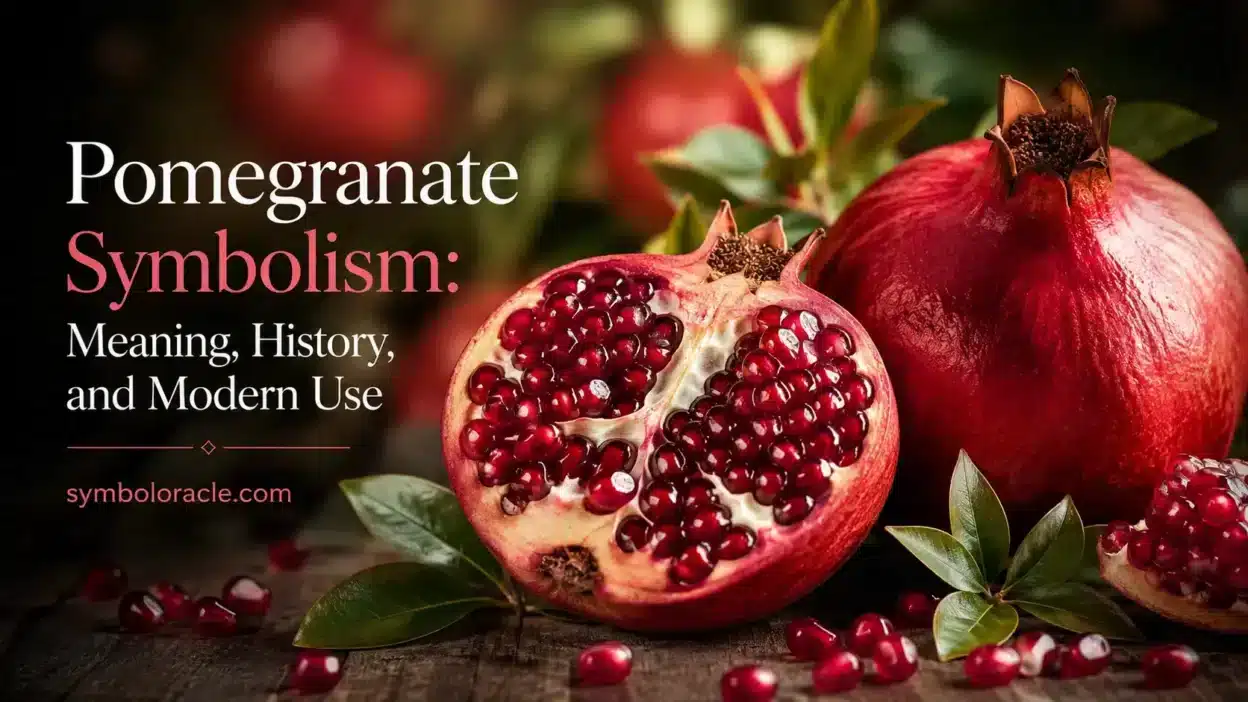
A pomegranate is a round fruit with a thick outer skin that ranges from deep red to reddish-brown. Inside are hundreds of jewel-like seeds, each surrounded by sweet-tart juice. This unusual structure is one of the main reasons the fruit became a powerful symbol across cultures.
People encounter pomegranates in grocery stores, holiday meals, Mediterranean and Middle Eastern cuisine, artwork, textiles, ceramics, jewelry, cosmetics, and wellness products. Their distinctive appearance makes them instantly recognizable and visually meaningful.
The fruit’s ability to produce hundreds of seeds from a single shell naturally encouraged people to associate it with growth, generosity, and life’s abundance.
The Core Meaning of the Pomegranate Today
In the United States, the pomegranate most often symbolizes:
- Abundance
- Prosperity
- Fertility
- Good fortune
- Renewal
- Health
- Family unity
- Lasting relationships
Unlike symbols that carry sharply divided meanings, the pomegranate is generally viewed positively. Whether used in home décor or personal jewelry, it usually expresses optimism, generosity, and the hope that life’s blessings will multiply.
Many people also associate the fruit with gratitude because its harvest season overlaps with autumn celebrations and family gatherings.
Ancient Roots of Pomegranate Symbolism
The symbolic history of the pomegranate stretches back several thousand years. It grew naturally across regions stretching from present-day Iran through the eastern Mediterranean, making it familiar to many early civilizations.
Its impressive number of seeds inspired associations with fertility and population growth. Ancient rulers sometimes adopted the fruit as a sign of wealth because successful harvests reflected agricultural prosperity.
As trade expanded, so did the pomegranate’s symbolism. Artists carved it into temples, embroidered it into clothing, and incorporated it into ceremonial objects. Over time, the fruit came to represent not only physical abundance but also social stability and divine favor.
Pomegranates in Greek Mythology
One of the best-known symbolic stories involving the pomegranate comes from Greek mythology.
According to the myth, Persephone, the daughter of Demeter, ate several pomegranate seeds while in the underworld. Because she consumed the fruit there, she was required to spend part of each year with Hades and the remaining months with her mother.
This story became an explanation for the changing seasons. Spring and summer represented Persephone’s return to the world above, while autumn and winter marked her absence.
As a result, the pomegranate gained lasting associations with:
- Life and death
- Seasonal cycles
- Transformation
- Return and renewal
- The balance between endings and beginnings
Modern readers often interpret the story less literally and more as a reminder that change is a natural part of life.
Religious Symbolism Across Different Traditions
The pomegranate appears in several major religious traditions, although each emphasizes different aspects of its symbolism.
In Judaism, the fruit has long represented righteousness, blessings, wisdom, and spiritual responsibility. It is especially associated with the Jewish New Year, where it expresses hopes for a year filled with good deeds and prosperity.
In Christianity, pomegranates became symbols of resurrection, eternal life, and hope. Renaissance artists frequently included them in religious paintings to communicate these ideas without words.
In Islam, the fruit is mentioned as one of the blessings found in Paradise. It is commonly associated with divine generosity, nourishment, and gratitude.
Although these interpretations differ, they share common themes of life, blessing, and spiritual abundance.
What the Pomegranate Symbolizes in the United States
American interpretations combine historical symbolism with modern values.
Today, many people see the pomegranate as representing:
- Healthy living
- Prosperity
- Family celebrations
- Hospitality
- Gratitude
- Personal growth
Because the fruit has become closely linked with nutrition and wellness, it often appears in advertising, recipe books, health products, and lifestyle branding. These modern associations strengthen its image as something that supports vitality and positive living.
Its attractive appearance also makes it a favorite decorative element during Thanksgiving, winter celebrations, and seasonal centerpieces.
Rather than carrying strictly religious meaning, Americans usually interpret the fruit through themes of generosity, family, and abundance.
Symbolism Around the World
While many meanings overlap, different cultures emphasize different aspects of the fruit.
| Culture or Context | Meaning in the USA | Common Associations | Notes |
|---|---|---|---|
| American culture | Prosperity and wellness | Family, gratitude, health | Often seasonal |
| Ancient Greece | Renewal | Persephone, seasons | Linked with life cycles |
| Judaism | Blessings | Wisdom, righteousness | New Year traditions |
| Christianity | Resurrection | Eternal life, hope | Common in religious art |
| Middle Eastern traditions | Hospitality | Abundance, generosity | Frequently served to guests |
Despite these differences, abundance remains one of the few symbolic themes shared almost everywhere.
Emotional and Psychological Meaning
Psychologically, the pomegranate often represents a full and meaningful life.
Its hundreds of seeds can suggest:
- Many opportunities
- Strong family connections
- Personal growth
- Emotional resilience
- Shared success
People who choose pomegranate imagery sometimes identify with the idea that life’s greatest rewards come from patience and steady growth rather than quick results.
The fruit’s protective outer shell and vibrant interior can also symbolize hidden potential. This interpretation encourages people to look beyond first impressions and recognize value beneath the surface.
Why the Pomegranate Appears in Tattoos and Jewelry
Pomegranate tattoos have become increasingly popular among people looking for a symbol with both beauty and substance.
Common tattoo meanings include:
- Motherhood
- Fertility
- New beginnings
- Survival after hardship
- Personal transformation
- Family bonds
Some people choose realistic fruit designs, while others prefer stylized branches, blossoms, or split-open pomegranates that reveal their many seeds.
Jewelry featuring pomegranates often carries similar meanings. Pendants, earrings, and rings may symbolize prosperity, love, gratitude, or a wish for a flourishing future.
Unlike symbols associated with rebellion or conflict, the pomegranate usually expresses optimism and continuity.
Pomegranates in Art, Design, and Home Décor
Artists have used pomegranates for centuries because they combine striking visual appeal with recognizable symbolism.
Today they appear in:
- Ceramic pottery
- Kitchen textiles
- Holiday decorations
- Wallpaper patterns
- Greeting cards
- Wedding decorations
- Fine art
- Luxury packaging
In interior design, the fruit often symbolizes hospitality and abundance. Decorative bowls filled with pomegranates can communicate warmth and generosity without saying a word.
Its deep red color also contributes to feelings of comfort, celebration, and seasonal richness.
Color Symbolism and the Fruit’s Visual Appeal
The pomegranate’s symbolism is influenced not only by its shape but also by its colors.
Its rich red interior commonly represents:
- Vitality
- Love
- Passion
- Celebration
- Courage
Meanwhile, the many shining seeds create an impression of richness and possibility.
Because of this visual combination, the fruit has become popular in branding related to wellness, food, beauty products, and luxury goods. Designers often use it to suggest freshness, quality, and natural abundance.
How the Symbol Has Changed Over Time
The meaning of the pomegranate has gradually expanded rather than completely changed.
Ancient societies emphasized fertility because agricultural success determined survival.
Religious traditions highlighted divine blessings, righteousness, resurrection, or paradise.
Modern American culture focuses more on health, family, gratitude, abundance, and personal growth.
This shift reflects changing priorities. While relatively few people today connect the fruit directly with ancient mythology, many still appreciate the ideas of renewal and generosity that have accompanied it for centuries.
Common Misunderstandings About the Pomegranate
One common misconception is that the pomegranate belongs exclusively to one religion or culture.
In reality, it has been meaningful across numerous civilizations for thousands of years. No single tradition owns its symbolism.
Another misunderstanding is that it always represents fertility in a literal sense.
Today, many people interpret fertility more broadly to include creativity, productivity, successful projects, strong relationships, or personal development rather than simply parenthood.
Some online interpretations also exaggerate mystical meanings that have little historical support. Most established traditions emphasize abundance, life, gratitude, and renewal rather than supernatural powers.
Why the Pomegranate Continues to Matter
Many ancient symbols fade because they lose relevance in everyday life.
The pomegranate has remained meaningful because it continues to connect with experiences people value today: family meals, seasonal celebrations, generosity, health, resilience, and hope for the future.
Its symbolism also works across different backgrounds. Whether someone appreciates its religious history, artistic beauty, nutritional value, or mythological stories, the fruit offers multiple layers of meaning without becoming confusing.
That flexibility helps explain why it remains popular in both traditional and contemporary settings.
Frequently Asked Questions
What does a pomegranate symbolize?
A pomegranate most commonly symbolizes abundance, prosperity, fertility, renewal, and good fortune. Its many seeds naturally led people across cultures to associate it with growth and life’s many blessings.
Is the pomegranate a religious symbol?
Yes, it appears in several religious traditions, including Judaism, Christianity, and Islam. While each tradition emphasizes different meanings, the fruit is generally connected with blessings, life, hope, and divine generosity.
What does a pomegranate tattoo mean?
A pomegranate tattoo often represents personal growth, family, resilience, motherhood, abundance, or new beginnings. Individual interpretations vary depending on personal experiences and artistic design.
Why is the pomegranate associated with fertility?
Its hundreds of seeds made it an obvious symbol of reproduction and plentiful life in ancient agricultural societies. Over time, this symbolism expanded to include creativity, prosperity, and productive living.
Is the pomegranate considered a lucky symbol?
Many people view it as a lucky symbol because it represents prosperity, success, generosity, and abundance. In several cultures, displaying or eating pomegranates during celebrations is believed to welcome a fortunate year ahead.
What does the pomegranate symbolize in American culture?
In the United States, the fruit is most often associated with healthy living, family gatherings, gratitude, prosperity, and seasonal celebrations. Its symbolism tends to be positive and inclusive rather than tied to one specific tradition.
Conclusion
The pomegranate has remained one of the world’s most enduring symbols because its physical characteristics naturally inspired ideas of abundance, life, generosity, and renewal. Ancient myths, religious traditions, artistic expression, and everyday experience have all contributed to its lasting cultural importance.
Today, pomegranate symbolism continues to evolve while preserving its central themes of prosperity, family, hope, and personal growth. Whether it appears in a tattoo, a holiday centerpiece, a work of art, or a shared meal, the fruit reminds people that life’s greatest rewards often grow through connection, patience, and generosity.