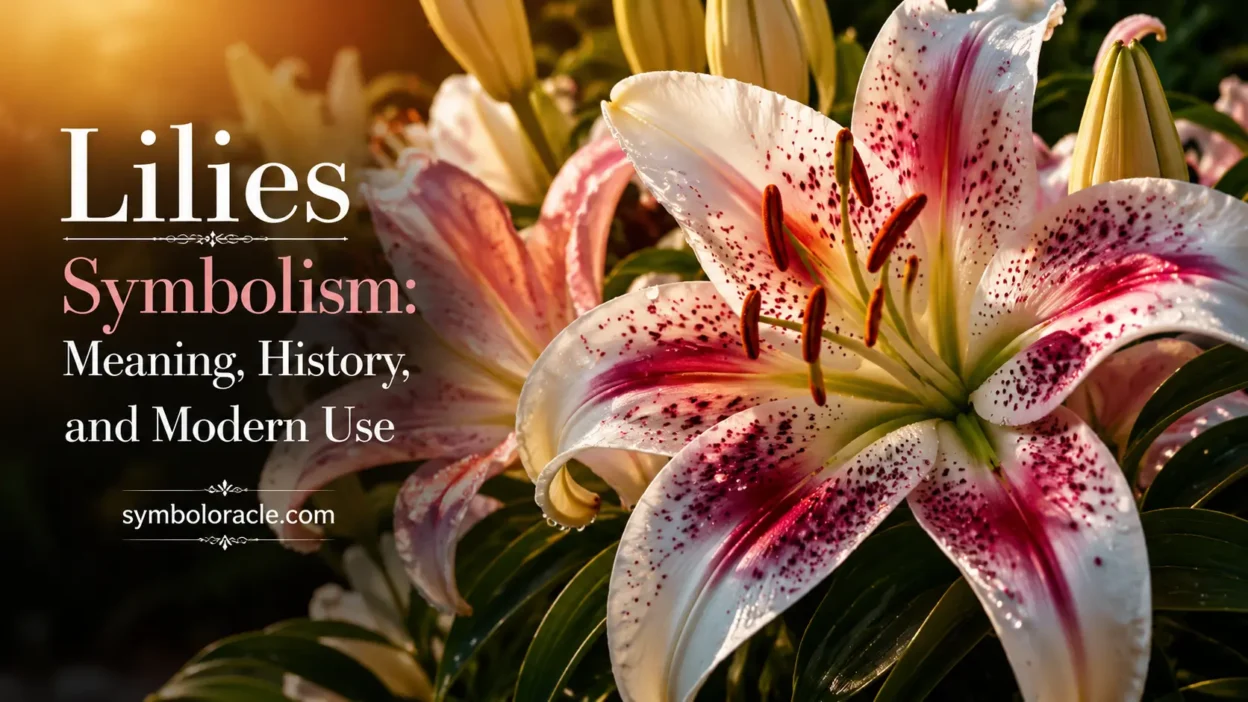
Lilies have long been admired for their elegant flowers, delicate fragrance, and striking appearance. Today, lilies symbolism is commonly associated with purity, renewal, remembrance, love, hope, and life’s important transitions. Whether placed in a wedding bouquet, displayed during Easter, or arranged at a memorial service, lilies often communicate emotions that words cannot easily express.
In the United States, lilies appear in religious celebrations, home gardens, floral arrangements, artwork, jewelry, tattoos, and seasonal decorations. Their meaning varies depending on the color, cultural setting, and occasion, but they consistently represent sincerity, respect, and the beauty of life’s changing seasons.
Quick Answer
Lilies symbolism commonly represents purity, hope, renewal, love, and remembrance in modern American culture. Historically, lilies also became symbols of spiritual devotion, royalty, rebirth, and honor across many civilizations and religious traditions.
TL;DR
- Lilies often symbolize purity and renewal.
- White lilies are strongly linked to remembrance.
- Easter lilies represent resurrection and hope.
- Different lily colors carry different meanings.
- Americans use lilies for weddings and memorials.
- Their symbolism evolved across many cultures.
What Lilies Look Like and Why They Stand Out
True lilies belong to the Lilium genus and grow from bulbs. Their flowers usually have six large petals that curve outward, making them among the most recognizable blooms in gardens and floral arrangements.
Lilies naturally occur across Europe, Asia, and parts of North America. They range from pure white to vibrant orange, yellow, pink, red, and deep burgundy. Some varieties produce a noticeable fragrance, while others are nearly scentless.
Because lilies bloom with striking elegance yet often have relatively short flowering periods, people have long viewed them as reminders that beauty can be both extraordinary and temporary.
The Core Meaning of Lilies Today
In modern American culture, lilies most commonly symbolize:
- Purity
- Innocence
- Hope
- Renewal
- Love
- Peace
- Sympathy
- Respect
- New beginnings
- Spiritual comfort
Unlike flowers that represent excitement or romance alone, lilies often appear during life’s meaningful milestones. They celebrate joyful occasions such as weddings and births while also offering comfort during funerals and memorial services.
Their ability to fit both celebrations and moments of grief gives lilies an unusually broad emotional meaning.
Ancient Roots of Lily Symbolism
Long before modern flower language developed, lilies appeared in ancient art, mythology, and religious traditions.
In ancient Egypt, lilies were connected with fertility, abundance, and rebirth. Decorative motifs featuring lily-like flowers appeared on temples, ceremonial objects, and royal artwork.
Ancient Greeks associated lilies with motherhood and divine femininity. One well-known myth tells that lilies sprang from the milk of the goddess Hera, reinforcing ideas of motherhood, protection, and sacred life.
The Romans admired lilies for their beauty and linked them with prosperity, marriage, and public celebrations. Floral garlands containing lilies sometimes decorated festivals and important ceremonies.
Although these traditions differed, many early cultures connected lilies with life, dignity, and renewal rather than simple decoration.
How Christianity Shaped Their Meaning
Christian symbolism significantly influenced how many Americans understand lilies today.
White lilies became associated with the Virgin Mary because their bright petals suggested purity, humility, and faithful devotion. Artists frequently included lilies in paintings depicting the Annunciation, when the angel Gabriel announced the birth of Jesus.
The Easter lily eventually became one of Christianity’s best-known flowers. Blooming in spring, it came to symbolize:
- Resurrection
- Eternal life
- Hope
- Spiritual renewal
- Victory over death
Churches across the United States continue to decorate sanctuaries with Easter lilies during the Easter season, making the flower instantly recognizable as a symbol of hope.
Lilies in the Language of Flowers
During the Victorian era, flowers became a way to express emotions without speaking openly. This practice, often called the language of flowers, assigned symbolic meanings to individual blooms.
Lilies generally represented:
- Pure affection
- Respect
- Honor
- Devotion
- Refined beauty
People included lilies in carefully arranged bouquets to communicate feelings that social customs sometimes discouraged from being spoken directly.
Although few Americans intentionally practice Victorian flower symbolism today, many traditional floral meanings remain surprisingly familiar.
What Lilies Symbolize in the United States
Modern American interpretations combine historical traditions with contemporary customs.
Lilies frequently appear during:
- Weddings
- Easter celebrations
- Mother’s Day
- Memorial services
- Funerals
- Graduation ceremonies
- Religious events
- Garden landscaping
Americans often associate lilies with sincerity rather than extravagance. Their graceful appearance makes them suitable for occasions that emphasize respect, gratitude, compassion, and hope.
Because lilies comfortably fit both joyful and solemn events, they are among the most versatile symbolic flowers in American culture.
What Different Lily Colors Mean
Color strongly influences how people interpret lilies.
| Lily Color | Meaning in the USA | Common Associations | Notes |
|---|---|---|---|
| White | Purity, remembrance, peace | Weddings, funerals, Easter | Most widely recognized symbolic color |
| Pink | Admiration, compassion, joy | Birthdays, appreciation | Gentle and affectionate meaning |
| Yellow | Happiness, gratitude, optimism | Celebrations, friendship | Bright, cheerful symbolism |
| Orange | Confidence, passion, success | Achievements, encouragement | Bold and energetic appearance |
| Red | Love, commitment, admiration | Romance, anniversaries | Less common than roses but meaningful |
These meanings are widely accepted in floral traditions, though individual interpretations may vary.
Lilies in Weddings and Celebrations
White lilies remain popular wedding flowers because they symbolize honesty, commitment, and new beginnings.
Modern florists often combine lilies with roses, peonies, or greenery to create arrangements that balance elegance with warmth.
Lilies also appear in:
- Baby celebrations
- Housewarming gifts
- Anniversary bouquets
- Graduation arrangements
In these settings, they represent optimism for the future rather than only purity.
Why Lilies Are Common at Funerals
Perhaps no flower is more closely connected with sympathy in the United States than the white lily.
Funeral arrangements often include lilies because they express:
- Respect
- Lasting love
- Peace
- Comfort
- Hope beyond loss
Many people also appreciate that lilies offer comfort without appearing overly dramatic. Their calm appearance communicates quiet support during difficult times.
Although their use at funerals sometimes causes people to associate lilies exclusively with mourning, that interpretation overlooks their equally important role in celebrating life and renewal.
Cross-Cultural Meanings Around the World
Lilies carry different meanings depending on cultural traditions.
In parts of East Asia, lilies often symbolize family harmony, lasting relationships, and good fortune. They are commonly included in wedding celebrations because they express hopes for a happy marriage.
In European traditions, lilies have frequently represented nobility, honor, and religious devotion. Their elegant form made them common in coats of arms, architecture, and sacred artwork.
Across many cultures, lilies consistently suggest respect, dignity, and positive wishes, even though the specific meanings differ.
Emotional and Psychological Symbolism
Flowers influence emotions because people connect them with important life experiences.
Lilies often communicate:
- Calmness
- Reflection
- Grace
- Compassion
- Emotional healing
- Optimism
Their open blossoms create a sense of openness and acceptance, while their balanced shape gives many people feelings of order and peace.
Psychologically, lilies often signal thoughtful care rather than excitement. They encourage quiet appreciation instead of dramatic celebration.
Lilies in Tattoos, Jewelry, and Personal Style
Lilies have become increasingly popular in personal symbolism.
A lily tattoo may represent:
- Personal growth
- Recovery after hardship
- Faith
- Family remembrance
- Motherhood
- Inner peace
Jewelry featuring lilies often symbolizes elegance, kindness, or enduring affection rather than luxury alone.
Fashion designers also incorporate lily patterns into clothing, scarves, and accessories because the flower conveys refinement without appearing overly formal.
On social media, lilies frequently appear in photographs celebrating spring, weddings, graduations, and moments of reflection.
How Lily Symbolism Has Changed Over Time
The meaning of lilies has never remained fixed.
Ancient civilizations emphasized fertility and divine protection.
Later religious traditions focused on purity and spiritual devotion.
Victorian society expanded their role into emotional communication through flowers.
Today, Americans generally view lilies more broadly. Rather than representing only one idea, they symbolize important life transitions—birth, marriage, achievement, remembrance, healing, and hope.
This broader understanding reflects how symbols naturally evolve as cultures change.
Common Misunderstandings About Lilies
Several misconceptions surround lily symbolism.
One common belief is that lilies only represent death because they appear so often at funerals. In reality, funeral traditions emphasize hope, peace, and remembrance rather than death itself.
Another misunderstanding is that every flower called a “lily” belongs to the same botanical group. Plants such as calla lilies, peace lilies, and daylilies are not true lilies, even though they share similar names and symbolic associations.
Some people also assume all lily colors have identical meanings. While they share themes of beauty and renewal, color can significantly change the message being conveyed.
Why Lilies Continue to Matter Today
Despite changing design trends, lilies remain among America’s most meaningful flowers.
Their symbolism continues because they fit many different moments in life. A single flower can celebrate love, comfort grieving families, honor faith, or simply brighten a home.
Modern Americans often seek symbols that feel genuine without being overly complicated. Lilies meet that need by expressing recognizable emotions through a flower that most people already understand.
Rather than belonging to only one tradition, lilies have become part of everyday cultural language.
Frequently Asked Questions
What do lilies symbolize most commonly?
Lilies most often symbolize purity, hope, renewal, peace, and remembrance. Their exact meaning depends on the occasion, flower color, and cultural tradition in which they are used.
Are lilies considered a positive symbol?
Yes. In most modern settings, lilies represent positive qualities such as compassion, sincerity, love, healing, and respect. Even at funerals, they are intended to express comfort and hope rather than sadness alone.
What does a lily tattoo mean?
A lily tattoo often represents personal growth, resilience, faith, motherhood, remembrance, or inner peace. The design, color, and placement can add personal meaning unique to the individual.
Why are white lilies used at funerals?
White lilies symbolize peace, innocence, and the hope of renewal. Their calm appearance and long-standing religious associations make them a comforting choice for memorial services.
What do pink and yellow lilies symbolize?
Pink lilies usually express admiration, compassion, and happiness, while yellow lilies symbolize gratitude, friendship, optimism, and joyful celebration. These colors are commonly chosen for uplifting occasions.
Are lilies associated with Christianity?
Yes. White lilies are closely connected with the Virgin Mary, while Easter lilies symbolize the resurrection of Jesus and the promise of new life. These associations remain especially strong during the Easter season in the United States.
Conclusion
Lilies remain one of the most meaningful flowers in American culture because they communicate hope, purity, remembrance, love, and renewal across many different occasions. Their symbolism has developed over thousands of years, blending ancient traditions, religious beliefs, artistic expression, and everyday customs into a message that continues to feel relevant.
Today, lilies symbolism reflects both continuity and change. Whether found in a wedding bouquet, an Easter display, a memorial arrangement, or a personal tattoo, lilies remind us that beauty, compassion, and hope often accompany life’s most important moments.