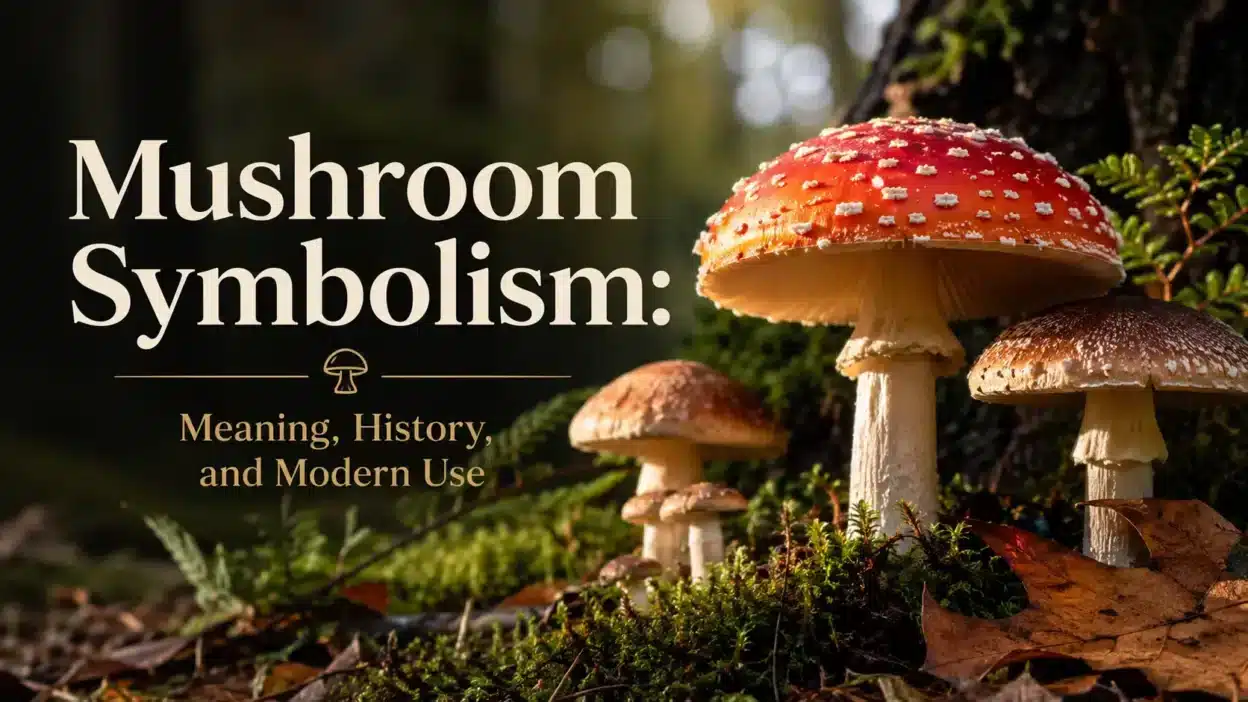
Mushrooms have long captured human attention because they appear suddenly, thrive in unexpected places, and exist in forms ranging from familiar edible varieties to striking poisonous species. Today, mushroom symbolism is commonly connected with growth, resilience, transformation, mystery, and the hidden connections found in nature.
In the United States, mushrooms have become more than forest organisms. They appear in home décor, fashion, tattoos, children’s stories, wellness conversations, video games, and environmental discussions. Their symbolic meaning continues to evolve as Americans increasingly appreciate fungi for both their ecological importance and cultural appeal.
Understanding why mushrooms symbolize certain ideas requires looking at history, folklore, science, and modern culture together. Their meaning has never come from a single tradition. Instead, it developed from centuries of observation, storytelling, religion, and everyday experiences.
Quick Answer
Mushroom symbolism most commonly represents growth, resilience, transformation, and the hidden connections of nature in modern American culture. Historically, mushrooms have also symbolized mystery, good fortune, spiritual reflection, abundance, and the unpredictable balance between life and decay across many cultures.
TL;DR
- Mushrooms often represent resilience and renewal.
- Their symbolism grew from folklore and observation.
- Americans associate them with nature and wellness.
- Different cultures interpret mushrooms differently.
- Modern tattoos often symbolize personal transformation.
- Some myths exaggerate their symbolic meaning.
What Mushrooms Look Like and Why They Stand Out
Unlike flowering plants, mushrooms emerge from fungal networks hidden beneath the ground. The visible mushroom is only the fruiting body, while an extensive underground structure called mycelium quietly supports its growth.
This unusual life cycle has shaped symbolic thinking for centuries. People often notice mushrooms appearing overnight after rainfall, making them seem sudden or unexpected. Their variety of shapes, colors, and sizes also contributes to their symbolic appeal. Bright red caps with white spots, delicate white mushrooms, and towering forest fungi all evoke different emotional responses.
Because much of their life remains unseen, mushrooms naturally became symbols of hidden potential and invisible connections.
The Core Meaning of Mushrooms Today
In modern American culture, mushrooms most often symbolize several related ideas rather than one fixed meaning.
- Personal growth after difficult experiences
- Adaptability during changing circumstances
- Renewal and natural cycles
- Hidden strength beneath the surface
- Curiosity and discovery
- Respect for nature’s complexity
These meanings reflect how fungi actually behave in ecosystems. Rather than simply representing mystery, mushrooms demonstrate cooperation, decomposition, and regeneration—processes essential for healthy forests.
Ancient Roots of Mushroom Symbolism
People have gathered, feared, and admired mushrooms for thousands of years.
Ancient societies recognized that some mushrooms provided nourishment while others could cause serious illness or death. This contrast gave fungi a dual symbolic identity. They represented both life and danger, abundance and caution.
In parts of Europe, unusual mushroom circles inspired legends about supernatural gatherings. These naturally occurring “fairy rings” became associated with folklore involving fairies, spirits, or magical events because their circular patterns seemed difficult to explain before modern science.
Elsewhere, mushrooms appeared in traditional healing practices, seasonal rituals, and local folklore. Their symbolic meaning depended largely on how communities experienced them in daily life.
How Mushroom Symbolism Developed in the United States
American interpretations combine influences from Native traditions, European folklore, scientific discovery, and modern environmental awareness.
Today, mushrooms commonly symbolize:
- Healthy ecosystems
- Outdoor exploration
- Environmental responsibility
- Sustainable living
- Curiosity about the natural world
The growing popularity of hiking, foraging education, conservation programs, and nature photography has strengthened these associations.
Rather than focusing primarily on superstition, many Americans now see mushrooms as reminders that unseen ecological systems support everyday life.
Mushrooms in Folklore and Traditional Stories
Folklore helped shape many familiar mushroom images.
European traditions often connected mushrooms with enchanted forests, woodland spirits, and fairy circles. While these stories differed by region, they shared the idea that mushrooms marked places where ordinary rules might not apply.
Children’s literature later borrowed these images, presenting mushrooms as whimsical homes for forest creatures or magical settings for adventure.
These imaginative portrayals continue influencing popular culture even though modern science explains how mushrooms actually grow.
Religious and Spiritual Interpretations
Mushrooms generally play a smaller symbolic role in major world religions than symbols such as trees, flowers, or birds. However, some spiritual traditions have interpreted fungi in meaningful ways.
Certain Indigenous cultures viewed particular mushrooms within ceremonial or sacred contexts, though these practices were highly specific and should not be generalized across all Native peoples.
Some Eastern philosophies emphasize mushrooms as examples of impermanence and natural cycles because of their brief visible lifespan.
Modern spiritual communities sometimes interpret mushrooms as symbols of awakening, interconnectedness, or self-discovery. These contemporary meanings often blend ecological awareness with personal reflection rather than traditional religious teachings.
Emotional and Psychological Meaning
Psychologically, mushrooms often symbolize qualities people hope to develop during periods of change.
These include:
- Patience
- Quiet confidence
- Adaptability
- Recovery
- Humility
- Curiosity
Unlike symbols associated with dominance or achievement, mushrooms represent progress that happens gradually and often unnoticed.
Many people identify with this symbolism because personal growth frequently occurs beneath the surface before becoming visible to others.
Mushroom Symbolism Across Different Cultures
Although interpretations vary, several themes appear repeatedly around the world.
| Context | Meaning in the USA | Common Associations | Notes |
|---|---|---|---|
| Nature | Renewal | Forests, ecology | Strong modern interpretation |
| Folklore | Mystery | Fairy rings, legends | Mainly European influence |
| Personal Growth | Transformation | Resilience, healing | Common in tattoos |
| Art & Design | Creativity | Fantasy, imagination | Popular in illustration |
| Environmental Culture | Interconnection | Mycelium, sustainability | Growing importance today |
These meanings overlap without being identical. Cultural traditions often emphasize different aspects depending on local history and environment.
Why Mushrooms Appear in Tattoos
Mushroom tattoos have become increasingly popular in the United States over the past decade.
Many people choose mushroom designs because they symbolize:
- Starting over after hardship
- Personal resilience
- Love of nature
- Environmental values
- Individuality
- Creativity
The specific design often changes the interpretation. A realistic woodland mushroom may express appreciation for nature, while colorful fantasy mushrooms may reflect imagination or nostalgia inspired by books and games.
Some tattoo wearers simply enjoy mushrooms as recognizable symbols of outdoor life rather than attaching deeper personal meaning.
Mushrooms in Home Décor, Fashion, and Popular Culture
Mushrooms have experienced a noticeable revival in contemporary design.
They appear on:
- Kitchen décor
- Ceramic artwork
- Clothing
- Jewelry
- Greeting cards
- Children’s products
- Cottagecore fashion
- Social media aesthetics
Their popularity reflects broader cultural interest in natural living, cozy interiors, gardening, and woodland themes.
Video games, animated films, and fantasy artwork have also made mushrooms instantly recognizable symbols of adventure, imagination, and exploration.
The Ecological Symbolism of Mushrooms
Scientific discoveries have transformed how many people think about fungi.
Researchers now better understand mycelium—the underground fungal networks connecting plants and recycling nutrients throughout forests. As public awareness has grown, mushrooms increasingly symbolize cooperation instead of isolation.
Many environmental educators use mushrooms as examples of:
- Interdependence
- Resource sharing
- Regeneration
- Ecological balance
- Sustainable ecosystems
This science-based symbolism differs from older folklore because it emphasizes observable natural relationships rather than supernatural explanations.
Common Misunderstandings About Mushroom Symbolism
Several misconceptions continue to circulate.
One misunderstanding assumes all mushrooms symbolize magic or psychedelics. While certain species have historical ceremonial uses, the vast majority of mushroom symbolism has nothing to do with altered states of consciousness.
Another misconception treats every mushroom as either dangerous or medicinal. In reality, fungi represent enormous biological diversity, and symbolic meanings vary accordingly.
Some internet content also claims mushrooms have one universal meaning across every culture. Historical evidence shows otherwise. Different societies developed distinct interpretations based on local environments and traditions.
How Mushroom Meaning Has Changed Over Time
The symbolism of mushrooms has evolved alongside human knowledge.
Early communities often focused on survival—identifying edible species and avoiding poisonous ones.
Medieval folklore emphasized mystery and supernatural stories.
The scientific era shifted attention toward biology and ecology.
Today, Americans increasingly associate mushrooms with environmental awareness, sustainable living, biodiversity, and personal resilience.
Rather than replacing earlier meanings, these newer interpretations build upon them, creating a broader and more balanced understanding.
Why Mushroom Symbolism Continues to Matter
Modern symbolism often reflects current cultural values, and mushrooms are a good example.
As climate awareness, conservation, and interest in local ecosystems have grown, fungi have become symbols of nature’s hidden resilience. They remind people that healthy environments depend on countless unseen relationships working together.
At the same time, mushrooms remain approachable symbols. They appear in gardens, grocery stores, hiking trails, artwork, and family activities, making their symbolism accessible to people of many backgrounds.
Their meaning continues to evolve without losing its historical roots.
Frequently Asked Questions
What do mushrooms symbolize most commonly?
Today, mushrooms most commonly symbolize resilience, growth, transformation, and the hidden relationships that support life. Many Americans also associate them with environmental awareness and renewal.
Are mushrooms considered good luck?
In some European traditions, certain mushrooms were connected with good fortune or abundance, while others carried warnings because of their toxicity. Modern American culture generally views mushrooms as neutral or positive symbols rather than lucky charms.
What does a mushroom tattoo mean?
A mushroom tattoo often represents personal growth, overcoming challenges, creativity, or a close connection to nature. The meaning usually depends on the person’s experiences and the style of the artwork.
Do mushrooms have religious symbolism?
Mushrooms are not central symbols in most major religions, but they appear in some Indigenous ceremonial traditions and certain spiritual practices. Their religious significance varies widely and should always be understood within its specific cultural context.
Why are mushrooms linked to mystery?
Much of a fungus lives underground, while mushrooms can appear quickly after rainfall. Before scientific explanations were available, these unusual characteristics inspired folklore about hidden worlds, fairy circles, and unexplained natural events.
Has mushroom symbolism changed in recent years?
Yes. Modern ecological research has encouraged many people to view mushrooms as symbols of cooperation, biodiversity, and healthy ecosystems. This scientific perspective now complements older folklore and artistic traditions.
Conclusion
Mushrooms have earned their symbolic meaning through a combination of natural observation, folklore, scientific discovery, and cultural change. Their ability to emerge unexpectedly, recycle life, and connect entire ecosystems has made them enduring symbols of resilience, renewal, adaptability, and the unseen relationships that sustain the natural world.
Today, mushroom symbolism reflects both historical traditions and contemporary American values. Whether found in tattoos, artwork, woodland walks, environmental education, or everyday design, mushrooms remind us that meaningful growth often begins quietly, beneath the surface, long before it becomes visible.


