The snow leopard is one of the world’s most elusive wild cats, living high in the rugged mountains of Central and South Asia. Although relatively few Americans will ever see one in the wild, snow leopard symbolism has become increasingly recognized through wildlife conservation, documentaries, art, and personal expression.
People are drawn to the snow leopard because it represents qualities that seem both rare and admirable. Its ability to survive in harsh alpine environments, move silently across rocky cliffs, and remain largely unseen has inspired symbolic meanings centered on resilience, independence, wisdom, and quiet confidence.
Today, Americans often interpret the snow leopard less as a mythical creature and more as a symbol of strength balanced with humility. Its growing role in conservation has also expanded its meaning to include environmental responsibility and respect for endangered wildlife.
Quick Answer
Snow leopard symbolism commonly represents resilience, quiet strength, independence, and grace in modern American culture, especially in personal growth, wildlife appreciation, and artistic expression. Historically, mountain communities across Asia also associated the snow leopard with protection, courage, and the wisdom required to survive in challenging landscapes.
TL;DR
- Represents resilience under difficult conditions.
- Symbolizes quiet confidence instead of dominance.
- Rooted in Asian mountain traditions.
- Often reflects personal independence.
- Modern meaning includes wildlife conservation.
- Popular in tattoos, art, and outdoor culture.
What the Snow Leopard Looks Like and Why It Stands Out
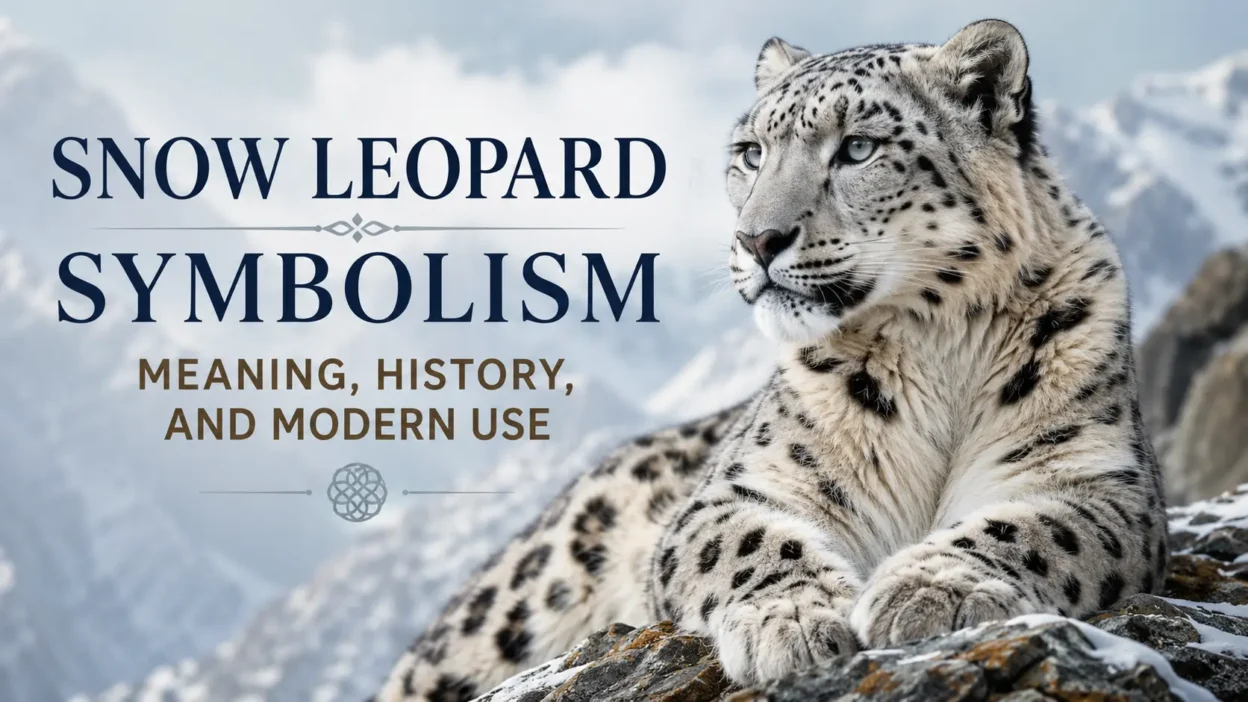
The snow leopard is instantly recognizable by its thick pale-gray coat covered with dark rosettes, long fluffy tail, broad paws, and piercing eyes. Every physical feature helps it survive freezing temperatures and steep mountain terrain.
Unlike lions or tigers, snow leopards rarely roar. They communicate quietly and spend much of their lives alone. Their elusive nature has shaped much of their symbolism.
People often associate visible animals with power through display. The snow leopard suggests something different: capability without seeking attention. That contrast explains why it has become an appealing symbol in modern culture.
The Core Meaning of Snow Leopard Symbolism
Today, several symbolic meanings appear consistently across art, literature, conservation campaigns, and personal interpretation.
These include:
- Quiet strength
- Independence
- Adaptability
- Resilience
- Patience
- Focus
- Balance
- Self-control
- Grace under pressure
Rather than representing aggressive dominance, the snow leopard symbolizes achieving success through careful judgment, calm action, and perseverance.
Many people see it as a reminder that true strength does not always need to be loud or visible.
Ancient Roots and Early Symbolism
The snow leopard has lived for thousands of years across the Himalayas, the Tibetan Plateau, Mongolia, and neighboring mountain regions. Communities living alongside the animal naturally incorporated it into local beliefs.
Hunters respected its remarkable climbing ability and intelligence. Shepherds often viewed encounters with a mixture of admiration and caution because the animal occasionally preyed on livestock.
Instead of being universally feared, the snow leopard frequently became a symbol of nature’s balance. Its survival in some of Earth’s harshest environments represented endurance and harmony with rugged landscapes.
Some regional traditions connected the animal with mountain spirits, while others viewed it as a guardian of remote wilderness.
Why Mountains Shape Its Symbolism
Unlike predators that inhabit forests or grasslands, the snow leopard lives among rocky cliffs above the tree line.
Mountains themselves often symbolize:
- endurance
- perspective
- stability
- isolation
- spiritual reflection
Because the animal is inseparable from this environment, many of these ideas naturally became associated with it.
Its ability to move confidently across dangerous cliffs reinforces the idea of navigating life’s obstacles with skill rather than force.
Snow Leopard Symbolism in the United States
In the United States, most people encounter snow leopards through zoos, wildlife organizations, photography, educational programs, and documentaries rather than personal experience.
Modern American interpretations often emphasize:
- perseverance during hardship
- personal independence
- emotional resilience
- respect for wildlife
- environmental stewardship
- calm leadership
Outdoor enthusiasts may identify with the snow leopard because it represents thriving in demanding environments without unnecessary attention.
Professionals sometimes use the snow leopard metaphor to describe leaders who remain calm, observant, and decisive without dominating every conversation.
Symbolic Meanings Across Cultures
Although meanings vary across regions, several themes appear repeatedly.
| Culture or Context | Meaning | Common Associations | Notes |
|---|---|---|---|
| Himalayan communities | Survival | Mountain life | Respect for nature |
| Tibetan traditions | Harmony | High mountains | Balance with the environment |
| Central Asian folklore | Courage | Remote wilderness | Skilled hunter |
| Modern United States | Quiet resilience | Personal growth | Conservation awareness |
| Global wildlife movement | Hope | Endangered species | Biodiversity protection |
Despite cultural differences, the snow leopard is rarely viewed as a symbol of reckless aggression. Instead, respect for its intelligence and adaptability appears consistently.
Emotional and Psychological Symbolism
Psychologically, the snow leopard often represents a personality that values observation over impulsiveness.
People who identify with this symbol may appreciate:
- independence without loneliness
- confidence without arrogance
- determination without aggression
- resilience during uncertainty
The animal’s solitary lifestyle has also made it a symbol for people who recharge through reflection and personal space rather than constant social activity.
Rather than suggesting isolation, it often represents healthy self-reliance.
Why the Snow Leopard Appears in Tattoos
Snow leopard tattoos have become increasingly popular among people seeking designs that communicate resilience and individuality.
Common reasons include:
- overcoming personal struggles
- surviving major life changes
- honoring independence
- celebrating inner calm
- expressing love of wildlife
Tattoo artists frequently combine snow leopards with mountains, snowflakes, moons, pine forests, or geometric designs.
Unlike lion tattoos, which often emphasize authority, snow leopard designs usually communicate quiet confidence and personal endurance.
Snow Leopard Symbolism in Art, Fashion, and Home Décor
Designers often use snow leopard imagery to evoke elegance without excess.
Examples include:
- wildlife paintings
- outdoor apparel
- nature photography
- decorative sculptures
- minimalist home décor
- conservation-inspired artwork
The animal’s distinctive coat pattern also inspires fashion prints, although these are often stylized rather than realistic.
In home décor, snow leopard imagery tends to create feelings of calm, natural beauty, and connection with wild landscapes.
Conservation Has Changed Its Meaning
One of the biggest shifts in modern symbolism comes from conservation.
Because snow leopards face threats including habitat loss, climate change, and illegal poaching, they increasingly symbolize:
- environmental responsibility
- biodiversity
- coexistence
- protection of fragile ecosystems
For many Americans, seeing a snow leopard now immediately brings conservation to mind.
The animal has become both a symbol of natural beauty and a reminder that rare species require long-term protection.
Common Misunderstandings About the Symbol
Several misconceptions surround snow leopard symbolism.
One misunderstanding is that it represents secrecy because it hides from humans. In reality, its behavior is largely an adaptation to survival rather than an intentional symbol of concealment.
Another misconception equates the snow leopard with aggression simply because it is a large predator. Compared with many other big cats, it generally avoids human contact whenever possible.
Some online interpretations also assign supernatural meanings unsupported by historical traditions. While local folklore occasionally connects the animal with mountain spirits, most symbolic interpretations emphasize observable traits such as endurance, patience, and adaptability.
How Its Meaning Has Evolved Over Time
Historically, mountain communities focused on practical relationships with the snow leopard.
The animal represented:
- survival
- hunting skill
- respect for wilderness
- balance between humans and nature
As wildlife science expanded and conservation efforts grew during the twentieth and twenty-first centuries, new symbolic meanings developed.
Today, many people view the snow leopard as representing environmental awareness alongside personal resilience.
This evolution reflects changing relationships between humans and wildlife. Rather than viewing predators primarily as threats, many now see them as essential parts of healthy ecosystems.
Snow Leopard Symbolism in Digital Culture
Social media has introduced the snow leopard to audiences who might otherwise know little about it.
Photographs of snow leopards often accompany messages about:
- perseverance
- mindfulness
- quiet leadership
- environmental protection
- overcoming adversity
Nature photographers and wildlife filmmakers have also helped reshape public perception by highlighting the animal’s intelligence and remarkable adaptations instead of portraying it as simply a dangerous predator.
This modern visibility has broadened its symbolism while encouraging greater appreciation for mountain ecosystems.
When Snow Leopard Symbolism Is Most Meaningful
The snow leopard often feels especially meaningful during periods of transition.
People may connect with it when:
- beginning a difficult journey
- recovering from setbacks
- pursuing long-term goals
- seeking greater independence
- learning patience
- simplifying their lives
Its symbolism encourages steady progress rather than dramatic displays of strength.
For many, it serves as a reminder that resilience is often built quietly through consistent effort.
Frequently Asked Questions
What does snow leopard symbolism mean?
The snow leopard most commonly symbolizes resilience, independence, quiet strength, patience, and adaptability. Modern interpretations also connect it with environmental responsibility because the species is endangered.
Is the snow leopard considered a good symbol?
Yes. In most modern contexts, the snow leopard is viewed positively. It represents determination, calm confidence, and the ability to overcome challenges without relying on aggression.
What does a snow leopard tattoo symbolize?
A snow leopard tattoo often represents surviving hardship, embracing independence, or developing inner strength. Many people also choose the design to express admiration for wildlife and mountain landscapes.
Does the snow leopard have religious symbolism?
The snow leopard is not a major religious symbol in most traditions. However, some Himalayan and Tibetan cultural beliefs associate it with sacred mountains, harmony with nature, and respect for the wilderness.
Why is the snow leopard associated with resilience?
Its ability to survive freezing temperatures, scarce food, and steep mountain terrain makes it a natural symbol of endurance. People often see its survival as an example of adapting successfully to difficult circumstances.
Is snow leopard symbolism different from lion symbolism?
Yes. Lions usually symbolize public leadership, authority, and visible courage. Snow leopards more often represent quiet confidence, careful observation, patience, and strength that does not require public recognition.
Conclusion
The enduring appeal of snow leopard symbolism comes from the remarkable balance the animal represents. It is powerful without being boastful, independent without rejecting community, and resilient without appearing invincible. These qualities have made it an increasingly meaningful symbol in contemporary American culture.
While its historical roots lie in the mountain traditions of Central and South Asia, its modern significance has expanded through conservation, education, art, and personal expression. Whether admired for its graceful movement, survival in harsh environments, or role as an ambassador for endangered wildlife, the snow leopard continues to remind us that lasting strength often appears in quiet, steady forms rather than dramatic displays.