
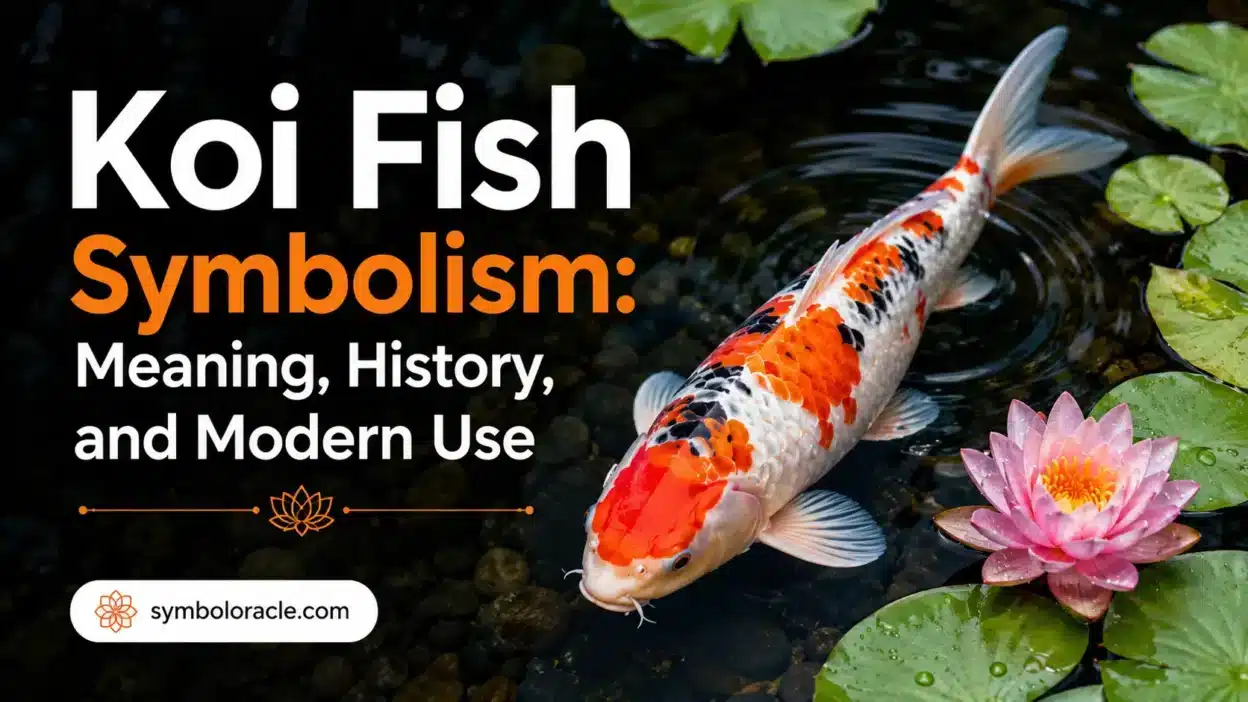
Koi fish symbolism has become widely recognized in the United States as a representation of perseverance, personal growth, good fortune, and resilience. Whether seen in backyard ponds, Japanese gardens, tattoos, paintings, or home décor, koi are admired not only for their colorful appearance but also for the stories and values they represent.
People are often drawn to koi because they seem calm yet determined. They move gracefully through water while carrying centuries of cultural meaning that originated in East Asia and gradually became part of global visual culture. Today, Americans appreciate koi both for their beauty and for what they communicate about overcoming challenges and pursuing meaningful goals.
Although the koi has ancient roots, its symbolism continues to evolve. Modern interpretations often emphasize personal achievement, emotional strength, and optimism while still respecting the traditions that first gave the fish its symbolic importance.
Quick Answer
Koi fish symbolism commonly represents perseverance, resilience, good fortune, and personal growth in modern American culture. Historically, the koi became a symbol of determination and success in East Asian traditions, where stories of the fish swimming upstream inspired ideas about courage, transformation, and achievement.
TL;DR
- Represents perseverance and determination.
- Associated with prosperity and good luck.
- Inspired by East Asian legends.
- Popular in American tattoos and garden design.
- Colors influence symbolic interpretation.
- Often reflects personal growth after hardship.
What Is a Koi Fish?
A koi is a domesticated variety of carp that has been selectively bred for its vibrant colors and distinctive patterns. Unlike ordinary carp, koi are appreciated primarily as ornamental fish and are commonly kept in decorative ponds.
Their scales display combinations of red, white, black, yellow, orange, blue, and metallic shades. Individual fish can live for decades, and exceptional specimens have been known to survive for much longer with proper care.
Because koi grow slowly and live long lives, they naturally became associated with patience, endurance, and lasting success.
The Core Meaning of Koi Fish Symbolism
Today, several symbolic meanings consistently appear whenever people discuss koi fish.
The most recognizable interpretation is perseverance. Koi are admired for their ability to swim against strong currents, making them a natural symbol of persistence during difficult periods.
Another common meaning is personal transformation. Just as the fish continues moving forward despite obstacles, people often see the koi as representing life’s challenges and the growth that comes from overcoming them.
Good fortune is another widespread association. Decorative koi ponds are frequently designed to create a peaceful atmosphere while expressing hopes for prosperity, abundance, and future success.
Many Americans also connect koi with balance. Their smooth movement through water suggests emotional stability, patience, and thoughtful decision-making rather than impulsive action.
Ancient Roots and Early Symbolism
The symbolic history of koi begins with the carp, a fish long respected throughout China for its strength and ability to swim upstream against powerful rivers.
One of the best-known legends tells of a carp that successfully climbed a waterfall known as the Dragon Gate. According to the story, the fish’s determination earned it the transformation into a dragon. Whether viewed as folklore or mythology, this story became a lasting metaphor for persistence leading to extraordinary achievement.
Centuries later, Japan developed ornamental koi through selective breeding. While the fish remained connected to perseverance, Japanese culture also embraced koi as symbols of beauty, family prosperity, harmony, and celebration.
Over time, these meanings spread internationally through Japanese gardens, art, cultural exchanges, and eventually popular media.
Why Swimming Upstream Became So Symbolic
The image of a fish swimming against the current naturally communicates determination.
Unlike symbols that suggest effortless success, the koi reminds people that worthwhile achievements usually require patience and repeated effort. The symbolism focuses less on winning quickly and more on continuing despite setbacks.
This idea appeals strongly in modern American culture, where stories of resilience, entrepreneurship, education, athletic achievement, and personal recovery often celebrate persistence rather than perfection.
For many people, the koi represents progress made one difficult step at a time.
What Koi Fish Symbolize in the United States
While Americans recognize the koi’s Asian origins, its symbolism has taken on additional meanings within U.S. culture.
Many homeowners install koi ponds as peaceful outdoor spaces that encourage relaxation and mindfulness.
Businesses sometimes display koi imagery to express hopes for prosperity, stability, and long-term growth.
Artists frequently use koi in paintings and digital illustrations because the fish combines elegance with movement and optimism.
In personal life, Americans often choose koi-themed jewelry, clothing, or tattoos after completing major milestones such as graduating, recovering from illness, changing careers, or overcoming personal hardships.
Rather than representing a specific religion, koi symbolism in the United States usually reflects individual life experiences and personal resilience.
The Symbolism of Koi Colors
Different koi colors carry different symbolic associations. While interpretations vary slightly, these meanings are among the most widely recognized.
| Koi Color | Meaning in the USA | Common Associations | Notes |
|---|---|---|---|
| Red | Love, courage, passion | Family, relationships | Often represents emotional strength |
| Gold or Yellow | Wealth and prosperity | Success, abundance | Popular in business symbolism |
| White | Fresh beginnings | Purity, honesty | Associated with new chapters |
| Black | Endurance through hardship | Recovery, resilience | Often symbolizes overcoming adversity |
| Blue | Peace and stability | Calmness, reflection | Linked with emotional balance |
Many koi display multiple colors, allowing people to interpret them as representing several positive qualities at once.
Koi Fish in Tattoos and Personal Style
Koi tattoos are among the most recognizable symbolic tattoo designs in the United States.
For many wearers, the fish marks a turning point in life rather than simply serving as decoration. Someone who has overcome addiction, survived illness, completed military service, finished a demanding education, or rebuilt after loss may choose a koi to represent that journey.
Tattoo orientation also carries symbolic meaning in many traditions.
An upward-swimming koi often represents striving toward future goals or continuing through challenges.
A downward-swimming koi may symbolize having already overcome significant obstacles or entering a more peaceful stage of life.
Modern tattoo artists frequently combine koi with water, lotus flowers, waves, cherry blossoms, or dragons to create larger narratives about growth and transformation.
Koi in Art, Gardens, and Home Décor
Koi appear throughout many forms of decorative art because they communicate movement without aggression.
Garden ponds featuring koi often become places for reflection and relaxation. Watching the fish swim slowly through still water encourages patience and attentiveness.
Interior designers sometimes incorporate koi artwork into homes, offices, wellness centers, and meditation spaces because the imagery suggests harmony and steady progress.
Unlike symbols associated with competition or status, koi generally communicate quiet confidence and enduring success.
Cross-Cultural Meanings
Although koi symbolism is now international, its interpretation differs across cultures.
In Japan, koi are closely connected with perseverance, family happiness, children’s celebrations, and seasonal festivals.
Chinese traditions often emphasize prosperity, scholarly success, ambition, and advancement, reflecting the famous Dragon Gate legend.
In many Western countries, including the United States, these meanings have blended with contemporary ideas about personal development, emotional resilience, and self-improvement.
Despite these differences, the central message of determination remains remarkably consistent.
Emotional and Psychological Symbolism
On a psychological level, koi often represent how people want to approach life’s challenges.
The fish suggests remaining calm under pressure instead of reacting impulsively. Because it moves steadily rather than rapidly, it symbolizes consistent effort over dramatic bursts of activity.
Many people also associate koi with emotional recovery.
Someone experiencing grief, career setbacks, divorce, financial hardship, or illness may identify with the idea of continuing forward despite difficult circumstances.
This makes the koi both aspirational and comforting. Rather than promising that life will become easy, it reflects confidence that perseverance can produce meaningful progress.
Koi Fish in Popular Culture and Digital Media
Koi imagery has become increasingly visible across modern American culture.
Social media creators use koi animations, illustrations, and wallpapers to represent mindfulness and positive change.
Fashion brands incorporate koi into streetwear, athletic apparel, and accessories because the designs combine striking visuals with recognizable symbolism.
Video games, animated films, and graphic novels also feature koi-inspired imagery, often portraying transformation, hidden strength, or spiritual journeys.
Because these interpretations reach global audiences, younger generations frequently recognize koi symbolism even if they have never visited a traditional koi pond.
Common Misunderstandings About Koi Symbolism
Some misconceptions deserve clarification.
One common misunderstanding is that every koi symbolizes wealth above all else. While prosperity is certainly one traditional interpretation, perseverance has remained the most consistent meaning across cultures.
Another misconception is that koi are religious symbols. Although they appear within Buddhist and other cultural contexts, koi themselves are not exclusive to any single religion.
People also sometimes assume all koi colors have universally agreed meanings. In reality, interpretations vary among artists, families, and regional traditions.
Understanding these differences helps preserve the cultural richness behind the symbol instead of reducing it to a single simplified message.
How the Meaning Has Changed Over Time
The symbolism of koi has expanded considerably over the centuries.
Originally connected to stories of determination and scholarly achievement, koi later became associated with family prosperity, seasonal celebrations, and ornamental beauty in Japan.
As the fish gained popularity worldwide, Americans and other Western audiences emphasized themes of resilience, emotional healing, individuality, and self-discovery.
Today’s interpretation combines traditional values with modern experiences, allowing the koi to remain meaningful across different cultures without losing its historical roots.
Why Koi Fish Continue to Inspire People
The lasting popularity of koi comes from the balance of realism and hope within the symbol.
Unlike mythical creatures, koi are real animals that people can observe every day. Yet the stories surrounding them encourage people to view ordinary persistence as something worthy of admiration.
Their graceful movement, remarkable lifespan, and colorful appearance reinforce ideas about patience, longevity, and quiet confidence.
These qualities continue to make koi relevant across generations.
Frequently Asked Questions
What does a koi fish symbolize spiritually?
Many people see koi as representing perseverance, wisdom, patience, and personal transformation. Spiritual interpretations generally focus on developing character through life’s challenges rather than achieving instant success.
Is a koi fish a symbol of good luck?
Yes. Koi are widely associated with good fortune, prosperity, and abundance, especially in decorative ponds and artwork. However, luck is usually paired with the idea that dedication and effort create opportunities.
What does a koi fish tattoo usually mean?
A koi tattoo often represents overcoming adversity, pursuing goals, or marking a significant life achievement. Individual meanings may also depend on color, swimming direction, and accompanying imagery.
Are koi fish connected to any religion?
Koi appear in cultural traditions that overlap with Buddhism and other belief systems, but they are not exclusive religious symbols. Most modern uses emphasize cultural values such as perseverance, harmony, and resilience.
Why are koi often shown swimming upstream?
Swimming upstream represents determination despite obstacles. The image reflects traditional stories in which persistence eventually leads to growth, success, or transformation.
Does the color of a koi change its symbolic meaning?
Yes. Red commonly symbolizes love and courage, gold represents prosperity, black reflects resilience, white suggests new beginnings, and blue often symbolizes peace. These meanings are widely recognized but can vary between traditions.
Conclusion
The enduring appeal of koi fish symbolism comes from its combination of beauty and practical wisdom. Rather than promising effortless success, the koi reminds people that meaningful accomplishments usually require patience, resilience, and steady determination.
From ancient legends to modern American tattoos, gardens, artwork, and personal milestones, the koi has remained a symbol of moving forward despite life’s challenges. Its message continues to resonate because it celebrates progress earned through persistence—an idea that remains as relevant today as it was centuries ago.