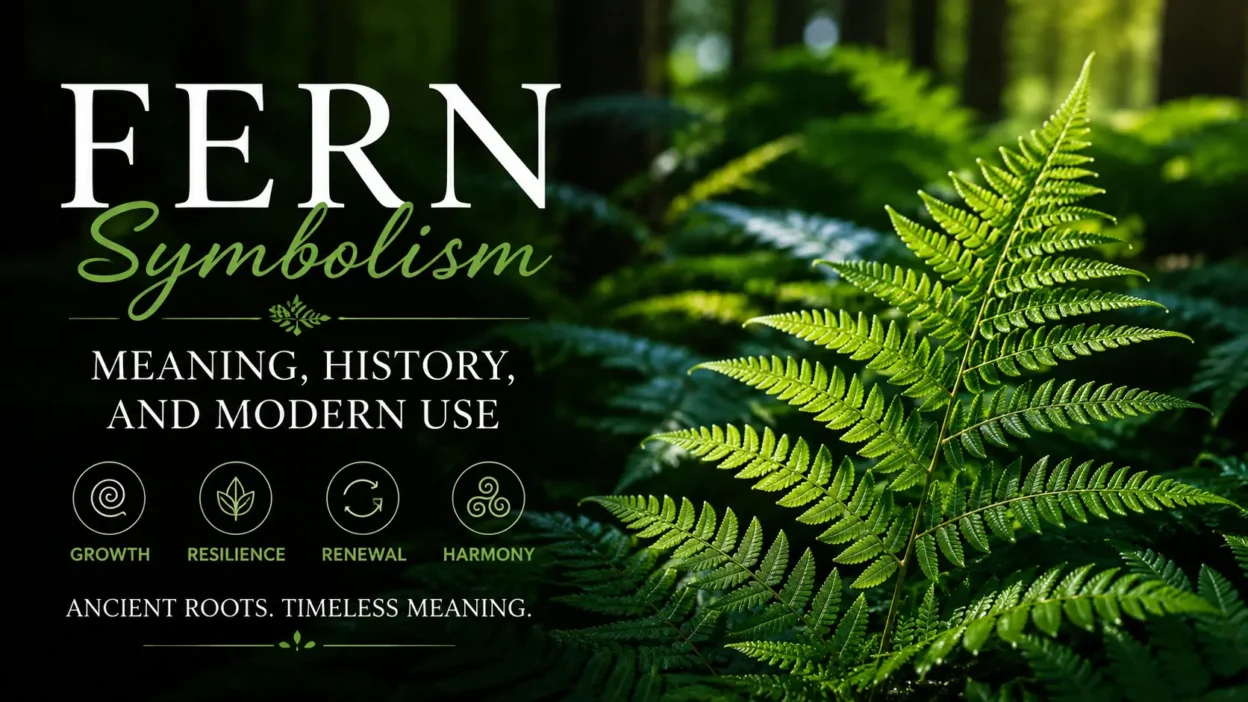
Ferns are among the oldest living plants on Earth, thriving in forests, mountains, wetlands, and gardens across the United States. Because they can flourish in shaded places and return year after year, fern symbolism has become closely connected with resilience, renewal, humility, and enduring growth.
Although ferns rarely produce colorful flowers, they have earned lasting cultural importance through their graceful shape, remarkable history, and ability to survive changing environments. Today, Americans encounter ferns in landscaping, home décor, botanical gardens, artwork, tattoos, and outdoor recreation, where they often represent a quiet appreciation for nature and personal growth.
Unlike symbols built around dramatic myths or legends, the fern’s meaning developed through careful observation of the natural world. Its symbolism reflects patience, steady progress, and the idea that strength does not always need to be loud or obvious.
Quick Answer
Fern symbolism most commonly represents resilience, renewal, steady personal growth, and a close connection to nature in modern American culture. Historically, ferns have also been associated with protection, humility, fertility, hidden knowledge, and good fortune in various cultural traditions.
TL;DR
- Represents resilience and quiet endurance.
- Symbolizes renewal through continual growth.
- Reflects harmony with the natural world.
- Used in tattoos and botanical-inspired design.
- Historically linked with protection and folklore.
- Modern meaning emphasizes personal growth.
What a Fern Is and Why It Became Symbolic
A fern is a non-flowering vascular plant recognized by its feathery fronds and distinctive unfurling leaves, known as fiddleheads. Unlike flowering plants, ferns reproduce through spores rather than seeds, making them one of the oldest surviving plant groups on Earth.
This ancient origin has contributed greatly to their symbolism. Many people view ferns as living reminders that life can adapt and continue across enormous spans of time. Their ability to thrive in forests, rocky hillsides, and shaded landscapes reinforces ideas of persistence and flexibility.
Their elegant appearance also makes them symbols of understated beauty. Rather than demanding attention with bright blooms, ferns create calm, textured landscapes that encourage reflection and appreciation of nature.
The Core Meaning of Fern Symbolism Today
In the United States, the fern most commonly symbolizes steady growth rather than sudden transformation. It reflects the belief that meaningful progress often happens gradually through patience, resilience, and consistency.
Several symbolic meanings appear repeatedly across modern interpretations:
- Renewal after challenges
- Adaptability in changing environments
- Quiet confidence
- Lifelong learning
- Stability through persistence
- Appreciation of nature
Many people choose fern imagery during periods of transition, such as starting a new career, recovering from hardship, or embracing a healthier lifestyle. Instead of representing dramatic change, the fern suggests lasting improvement through small, consistent steps.
Ancient Roots and Early Symbolism
Long before modern botany explained how ferns reproduced, people noticed their unusual growth habits and mysterious lack of flowers. Because spores were invisible to the naked eye, many cultures imagined that ferns possessed hidden or magical qualities.
In parts of Europe, folklore claimed that fern seeds appeared only under extraordinary circumstances and brought wisdom or good fortune to anyone who found them. Although these stories were mythical rather than scientific, they helped establish the fern as a symbol of mystery and unseen possibilities.
Ancient societies also admired the fern’s ability to return every growing season, linking it with renewal and the dependable cycles of nature.
Fern Symbolism in the United States
American interpretations of the fern focus more on nature than folklore. Today, ferns commonly appear in settings that promote relaxation, environmental awareness, and outdoor living.
People often associate ferns with:
- National parks and hiking trails
- Woodland gardens
- Sustainable landscaping
- Cabin and lodge décor
- Wellness spaces
- Botanical conservatories
The popularity of houseplants has also increased appreciation for ferns. Their soft green fronds help create peaceful indoor environments, making them symbols of balance, calm, and healthy living.
Rather than representing status or luxury, the fern reflects simplicity and an appreciation for the natural world.
Why Ferns Represent Renewal and Resilience
Few plants demonstrate resilience as clearly as ferns. Many species survive fires, storms, droughts, and changing climates before growing again when conditions improve.
This biological resilience naturally became symbolic.
People often interpret the fern as a reminder that setbacks do not define the future. Like new fronds emerging each season, personal growth often continues after periods of difficulty.
This interpretation makes fern imagery especially meaningful during life changes such as:
- Recovering from illness
- Beginning a new chapter
- Healing after loss
- Building confidence
- Starting over after failure
Instead of suggesting instant recovery, the fern symbolizes gradual healing and lasting strength.
Spiritual and Religious Associations
Although ferns do not occupy a central role in most major religions, they appear in various spiritual traditions as symbols of life, renewal, and creation.
Some Christian communities appreciate evergreen plants, including certain fern species, as reminders of continuing life and God’s enduring creation. The emphasis generally remains on nature rather than formal religious symbolism.
In some Indigenous traditions, local fern species have practical and cultural importance connected with healing, food, and respect for the environment. Because traditions vary widely among Native American nations, there is no single universal religious interpretation.
Across many spiritual perspectives, the fern represents living in harmony with the natural world rather than supernatural power.
Cross-Cultural Meanings Around the World
Different cultures have developed unique interpretations of ferns while sharing several common themes.
| Context | Meaning in the USA | Common Associations | Notes |
|---|---|---|---|
| Nature | Renewal | Forests, gardens | Most common interpretation |
| Personal growth | Resilience | Recovery, patience | Popular modern meaning |
| European folklore | Hidden fortune | Fern seed legends | Symbolic rather than literal |
| Japan | Family continuity | Traditional crests | Represents prosperity and growth |
| Victorian era | Sincerity | Botanical art | Reflected fascination with nature |
These varying traditions demonstrate how a single plant can acquire different meanings while consistently representing life, endurance, and natural beauty.
Emotional and Psychological Meaning
Psychologically, ferns often communicate emotional stability and inner resilience.
Unlike symbols associated with excitement or dramatic emotion, the fern encourages feelings of:
- Peace
- Security
- Patience
- Reflection
- Hope
- Emotional balance
Its soft texture and layered greenery create a calming visual effect, which explains why fern imagery is frequently used in meditation spaces, wellness branding, and therapeutic environments.
For many people, the fern represents confidence that develops quietly over time rather than through dramatic achievements.
Why Ferns Appear in Tattoos and Personal Style
Fern tattoos have become increasingly popular because they carry positive meanings without being overly elaborate.
A fern tattoo often symbolizes:
- Personal growth
- Survival through hardship
- Love of nature
- Simplicity
- Independence
- New beginnings
Some designs feature a single unfurling fiddlehead to represent life’s continual unfolding. Others use full fronds to express maturity, stability, or appreciation for forests and outdoor adventures.
Fern-inspired jewelry, scarves, home décor, and clothing similarly communicate an affinity for nature and understated elegance.
Ferns in Art, Design, and Home Décor
Interior designers frequently use fern patterns because they create a feeling of freshness without overwhelming a space.
Fern motifs appear in:
- Wallpaper
- Botanical prints
- Ceramic pottery
- Textile patterns
- Furniture accents
- Garden architecture
The Victorian era saw an especially strong fascination with ferns, sometimes called “fern fever.” Botanical illustrations, pressed fern collections, and decorative motifs became fashionable throughout homes and public spaces.
Modern design continues this tradition by using fern imagery to evoke tranquility, sustainability, and organic beauty.
Fern Symbolism in Digital Culture and Modern Media
Although ferns receive less attention than roses or sunflowers on social media, they have developed a distinct place within contemporary visual culture.
Lifestyle creators, hikers, photographers, and gardeners often use fern imagery to communicate:
- Mindful living
- Outdoor exploration
- Environmental awareness
- Slow living
- Personal renewal
The plant also appears in branding for eco-friendly products, wellness companies, spas, and sustainable businesses because its appearance immediately suggests freshness and natural balance.
Rather than becoming a trendy symbol that changes quickly, the fern has maintained a consistent reputation for authenticity and calm.
Common Misunderstandings About Fern Symbolism
One misunderstanding is that all fern symbolism comes from magical folklore. While legends about invisible fern seeds are historically interesting, they represent only one small part of the plant’s symbolic history.
Another misconception is that ferns symbolize secrecy or hidden magic above everything else. In contemporary American culture, resilience, renewal, and connection with nature are far more common interpretations.
It is also inaccurate to assume every culture views ferns identically. Meanings vary across regions, religions, and historical periods, even though many traditions appreciate the fern’s enduring life cycle.
How the Meaning of Ferns Has Changed Over Time
Early interpretations often focused on mystery because people did not understand how ferns reproduced. Invisible spores encouraged stories about magical seeds and hidden powers.
As scientific understanding grew, symbolism gradually shifted toward observable qualities such as longevity, adaptation, and ecological importance.
Today, Americans generally see the fern as a practical symbol of resilience rather than superstition. Its image reflects appreciation for nature, sustainable living, emotional balance, and personal growth.
This evolution shows how symbolism changes alongside cultural knowledge while preserving meaningful connections to the past.
Frequently Asked Questions
What does a fern symbolize?
A fern most commonly symbolizes resilience, renewal, patience, and a lasting connection with nature. Its ability to grow steadily in changing environments makes it a popular symbol of quiet strength and personal growth.
Is a fern a good tattoo symbol?
Yes. Many people choose fern tattoos to represent overcoming challenges, starting a new chapter, or maintaining balance in life. The design is versatile and carries positive meanings without relying on dramatic imagery.
Does the fern have religious meaning?
The fern is not a central religious symbol in most major faiths, but it is sometimes associated with continuing life, creation, and respect for nature. Some cultural and Indigenous traditions also value local fern species for practical and ceremonial reasons.
Why is the fern connected with good luck?
European folklore included stories about rare fern seeds bringing fortune or wisdom. While these legends are not based on science, they influenced later symbolic interpretations that associated ferns with opportunity and hidden blessings.
What does a fern represent in American culture?
In the United States, the fern usually represents resilience, peaceful living, environmental appreciation, and steady personal development. It appears frequently in gardens, interior design, botanical art, and outdoor recreation.
Are ferns considered positive or negative symbols?
They are overwhelmingly viewed as positive symbols. Most interpretations emphasize endurance, hope, growth, adaptability, and harmony with the natural world rather than fear or bad luck.
Conclusion
The enduring appeal of fern symbolism comes from qualities people can observe in nature itself. Ferns survive, adapt, and continue growing in environments where many other plants struggle, making them fitting symbols of resilience, renewal, patience, and lasting strength.
While folklore once emphasized mystery, modern American culture values the fern for its connection to nature, emotional balance, and steady personal growth. Whether found in woodland landscapes, tattoos, botanical artwork, or home décor, the fern continues to remind people that meaningful progress often happens quietly, one season at a time.