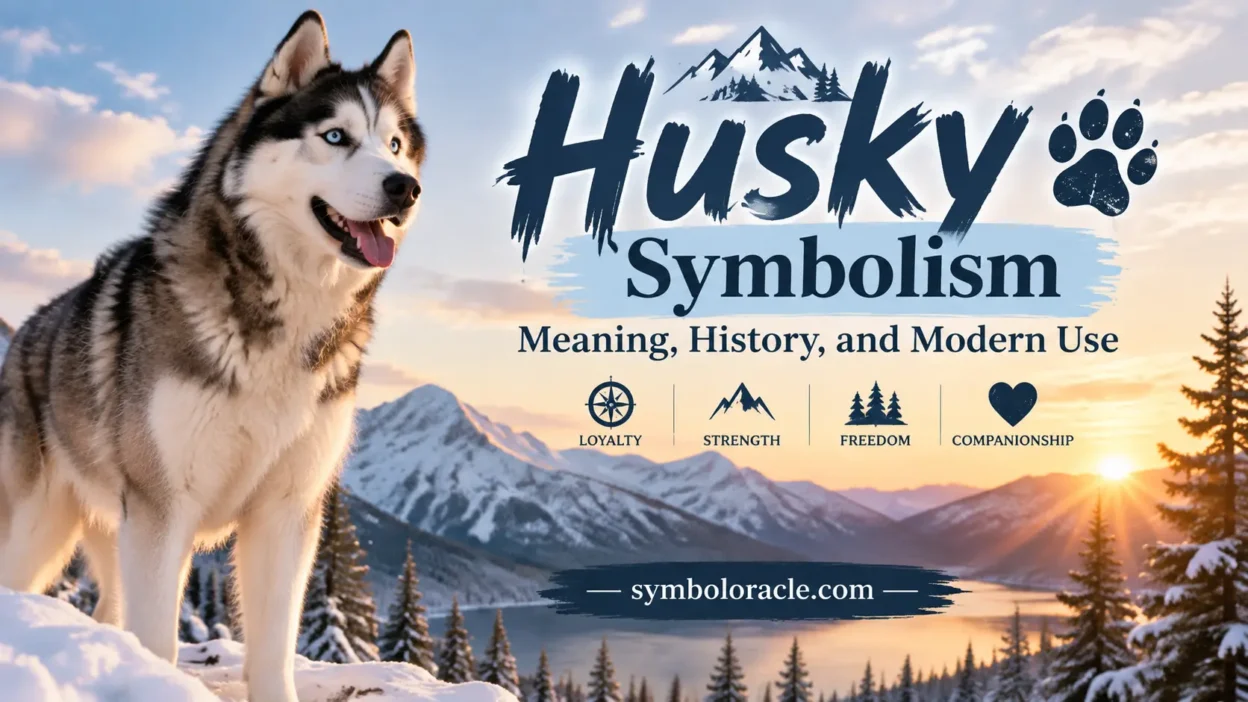
Dogs have long represented human relationships with loyalty, protection, companionship, and trust. Among the many breeds, the husky carries a unique image shaped by its Arctic origins, working history, and distinctive personality. Husky symbolism often connects with independence, endurance, loyalty, intelligence, and the ability to survive challenging conditions.
The Siberian Husky is recognized for its striking appearance, including bright eyes, thick double coats, pointed ears, and wolf-like features. However, its meaning goes beyond appearance. The breed’s history as a sled dog, companion, and working partner has influenced how people understand its symbolic value today.
In the United States, huskies are often associated with adventure, outdoor lifestyles, emotional strength, and a free-spirited personality. They appear in homes, tattoos, artwork, clothing designs, and online communities as symbols of resilience and connection with nature.
Quick Answer
Husky symbolism commonly represents loyalty, endurance, independence, and adventure in modern American culture, especially through its role as a trusted companion and working dog. Historically, huskies have also symbolized survival, teamwork, and human cooperation in Arctic environments.
TL;DR
- Huskies symbolize loyalty, endurance, and independence.
- Their roots come from Arctic working traditions.
- Americans often associate them with adventure.
- Husky tattoos represent freedom and resilience.
- Their wolf-like appearance creates unique symbolism.
- Modern culture celebrates huskies as companions.
What Makes the Husky a Powerful Symbol?
The husky is a medium-sized working dog known for strength, speed, stamina, and social behavior. Unlike many breeds created mainly for guarding or hunting, huskies developed as endurance animals capable of pulling sleds across frozen landscapes.
Their physical features contribute to their symbolic meaning. Thick fur represents adaptation to harsh environments, while their energetic nature suggests movement, exploration, and determination.
The husky’s appearance also creates a connection between domestic dogs and wild animals. Its resemblance to wolves often gives it associations with nature, instinct, and freedom, although huskies are fully domesticated dogs with their own unique history.
The Core Meanings Associated With Husky Symbolism
Different people interpret huskies in different ways, but several meanings appear consistently.
| Context | Meaning in the USA | Common Associations | Notes |
|---|---|---|---|
| Companion animal | Loyalty and friendship | Family bonds, trust | Reflects emotional connection |
| Working dog | Strength and endurance | Teamwork, dedication | Connected to sled traditions |
| Tattoo design | Freedom and resilience | Adventure, identity | Often represents personal journeys |
| Outdoor culture | Exploration and independence | Nature, travel | Popular among adventure communities |
| Online culture | Personality and humor | Playfulness, individuality | Inspired by husky behavior |
The most common symbolic ideas include:
Loyalty: Huskies are social animals that form strong bonds with their human families. Their reputation as devoted companions makes them symbols of trust and friendship.
Endurance: Their ability to travel long distances in extreme climates represents persistence and the willingness to continue despite obstacles.
Independence: Huskies are intelligent and sometimes stubborn, creating an association with confidence, self-direction, and a strong personality.
Adventure: Their connection with snow, mountains, and exploration makes them symbols of discovery and outdoor experiences.
Ancient Roots and Early Arctic Symbolism
The symbolic meaning of huskies begins with the communities that depended on them. Siberian Huskies originated among the Chukchi people of northeastern Siberia, where they were bred for transportation and survival.
These dogs were valued because they could travel long distances while using limited energy. They helped families move supplies, travel across frozen landscapes, and maintain connections between distant communities.
In Arctic societies, sled dogs were not simply tools. They were important partners in daily life. Their intelligence, cooperation, and ability to handle difficult conditions created respect and appreciation.
The husky’s early symbolism developed from this relationship: survival through cooperation, strength through teamwork, and adaptation to a demanding environment.
How Huskies Became Symbols in American Culture
The husky gained wider recognition in the United States during the early 20th century, especially through sled dog racing and Arctic exploration.
One of the most famous examples was the 1925 serum run to Nome, Alaska, when sled dogs helped transport medicine during a diphtheria outbreak. The event strengthened the public image of sled dogs as courageous and dependable.
Today, Americans often connect huskies with Alaska, winter landscapes, outdoor recreation, and adventure. They are popular among people who enjoy hiking, camping, and active lifestyles.
The breed also appears frequently in family homes, where its symbolism shifts from survival and work toward companionship and emotional connection.
The Husky as a Symbol of Loyalty and Friendship
Many people associate huskies with loyalty because of their close relationships with humans.
Unlike guard dogs that symbolize protection through strength, huskies often represent partnership. They are known for enjoying social interaction and being closely connected with their owners.
In American culture, this makes the husky a symbol of:
- Friendship
- Family connection
- Emotional support
- Trust between humans and animals
For many owners, a husky represents a relationship built on patience, communication, and mutual respect.
Why Huskies Represent Strength and Endurance
A husky’s history explains why endurance is one of its strongest symbolic meanings.
These dogs were developed to run long distances in cold environments while maintaining energy efficiency. Their role required physical ability, focus, and cooperation.
Because of this background, people often use husky imagery to represent overcoming difficulties. A husky may symbolize someone who continues moving forward even when circumstances are challenging.
This interpretation appears frequently in personal artwork, motivational designs, and tattoos.
The Connection Between Huskies and Freedom
Huskies are often linked with freedom because of their association with wilderness and open landscapes.
Their energetic personality, love of movement, and connection with snowy environments create an image of a creature that belongs outdoors. This does not mean huskies represent isolation; instead, they often symbolize independent thinking while remaining connected to a group.
In modern American culture, the husky can represent:
- A desire for exploration
- Personal independence
- A connection with nature
- Breaking away from limitations
Husky Symbolism in Tattoos and Personal Identity
Husky tattoos are popular among people who want to express certain personality traits or life experiences.
Common meanings include:
- Loyalty to loved ones
- Love for animals
- Personal strength
- Adventure and travel
- Connection with nature
A realistic husky tattoo may focus on companionship, while a more artistic design may emphasize freedom or wilderness.
Some people choose husky imagery because the animal represents qualities they admire or want to develop in themselves.
Emotional and Psychological Meaning of the Husky
Animals often become symbols because people connect their traits with human experiences. Huskies frequently represent emotional qualities such as resilience, curiosity, and social connection.
Their playful behavior can symbolize joy and energy. Their determination can represent persistence. Their need for companionship can reflect the importance of relationships.
For some people, a husky also represents comfort after loss, especially when connected to a beloved pet. Pet memorial artwork often uses dogs as symbols of lasting emotional bonds.
Husky Symbolism in Home Decor and Design
Husky imagery appears in many forms of home decoration, especially among animal lovers and outdoor enthusiasts.
Common examples include:
- Wall art
- Blankets
- Sculptures
- Clothing designs
- Seasonal decorations
In home spaces, husky images often create feelings of warmth, adventure, and connection with nature.
A husky portrait may represent a household’s love for animals or remind people of a favorite companion.
Cross-Cultural Meanings of Sled Dogs and Huskies
While modern husky symbolism is especially strong in North America, sled dogs have meaningful roles in other regions.
In Arctic cultures, working dogs have traditionally represented cooperation between humans, animals, and the environment. Their importance comes from practical survival relationships rather than symbolic decoration alone.
In many cultures, dogs broadly represent loyalty and protection. However, the husky’s specific connection with cold climates and endurance gives it a distinctive identity.
The Wolf-Like Appearance and Common Misunderstandings
One reason huskies attract symbolic attention is their resemblance to wolves.
This appearance often leads people to associate huskies with wildness, instinct, and ancient nature. However, this comparison can create misunderstandings.
Huskies are not wolves. They are domesticated dogs with generations of breeding focused on cooperation with humans.
The wolf-like appearance is mainly a visual association. The true symbolism of the husky comes from its history, behavior, and relationship with people.
Controversies and Misuse of Husky Symbolism
Husky symbolism is generally positive, but some interpretations can oversimplify the breed.
A common misunderstanding is viewing huskies only as symbols of wild freedom. In reality, they require attention, training, exercise, and responsible ownership.
Another issue comes from treating the breed as an aesthetic symbol without understanding its needs. Their popularity has sometimes led people to adopt huskies because of appearance while underestimating their active nature.
Respecting the animal’s real characteristics creates a more accurate understanding of its symbolism.
How Husky Meaning Has Changed Over Time
The meaning of huskies has evolved from practical survival partners to cultural icons.
Originally, they represented transportation, teamwork, and survival in Arctic environments. Later, they became symbols of exploration and courage through sled races and historical events.
Today, huskies represent a mixture of meanings:
- Loyal companion
- Adventure partner
- Independent spirit
- Resilient survivor
- Connection with nature
Their symbolism continues changing as people develop new relationships with animals.
Modern Use of Husky Symbolism in Digital Culture
Huskies have become especially popular online because of their expressive faces and playful personalities.
Social media has transformed huskies into symbols of humor, personality, and everyday companionship. Photos and videos often highlight their intelligence, stubbornness, and emotional expressions.
In digital spaces, huskies commonly represent:
- Fun personality
- Individuality
- Animal appreciation
- Positive emotions
Their online popularity has expanded their symbolic meaning beyond traditional working-dog associations.
Frequently Asked Questions
What does a husky symbolize spiritually?
A husky can symbolize loyalty, endurance, connection with nature, and personal strength. Spiritual interpretations vary, but many people view animals as reflections of qualities they admire.
What does a husky tattoo symbolize?
A husky tattoo often represents loyalty, adventure, resilience, or a strong bond with a pet. The meaning depends on the person’s experience and design choice.
Are huskies considered symbols of freedom?
Yes, many people associate huskies with freedom because of their connection to wilderness, movement, and exploration. However, they are also symbols of companionship and teamwork.
Why are huskies connected with Alaska?
Huskies became strongly associated with Alaska because of sled racing, transportation history, and events involving sled dogs in harsh conditions.
Do huskies symbolize loyalty?
Yes. Their close relationship with humans and teamwork in sled groups make loyalty one of their most recognized symbolic meanings.
What is the difference between husky and wolf symbolism?
Wolf symbolism often focuses on wilderness, instinct, and independence, while husky symbolism emphasizes partnership, endurance, and human connection.
Conclusion
The meaning of husky symbolism comes from a combination of history, behavior, and human relationships with these remarkable dogs. From Arctic working traditions to modern American homes, huskies represent loyalty, endurance, adventure, and connection.
Although their appearance may suggest wildness, their strongest meaning comes from cooperation with people. Huskies remind us that strength can exist alongside friendship, and independence can still include meaningful bonds.
Today, the husky remains a symbol of resilience, companionship, and the desire to explore both the world around us and our own personal journeys.