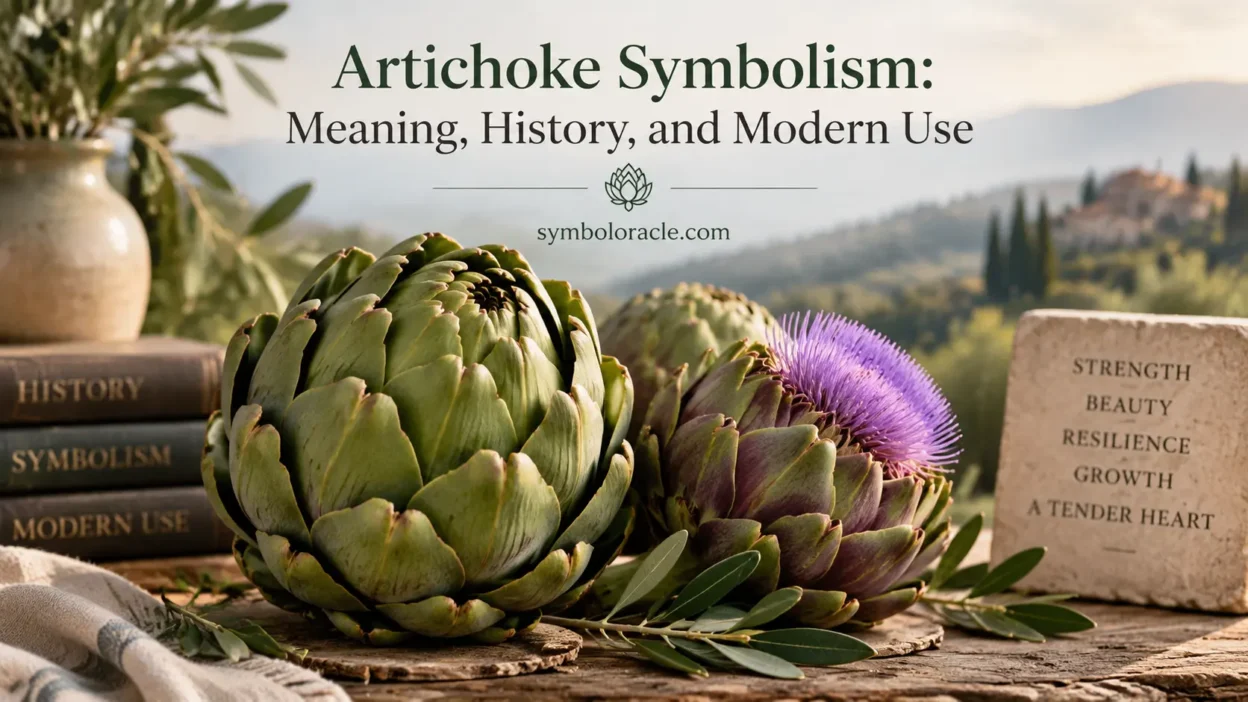
Artichoke symbolism reflects ideas of protection, personal growth, patience, and discovering hidden value beneath the surface. Although the artichoke is best known in the United States as a distinctive vegetable enjoyed in cooking, its layered structure has also inspired cultural interpretations about identity, resilience, and emotional openness.
The artichoke is unusual because its most valuable part is hidden beneath many tough outer leaves. This physical quality has encouraged people to view it as a reminder that meaningful qualities often require time, care, and understanding to discover. In modern American culture, the artichoke appears in food traditions, artwork, tattoos, home design, and personal expressions connected to strength and authenticity.
Quick Answer
Artichoke symbolism commonly represents protection, growth, patience, and hidden beauty in modern American culture, especially in personal design and lifestyle choices. Historically, it has been connected with abundance, hospitality, and the value of uncovering what lies beneath the surface.
TL;DR
- Artichokes symbolize protection and personal boundaries.
- Layers represent growth, patience, and discovery.
- Ancient cultures valued artichokes as signs of abundance.
- Americans connect artichokes with food and hospitality.
- Tattoos often represent resilience and individuality.
What the Artichoke Looks Like and Why Its Form Matters
The artichoke is a flowering plant with a round shape covered by overlapping green leaves called bracts. The edible portion sits inside the protective layers, while the mature flower can develop into a striking purple bloom.
This structure plays an important role in its symbolism. Unlike flowers that immediately reveal their beauty, the artichoke keeps its inner value hidden. The process of removing each layer before reaching the heart has become a common metaphor for understanding personality, emotions, and personal development.
Many symbolic interpretations come directly from this natural design. The outer leaves suggest defense and protection, while the tender heart represents honesty, vulnerability, and the qualities people reveal only when they feel comfortable.
What Artichokes Commonly Mean in the United States
In the United States, artichokes are most strongly associated with nourishment, hospitality, and appreciation for simple but distinctive experiences. They are especially connected with food culture in regions where Mediterranean cooking traditions became popular.
Symbolically, Americans often interpret the artichoke through the idea that appearances can be misleading. A person or situation may seem difficult to understand at first, but patience can reveal valuable qualities underneath.
Common meanings include:
| Context | Meaning in the USA | Common Associations | Notes |
|---|---|---|---|
| Personal growth | Discovering hidden qualities | Patience, maturity | Layers represent life experiences |
| Food culture | Hospitality and sharing | Family meals, gatherings | Often linked with Mediterranean cuisine |
| Tattoos | Strength behind protection | Identity, resilience | Personal meanings vary |
| Home design | Natural beauty | Organic style, abundance | Used in decorative patterns |
| Relationships | Emotional openness | Trust, understanding | Symbolizes revealing the inner self |
The artichoke rarely carries a single fixed meaning. Instead, its symbolism depends on the situation where people use it.
Ancient Roots and Early Symbolic Associations
The artichoke has roots in Mediterranean agriculture, where related plants were cultivated thousands of years ago. Ancient societies valued similar thistle-like plants for food, medicine, and cultivation.
Greek and Roman cultures developed traditions around cultivated artichokes and related plants. In these societies, certain plants represented fertility, abundance, and prosperity because successful farming reflected stability and wealth.
Artichokes also gained associations with luxury because they were not always considered ordinary food. Their preparation required effort, and their availability could reflect social status and celebration.
Over time, the artichoke moved from a cultivated delicacy into a broader cultural symbol connected with nourishment and appreciation.
How Layers Became a Symbol of Personal Growth
The most recognizable symbolic feature of the artichoke is its layers. Each leaf must be removed carefully before reaching the heart, creating a natural comparison to human experiences.
People often use the artichoke as a metaphor for:
- learning from life experiences
- developing emotional strength
- protecting personal boundaries
- revealing true character gradually
This interpretation appears frequently in modern conversations about relationships and self-development. Someone described as “having layers” is often viewed as complex rather than difficult.
The artichoke suggests that understanding people requires patience. The valuable parts of personality may not appear immediately.
Protection and Emotional Boundaries
The artichoke’s tough outer leaves create a strong connection with protection symbolism. The plant protects its inner edible center from outside conditions, similar to how people create emotional boundaries.
In modern psychological discussions, boundaries are often viewed as healthy forms of self-care. The artichoke can represent the idea that protecting oneself does not mean being closed off forever.
Its symbolism creates a balance:
- outer leaves represent defense
- inner heart represents openness
- the process represents trust
This makes the artichoke a meaningful symbol for people who value both independence and emotional connection.
Artichoke Symbolism in American Food Culture
Food symbolism plays an important role in American traditions, and artichokes have developed a strong association with sharing and hospitality.
In the United States, artichokes are commonly found in:
- family dinners
- restaurant menus
- holiday appetizers
- Mediterranean-inspired cooking
The preparation of an artichoke often encourages people to slow down and participate in the meal experience. Unlike foods eaten quickly, artichokes require attention and interaction.
Because of this, the plant can symbolize connection, conversation, and enjoying experiences rather than rushing through them.
Cross-Cultural Meanings of the Artichoke
Although modern symbolism varies, artichokes have appeared in different cultural contexts connected with agriculture, beauty, and abundance.
Mediterranean cultures often associate the plant with:
- seasonal harvests
- agricultural success
- culinary tradition
European artistic traditions sometimes included plants like artichokes in decorative designs representing prosperity and natural richness.
These meanings differ from modern personal symbolism, but they share a common idea: the artichoke represents something valuable that requires appreciation.
Emotional and Psychological Meaning of the Artichoke
The artichoke can represent several emotional themes because of its unique structure.
Resilience
The protective leaves suggest the ability to survive challenges while maintaining inner value.
Authenticity
The hidden heart represents qualities that become visible only through genuine understanding.
Patience
The process of reaching the center reminds people that meaningful results often require time.
Self-Respect
The outer layers can symbolize healthy protection rather than emotional isolation.
These interpretations explain why the artichoke appeals to people who see personal identity as something developed through experience.
Why Artichokes Appear in Tattoos and Personal Style
Artichoke tattoos are less common than symbols like roses or butterflies, which makes them appealing to people who want a more unusual design.
People may choose an artichoke tattoo to represent:
- overcoming difficult experiences
- protecting personal identity
- embracing complexity
- valuing inner qualities
The design can be adapted in many ways. Some tattoos highlight realistic botanical details, while others use simple outlines or artistic interpretations.
Unlike symbols with universally recognized meanings, an artichoke tattoo usually carries a personal story connected to the wearer.
Artichoke Symbolism in Art, Fashion, and Home Decor
The artichoke’s shape makes it visually interesting for creative fields. Its repeated layers create patterns that work well in illustrations, textiles, and decorative objects.
In home design, artichoke-inspired imagery may suggest:
- natural living
- organic beauty
- connection with gardening
- appreciation for craftsmanship
Artists may use the artichoke because it combines strength and softness. The outer structure appears protective, while the interior suggests warmth and value.
Its unusual appearance allows it to stand apart from more traditional floral symbols.
Modern Digital Culture and Identity Symbolism
Online culture has expanded how people use everyday objects as symbols of personality. The artichoke can appear in social media posts, illustrations, and lifestyle branding connected with food, creativity, and individuality.
Because the plant represents hidden qualities, it fits conversations about:
- personal journeys
- self-discovery
- authenticity
- accepting complexity
It is also sometimes used humorously because the artichoke is visually unusual and has a distinctive preparation process.
Digital interpretations often combine traditional meanings with modern personal expression.
Common Misunderstandings About Artichoke Symbolism
Artichoke symbolism is sometimes exaggerated or assigned meanings without historical support. Not every interpretation found online represents a traditional cultural belief.
Some people assume the artichoke has a universal spiritual meaning, but its symbolism depends heavily on context. Its strongest associations come from its physical qualities, agricultural history, and cultural use.
The artichoke should not be treated as a fixed symbol with one official definition. Like many natural symbols, its meaning changes based on personal experience and cultural setting.
How Artichoke Meaning Has Changed Over Time
The artichoke began mainly as a cultivated food plant valued for agriculture and cuisine. Over time, people expanded its meaning beyond practical use.
Earlier associations focused on:
- harvest
- abundance
- culinary value
Modern interpretations focus more on:
- personal identity
- emotional protection
- growth
- discovering hidden qualities
This shift reflects a broader cultural pattern where ordinary objects become symbols for human experiences.
Positive and Negative Interpretations of the Artichoke
Most artichoke symbolism is positive, but some interpretations recognize possible challenges.
Positive meanings include:
- resilience
- patience
- protection
- authenticity
- abundance
Less positive interpretations may include:
- emotional guardedness
- difficulty opening up
- appearing complicated
These meanings are not negative in every situation. Protection can be valuable, but excessive barriers may prevent connection.
The symbol often represents finding balance between protecting oneself and allowing others to understand who someone truly is.
Frequently Asked Questions
What does artichoke symbolism represent?
Artichoke symbolism commonly represents protection, patience, personal growth, and discovering hidden qualities. Its layered structure creates a connection between outer defenses and inner value.
What does an artichoke tattoo mean?
An artichoke tattoo often represents resilience, individuality, and personal experiences that shaped someone’s identity. The meaning usually depends on the person wearing the design.
Is the artichoke a spiritual symbol?
The artichoke does not have one universal religious meaning. Some people use it spiritually as a personal symbol of growth, protection, or inner discovery.
Why does the artichoke represent hidden beauty?
The artichoke represents hidden beauty because its edible heart remains covered beneath many protective layers. This creates a metaphor for discovering valuable qualities over time.
What does an artichoke symbolize in American culture?
In American culture, the artichoke is often connected with food traditions, hospitality, creativity, and appreciating things that require patience.
Can artichokes symbolize strength?
Yes. The protective outer leaves can represent strength and resilience, while the inner heart represents the ability to remain valuable despite challenges.
Conclusion
The artichoke represents more than a unique vegetable. Its layered structure has encouraged people to see it as a symbol of protection, patience, growth, and the value hidden beneath appearances.
In modern American culture, artichoke symbolism appears in food traditions, artwork, tattoos, and personal expressions because it reflects a familiar human experience: understanding that meaningful qualities often take time to discover. Like the plant itself, people can have protective layers while still holding something valuable within.


