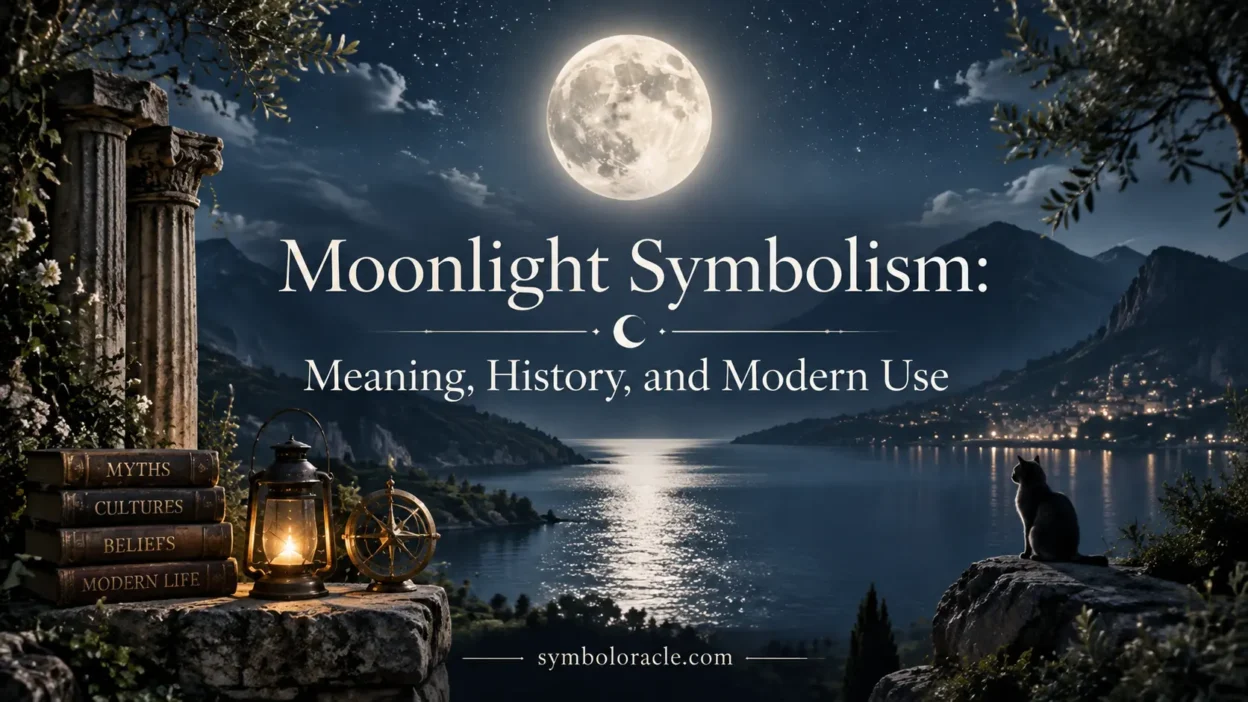
Moonlight symbolism represents the meanings people connect with the soft light reflected from the moon, including calmness, reflection, mystery, romance, and emotional connection. In modern American culture, moonlight often appears in art, photography, literature, tattoos, and personal spaces because it creates a feeling of quiet beauty and nighttime reflection.
Unlike sunlight, which is commonly linked with energy, visibility, and action, moonlight is associated with subtle experiences such as imagination, emotions, dreams, and inner thought. Its changing appearance across the lunar cycle has also made it a symbol of change, renewal, and the passage of time.
People have looked at the moon for thousands of years to understand seasons, navigation, celebrations, and human experiences. Today, moonlight continues to appear in American culture as a symbol of peaceful moments, personal growth, creativity, and connection with nature.
Quick Answer
Moonlight symbolism commonly represents peace, reflection, emotional awareness, and imagination in modern American culture, especially in art, personal expression, and design. Historically, moonlight has also been connected with cycles of change, spiritual traditions, storytelling, and humanity’s relationship with the natural world.
TL;DR
- Moonlight represents calmness, reflection, and emotional balance.
- Ancient cultures linked moonlight with cycles and renewal.
- Americans often view moonlight as romantic and peaceful.
- Artists use moonlight to express mystery and imagination.
- Tattoos often connect moonlight with personal transformation.
What Moonlight Represents in Modern American Culture
In the United States, moonlight is often viewed as a symbol of quiet moments and emotional reflection. Many people associate a moonlit scene with relaxation, creativity, romance, or a pause from everyday stress.
Moonlight appears frequently in American photography, movies, and paintings because it creates a softer atmosphere than daylight. A full moon over a lake, a moonlit forest, or a person walking under the night sky often suggests thoughtfulness, independence, or a connection with nature.
Modern interpretations usually focus less on supernatural ideas and more on personal meaning. Someone may choose moonlight imagery because it represents finding peace during difficult periods, embracing change, or appreciating beauty in ordinary moments.
The Physical Appearance and Natural Meaning of Moonlight
Moonlight is not its own light source. It is sunlight reflected from the surface of the moon and reaching Earth during nighttime hours. Because the moon reflects light differently depending on its position, moonlight changes in brightness and appearance throughout the lunar cycle.
A bright full moon can create a dramatic landscape, while a thin crescent moon may produce a softer and more delicate image. These natural changes influence why people connect moonlight with transformation and different stages of life.
The gentle quality of moonlight also creates a contrast with the brightness of daytime. This difference has helped shape its association with quieter emotions, imagination, and hidden aspects of human experience.
Ancient Roots and Early Symbolism of Moonlight
Ancient societies often depended on the moon for measuring time, planning agriculture, and understanding seasonal changes. Because moonlight helped people travel and work after sunset, many cultures developed stories and traditions around the moon and its light.
In ancient Greece and Rome, the moon was connected with lunar deities who represented different aspects of nature, protection, and cycles. In many traditions, the moon’s changing phases represented birth, growth, decline, and renewal.
Ancient agricultural communities also noticed the relationship between lunar cycles and farming practices. As a result, moonlight became connected with fertility, timing, and natural rhythms.
The symbolic meaning developed from practical observation. People saw the moon change regularly and connected those changes with human experiences such as aging, recovery, and personal transformation.
Moonlight Symbolism in Mythology and Folklore
Moonlight plays an important role in mythology and folklore because nighttime has traditionally been a setting for stories about exploration, imagination, and the unknown.
In many European folktales, moonlit forests and landscapes became places where magical creatures, legends, and mysterious events were imagined. These stories helped create an association between moonlight and fantasy.
In East Asian traditions, the moon often carries themes of beauty, family connection, and reflection. Lunar celebrations have used the moon as a symbol of togetherness and seasonal awareness.
Native American traditions include many different tribal interpretations of the moon, often connecting lunar cycles with nature, timekeeping, animals, and community traditions. These meanings vary among nations and should not be treated as one single interpretation.
Religious and Spiritual Interpretations of Moonlight
Many religions and spiritual traditions have used moonlight as a symbol because of its connection with cycles, guidance, and the natural world.
In some Christian artwork and traditions, moon imagery can represent reflection, purity, or the relationship between light and darkness. Because moonlight reflects another source of light, some interpretations connect it with ideas of guidance and receiving wisdom.
In Islamic traditions, the moon has cultural and religious importance, especially in determining months and major occasions. The crescent moon is widely recognized as a symbol connected with Islamic identity, although practices and interpretations vary.
In broader spiritual communities, moonlight is often associated with meditation, emotional awareness, and personal reflection. These modern meanings are usually based on individual interpretation rather than one universal belief.
The Emotional and Psychological Meaning of Moonlight
Moonlight often creates emotional responses because humans naturally experience nighttime differently from daytime. The softer lighting can create a sense of calm and encourage quiet thinking.
Psychologically, moonlit environments are often connected with imagination and creativity. Writers, musicians, and artists frequently use moonlight scenes to express feelings that are difficult to show directly.
Moonlight can also represent acceptance of uncertainty. Unlike sunlight, which clearly reveals surroundings, moonlight leaves some details hidden. This quality can symbolize curiosity, patience, and the ability to find meaning without having every answer immediately.
Moonlight Symbolism in American Art and Literature
American artists and writers have frequently used moonlight to create emotional settings. It appears in landscape paintings, poetry, novels, and films because it can suggest different moods without requiring words.
In literature, moonlight often appears during moments of personal discovery, romance, loneliness, or important decisions. A character standing under the moon may represent someone thinking deeply or facing change.
Visual artists use moonlight to create contrast between darkness and brightness. The balance between shadow and light allows artists to explore themes such as hope, memory, and human connection.
How Moonlight Appears in Tattoos and Personal Style
Moonlight imagery is popular in tattoo culture because it allows people to express personal stories through a simple natural symbol.
Common moonlight tattoo meanings include:
- personal growth after difficult experiences
- emotional strength
- connection with nature
- love of nighttime and creativity
- acceptance of life changes
Some designs combine moonlight with forests, oceans, flowers, animals, stars, or human figures. Each combination creates a different message. For example, moonlight over water may suggest emotional calm, while moonlight among trees may represent exploration and independence.
Moonlight jewelry and fashion designs often use similar themes. People may choose lunar-inspired pieces because they represent elegance, individuality, or a connection with natural cycles.
Moonlight Symbolism in Home Decor and Design
Moonlight-inspired designs are common in American homes because they create a calm and peaceful atmosphere. Interior designers often use moon images, night sky artwork, silver tones, and soft lighting to create spaces that feel relaxing and reflective.
A moonlit landscape in a bedroom or living area can suggest rest, imagination, and comfort. Unlike bright decorative themes that focus on energy and activity, moon-inspired decor often supports quiet environments where people can relax.
Moonlight themes also appear in candles, wall art, bedding, and nature-inspired decorations. These designs appeal to people who enjoy astronomy, outdoor spaces, fantasy themes, or a peaceful aesthetic.
The meaning usually depends on personal preference. For one person, moonlight decor may represent a love of nature. For another, it may represent memories, creativity, or a peaceful escape from busy routines.
Moonlight Symbolism in Weddings, Romance, and Relationships
Moonlight has long been connected with romance because nighttime settings often create feelings of intimacy and privacy. In American culture, moonlit walks, outdoor weddings, and evening celebrations often use moon imagery to create a sentimental atmosphere.
A moonlit scene can represent emotional connection because it is associated with quiet conversations, shared memories, and meaningful moments away from daily distractions.
In wedding symbolism, moonlight may represent commitment through changing life stages. Since the moon moves through different phases, some couples interpret it as a reminder that relationships continue to grow and change over time.
However, moonlight is not only a romantic symbol. Many people also connect it with friendship, family memories, or personal reflection.
The Role of Moonlight in Pop Culture and Digital Media
Moonlight remains a common visual element in movies, television, music, and online content. Filmmakers often use moonlit scenes to create specific emotions, from romance and peacefulness to suspense and mystery.
In fantasy and science fiction, moonlight often creates a connection between ordinary life and imaginative worlds. In music videos and digital artwork, it can represent creativity, emotional expression, or a dreamlike atmosphere.
Social media has also increased the popularity of moon-themed visuals. Images of moonlit skies, nighttime photography, and lunar designs are often shared because they communicate calmness, beauty, and personal mood.
Modern digital culture usually presents moonlight as an aesthetic symbol rather than a fixed traditional meaning. People adapt it to express their own feelings and identities.
Moonlight and Color Symbolism
The colors connected with moonlight influence how people interpret its meaning. Silver, white, blue, and gray are commonly associated with lunar imagery.
| Context | Meaning in the USA | Common Associations | Notes |
|---|---|---|---|
| Silver moonlight | Elegance and reflection | Jewelry, art, design | Often linked with a clean and modern style |
| Blue moonlit scenes | Calm and imagination | Photography, movies | Creates a peaceful nighttime mood |
| White moonlight | Purity and clarity | Spiritual art, decor | Often represents guidance or simplicity |
| Dark moon settings | Mystery and exploration | Literature, fantasy | Focuses on the unknown and curiosity |
Color interpretation depends on the situation. A moonlit scene in a horror movie may create tension, while the same colors in home decor may create relaxation.
Positive and Negative Interpretations of Moonlight
Moonlight usually carries positive meanings, but its symbolism can change depending on cultural context and personal experience.
Positive interpretations include:
- peace during difficult times
- creativity and imagination
- emotional understanding
- natural beauty
- personal transformation
Some darker interpretations come from older folklore, where nighttime was associated with uncertainty or danger. Stories about mysterious creatures or supernatural events often used moonlight as a setting because darkness naturally creates suspense.
These associations do not mean moonlight itself represents something negative. Instead, they show how the same symbol can communicate different ideas depending on the story, culture, or situation.
Common Misunderstandings About Moonlight Symbolism
One common misunderstanding is that moonlight has one universal meaning. In reality, its symbolism changes across cultures, religions, and personal experiences.
Another misconception is that every moon-related symbol has a spiritual meaning. While some traditions use moon imagery for religious or spiritual purposes, many modern uses are simply artistic, emotional, or decorative.
Moonlight tattoos, artwork, and designs do not automatically reveal someone’s beliefs or personality. The meaning usually comes from the individual’s personal connection with the image.
Understanding moonlight symbolism requires looking at context rather than assuming a single explanation.
How Moonlight Symbolism Has Changed Over Time
The meaning of moonlight has evolved as societies changed. Early communities often viewed the moon through practical needs such as farming, navigation, and tracking time.
Later traditions added mythology, religion, literature, and artistic interpretations. During the Romantic period, writers and artists especially emphasized moonlight as a symbol of emotion, imagination, and natural beauty.
Today, moonlight continues to combine old and new meanings. Americans may appreciate it for its connection to nature, while also using it as a modern symbol of creativity, self-expression, and peaceful living.
Its meaning remains flexible because people continue to attach personal experiences to it.
Frequently Asked Questions About Moonlight Symbolism
What does moonlight symbolize in modern culture?
Moonlight commonly symbolizes peace, reflection, creativity, and emotional awareness in modern culture. Many people associate it with quiet moments, nature, and personal thought rather than a single traditional belief.
What does a moonlight tattoo mean?
A moonlight tattoo can represent personal growth, transformation, creativity, or a connection with nature. The meaning depends on the design and the person’s own experiences.
Is moonlight considered a spiritual symbol?
Moonlight can have spiritual meanings in some traditions, including ideas of guidance, cycles, and reflection. However, many people use moon imagery simply for artistic or emotional reasons.
Why is moonlight associated with romance?
Moonlight is often connected with romance because nighttime creates private and peaceful settings. Literature, movies, and cultural traditions have reinforced its connection with love and meaningful moments.
Does moonlight have a negative meaning?
Moonlight does not have a naturally negative meaning, but some folklore uses moonlit settings to represent mystery or uncertainty. These interpretations usually come from storytelling traditions rather than the symbol itself.
What does moonlight represent in American art?
In American art, moonlight often represents emotion, imagination, nature, and moments of reflection. Artists use it to create mood and highlight the relationship between light and darkness.
Conclusion
Moonlight has remained meaningful because it connects natural observation with human emotions. Its changing appearance, gentle brightness, and relationship with nighttime have allowed people to associate it with reflection, creativity, romance, and personal change.
In modern America, moonlight symbolism appears in art, tattoos, design, literature, and everyday expressions of identity. While its historical meanings come from many cultures, its current interpretation often depends on individual experiences and personal connections.
Moonlight continues to remind people that quiet moments, change, and imagination can hold their own value even when they are not as visible as the daytime world.


