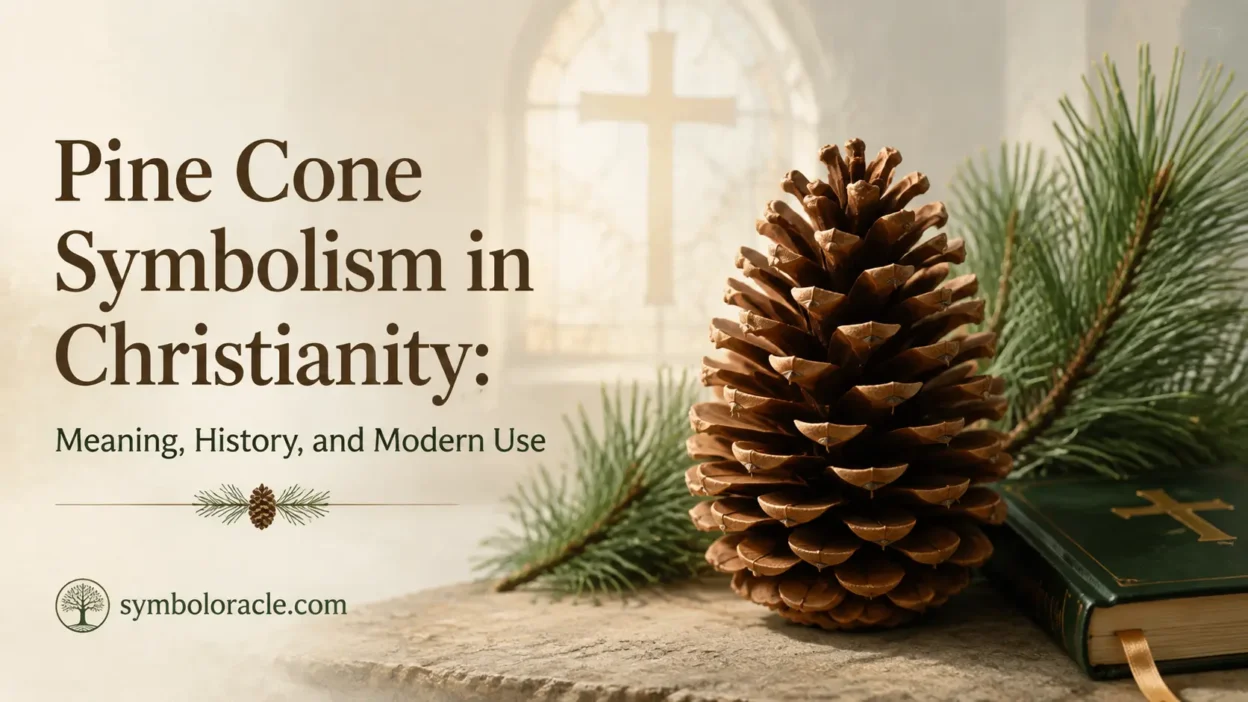
The pine cone symbolism in Christianity is connected with ideas such as spiritual growth, eternal life, renewal, and the unfolding of divine wisdom. Although pine cones are not a central symbol in Christian scripture, they have appeared in Christian art, architecture, and religious traditions because of their connection to evergreen trees and ancient ideas about life that continues beyond death.
People often notice pine cones in church decorations, religious artwork, gardens, and holiday displays without realizing that this small natural object has carried symbolic meanings across different cultures. Its layered structure, connection to pine trees, and ability to release seeds have made it a meaningful image of growth and continuation.
In modern American culture, pine cones are commonly associated with Christmas decorations, nature-inspired design, and seasonal traditions. When used in Christian settings, they often represent themes of faith, renewal, and the hope of everlasting life.
Quick Answer
Pine cone symbolism in Christianity commonly represents spiritual growth, renewal, and eternal life, especially through its connection with evergreen trees and the continuation of life. Historically, pine cones have also been linked with fertility, wisdom, and divine creation in several religious and cultural traditions.
TL;DR
- Pine cones symbolize growth, renewal, and lasting life.
- Evergreen connections shaped Christian interpretations.
- Ancient cultures linked pine cones with creation and wisdom.
- Americans often use pine cones in Christmas traditions.
- Christian art sometimes uses nature symbols for faith.
- Modern meanings focus on hope and renewal.
What a Pine Cone Represents as a Christian Symbol
A pine cone is the seed-bearing structure of pine trees. Its overlapping scales protect seeds until they are ready to spread, creating a natural image of preparation, growth, and continuation.
Within Christian symbolism, these qualities can be connected with spiritual development. Just as a pine cone holds seeds that may become new trees, believers may view it as an image of faith growing and producing new life.
The pine cone is not considered a formal Christian symbol like the cross, dove, or fish. Instead, it is a secondary symbol that gained meaning through artistic traditions and interpretations of nature.
The Connection Between Pine Trees and Eternal Life
The strongest Christian association with pine cones comes from the evergreen nature of pine trees.
Unlike many trees that lose their leaves during winter, evergreen trees remain green throughout the colder months. Early Christians and later European traditions often connected evergreen plants with life continuing through difficult seasons.
This connection became especially visible during Christmas celebrations. Pine branches, wreaths, and trees became reminders of hope, resurrection, and the promise of life beyond physical death.
Because pine cones grow on evergreen trees, they inherited some of these associations with endurance and spiritual continuation.
Ancient Roots of Pine Cone Symbolism Before Christianity
The pine cone had symbolic importance long before Christian traditions used it.
Ancient civilizations connected pine cones with fertility, creation, and the continuation of life. In Mediterranean cultures, pine trees were valued for their ability to survive harsh environments and provide resources.
Some ancient artworks featured pine cones in religious settings. These images often represented ideas related to nature, fertility, and divine power.
When Christianity developed within the broader cultural world of the Mediterranean, some natural symbols continued to appear in art and architecture, although their meanings changed according to Christian beliefs.
Pine Cone Imagery in Christian Art and Architecture
Pine cone designs appear occasionally in Christian-inspired artwork and religious buildings. Artists have used natural objects to communicate spiritual ideas because nature was often viewed as part of God’s creation.
A pine cone’s structure can suggest:
- Growth from small beginnings
- Hidden potential
- The spreading of faith
- Renewal after hardship
In some churches and religious spaces, decorative plants and natural patterns appear around sacred areas. These designs often reflect appreciation for creation rather than representing a specific doctrine.
Why Pine Cones Became Connected With Christmas Traditions
In the United States, pine cones are strongly connected with Christmas decorations.
They appear in:
- Holiday wreaths
- Christmas centerpieces
- Garland arrangements
- Winter-themed home decorations
Their association with Christmas comes from their relationship with evergreen trees. Since Christmas traditions often use evergreens as symbols of life during winter, pine cones naturally became part of seasonal decoration.
For many American Christians, pine cones represent the beauty of creation, family traditions, and the hope associated with the Christmas season.
Symbolism of Pine Cones in Christianity Compared With Other Meanings
| Context | Meaning in the USA | Common Associations | Notes |
|---|---|---|---|
| Christianity | Renewal and eternal life | Faith, hope, spiritual growth | Usually an indirect symbol |
| Christmas traditions | Seasonal celebration | Evergreens, family, winter | Common in home décor |
| Ancient cultures | Creation and fertility | Life cycles, nature | Predates Christianity |
| Modern design | Natural beauty | Warmth, simplicity | Popular rustic decoration |
Spiritual Growth and the Pine Cone’s Meaning
Many Christians interpret natural objects as reminders of spiritual lessons. A pine cone can represent the process of becoming stronger through faith.
Its tightly closed scales may symbolize protection and preparation. When the cone opens and releases seeds, it can represent sharing blessings, wisdom, or faith with others.
This interpretation connects with Christian teachings about personal growth, generosity, and the importance of producing positive results through one’s actions.
The Emotional Meaning of Pine Cone Symbolism
Symbols often gain meaning because they connect with human experiences. Pine cones can create feelings of comfort, stability, and connection with nature.
For many people, pine cones remind them of:
- Childhood holiday memories
- Peaceful forests
- Family gatherings
- Seasonal traditions
- A sense of permanence
In Christian households, these emotions may connect with spiritual ideas such as gratitude, hope, and appreciation for creation.
Pine Cone Symbolism in Modern American Culture
Today, pine cones appear in many areas beyond religious settings.
Americans commonly use pine cones in:
- Rustic home décor
- Fall decorations
- Christmas displays
- Nature photography
- Craft projects
- Seasonal weddings
Their popularity comes from their natural appearance and connection with outdoor life. While many uses are decorative rather than religious, Christian families may still appreciate the symbolic meanings connected with faith and renewal.
Pine Cone Symbolism in Tattoos and Personal Expression
Pine cone tattoos are less common than symbols like crosses, trees, or flowers, but some people choose them because of their personal meanings.
A pine cone tattoo may represent:
- Personal growth
- Family roots
- Connection to nature
- Spiritual renewal
- Endurance through challenges
For Christians, it may serve as a subtle reminder of faith, creation, and the continuation of life.
However, a pine cone tattoo does not automatically indicate a religious belief. Its meaning depends on the individual’s personal experience.
Cross-Cultural Meanings of Pine Cones
Different cultures have interpreted pine cones in various ways.
In some traditions, pine cones represent fertility because they contain seeds that create new life. Others associate them with wisdom, spiritual awareness, or connection between the natural and divine worlds.
These meanings influenced how people viewed pine cones before and after Christianity developed. Modern interpretations often combine older natural symbolism with personal beliefs.
Common Misunderstandings About Pine Cone Symbolism
One misunderstanding is that pine cones are a major biblical symbol. The Bible does not specifically identify pine cones as a religious emblem.
Another misconception is that every pine cone image has a hidden spiritual meaning. Sometimes pine cones are simply decorative elements chosen because they represent nature and seasonal beauty.
Understanding the difference between official Christian teachings and later symbolic traditions helps avoid confusion.
How Pine Cone Meaning Has Changed Over Time
The meaning of pine cones has evolved as cultures changed.
Ancient societies often focused on creation, fertility, and nature’s cycles. Christian traditions later connected evergreen plants with themes of life and renewal. Modern Americans often view pine cones through the lens of holidays, decoration, and personal symbolism.
This evolution shows how symbols can gain new meanings while still carrying traces of earlier interpretations.
FAQ
Is the pine cone mentioned in the Bible?
No, the pine cone is not specifically mentioned as a Christian symbol in the Bible. Its religious meanings developed through later traditions, artwork, and connections with evergreen plants.
What does a pine cone symbolize spiritually?
A pine cone can symbolize growth, renewal, potential, and the continuation of life. Many people connect it with spiritual development because it contains seeds that can create new growth.
Are pine cones a Christian symbol?
Pine cones are not official Christian symbols like the cross or dove. However, they have been used in Christian-inspired art and decorations because of their associations with life and renewal.
Why are pine cones used during Christmas?
Pine cones are used during Christmas because they are connected with evergreen trees, which symbolize life and endurance during winter. They are common in wreaths, decorations, and seasonal displays.
What does a pine cone tattoo mean?
A pine cone tattoo may represent growth, nature, family connections, or personal transformation. Some Christians may choose it as a reminder of renewal and faith.
Do pine cones have meanings outside Christianity?
Yes. Many cultures have connected pine cones with fertility, creation, wisdom, and natural cycles. These meanings existed before Christian interpretations developed.
Conclusion
Pine cone symbolism in Christianity reflects ideas of renewal, spiritual growth, and the continuation of life rather than a direct biblical teaching. Its meaning developed through connections between evergreen trees, nature, and religious traditions that value hope and creation.
In modern America, pine cones remain popular in Christmas decorations, home design, and personal expression. Whether viewed as a faith reminder or simply a symbol of nature’s beauty, the pine cone continues to represent growth, resilience, and the possibility of new beginnings.