
Nature often gives people symbols that connect ordinary experiences with bigger ideas. A rare and visually striking insect can become a reminder of change, beauty, patience, and the short but meaningful moments of life. Comet moth symbolism is connected with transformation, renewal, and the appreciation of fragile natural beauty, while its unusual appearance has also shaped how people view it in art, personal expression, and culture.
The comet moth is known for its long tail-like wings, soft colors, and brief adult life. Because moths naturally move through dramatic life stages, many cultures associate them with growth and personal change. Unlike common moths that are often seen as pests, the comet moth is frequently viewed as a symbol of elegance and natural wonder.
In modern American culture, people encounter moth symbolism in tattoos, artwork, home decor, and nature-inspired designs. The comet moth’s rarity makes it especially appealing to people who connect with ideas of individuality, resilience, and finding beauty in temporary moments.
Quick Answer
Comet moth symbolism commonly represents transformation, personal growth, and appreciation for rare beauty in modern American culture. Historically, moths have been connected with change, nighttime mystery, and the natural cycle of life across different traditions.
TL;DR
- Comet moths symbolize transformation and personal growth.
- Their rare appearance represents uniqueness and individuality.
- Moths connect with renewal through life-cycle changes.
- Americans use moth imagery in tattoos and artwork.
- Different cultures view moths as change symbols.
- Modern meanings focus on beauty and resilience.
What Is a Comet Moth and Why Does It Stand Out?
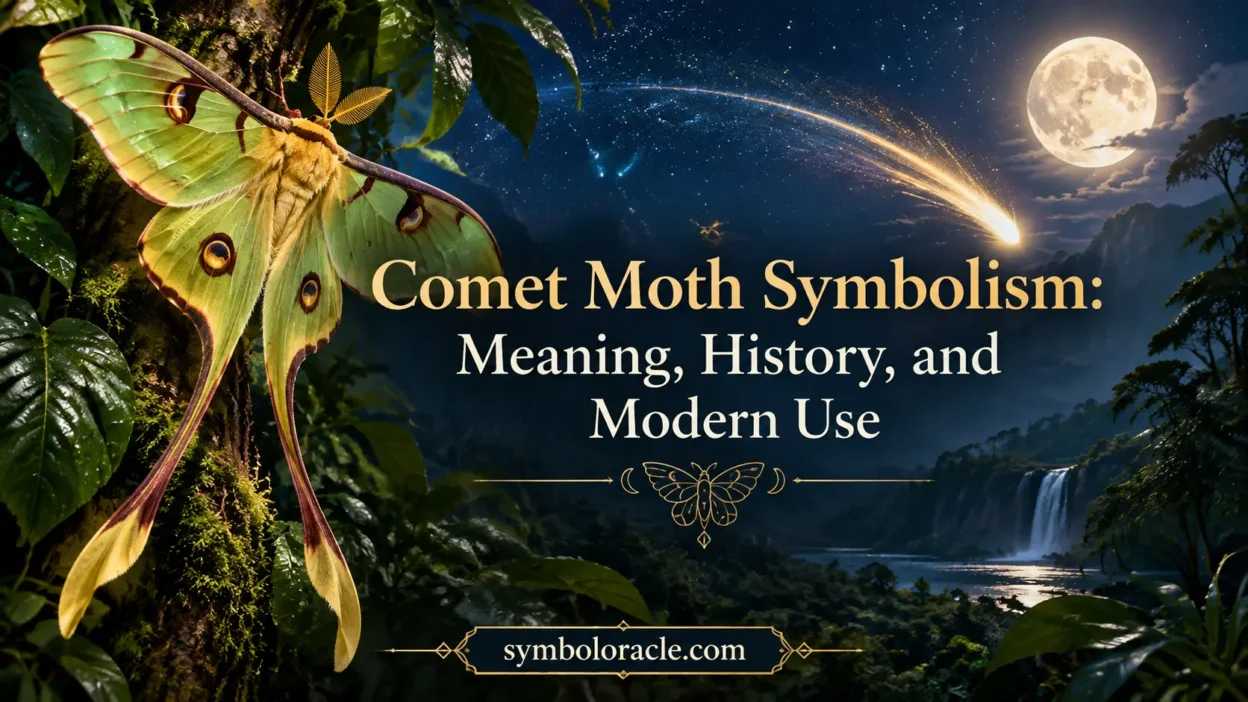
The comet moth is a large, colorful moth recognized for its impressive wing shape and long hindwing tails. One of the most famous examples is the African comet moth, which has golden-yellow wings, eye-like markings, and extended tails that make it look almost unreal compared with ordinary moth species.
Unlike butterflies, which are often active during daylight, many moths are associated with nighttime environments. This difference has influenced their symbolism. Butterflies are commonly linked with visible beauty and daytime transformation, while moths often represent quieter forms of change that happen away from attention.
The comet moth’s appearance has helped it gain symbolic value because it combines two ideas: delicacy and survival. It looks fragile, yet its entire life cycle shows adaptation and persistence.
What Does the Comet Moth Symbolize in the United States?
In the United States, the comet moth is generally understood through broader moth symbolism rather than specific traditional American folklore. Many people associate it with personal transformation because moths experience one of nature’s clearest examples of change: moving from a caterpillar into a completely different adult form.
Common American interpretations include:
| Context | Meaning in the USA | Common Associations | Notes |
|---|---|---|---|
| Personal growth | Transformation and renewal | Life changes, new beginnings | Often used in self-expression |
| Tattoos | Individuality and resilience | Identity, personal stories | Popular in nature-inspired designs |
| Art and decor | Natural beauty | Creativity, elegance | Used for unique visual appeal |
| Spiritual reflection | Change and cycles | Acceptance, inner growth | Depends on personal beliefs |
| Conservation | Appreciation of nature | Biodiversity, rarity | Connects with environmental awareness |
For many Americans, the comet moth represents becoming something new without losing connection to the past. Its life cycle reflects the idea that change can create a different form of beauty.
Transformation: The Main Symbolic Meaning of the Comet Moth
Transformation is the central meaning connected with moths and butterflies because both insects undergo complete metamorphosis. A caterpillar does not simply grow larger; it changes into a new form with different abilities and purposes.
The comet moth reflects this idea in a more unusual way because its appearance emphasizes the final stage of that transformation. Its large wings and flowing tails show the result of a hidden process that happened before anyone saw the adult insect.
People often connect this symbolism with major life transitions, such as:
- starting a new career
- recovering after difficult experiences
- entering a new stage of adulthood
- changing personal beliefs
- discovering new interests
In tattoos and artwork, comet moth imagery can represent someone who has changed significantly while embracing their new identity.
Rare Beauty and Individuality in Comet Moth Symbolism
The comet moth’s rarity contributes strongly to its symbolic meaning. Unlike everyday insects that people see regularly, a comet moth feels unusual and unexpected. This quality makes it a natural symbol for uniqueness.
Many people are drawn to rare animals because they represent qualities they value in themselves. The comet moth can suggest:
- being different from others
- embracing personal qualities
- valuing uncommon experiences
- finding beauty outside traditional standards
In American design culture, rare animals are often used to express personality. A comet moth image may appeal to someone who wants a symbol that feels less common than a butterfly or flower.
Ancient Roots and Early Symbolism of Moths
Moths have carried symbolic meanings in human cultures for thousands of years, although the specific comet moth is a relatively modern subject of interest because it was not widely known outside its natural regions. Most traditional meanings come from the broader symbolism of moths as creatures connected with night, change, and natural cycles.
Ancient societies often paid attention to insects because they represented visible examples of life transformation. A caterpillar disappearing into a cocoon and later emerging as a winged insect created a natural image of renewal and rebirth.
In some traditions, moths became connected with the unseen parts of life. Their nighttime activity led people to associate them with dreams, hidden thoughts, and experiences that happen away from public attention. These interpretations were not universal, but they shaped how moth imagery developed over time.
The comet moth adds another layer because its appearance suggests elegance and rarity. Its long wing tails and golden coloring have encouraged modern observers to see it as an example of nature’s creativity.
How Different Cultures Understand Moth Symbolism
Moth symbolism changes depending on cultural background. Some traditions view moths positively, while others connect them with caution or mystery.
In many European traditions, moths were sometimes linked with the soul because of their nighttime movement and attraction to light. This connection influenced stories and artistic interpretations where moths represented spirits, memories, or invisible forces.
Some Indigenous cultures have their own relationships with moths and other insects, often viewing animals through the lens of ecological relationships, seasonal patterns, and storytelling. Meanings vary widely between nations and communities, so there is no single Indigenous interpretation of moth symbolism.
In parts of Asia, moths may appear in artwork and stories connected with themes such as devotion, attraction, and change. These meanings often depend on the specific species, local traditions, and historical context.
The comet moth itself does not have one fixed ancient meaning. Instead, its symbolism developed by combining its natural characteristics with broader human interpretations of moths.
The Comet Moth’s Connection With Night and Mystery
Because comet moths are active during nighttime, they naturally connect with ideas related to darkness and the unknown. However, “mystery” does not always mean something negative. It can also represent curiosity, imagination, and discovery.
In modern American culture, nighttime symbols often appear in creative fields such as:
- fantasy artwork
- poetry
- fashion design
- tattoos
- alternative aesthetics
The comet moth fits these themes because it looks unusual and almost dreamlike without needing artificial decoration.
Its relationship with darkness also creates a balance between light and shadow. The moth is not simply a symbol of the night; it represents life continuing within the night environment.
Emotional and Psychological Meaning of the Comet Moth
Symbols often become meaningful because people connect them with personal experiences. The comet moth can represent several emotional ideas depending on the person using it.
Personal Change
A person who chooses a comet moth image may see it as a reminder of growth after a difficult period. The insect’s transformation reflects the idea that identity can evolve over time.
Quiet Strength
Moths are not usually associated with loud displays of power. Instead, they represent subtle survival. The comet moth’s delicate appearance contrasts with the strength required to complete its life cycle.
Acceptance of Temporary Moments
Many insects live briefly as adults. This can remind people to value experiences even when they do not last forever.
This idea appears in modern discussions about mindfulness and appreciating everyday moments. The comet moth can symbolize enjoying beauty without needing permanence.
Why Comet Moths Appear in Tattoos and Personal Style
Moth tattoos have become increasingly popular in modern American tattoo culture. The comet moth is especially appealing because it combines detailed natural patterns with unusual shapes.
People may choose a comet moth tattoo to express:
- personal transformation
- overcoming challenges
- independence
- connection with nature
- appreciation for uncommon beauty
Unlike some symbols with widely accepted meanings, moth tattoos are often highly personal. Two people may choose the same design while attaching completely different stories to it.
The comet moth’s flowing wing shape also works well visually. Tattoo artists can highlight its symmetry, texture, and natural details, making it suitable for both simple and highly detailed designs.
Comet Moth Symbolism in Art, Fashion, and Home Decor
Nature-inspired design has become common in American homes and creative spaces. In this setting, the comet moth often represents curiosity, creativity, and appreciation for the natural world.
Artists may use moth imagery because it creates contrast. A delicate insect can represent strength, while a nighttime creature can represent imagination and exploration.
In fashion, moth designs often appear in:
- embroidered clothing
- jewelry patterns
- accessories
- graphic designs
Compared with more common symbols like roses or butterflies, moth imagery can feel more unusual and individual.
Home decor featuring moths may appeal to people who enjoy:
- botanical themes
- vintage illustrations
- scientific artwork
- nature collections
The comet moth fits these styles because it combines scientific interest with artistic beauty.
Modern Environmental Meaning of the Comet Moth
Today, many people connect insects with environmental awareness. As concerns about biodiversity grow, unusual species like the comet moth can represent the importance of protecting natural ecosystems.
The symbolism shifts from only personal meaning to a broader message:
- respect for wildlife
- protection of habitats
- appreciation for species diversity
- curiosity about the natural world
In the United States, nature organizations, educators, and artists often use insects to encourage environmental awareness. The comet moth can serve as a reminder that even less familiar creatures have important roles in ecosystems.
How Comet Moth Symbolism Appears in Digital Culture
Modern digital culture has changed how people discover and share symbols. Images that were once limited to museums, books, or scientific collections can now reach millions of people through social media platforms, digital artwork, and online communities.
The comet moth has gained attention online because of its unusual appearance. Its long tails, bright colors, and rare status make it visually memorable. Many users share images of unusual animals as a way to express curiosity, appreciation for nature, or personal identity.
On platforms focused on art, fashion, and lifestyle, comet moth imagery often appears alongside themes such as:
- nature appreciation
- personal transformation
- creative identity
- alternative aesthetics
- fantasy-inspired design
However, online symbolism is usually personal rather than based on one official meaning. A person sharing a comet moth image may see it as a symbol of beauty, while another may connect it with change or resilience.
Positive and Negative Interpretations of Moth Symbolism
Moth symbolism is not always viewed in the same way. Different people and cultures have created different associations based on their experiences with these insects.
Positive interpretations often include:
- transformation
- curiosity
- adaptation
- beauty in unusual places
- connection with nature
Some people also associate moths with attraction to light, creating a metaphor for searching for knowledge, hope, or purpose.
Negative interpretations sometimes come from older beliefs about moths. Because certain moth species damage clothing or appear around darkness, some traditions connected them with decay, loss, or unwanted change.
These interpretations usually come from common moth experiences rather than from the comet moth itself. The comet moth is generally viewed more positively because of its rare appearance and harmless reputation.
Understanding the difference between traditional fears and modern interpretations helps prevent oversimplifying the symbol.
Common Misunderstandings About Comet Moth Symbolism
One common misunderstanding is that every symbol has one fixed meaning. In reality, symbolism changes across cultures, time periods, and personal experiences.
The comet moth does not have a single universal interpretation. Its meaning depends on:
- cultural background
- personal beliefs
- artistic context
- individual experiences
Another misunderstanding is assuming that moth symbolism is always spiritual. While some people use moth imagery for spiritual reflection, others choose it simply because they appreciate the insect’s appearance or connection with nature.
A comet moth tattoo, artwork, or decoration does not automatically reveal a person’s beliefs or personality. Symbols are often chosen because they represent something meaningful to the individual.
How Comet Moth Meaning Has Changed Over Time
The meaning of moth imagery has developed alongside human understanding of nature. Earlier interpretations were often influenced by mystery, nighttime behavior, and folklore. Modern meanings are more likely connected with ecology, creativity, and personal growth.
Scientific knowledge has also changed how people view moths. Instead of seeing them only as creatures of darkness, many people now recognize their importance in ecosystems and their fascinating biological features.
The comet moth represents this shift clearly. Its meaning has moved from general ideas about moths toward more modern themes:
- celebrating rare natural beauty
- respecting biodiversity
- embracing personal change
- finding meaning in temporary experiences
As environmental awareness grows, symbols connected with unusual animals may continue gaining new interpretations.
Comet Moth Symbolism in Modern American Identity
Symbols often become part of identity because they help people communicate values without words. In the United States, nature symbols are commonly used to express personal interests, memories, and life experiences.
A person may connect with the comet moth because it represents:
- feeling different from others
- personal reinvention
- love of wildlife
- creativity
- independence
This type of symbolism appears in many areas of American life, including tattoos, artwork, jewelry, clothing, and personal collections.
The comet moth’s uncommon appearance makes it especially suitable for people who want a symbol that feels less traditional. It offers a way to express individuality while staying connected to the natural world.
Frequently Asked Questions About Comet Moth Symbolism
What does a comet moth symbolize?
A comet moth usually symbolizes transformation, individuality, and appreciation for rare beauty. Many people connect it with personal growth because of the moth’s dramatic life-cycle changes.
What does a comet moth tattoo mean?
A comet moth tattoo often represents change, resilience, or embracing a unique identity. The meaning depends on the person, but many choose it as a reminder of personal evolution.
Is the comet moth a spiritual symbol?
The comet moth can have spiritual meaning for some people, especially those who connect it with renewal, cycles of life, or inner change. However, it does not have one universal religious meaning.
Are moths considered good or bad symbols?
Moths can have both positive and negative associations depending on cultural traditions. Modern interpretations often focus on transformation, beauty, and adaptation rather than negative ideas.
Why are moths used in modern art and fashion?
Moths are popular in art and fashion because they combine delicate details with unusual shapes. They often represent creativity, nature, and individuality.
What makes the comet moth different from other moth symbols?
The comet moth stands out because of its rare appearance, large size, and long wing tails. These features make it more strongly associated with uniqueness and natural beauty.
Conclusion
The comet moth represents transformation, individuality, and the appreciation of unusual beauty. Its symbolism comes from the broader meanings of moths, combined with the species’ rare appearance and connection to the natural world.
In modern American culture, comet moth symbolism appears in tattoos, artwork, fashion, and environmental conversations. While its meaning changes from person to person, it often reflects the idea that change can create something unexpected and valuable.
The comet moth reminds people that nature does not need to be common to be meaningful. Sometimes the rarest forms of beauty are the ones that inspire the strongest curiosity and reflection.


