
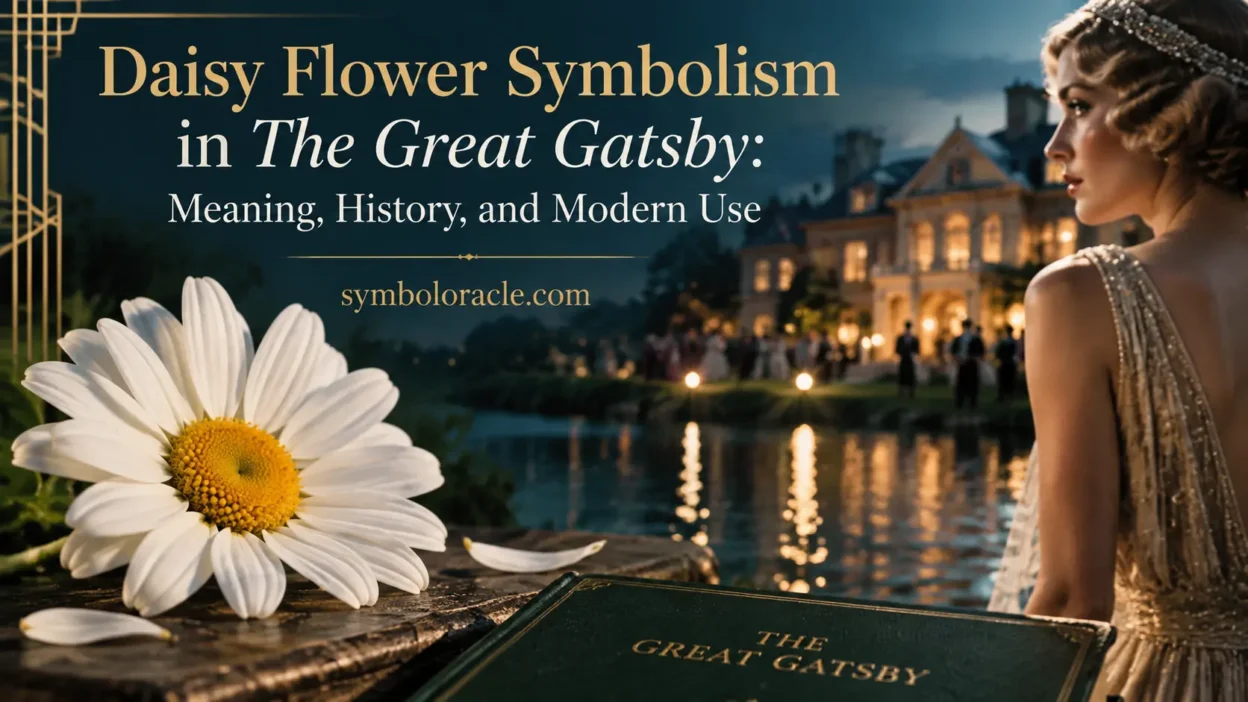
In daisy flower symbolism in The Great Gatsby, the flower represents beauty, innocence, romance, and the complicated difference between dreams and reality. In F. Scott Fitzgerald’s novel, the daisy is closely connected to Daisy Buchanan, whose name reflects both her attractive appearance and the fragile image of perfection created around her.
The daisy has long been associated with youth, purity, and affection in Western culture. However, in The Great Gatsby, the symbol becomes more complex. It reflects not only love and hope but also illusion, social expectations, wealth, and the emotional distance between what people want and what they can truly achieve.
Understanding the daisy symbol helps readers see why Fitzgerald chose this particular flower for Daisy Buchanan. The image appears simple and charming, but its meaning develops into a deeper comment on relationships, identity, and the American Dream.
Quick Answer
Daisy flower symbolism in The Great Gatsby commonly represents innocence, beauty, and romantic desire in modern American literary interpretation. In Fitzgerald’s novel, the daisy also reflects illusion, social status, and the gap between idealized dreams and reality.
TL;DR
- Daisy symbolizes beauty, youth, and romantic attraction.
- The flower reflects innocence mixed with hidden complexity.
- Fitzgerald uses Daisy to explore dreams and disappointment.
- White daisies connect with purity and social expectations.
- Modern readers view Daisy as a symbol of illusion.
What Does the Daisy Flower Represent in The Great Gatsby?
The daisy flower in The Great Gatsby is mainly connected to Daisy Buchanan, one of the novel’s central characters. Her name immediately creates a visual connection between the character and the flower.
A daisy traditionally appears delicate, bright, and simple. These qualities match the way Daisy is introduced. She seems charming, graceful, and almost perfect from the outside. Gatsby sees her as the personification of his ideal future.
However, Fitzgerald does not present Daisy as only a symbol of innocence. The flower’s meaning changes as the story develops. Behind Daisy’s attractive image are fear, privilege, uncertainty, and emotional limitations.
The daisy therefore becomes a symbol of both attraction and disappointment. It represents something beautiful that may not be as perfect as it first appears.
Why Did Fitzgerald Choose a Daisy as Daisy Buchanan’s Name?
F. Scott Fitzgerald’s choice of the name Daisy was likely intentional because flowers often carry cultural meanings. The name creates an immediate association with freshness, youth, and charm.
During the early 20th century, flowers were commonly used in literature to represent personality traits and emotions. A daisy could suggest simplicity and innocence, making it a fitting symbol for the image Gatsby creates around Daisy Buchanan.
Gatsby does not only love Daisy as a person. He loves the dream connected to her. To him, she represents a perfect version of the past that he wants to recover.
The flower helps show this contrast. A daisy may look pure and uncomplicated, but real relationships and human emotions are far more complicated.
The Historical Symbolism of Daisies Before The Great Gatsby
Long before Fitzgerald used the flower in his novel, daisies carried symbolic meanings in European and American traditions.
In many Western cultures, daisies became connected with childhood, innocence, and affection. Children often used daisies in games, including the familiar practice of pulling petals while asking whether someone “loves me” or “loves me not.”
This tradition connected daisies with romantic uncertainty. The flower became linked with questions about love, feelings, and relationships.
Victorian flower symbolism also gave daisies meanings related to purity and loyal affection. People used flowers to communicate emotions when direct expression was limited by social customs.
These earlier associations helped create the cultural background that made Fitzgerald’s use of the daisy understandable to readers.
How Daisy Symbolism Connects With the American Dream
One of the strongest meanings behind the daisy in The Great Gatsby is its connection to the American Dream.
Gatsby believes that wealth and success can help him recreate his relationship with Daisy. To him, Daisy represents a future where everything becomes perfect again.
The flower’s beauty mirrors this dream. A daisy appears simple and flawless, just as Gatsby imagines his future with Daisy.
However, Fitzgerald challenges this idea. The novel shows that money cannot completely restore the past or remove emotional conflicts. The dream Gatsby builds around Daisy is partly based on imagination rather than reality.
The daisy becomes a reminder that attractive dreams can still contain disappointment.
The Connection Between Daisy’s White Color and Symbolism
The white color often associated with daisies adds another layer to the symbol.
In American culture, white flowers frequently represent purity, innocence, weddings, remembrance, and peaceful emotions. These associations influence how readers interpret Daisy Buchanan.
At first, Daisy appears connected to these traditional ideas. She seems elegant, gentle, and untouched by difficulty.
Yet Fitzgerald creates tension between appearance and reality. The whiteness of the daisy can also represent the polished image maintained by wealthy society. Behind that image are problems that remain hidden.
The symbol suggests that outward beauty does not always reveal inner truth.
| Symbolic Element | Meaning in The Great Gatsby | Common Association | Notes |
|---|---|---|---|
| Daisy flower | Beauty and idealized love | Romance and youth | Connected to Daisy Buchanan |
| White color | Purity and social image | Innocence and elegance | Also suggests appearances |
| Flower petals | Fragile emotions | Love uncertainty | Reflects Gatsby’s hopes |
| Garden imagery | Wealth and beauty | Luxury and status | Fits the novel’s upper-class world |
Daisy as a Symbol of Gatsby’s Idealized Love
Gatsby’s feelings for Daisy are not based only on who she is. He creates an ideal version of her in his imagination.
The daisy represents this idealization because flowers are often associated with beauty that people admire but cannot permanently hold.
Gatsby believes Daisy can complete his life and return him to a happier moment from the past. He views her almost like a perfect symbol rather than a complicated human being.
This creates one of the novel’s central conflicts. Gatsby loves an image of Daisy that may not fully exist.
The flower represents the difference between loving someone and loving an idea of someone.
How Daisy Symbolism Reflects Wealth and Social Class
In The Great Gatsby, Daisy is also connected with wealth, old money, and social privilege.
Her world is one of expensive homes, elegant clothing, and traditional status. Like a carefully arranged flower, her appearance represents refinement and beauty.
However, Fitzgerald shows that this beauty is protected by social advantages. Daisy’s position allows her to avoid consequences in ways that others cannot.
The daisy symbol therefore has two sides. It represents attractiveness and elegance, but it also reveals the protected world of privilege surrounding Daisy.
Daisy Flower Symbolism in Modern American Literary Interpretation
Modern American readers often view the daisy in The Great Gatsby as a symbol of complicated identity.
The flower no longer represents only innocence. It also represents the pressure to appear perfect and the difficulty of separating reality from fantasy.
Many discussions of the novel focus on how Daisy reflects larger cultural ideas about beauty, success, and social expectations.
The symbol remains relevant because people still experience the conflict between ideal images and real life, especially in a culture influenced by advertising, celebrity images, and social media.
Daisy Symbolism in American Culture Beyond Literature
Although Fitzgerald’s use of Daisy Buchanan gives the flower a specific literary meaning, daisies continue to hold familiar associations in American culture. Many people connect daisies with friendliness, simplicity, childhood memories, and natural beauty.
Unlike more formal flowers such as roses or lilies, daisies often feel casual and approachable. They appear in gardens, wildflower fields, home decorations, and seasonal designs. Their everyday appearance helps maintain their connection with happiness and uncomplicated beauty.
In the context of The Great Gatsby, these cultural associations create an interesting contrast. The daisy appears simple and innocent, but Fitzgerald uses it to explore complicated emotions and social realities.
The flower’s ordinary appearance makes its symbolic role even more effective. Something that looks small and harmless can represent larger ideas about love, ambition, and disappointment.
The Emotional Meaning Behind the Daisy Symbol
The daisy carries several emotional meanings that help explain why it works so well as a literary symbol.
First, it represents hope. Gatsby’s hope for a future with Daisy is connected to his belief that love can overcome time and circumstances.
Second, it represents longing. Like someone trying to preserve a beautiful memory, Gatsby holds onto an image of Daisy from the past.
Third, it represents fragility. Flowers are living things that require care and eventually fade. This quality reflects the temporary nature of Gatsby’s dream.
The emotional symbolism of the daisy comes from this balance between beauty and vulnerability. The flower looks cheerful, but it can also suggest something that cannot last forever.
Daisy Symbolism and the Theme of Illusion Versus Reality
One of Fitzgerald’s main themes in The Great Gatsby is the conflict between appearance and reality. The daisy strongly supports this idea.
A flower can look perfect from a distance, but closer observation reveals imperfections. Fitzgerald applies a similar idea to Daisy Buchanan.
Gatsby sees Daisy as a perfect symbol of love and success. Other characters see different sides of her personality, including her uncertainty and dependence on her social position.
The daisy represents the attractive surface people often create around themselves. It reminds readers that ideal images may hide complicated truths.
The Role of Flowers in 1920s American Culture
The 1920s, when The Great Gatsby takes place, was a period of changing social attitudes in the United States. Fashion, entertainment, wealth, and personal expression became important parts of public identity.
Flowers played a role in this culture through fashion, home decoration, celebrations, and social events. They represented elegance and refinement, especially among wealthy communities.
Daisy Buchanan’s connection with flowers fits this setting. Her image reflects the polished appearance associated with upper-class life during the Jazz Age.
At the same time, Fitzgerald uses floral imagery to question whether beauty and wealth truly create happiness.
Daisy Symbolism in Weddings, Fashion, and Design Today
In modern American culture, daisies remain common symbols in weddings, clothing, jewelry, and interior design.
Many people choose daisies because they represent cheerful emotions, natural beauty, and a relaxed style. Daisy patterns often appear in summer fashion, handmade products, and decorative artwork.
Some people also use daisy imagery because of its connection with optimism and personal growth.
However, the meaning of a daisy depends on context. In a wedding, it may represent happiness and affection. In literature, such as The Great Gatsby, it can represent more complicated ideas like dreams and unrealistic expectations.
Why People Use Daisy Imagery in Tattoos
Daisy tattoos are popular because the flower allows for many personal interpretations.
Common meanings include:
- innocence and new beginnings
- connection to nature
- happiness and positivity
- remembrance of someone important
- personal growth
Some people choose daisy tattoos because they associate the flower with a specific memory or person.
When connected to The Great Gatsby, a daisy tattoo may represent ideas such as romantic dreams, nostalgia, or the difference between what someone hopes for and what actually happens.
The symbol is flexible because it can express both positive emotions and deeper personal experiences.
Common Misunderstandings About Daisy Symbolism
A common misunderstanding is that the daisy always represents innocence and purity. While those meanings exist, symbols often change depending on their setting.
In The Great Gatsby, the daisy is not simply a symbol of goodness. Fitzgerald uses it to show the complexity of human desires.
Another misunderstanding is that Daisy Buchanan herself represents only beauty. The character is more complicated because she reflects social pressure, privilege, fear, and personal choices.
The flower’s meaning becomes stronger when readers recognize both sides: the attractive image and the reality behind it.
How Daisy Symbolism Has Changed Over Time
The meaning of daisies has developed from traditional flower symbolism into a broader cultural image.
Earlier interpretations often focused on innocence, affection, and youth. In modern culture, daisies can also represent individuality, natural living, and emotional honesty.
Literary works like The Great Gatsby expanded the flower’s meaning by connecting it with themes of ambition and illusion.
Today, the daisy can symbolize simple happiness in one situation and complicated emotions in another. Its meaning depends on the story, culture, and personal experience surrounding it.
Frequently Asked Questions About Daisy Flower Symbolism in The Great Gatsby
What does the daisy symbolize in The Great Gatsby?
The daisy symbolizes beauty, romantic idealization, innocence, and the difference between dreams and reality. Fitzgerald connects the flower with Daisy Buchanan and Gatsby’s unrealistic hopes about love and the past.
Why is Daisy Buchanan named after a flower?
Fitzgerald likely chose the name Daisy because the flower suggests beauty, youth, and charm. The name also supports the contrast between Daisy’s attractive image and her more complicated personality.
Is the daisy a positive or negative symbol in The Great Gatsby?
The daisy has both positive and negative meanings. It represents love and beauty, but it also represents illusion, disappointment, and the limitations of idealized dreams.
What does a daisy tattoo inspired by The Great Gatsby mean?
A daisy tattoo inspired by the novel may represent romantic dreams, nostalgia, beauty, or the difference between an ideal image and reality. The meaning depends on the person’s interpretation.
Does the color white affect the daisy’s meaning?
Yes. White is often connected with purity, elegance, and innocence in American culture. In The Great Gatsby, it also connects with the carefully maintained image of wealth and perfection.
How is daisy symbolism used in modern American culture?
Today, daisies appear in fashion, home decoration, tattoos, weddings, and art. They often represent happiness, nature, friendship, and personal memories.
Conclusion
The daisy in The Great Gatsby represents much more than a beautiful flower. It reflects love, hope, innocence, social image, and the difficult difference between dreams and reality.
Daisy flower symbolism in The Great Gatsby remains meaningful because Fitzgerald uses a familiar flower to explore complicated human emotions. The symbol shows how something attractive on the surface can contain deeper conflicts underneath.
Even today, the daisy continues to represent both simple happiness and complex personal meaning. Its lasting appeal comes from its ability to express beauty while reminding people that appearances do not always tell the complete story.


