
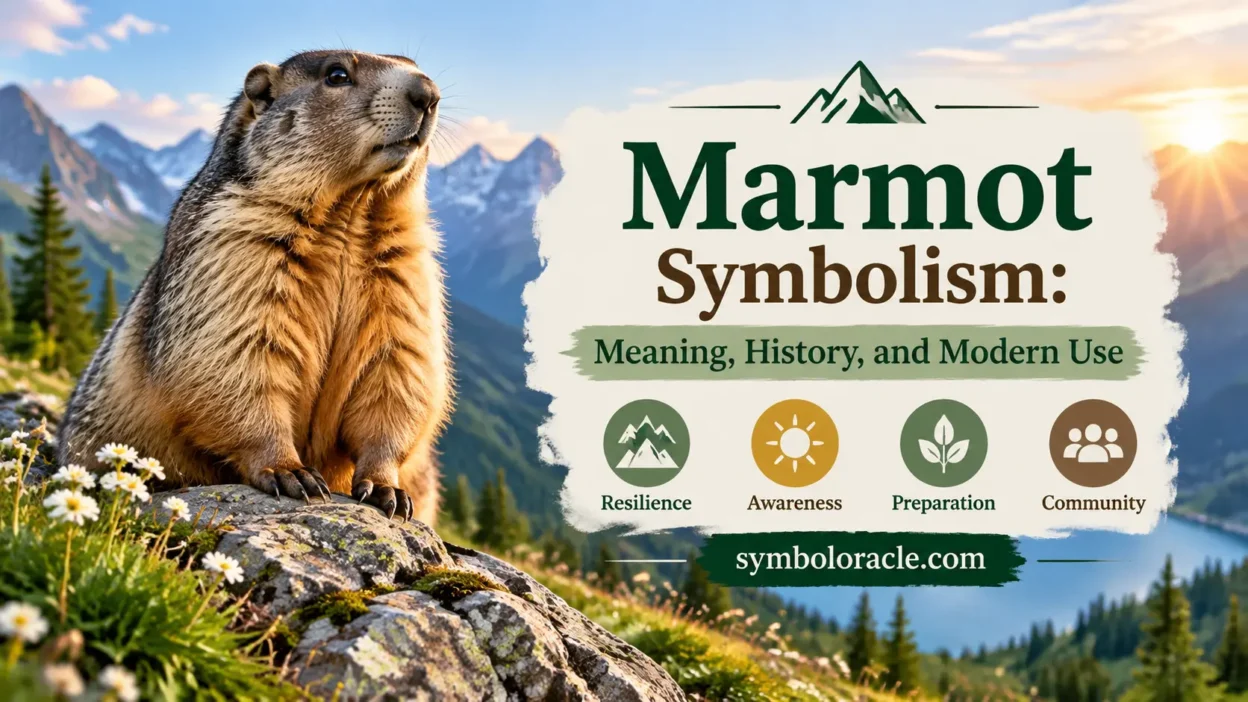
Marmot symbolism often connects this mountain-dwelling animal with awareness, community, patience, and the natural rhythms of life. Found across parts of North America, Europe, and Asia, marmots have long attracted attention because of their unusual habits: they live in social groups, spend months in hibernation, and carefully watch their surroundings before reacting.
People are interested in marmot symbolism because the animal represents ideas that feel relevant in modern life. Its behavior reflects themes such as slowing down, protecting personal space, preparing for change, and staying connected with a community. In the United States, marmots are especially recognized through wildlife culture, nature appreciation, and the famous tradition of Groundhog Day.
Although marmots are sometimes confused with other burrowing animals, they have their own identity in folklore and environmental symbolism. Their relationship with mountains, seasons, and survival has shaped the meanings people attach to them today.
Quick Answer
Marmot symbolism commonly represents awareness, preparation, community, and balance with nature in modern American culture. Historically, marmots have been associated with seasonal change, survival, and observation because of their hibernation habits and connection to mountain environments.
TL;DR
- Marmots symbolize awareness and careful observation.
- Their hibernation represents rest and renewal.
- U.S. culture connects them with seasonal traditions.
- Mountain habitats influence their natural symbolism.
- Marmots represent community and cooperation.
- Modern uses include art, wildlife identity, and tattoos.
What a Marmot Represents in Nature
A marmot is a large ground squirrel known for its sturdy body, short tail, burrowing lifestyle, and habit of living in colonies. Many species live in mountainous regions, grasslands, and rocky landscapes where they create underground homes for protection.
Unlike animals that rely mainly on speed or strength, marmots survive through caution and cooperation. They often post a lookout while others feed, using warning calls when danger approaches. This behavior contributes to their symbolic connection with awareness and responsibility.
Because marmots spend a significant part of their lives underground, they also represent hidden preparation. Their burrows provide shelter, family space, and protection from harsh weather. Symbolically, this reflects the importance of creating a secure foundation before facing challenges.
What Does Marmot Symbolism Mean in the United States?
In the United States, marmot symbolism is strongly connected with nature, seasonal cycles, and observation. Many Americans encounter marmot-related symbolism through the groundhog tradition, even though groundhogs are a specific type of marmot.
The most recognizable example is Groundhog Day, celebrated on February 2. The tradition involves watching whether a groundhog emerges from its burrow and appears to predict the arrival of spring. While the practice is more cultural than scientific, it has made marmot relatives a symbol of seasonal transition and curiosity.
Beyond this holiday connection, Americans often associate marmots with wilderness, national parks, and outdoor life. Their presence in mountain ecosystems represents resilience and adaptation in challenging environments.
| Context | Meaning in the USA | Common Associations | Notes |
|---|---|---|---|
| Wildlife | Adaptation and survival | Mountains, nature, ecosystems | Based on animal behavior |
| Seasonal traditions | Change and prediction | Groundhog Day, spring | Mostly cultural symbolism |
| Personal identity | Patience and awareness | Tattoos, artwork | Individual interpretations vary |
| Environmental views | Respect for nature | Conservation, wilderness | Connected to habitat protection |
Ancient Roots and Early Symbolic Connections
Marmots have existed alongside human communities for thousands of years, especially in regions where people depended on mountain environments. Early interpretations often came from observing the animal’s seasonal behavior rather than from formal mythology.
The marmot’s ability to survive long winters made it a natural example of endurance. Communities living near mountainous areas noticed that marmots disappeared during colder months and returned when conditions improved. This cycle encouraged associations with survival, renewal, and adaptation.
In some traditional cultures, animals that lived between underground spaces and the surface world were viewed as symbols of connection between different parts of nature. Marmots fit this pattern because they moved between hidden burrows and open landscapes.
The Symbolism of Hibernation and Renewal
One of the strongest meanings connected with marmots comes from hibernation. During winter, marmots enter long periods of inactivity to conserve energy until food becomes available again.
Symbolically, this behavior represents rest, recovery, and preparation. Unlike the idea of inactivity as laziness, marmot symbolism suggests that periods of quiet can support future growth.
Modern interpretations often connect this idea with personal balance. A person may view the marmot as a reminder that constant activity is not always productive. Taking time to recover can be part of long-term progress.
This interpretation appears in wellness discussions, nature-inspired designs, and personal reflection practices.
Why Marmots Symbolize Awareness and Observation
Marmots are highly alert animals. Their survival depends on noticing predators and responding quickly to changes around them.
Their warning calls and lookout behavior have made them symbols of attention and careful decision-making. The animal does not rush blindly into situations; it observes before acting.
For many people, this represents a practical life lesson: awareness can prevent unnecessary problems. The marmot symbolizes the value of paying attention to surroundings, relationships, and personal choices.
Community and Family Symbolism of Marmots
Marmots are social animals that often live in groups. They share burrows, communicate with each other, and cooperate for safety.
This behavior gives them symbolic connections with family, teamwork, and belonging. Unlike solitary animals that represent independence, marmots highlight the importance of relationships and shared protection.
In human symbolism, the marmot can represent building a supportive environment where individuals help each other survive difficult periods.
This meaning fits modern discussions about community, family connections, and cooperation.
Mountain Symbolism and Connection With the Earth
Because many marmot species live in mountain regions, they are closely connected with landscapes that represent strength, stability, and endurance.
Mountains often symbolize challenges, perspective, and natural power. A marmot living among rocky terrain represents the ability to adapt while remaining connected to its environment.
In American outdoor culture, mountain animals frequently appear as symbols of wilderness and exploration. Marmots represent a quieter side of nature: not the dramatic predator, but the careful survivor.
Marmot Symbolism in Folklore and Cultural Traditions
Marmot-related folklore varies by region. In some European and Asian traditions, mountain animals were connected with weather patterns, seasonal changes, and local beliefs about nature.
Many stories about animals developed from close observation. Before modern science explained animal behavior, people often used wildlife patterns to understand changing seasons.
Marmots became associated with weather prediction partly because their emergence after winter was easy for communities to notice. These observations influenced traditions that continue in different forms today.
However, many weather-related animal beliefs are cultural traditions rather than accurate forecasting methods.
Emotional and Psychological Meaning of the Marmot
People often connect animals with personality traits, and the marmot commonly represents a thoughtful and balanced character.
Its symbolic qualities include:
- Careful decision-making
- Emotional protection
- Patience during difficult periods
- Appreciation for simple surroundings
- Connection with close communities
Someone drawn to marmot symbolism may identify with a quieter approach to life. The animal can represent a person who values preparation over rushing and stability over constant change.
Marmot Symbolism in Tattoos and Personal Style
Animal tattoos often represent personal values, memories, or connections with nature. Marmot tattoos are less common than wolf, bear, or eagle designs, but they can carry meaningful personal interpretations.
A marmot tattoo may symbolize:
- Love of mountain environments
- Patience and resilience
- A connection to outdoor experiences
- Appreciation for small but important creatures
Some people choose unusual animal tattoos because they represent individuality. A marmot design can communicate a preference for subtle symbolism rather than more common animal imagery.
Marmots in Modern Art, Decor, and Digital Culture
Today, marmots appear in wildlife photography, nature artwork, children’s media, and outdoor-themed designs.
Their friendly appearance and curious behavior make them suitable symbols for environmental awareness and educational projects. Wildlife organizations may use marmot imagery to represent habitat protection and biodiversity.
Online, marmots are often shared through humorous animal videos and nature content. Their expressive behavior has helped them become recognizable beyond scientific communities.
Common Misunderstandings About Marmot Symbolism
One common misunderstanding is confusing marmots with all ground-dwelling rodents. Although groundhogs are a type of marmot, not every marmot carries the same cultural associations.
Another misconception is treating animal symbolism as universal. Meanings change depending on culture, personal experience, and historical context.
Marmots do not have one fixed symbolic meaning. Their interpretations come from a combination of natural behavior, regional traditions, and modern personal connections.
How Marmot Meaning Has Changed Over Time
Earlier meanings focused mainly on survival, seasons, and environmental observation. People living close to nature paid attention to animal behavior because it affected daily life.
Modern interpretations have expanded. Today, marmots can represent mental balance, environmental awareness, personal boundaries, and appreciation for wildlife.
The symbol has shifted from a practical observation of nature to a broader reflection of how people relate to the natural world.
Marmot Symbolism Compared With Similar Animals
Marmots share some symbolic qualities with other animals but have their own distinct themes.
| Animal | Similar Meaning | Difference |
|---|---|---|
| Bear | Hibernation and strength | Bear symbolism often emphasizes power |
| Rabbit | Caution and survival | Rabbits are more linked with fertility |
| Squirrel | Preparation and gathering | Squirrels symbolize collecting resources |
| Mountain goat | Mountain connection | Goats represent climbing and ambition |
This comparison shows that marmot symbolism focuses more on awareness, community, and seasonal balance than dominance or competition.
Frequently Asked Questions
What does a marmot symbolize spiritually?
Marmots are often interpreted as symbols of awareness, renewal, and connection with nature. Spiritual interpretations vary because different cultures attach different meanings to animals.
Is a marmot a positive symbol?
Yes, many people view marmots positively because they represent survival, cooperation, patience, and adaptation. However, symbolism depends on personal and cultural interpretation.
What does a marmot tattoo mean?
A marmot tattoo may represent resilience, love of nature, mountain experiences, or a preference for thoughtful and uncommon symbols. The meaning depends on the person wearing it.
Are marmots connected to Groundhog Day symbolism?
Yes, because groundhogs are a type of marmot. Groundhog Day connects these animals with seasonal change and the arrival of spring in American culture.
What do marmots symbolize in Native American traditions?
Native American traditions are diverse, and specific marmot meanings depend on the individual culture and region. Broad claims about one universal Native American interpretation are inaccurate.
Why are marmots associated with winter?
Marmots are associated with winter because they hibernate for long periods during cold months. This behavior has influenced symbolism related to rest, survival, and renewal.
Conclusion
Marmot symbolism reflects the qualities people observe in this unique mountain animal: awareness, preparation, cooperation, and adaptation. In the United States, the symbol is especially connected with seasonal traditions, wildlife appreciation, and the relationship between humans and nature.
From ancient observations of animal behavior to modern art and personal expression, marmots continue to represent the value of patience and thoughtful action. Understanding marmot symbolism helps show how ordinary animals can become meaningful reflections of human experiences.


