
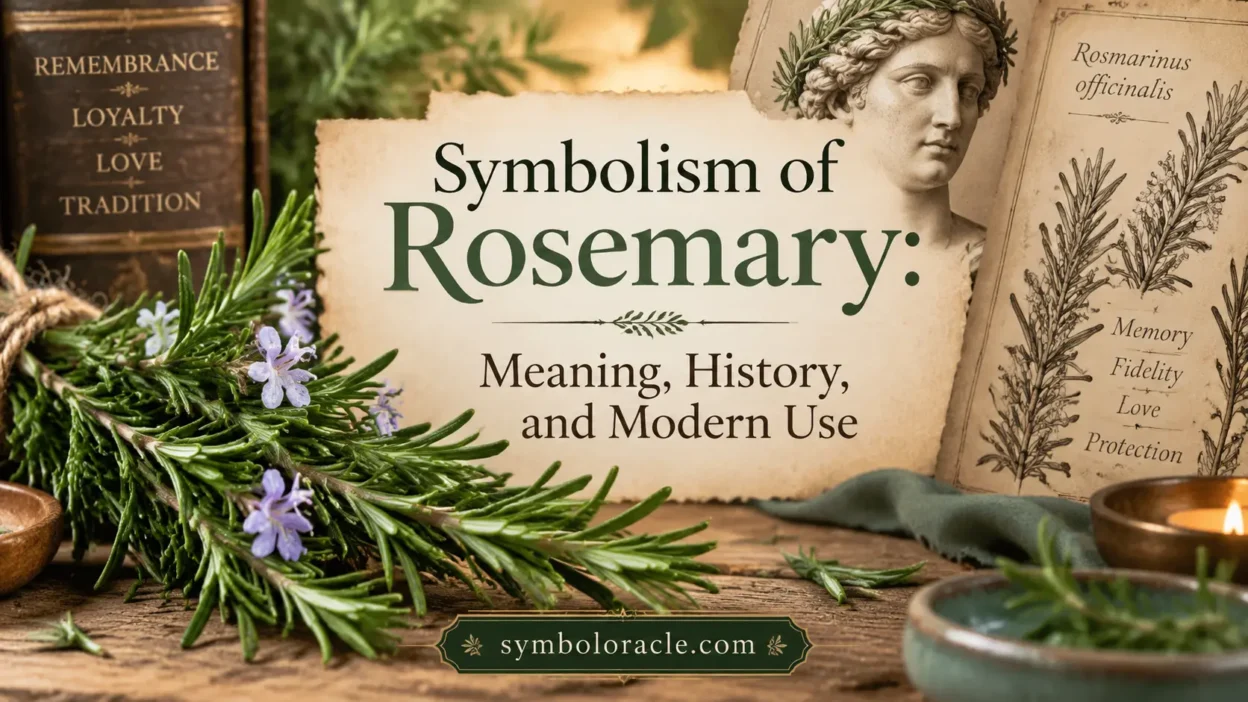
Rosemary is a fragrant evergreen herb recognized by its needle-like leaves, woody stems, and fresh scent. Beyond cooking and gardening, the symbolism of rosemary connects with memory, remembrance, loyalty, love, protection, and personal identity in many cultures, including modern American traditions.
People often encounter rosemary in kitchens, gardens, wedding arrangements, memorial ceremonies, perfumes, and decorative designs. Its meaning developed over centuries as communities connected the plant’s ability to remain green throughout the year with ideas of endurance, remembrance, and lasting relationships.
In the United States today, rosemary is usually viewed as a symbol of keeping memories alive, honoring important connections, and celebrating meaningful moments. It appears in both everyday life and special occasions, from family gardens to wedding bouquets and memorial displays.
Quick Answer
The symbolism of rosemary commonly represents remembrance, loyalty, and lasting connection in modern American culture, especially in weddings, memorials, and personal gardens. Historically, rosemary was associated with memory, love, protection, and ceremonial traditions in Mediterranean and European cultures.
TL;DR
- Rosemary symbolizes remembrance and lasting memories.
- Ancient traditions connected rosemary with loyalty and love.
- Americans use rosemary in weddings and memorials.
- The herb represents connection between past and present.
- Rosemary appears in tattoos, gardens, and personal designs.
What Rosemary Looks Like and Where People Encounter It
Rosemary is a small evergreen shrub with thin, pointed leaves that resemble pine needles. The plant usually has dark green leaves, woody branches, and small flowers that can appear in shades of blue, purple, white, or pink depending on the variety.
The herb originally grew around the Mediterranean region, where it adapted to dry climates and rocky landscapes. Today, it is commonly grown in gardens across the United States, especially in warmer areas, although many people also grow it indoors in pots.
Americans most often encounter rosemary in:
- Cooking and seasoning
- Herb gardens
- Wedding decorations
- Holiday arrangements
- Memorial ceremonies
- Essential oils and fragrances
- Decorative artwork and tattoos
Its physical qualities contribute to its symbolism. Because rosemary stays green through many seasons, people have often connected it with endurance, continuity, and memories that remain.
What Rosemary Commonly Means in the United States
In modern American culture, rosemary is most strongly linked with remembrance. Many people associate the herb with honoring someone important, preserving memories, or recognizing a meaningful relationship.
This connection appears in several areas of American life. Rosemary may be included in memorial gardens, funeral arrangements, or ceremonies that celebrate a person’s life. Families may plant rosemary as a living reminder of someone they love.
The herb also represents loyalty and commitment. Because of this association, rosemary is sometimes used in weddings and relationship celebrations. Couples may include rosemary sprigs in bouquets, decorations, or gifts as a symbol of devotion.
Common meanings of rosemary in the United States include:
| Context | Meaning in the USA | Common Associations | Notes |
|---|---|---|---|
| Memorials | Remembrance | Honoring loved ones | Often used as a living tribute |
| Weddings | Loyalty and love | Commitment and partnership | Appears in bouquets and decorations |
| Gardens | Continuity | Growth and family connection | Easy-care evergreen plant |
| Personal Items | Identity and memories | Tattoos, art, jewelry | Represents personal stories |
Ancient Roots and Early Symbolism
Rosemary’s symbolic history began in Mediterranean cultures where the plant was valued for both practical and ceremonial reasons. Ancient communities noticed that rosemary remained green even during dry seasons, which helped create associations with strength and endurance.
In ancient Greece and Rome, rosemary was connected with memory and learning. Students were sometimes associated with rosemary because people believed the plant represented mental clarity and remembrance. These ideas helped establish a long-lasting connection between rosemary and the human ability to preserve knowledge.
The plant also appeared in celebrations and rituals. Communities used rosemary in wreaths, decorations, and ceremonies because its strong fragrance and evergreen appearance made it suitable for important occasions.
Over time, these early meanings traveled through European traditions and developed into broader ideas of loyalty, love, and honoring the past.
Rosemary in Weddings, Love, and Commitment Traditions
Rosemary has a long connection with weddings because many cultures viewed it as a symbol of faithfulness and lasting partnership. The herb’s ability to stay green became a natural comparison for relationships that people hoped would remain strong.
In European wedding customs, brides sometimes carried rosemary as part of their wedding arrangements. Some traditions included giving rosemary to guests as a reminder of friendship and shared happiness.
In the United States, rosemary is not a required wedding symbol, but it appears in modern celebrations because of its natural appearance and traditional associations. Wedding planners and couples may choose rosemary because it fits rustic, garden, outdoor, and nature-inspired themes.
Common wedding uses include:
- Adding rosemary sprigs to bouquets
- Decorating ceremony spaces
- Creating herb-based table settings
- Giving small rosemary plants as favors
For many Americans, the meaning is less about following an old rule and more about expressing loyalty, appreciation, and connection.
Rosemary as a Symbol of Memory and Remembrance
The strongest symbolic association of rosemary is remembrance. This meaning developed because the plant became connected with honoring people, preserving stories, and keeping important experiences alive.
In American culture, remembrance symbols often appear during moments of reflection, such as funerals, anniversaries, and public memorial events. Rosemary fits these settings because it is a living plant rather than a temporary decoration.
A rosemary plant can continue growing for years, which gives it a personal quality. Someone may plant rosemary in memory of a family member, friend, or important life event.
This symbolism also appears outside formal ceremonies. A person may grow rosemary because it reminds them of:
- A childhood home
- A loved one
- A meaningful journey
- A family tradition
- A special season of life
The herb becomes a physical reminder that memories can continue even as circumstances change.
Religious and Spiritual Associations of Rosemary
Rosemary has appeared in several religious and spiritual traditions, although meanings vary between communities. In many cases, the plant’s connection with remembrance made it suitable for ceremonies involving honoring the past.
In some Christian traditions, rosemary has been associated with religious celebrations and remembrance practices. Its evergreen nature helped connect it with ideas of continuity and faithfulness.
Some folk traditions also viewed rosemary as a protective herb. People historically placed herbs near homes or used them in household practices because they believed certain plants could bring safety or comfort.
Modern Americans usually approach these meanings in personal or cultural ways rather than as universal beliefs. For many people, rosemary represents reflection, tradition, and emotional connection rather than a fixed spiritual meaning.
Rosemary Symbolism in Mediterranean and European Cultures
Rosemary’s meanings developed strongly in Mediterranean and European regions where the plant naturally grew. Different communities created their own interpretations based on local customs and beliefs.
In Mediterranean cultures, rosemary was valued as a useful herb connected with food, medicine, and household life. Because it was present in everyday routines, it became linked with home, care, and family traditions.
European folklore expanded these ideas. Rosemary appeared in stories, celebrations, and customs involving love, remembrance, and protection.
Although meanings differed from place to place, several themes appeared repeatedly:
- Remembering important people
- Maintaining loyalty
- Protecting relationships
- Celebrating major life events
- Preserving traditions
These historical connections influenced how rosemary is viewed in many countries today, including the United States.
Rosemary Symbolism in American Holidays and Public Life
In the United States, rosemary is not tied to one specific national holiday, but it appears in many seasonal and personal traditions because of its associations with memory, family, and connection.
During winter holidays, rosemary is sometimes used in wreaths, table decorations, and natural arrangements. Its evergreen appearance fits seasonal themes that focus on continuity and gathering with loved ones.
Rosemary also appears in remembrance events. Some communities use plants, flowers, or herbs as living memorials, and rosemary can be chosen because it continues growing after the original ceremony ends.
In public life, rosemary’s meaning is usually subtle. It does not carry a single official message but often communicates ideas such as:
- Respect for the past
- Appreciation for relationships
- Recognition of important moments
- Connection with family traditions
Its role depends heavily on personal and cultural context.
Emotional and Psychological Meaning of Rosemary
People often connect plants with emotions because scent, appearance, and personal memories can influence how a person feels. Rosemary’s fragrance is especially connected with familiarity and recognition for many people.
The smell of rosemary may remind someone of cooking, family gatherings, gardens, or specific experiences. Because scent is strongly connected with memory, rosemary often becomes a personal symbol rather than only a traditional one.
Emotionally, rosemary can represent:
- Comfort during times of change
- A connection to family history
- Appreciation for meaningful relationships
- A reminder of personal experiences
These meanings are individual. Two people may see the same rosemary plant but associate it with completely different memories.
Why People Choose Rosemary Tattoos
Rosemary tattoos have become a modern way for people to express personal meanings connected with memory, growth, and identity. Unlike some symbols with fixed interpretations, a rosemary tattoo often represents a private story.
Common reasons people choose rosemary tattoo designs include:
- Remembering a loved one
- Representing family heritage
- Honoring personal growth
- Celebrating resilience
- Showing appreciation for nature
The design style can also influence the meaning. A simple rosemary branch may communicate elegance and remembrance, while a larger botanical tattoo may represent a connection with gardening, tradition, or natural beauty.
In American tattoo culture, rosemary is often chosen because it feels personal and meaningful without being overly common. It allows people to carry a reminder of something important in a subtle visual form.
Rosemary in Home Decor and Personal Style
Natural elements have become popular in modern American home design, and rosemary fits easily into styles that emphasize plants, simplicity, and handmade details.
People may use rosemary in:
- Kitchen gardens
- Centerpieces
- Dried herb arrangements
- Wall art
- Seasonal decorations
In home spaces, rosemary can represent warmth and hospitality. Since the herb has long been associated with cooking and family gatherings, it often creates a connection between nature and everyday life.
Fashion and lifestyle brands may also use rosemary imagery because botanical designs often communicate simplicity, wellness, and natural living. However, these meanings depend on the brand or individual using the image.
Rosemary in Literature, Art, and Storytelling
Rosemary has appeared in literature and art as a symbol connected with memory and emotional relationships. Writers and artists have used plants as visual tools because they can communicate ideas without direct explanation.
When rosemary appears in a story, it may suggest:
- Someone remembering the past
- A connection between generations
- A promise or relationship
- A meaningful farewell
One well-known literary association comes from Shakespeare’s works, where rosemary is connected with remembrance. This helped strengthen the herb’s cultural link with memory for many English-speaking audiences.
In modern storytelling, rosemary may appear in books, films, illustrations, and photography because botanical symbols can add emotional meaning to a scene.
Modern Uses of Rosemary Symbolism in Digital Culture
Digital culture has changed how people share symbols. Today, rosemary imagery appears on social media, personal blogs, digital artwork, and lifestyle platforms.
People may use rosemary illustrations or photographs to express:
- Connection with nature
- Personal reflection
- Family traditions
- Minimalist aesthetics
- Personal milestones
Unlike some online symbols that develop fast-changing meanings, rosemary has maintained relatively stable associations. Its digital use usually continues traditional themes of memory, care, and natural beauty.
However, online interpretations can vary. A rosemary image posted by one person may represent grief, while another person may use it to represent cooking, gardening, or personal growth.
Common Misunderstandings About Rosemary Symbolism
Because rosemary has been used in many cultures, some modern interpretations can become exaggerated or simplified. The plant does not have one universal meaning shared by every society.
A few common misunderstandings include:
Rosemary always means remembrance:
Remembrance is one of its strongest associations, but rosemary can also represent loyalty, love, family, or everyday connection.
Rosemary has the same meaning everywhere:
Different cultures and individuals interpret plants differently based on history, beliefs, and personal experiences.
Rosemary symbolism is only spiritual:
Many people appreciate rosemary for cultural, emotional, decorative, or family reasons without attaching spiritual meaning.
Understanding rosemary requires looking at the situation where it appears. A wedding bouquet, memorial garden, and kitchen plant may all use rosemary but communicate different ideas.
How Rosemary Symbolism Has Changed Over Time
Rosemary’s symbolic meanings have evolved as societies changed. In ancient Mediterranean communities, the herb was connected with daily life, ceremonies, and memory traditions.
European customs expanded its associations with weddings, loyalty, and remembrance. Later, these meanings entered American culture through migration, literature, gardening traditions, and popular design.
Today, rosemary has moved beyond formal customs. Many Americans encounter it through cooking, gardening, tattoos, and home decoration. Its symbolism has become more personal, allowing individuals to create their own connections with the plant.
The main themes have remained consistent:
- Remembering important people
- Valuing relationships
- Maintaining connections
- Appreciating nature
The way people express these ideas continues to change.
Rosemary Symbolism in Different Personal Situations
| Situation | Possible Meaning | Why People Choose Rosemary |
|---|---|---|
| Memorial garden | Remembrance | A living plant that continues growing |
| Wedding ceremony | Loyalty and commitment | Represents lasting relationships |
| Family garden | Heritage and connection | Links generations together |
| Tattoo design | Personal memory | Carries an individual story |
| Home decoration | Warmth and tradition | Adds natural symbolism |
Is Rosemary Considered a Positive or Negative Symbol?
Rosemary is generally viewed as a positive symbol in modern American culture. Its most common associations involve love, memory, loyalty, and connection.
However, symbolic meanings can depend on context. In some historical settings, rosemary appeared during mourning rituals, which means it can be connected with loss as well as celebration.
A connection with grief does not necessarily make the symbol negative. Many people view remembrance as a way of honoring relationships and preserving meaningful memories.
Frequently Asked Questions About Rosemary Symbolism
What does rosemary symbolize in American culture?
Rosemary commonly symbolizes remembrance, loyalty, and connection in the United States. People often use it for memorials, weddings, gardens, and personal designs because of its association with meaningful relationships.
Why is rosemary associated with memory?
Rosemary became connected with memory because ancient and European traditions linked the evergreen herb with remembering people and preserving important experiences. Its continued growth also contributed to ideas of lasting remembrance.
What does a rosemary tattoo symbolize?
A rosemary tattoo often represents personal memories, family connections, growth, or honoring someone important. The meaning usually depends on the person’s own story and the design style.
Is rosemary a religious symbol?
Rosemary can have religious and ceremonial associations in some traditions, but it is not limited to one religion. Many people use it for cultural, personal, or decorative reasons without a religious meaning.
What does rosemary symbolize at weddings?
At weddings, rosemary is often associated with loyalty, love, and commitment. Some couples include it in bouquets or decorations because of its historical connection with lasting relationships.
Can rosemary symbolize grief?
Yes, rosemary can symbolize remembrance after loss because it has been used in mourning traditions. Many people see it as a symbol of honoring someone rather than only representing sadness.
Does rosemary have the same meaning in every culture?
No. Rosemary’s meaning changes across cultures and individuals. While remembrance and loyalty are common themes, different communities may connect the plant with their own traditions and beliefs.
Conclusion
Rosemary represents memory, loyalty, love, and connection in many cultural settings. Its evergreen nature and long relationship with human traditions helped shape how people understand its meaning today.
In the United States, the symbolism of rosemary is most often connected with remembering loved ones, celebrating relationships, and adding personal meaning to everyday spaces. Whether used in a wedding bouquet, a garden, a tattoo, or a memorial, rosemary continues to represent connections that people want to preserve.
Its meaning remains flexible because people continue to attach their own experiences and stories to this familiar herb.


