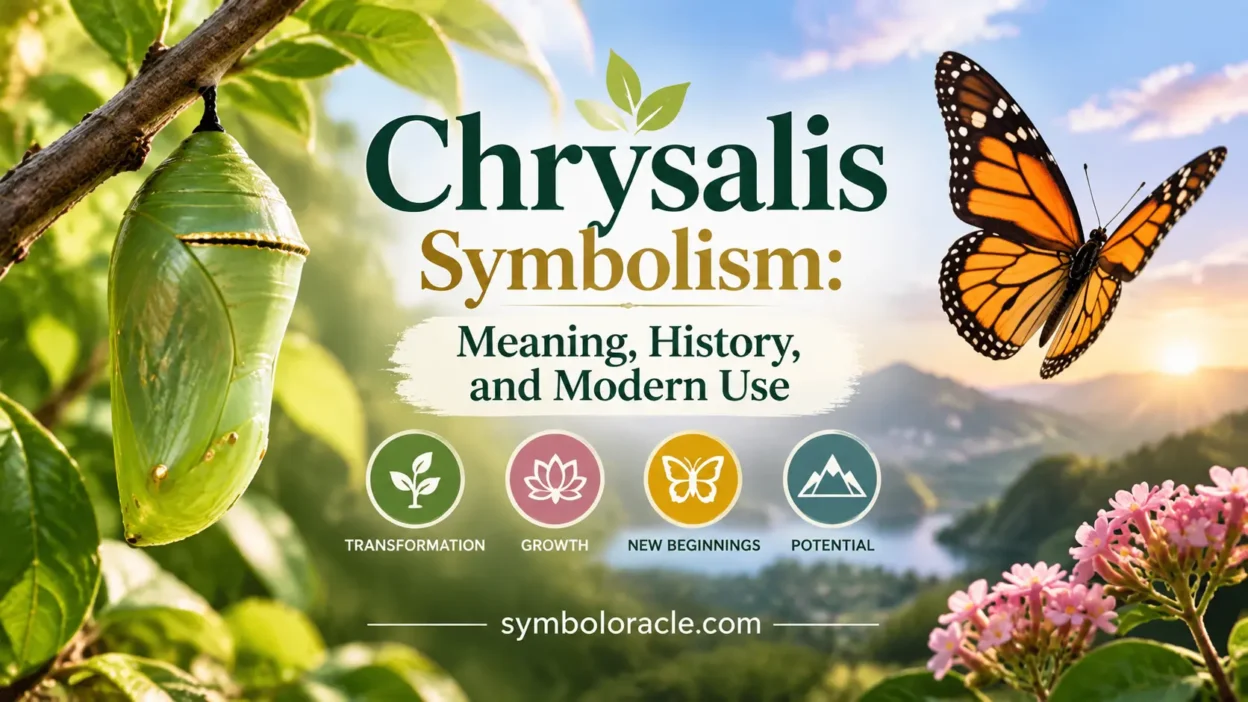
A chrysalis is the protective stage where a caterpillar changes into a butterfly or moth, and chrysalis symbolism commonly represents personal growth, transformation, patience, and the process of becoming something new. In modern American culture, people often connect this image with life changes, healing journeys, creativity, and personal identity.
Unlike symbols that focus only on the final result, the chrysalis represents the important stage between an old identity and a new one. It reminds people that change often happens quietly before others can see the outcome.
The image appears in nature, art, tattoos, jewelry, books, and personal designs because it reflects a common human experience: leaving behind one chapter of life and preparing for another.
Quick Answer
Chrysalis symbolism commonly represents transformation, growth, and personal change in modern American culture, especially during periods of renewal, healing, and self-development. Historically, the chrysalis has been connected with ideas of rebirth, natural cycles, and the transition between one stage of life and the next.
TL;DR
- Chrysalis represents growth before visible change.
- Ancient cultures linked butterflies with transformation.
- Americans use it for personal renewal.
- Tattoos often symbolize life transitions.
- Nature connects chrysalis with patience.
- Modern designs highlight hope and identity.
What Is a Chrysalis and Why Does It Carry Meaning?
A chrysalis is the protective covering formed by a caterpillar during metamorphosis. Inside this structure, the insect undergoes major physical changes before emerging as a butterfly or moth.
The chrysalis is not simply a resting place. It is an active stage of development where an entirely different form takes shape. This natural process explains why many people associate it with hidden growth and preparation.
In everyday life, people rarely see the changes happening inside someone else. A person may be learning, recovering, adapting, or building a new identity long before those changes become visible. The chrysalis became meaningful because it provides a clear image of that unseen process.
For many Americans today, the symbol feels relatable because modern life often includes major transitions such as career changes, moving to a new place, personal healing, education, or changes in relationships.
What It Commonly Means in the United States
In the United States, the chrysalis is most often understood as a symbol of transformation and personal development. It represents a period when someone is preparing for a new stage of life.
Unlike a butterfly, which represents the completed transformation, the chrysalis focuses on the journey itself. It highlights patience, preparation, and the value of growth that happens away from public attention.
Common American interpretations include:
| Context | Meaning in the USA | Common Associations | Notes |
|---|---|---|---|
| Personal growth | Becoming a new version of yourself | Change, learning, confidence | Often used during life transitions |
| Healing journeys | Recovery and renewal | Emotional strength, rebuilding | Common in personal artwork |
| Tattoos | A reminder of transformation | Identity, survival, new beginnings | Often paired with butterflies |
| Home decor | Calm change and hope | Nature, beauty, patience | Used in artistic designs |
The meaning can differ from person to person. For some, the chrysalis represents overcoming hardship. For others, it simply reflects natural growth and the idea that change takes time.
Ancient Roots and Early Symbolism of Transformation
The symbolic connection between butterflies and transformation developed from observations of nature. Ancient communities noticed that caterpillars appeared to disappear into a protective shell before emerging with wings.
This dramatic change encouraged many cultures to associate butterflies and their earlier stages with ideas of renewal, the soul, and life cycles.
In ancient Greek traditions, butterflies were sometimes connected with the concept of the soul. The Greek word psyche was associated with both “soul” and “butterfly,” creating a connection between the insect and spiritual ideas about human existence.
Some ancient beliefs viewed the butterfly’s transformation as a reminder that life could move through different stages. However, interpretations varied across cultures, and not every society viewed butterflies or chrysalises in the same way.
The chrysalis itself became especially meaningful because it represents the hidden part of transformation rather than only the final beauty of the butterfly.
The Chrysalis in Nature: Why the Process Inspires Symbolism
The natural process behind the chrysalis explains much of its symbolic meaning.
A caterpillar enters the chrysalis stage after a period of growth. During this time, it does not simply wait. Its body changes through a complex biological process called metamorphosis.
This process provides several symbolic ideas:
- Growth requires time.
- Change can happen without outside recognition.
- Temporary isolation can support development.
- A new identity may form from an older one.
The chrysalis does not suggest that change happens instantly. Instead, it reflects gradual development. This makes it different from symbols that represent sudden success or immediate achievement.
Many people find this message meaningful because personal changes usually happen through small steps rather than one dramatic moment.
Emotional and Psychological Meaning of the Chrysalis
From a psychological perspective, the chrysalis can represent periods of reflection and internal change.
People often experience “chrysalis moments” when they step away from old routines and reconsider who they want to become. These periods may happen after major events such as graduation, loss, career shifts, or personal discoveries.
The symbol can communicate several emotional ideas:
Patience
A chrysalis reminds people that growth does not always produce immediate results. Some changes require time before they become visible.
Privacy
The enclosed form represents a private stage of development. Many personal changes happen internally before they appear externally.
Hope
Because the chrysalis leads to a new form, it is often connected with optimism about the future.
Self-acceptance
The symbol can suggest that transformation does not mean rejecting the past. Instead, it can mean building from previous experiences.
Chrysalis Symbolism in American Culture
In the United States, the chrysalis often appears in places connected with personal stories, creativity, and change. It is especially common in artwork, educational materials, wellness spaces, and personal designs because it represents a process that many people experience in their own lives.
One reason the symbol feels familiar to Americans is its connection with the idea of self-improvement. Many cultural messages in the U.S. focus on learning, adapting, and creating a better future. The chrysalis fits this idea because it represents preparation before achievement.
People may use chrysalis imagery during important moments such as:
- Starting a new career
- Recovering from difficult experiences
- Entering adulthood
- Moving to a new environment
- Building a new personal identity
- Celebrating creative growth
The symbol is also common in schools and children’s education because butterfly development teaches lessons about nature, patience, and change. Teachers often use the caterpillar-to-butterfly process to explain growth and development.
In American art and design, the chrysalis usually carries a positive meaning. It rarely focuses on struggle alone. Instead, it highlights the possibility that a difficult or uncertain stage can lead to something meaningful.
Religious and Spiritual Interpretations Across Cultures
The chrysalis does not belong to one single religion, but its connection with transformation has appeared in different spiritual traditions through butterfly symbolism.
In some Christian interpretations, the butterfly’s transformation has been compared with themes of resurrection, renewal, and spiritual change. The movement from caterpillar to butterfly can represent leaving behind an old way of life and entering a renewed state.
Some people connect the chrysalis with personal faith journeys, seeing it as a metaphor for spiritual growth. However, the specific meaning depends on individual beliefs rather than a universal religious rule.
In ancient Greek culture, butterflies were connected with the soul through the concept of psyche. This association helped create a broader link between butterflies and ideas about life, identity, and transformation.
In some Indigenous cultures of North America, butterflies have appeared in stories, artwork, and traditions with meanings that vary among different nations. These interpretations are diverse and should not be treated as one single belief system.
The chrysalis itself is a newer symbolic focus compared with the butterfly because it emphasizes the hidden stage before transformation becomes visible.
Chrysalis Symbolism in Tattoos and Personal Style
Chrysalis tattoos are popular among people who want a symbol of personal change without showing only the final result.
A butterfly tattoo often represents freedom or beauty after transformation, while a chrysalis tattoo focuses more on the journey. It can communicate that someone is still growing, rebuilding, or becoming a different version of themselves.
Common meanings behind chrysalis tattoos include:
- Recovery after hardship
- Personal reinvention
- Emotional growth
- Leaving behind an earlier chapter
- Confidence during change
Design choices can add additional meaning. For example:
- A broken chrysalis may represent escaping limitations.
- A closed chrysalis may symbolize patience and preparation.
- A chrysalis with flowers may connect growth with nature and renewal.
- A chrysalis with a butterfly may represent completing a major life transition.
In modern tattoo culture, people often choose symbols based on personal experiences rather than traditional meanings alone. A chrysalis tattoo may represent a private story that only the wearer fully understands.
Chrysalis Symbolism in Fashion, Jewelry, and Home Decor
The chrysalis appears less frequently than butterflies in fashion and decoration, but it carries a more subtle message.
Butterfly designs often emphasize beauty and freedom, while chrysalis designs highlight the stage before change. This makes the symbol appealing for people who prefer quieter representations of growth.
In jewelry, chrysalis-inspired designs may appear as:
- Pendants
- Charms
- Nature-themed accessories
- Artistic metalwork
These pieces are often chosen as reminders of personal progress.
In home decor, chrysalis imagery can create associations with:
- Natural beauty
- Calm environments
- Seasonal change
- Reflection and renewal
Unlike symbols connected with luxury or status, the chrysalis usually communicates personal meaning. It is less about appearance and more about the story behind the object.
Chrysalis Symbolism in Literature, Art, and Popular Culture
Writers and artists often use chrysalis imagery to represent characters experiencing major internal changes.
A character may be described as being “in a chrysalis stage” when they are between identities. They may have left behind an old life but have not yet reached a new one.
This idea appears in many forms of storytelling:
- Coming-of-age stories
- Personal transformation narratives
- Recovery stories
- Creative journeys
The chrysalis works well as an artistic symbol because it creates tension. The audience knows change is happening, but the final result has not appeared yet.
In visual art, the chrysalis may be shown alongside natural elements such as flowers, trees, water, or light. These combinations reinforce themes of growth and renewal.
Modern digital culture has also expanded the symbol’s use. People may share butterfly or chrysalis imagery online when discussing personal milestones, new goals, or changes in identity.
Common Misunderstandings About the Chrysalis Symbol
Although the chrysalis is usually viewed positively, some interpretations can oversimplify its meaning.
One common misunderstanding is that transformation always produces a perfect outcome. In nature, metamorphosis is complex, and human growth is rarely a simple before-and-after story.
The chrysalis does not mean that every difficult experience automatically creates improvement. Instead, it represents the possibility of change and the process of development.
Another misunderstanding is that the chrysalis represents complete isolation. While the image suggests a protected stage, personal growth often happens with support from family, friends, teachers, or communities.
Some modern interpretations also treat the symbol as a guarantee of success. Historically and culturally, the chrysalis is better understood as a symbol of transition rather than a promise of a specific result.
How Chrysalis Meaning Has Changed Over Time
The meaning of the chrysalis developed from observations of nature and gradually expanded into a broader human metaphor.
Early interpretations focused mainly on the mystery of transformation. People saw an insect enter a protective shell and later emerge in a completely different form.
Over time, the symbol became connected with ideas such as:
- Spiritual renewal
- Personal development
- Emotional recovery
- Creative change
- Identity formation
In modern American culture, the chrysalis has moved away from being only a natural symbol. It now often represents personal experiences and individual stories.
Today, someone may use the chrysalis to describe a quiet period of preparation before a major change. This interpretation reflects modern views about growth, self-discovery, and personal identity.
Chrysalis Symbolism Compared With Butterfly Symbolism
Although they are connected, the chrysalis and butterfly represent different stages of transformation.
| Symbol | Main Meaning | Common U.S. Interpretation | Key Difference |
|---|---|---|---|
| Chrysalis | Preparation and hidden growth | Personal development | Focuses on the process |
| Butterfly | Freedom and completed change | Renewal and expression | Focuses on the result |
| Caterpillar | Early beginnings | Learning and potential | Represents the starting stage |
| Moth chrysalis | Quiet transformation | Adaptation and mystery | Often linked with nighttime imagery |
The chrysalis is often chosen by people who identify with the middle stage of change. It recognizes that becoming something new takes time.
Modern Uses of Chrysalis Symbolism
Today, chrysalis imagery appears in many areas of American life.
Wellness and Personal Development
Some wellness communities use chrysalis imagery to represent reflection, recovery, and rebuilding. The symbol fits conversations about becoming healthier emotionally and mentally.
Education
Schools use butterfly life cycles to teach children about science and natural change. The chrysalis becomes a visual example of development.
Branding and Design
Some organizations use chrysalis imagery to communicate growth, creativity, or transformation. It is especially common among businesses related to personal services, coaching, education, and creative work.
Social Media
Online, people often share chrysalis and butterfly images when discussing new beginnings, life updates, or personal milestones.
The symbol remains popular because it allows people to express change without explaining every detail of their personal journey.
Frequently Asked Questions
What does chrysalis symbolism mean?
Chrysalis symbolism represents transformation, preparation, and growth before visible change. It focuses on the process of becoming something new rather than only the final result.
What does a chrysalis tattoo symbolize?
A chrysalis tattoo often represents personal growth, recovery, and a major life transition. Many people choose it to mark a period when they changed their identity, goals, or direction.
Is a chrysalis a positive symbol?
Yes, most modern interpretations view the chrysalis as a positive symbol of development and renewal. However, it represents a process of change rather than guaranteed success.
What is the spiritual meaning of a chrysalis?
Spiritually, some people connect the chrysalis with renewal, inner growth, and transformation. Different traditions interpret butterfly-related symbols in different ways.
How is a chrysalis different from a butterfly symbol?
A chrysalis represents the hidden stage of transformation, while a butterfly usually represents the completed change. One focuses on preparation, and the other focuses on emergence.
Why do people use chrysalis imagery in art?
Artists use chrysalis imagery because it visually represents transition and potential. It can express ideas about identity, creativity, healing, and personal evolution.
Does the chrysalis symbolize rebirth?
The chrysalis can symbolize rebirth in some cultural and personal interpretations. It usually refers to renewal and a new stage of life rather than literal rebirth.
Conclusion
The chrysalis represents the stage of life when change is happening beneath the surface. It reminds people that growth does not always appear immediately and that preparation can be an important part of transformation.
From nature studies to tattoos, artwork, and personal expressions, chrysalis symbolism continues to represent patience, renewal, and the journey toward becoming something new. Its meaning remains flexible because each person can connect it with their own experience of change.
A chrysalis does not show the finished story. It represents the moment when a new story is still being created.


