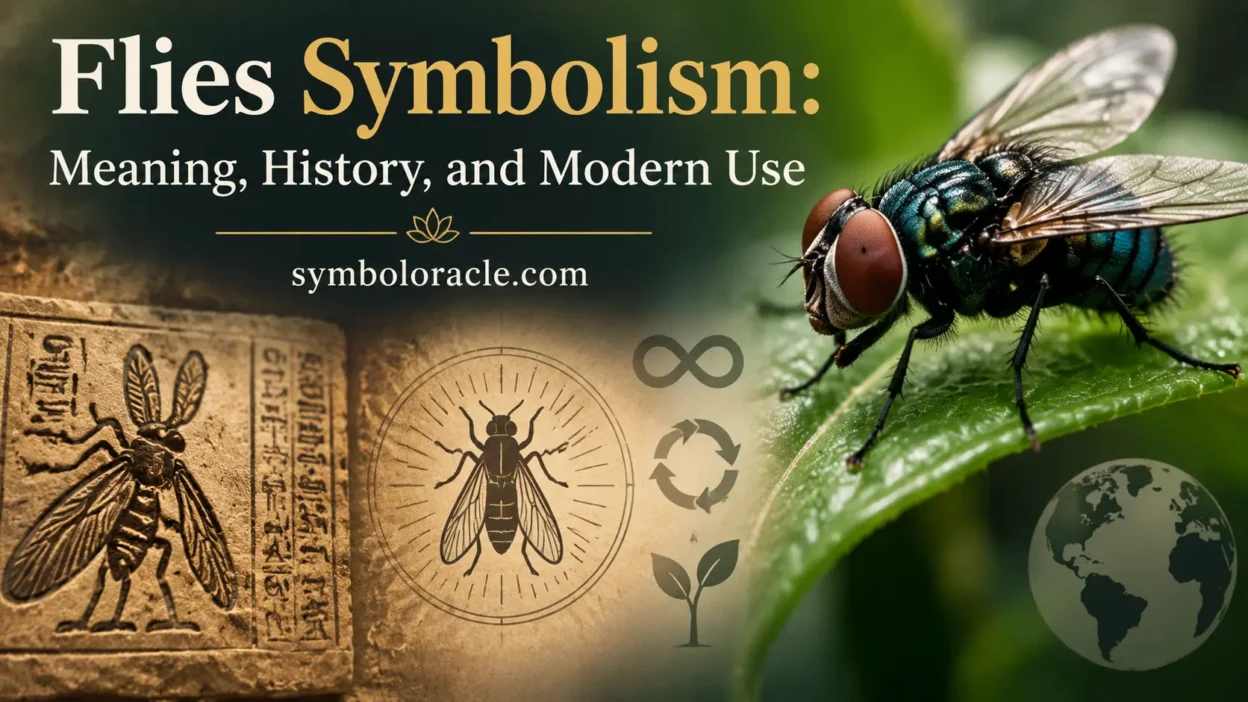
A small fly appearing near food, a painting, a tattoo, or a story can carry meanings far beyond the insect itself. Flies symbolism often connects with ideas of change, decay, survival, persistence, and the temporary nature of life. Because flies live close to both natural cycles and human environments, different cultures have viewed them as signs of warning, transformation, resilience, or even spiritual messages.
Although many people in the United States immediately associate flies with annoyance, dirt, or disease, the symbol has a more complex history. Artists, writers, religious traditions, and ancient civilizations have used the fly to represent everything from mortality and corruption to determination and adaptation.
Understanding the meaning of the fly requires looking beyond its reputation as a pest. The insect plays an important role in ecosystems by helping break down organic material, and its ability to survive in difficult conditions has influenced symbolic interpretations across cultures.
Quick Answer
Flies symbolism commonly represents decay, change, persistence, and the temporary nature of life in modern American culture. Historically, flies have also been connected with warnings, spiritual themes, mortality, and survival because of their relationship with decomposition and renewal.
TL;DR
- Flies symbolize change, decay, and life cycles.
- Ancient cultures viewed flies as signs of power or warning.
- Americans often associate flies with annoyance and transformation.
- Religious traditions linked flies with temptation and corruption.
- Fly tattoos can represent resilience and survival.
- Modern art uses flies to explore mortality and imperfection.
What the Fly Symbol Represents in Everyday Life
The common housefly is one of the insects most familiar to humans. With its small body, rapid movement, and ability to appear almost anywhere, the fly has become a symbol people often notice because it interrupts ordinary experiences.
In everyday American culture, flies are usually connected with unpleasant ideas. They may remind people of spoiled food, poor sanitation, summer heat, or neglected spaces. Because of this association, the fly often represents things that are unwanted, ignored, or beginning to break down.
However, symbolism depends on context. The same qualities that make flies uncomfortable also create other interpretations. A fly’s ability to survive, reproduce quickly, and adapt to changing environments can represent endurance and flexibility.
The fly is therefore a symbol with two sides:
| Context | Meaning in the USA | Common Associations | Notes |
|---|---|---|---|
| Nature | Life cycles and renewal | Decomposition, ecosystems | Shows nature’s balance |
| Art | Mortality and imperfection | Human weakness, passing time | Used as a visual message |
| Tattoos | Survival and resilience | Strength, adaptation | Often chosen for personal meaning |
| Religion | Warning or temptation | Sin, corruption | Depends on tradition |
| Literature | Social criticism | Decay, disorder | Used as a metaphor |
Why Flies Became Symbols of Decay and Change
One of the strongest meanings connected to flies comes from their relationship with decomposition. Flies are commonly found around decaying organic material because their life cycle depends on environments where matter is breaking down.
For humans, this connection created a symbolic link between flies and endings. A fly appearing near something damaged or forgotten can represent decline, neglect, or the natural process of returning to nature.
In art and literature, this idea became especially important. A fly can remind viewers that beauty and success do not last forever. A wealthy person, a beautiful object, or a powerful society can eventually experience decline.
This does not always make the fly a negative symbol. In many interpretations, decay is not only about destruction. It is also about transformation. Nature uses decomposition to create new growth, making the fly a reminder that endings can lead to new beginnings.
Ancient Roots of Fly Symbolism
The symbolic history of flies reaches back thousands of years. Ancient societies observed these insects closely because they appeared around food, animals, and human settlements.
In ancient Egypt, flies were connected with bravery and military strength. Fly-shaped decorations and awards represented persistence because flies were difficult to eliminate and repeatedly returned after being disturbed.
This interpretation is very different from the modern view of flies as simply unpleasant insects. Egyptians recognized a quality hidden behind the irritation: determination.
In Mesopotamian cultures, flies also appeared in symbolic and religious contexts. Some traditions connected them with death and the underworld, while fly-shaped objects were used as decorative items.
These examples show that early civilizations did not view flies in only one way. The insect could represent both negative forces and admirable qualities.
Flies Symbolism in Religion and Spiritual Traditions
Religious interpretations of flies are among the strongest symbolic associations throughout history.
In some Christian traditions, flies became connected with corruption, temptation, and evil. The name Beelzebub, often translated as “Lord of the Flies,” contributed to this association between flies and negative spiritual forces.
The Bible also includes the plague of flies in the story of Exodus, where swarms of flies appear as part of divine punishment against Egypt. Because of this story, flies became associated with judgment and warning in many Western interpretations.
However, religious symbolism is not universal. Some traditions recognize insects as important parts of creation rather than symbols of evil. The fly’s role in nature can represent balance, renewal, and the interconnectedness of living things.
How Americans Interpret Fly Symbolism Today
In the United States, the meaning of flies depends heavily on personal experience and cultural context.
For many Americans, the first reaction to a fly is practical rather than symbolic. People often think about cleanliness, food safety, or household problems. This everyday relationship has made the fly a symbol of irritation and unwanted disruption.
At the same time, modern American artists and creators often use flies differently. A fly in artwork may represent:
- human imperfection
- overlooked details
- survival under pressure
- uncomfortable truths
- the temporary nature of life
The fly appears in movies, paintings, fashion designs, and tattoos because it creates an immediate emotional reaction. Unlike traditionally beautiful symbols such as butterflies or flowers, flies create curiosity because they challenge normal ideas about attractiveness.
The Fly as a Symbol of Survival and Persistence
Although flies often receive negative attention, their survival abilities have created a different symbolic meaning.
Flies can adapt quickly to changing environments. They survive in conditions where many other creatures struggle. Because of this, some people view the fly as a symbol of persistence and determination.
This interpretation appears in modern jewelry, artwork, and personal symbolism. Someone who chooses a fly image may be expressing ideas such as:
- “I survived difficult circumstances.”
- “I adapt when life changes.”
- “I continue despite obstacles.”
The fly’s message in this context is not about being unpleasant. Instead, it highlights endurance.
Flies in Art: Mortality, Imperfection, and Reality
Artists have used flies as symbolic details for centuries. In European Renaissance paintings, a painted fly often represented mortality and the temporary nature of human achievements.
A fly placed on a beautiful painting created contrast. The viewer saw something attractive alongside something associated with decay. This combination encouraged reflection about time and human limitations.
The artistic use of flies also demonstrated skill. Some painters included realistic flies as visual challenges, showing their ability to imitate nature.
Modern artists continue this tradition by using flies to question ideas about beauty, cleanliness, and perfection.
Fly Symbolism in Tattoos and Personal Identity
Fly tattoos are less common than butterfly, snake, or bird tattoos, which makes them stand out. People who choose a fly design often want a symbol with a more unusual meaning.
Common interpretations include:
- resilience after hardship
- acceptance of imperfections
- transformation through struggle
- connection with nature
- awareness of mortality
A fly tattoo can also represent rejecting traditional beauty standards. Instead of choosing a symbol considered attractive, the person may choose something ordinary or disliked and give it personal value.
The meaning depends on the individual’s story rather than the insect alone.
Flies in Literature and Storytelling
Writers have often used flies as symbolic objects because they naturally create strong emotional reactions. A fly can appear harmless, annoying, or disturbing depending on the situation, which makes it useful for exploring human behavior and society.
In literature, flies frequently represent disorder, corruption, or situations that have been ignored for too long. When a writer describes flies gathering around a place or object, it may suggest that something beneath the surface is unhealthy.
For example, a fly appearing in a story about a wealthy family might symbolize hidden problems behind an attractive appearance. A perfect-looking home with flies nearby can suggest that something is wrong despite what people see on the outside.
Flies also appear in stories about survival. Because the insect continues living in difficult conditions, writers sometimes use it as a metaphor for characters who endure hardship.
The symbolism usually depends on the writer’s purpose:
- A fly near decay may represent decline or neglect.
- A persistent fly may represent endurance.
- A fly disturbing a peaceful scene may represent an uncomfortable truth.
This flexibility makes the fly a useful symbol in fiction, poetry, and visual storytelling.
The Psychological Meaning Behind Fly Symbolism
From a psychological perspective, flies can represent thoughts or experiences that people find difficult to ignore.
A buzzing fly is a small but persistent distraction. It returns repeatedly, demands attention, and interrupts comfort. Because of this, some symbolic interpretations connect flies with:
- unwanted thoughts
- unresolved problems
- irritation
- mental distractions
- uncomfortable realities
The fly can represent something that a person tries to avoid but eventually must face.
At the same time, the insect can symbolize acceptance. Life includes unpleasant moments, imperfections, and situations that cannot be controlled. A fly can remind people that nature is not always beautiful or convenient, but every creature has a role.
This interpretation connects with modern ideas about embracing imperfections rather than expecting life to be completely clean or predictable.
Positive Meanings Associated With Flies
Although many people view flies negatively, several positive meanings have developed around this insect.
The most common positive interpretations include:
Adaptability
Flies survive in many environments because they adjust quickly. Symbolically, this can represent a person’s ability to handle change.
Persistence
A fly often returns even after being removed. This behavior can symbolize determination and refusing to give up.
Resourcefulness
Flies use available resources to survive. In symbolic terms, they can represent creativity and making the most of difficult situations.
Transformation
Because flies are connected with decomposition, they can represent the process of change. Old material breaks down, allowing new life to develop.
These interpretations are especially common in modern personal symbolism, where people often choose unusual symbols to represent their own experiences.
Negative Meanings Associated With Flies
The negative symbolism of flies is one of the most recognized interpretations.
Common negative meanings include:
- contamination
- decay
- corruption
- temptation
- annoyance
- disorder
- neglect
These associations developed because flies are often found around waste, spoiled food, and decaying materials.
In American culture, this connection remains strong. A fly in a kitchen may immediately create concerns about cleanliness and hygiene. In movies and storytelling, flies often appear during scenes involving danger, death, or abandoned places because audiences already understand the emotional message.
However, the negative meaning should not be viewed as the only interpretation. Symbolism changes depending on context.
Cross-Cultural Interpretations of Fly Symbolism
Different societies have created different meanings for flies based on their environment, beliefs, and experiences.
Ancient Egypt
In ancient Egypt, flies could represent courage and persistence. Military leaders were sometimes associated with fly imagery because the insect represented determination and the ability to keep returning.
Ancient Near Eastern Traditions
Some ancient Near Eastern cultures connected flies with illness, death, and spiritual danger because of their association with decay and disease.
European Traditions
European religious and artistic traditions often used flies as symbols of corruption, temptation, and mortality. The connection became especially strong through Christian references involving Beelzebub.
Indigenous Perspectives
Many Indigenous cultures emphasize the role of insects within natural systems. Rather than viewing insects only negatively, some traditions recognize their ecological importance and relationship with the environment.
These differences show why symbols should be understood within cultural context. A fly does not carry one universal meaning.
Flies Symbolism in Modern American Pop Culture
Modern entertainment continues to use flies as visual symbols.
In films and television, flies often appear in scenes involving:
- abandoned locations
- crime investigations
- psychological tension
- decay or destruction
Their presence quickly communicates that something is uncomfortable or unusual.
In music and visual art, flies may represent rebellion against traditional ideas of beauty. Creators sometimes choose insects like flies because they challenge viewers and create stronger emotional reactions than more familiar symbols.
The fly can make people ask questions:
Why is this image here?
What does it represent?
What hidden message is being communicated?
That curiosity is one reason the insect remains relevant in modern creative expression.
Fly Symbolism in Fashion, Jewelry, and Home Decor
While flies are not as common in design as flowers, birds, or butterflies, they appear in certain fashion and decorative styles.
Designers may use fly imagery to create a specific mood, such as:
- dark or gothic aesthetics
- nature-inspired themes
- vintage artwork
- unconventional fashion statements
A fly-shaped piece of jewelry may symbolize individuality because it avoids traditional decorative choices.
In home decor, fly imagery can appear in paintings, sculptures, or antique-inspired designs. Often, the purpose is not to celebrate the insect itself but to communicate ideas about history, nature, or imperfection.
The unusual nature of the symbol makes it memorable.
Why People Choose Fly Symbols Despite Their Reputation
Choosing a fly as a personal symbol can seem surprising because many people associate the insect with unpleasant experiences.
However, unusual symbols often attract people because they allow deeper personal expression.
Someone may choose a fly because it represents:
- overcoming difficult circumstances
- accepting flaws
- surviving unwanted situations
- seeing beauty in overlooked things
- challenging social expectations
Unlike symbols that already have widely accepted meanings, the fly allows more personal interpretation.
A butterfly commonly suggests transformation. A fly can suggest transformation that happens in uncomfortable conditions.
The Difference Between Real Flies and Symbolic Flies
It is important to separate the actual insect from its symbolic meaning.
Real flies play important ecological roles. They help break down organic matter, contribute to nutrient cycles, and support food chains.
Symbolically, however, humans often focus on emotional reactions rather than biological facts.
This creates a contrast:
| Real Fly | Symbolic Meaning |
|---|---|
| Helps decomposition | Represents change and renewal |
| Survives many environments | Represents resilience |
| Often considered annoying | Represents unwanted truths |
| Appears around decay | Represents mortality and endings |
| Common everyday insect | Represents overlooked details |
Understanding this difference helps explain why a creature people dislike can still become a meaningful symbol.
Common Misunderstandings About Fly Symbolism
Because flies often have negative associations, their symbolism is sometimes misunderstood.
One common misunderstanding is that flies always represent something bad. In reality, many traditions connect them with survival, persistence, and natural cycles.
Another misunderstanding is that seeing a fly always carries a spiritual message. While some people personally interpret encounters with flies symbolically, there is no universal meaning attached to every appearance of an insect.
Symbolism is created through culture, personal experience, and context. A fly in a painting, dream, tattoo, or story may represent something completely different depending on the situation.
Another issue is the misuse of historical meanings. Ancient symbols are sometimes simplified online and presented as having one fixed definition. In reality, interpretations have changed across time and cultures.
How Fly Symbolism Has Changed From the Past to Today
The meaning of flies has evolved significantly.
In ancient societies, flies could represent both negative forces and admirable qualities such as persistence. Religious traditions often emphasized ideas of corruption or warning. Artists used flies to discuss mortality and the temporary nature of life.
Today, American interpretations are more diverse. Some people still view flies mainly as unpleasant insects connected with dirt or disease. Others see them as symbols of resilience, adaptation, and acceptance of imperfection.
Modern culture often values personal interpretation. A fly no longer needs to represent only decay or negativity. It can represent survival, creativity, or the ability to exist in difficult environments.
The symbol has shifted from a simple sign of disgust into a more complex image of nature’s contradictions.
Flies Symbolism in Dreams and Personal Interpretations
Dreams involving flies are often interpreted through personal emotions and life experiences rather than through one fixed meaning. Because flies can create feelings of discomfort, persistence, or attention, they may appear in dreams during times when a person is dealing with something difficult to ignore.
A fly in a dream may represent:
- an irritating problem that keeps returning
- a situation that needs attention
- feelings of frustration or stress
- personal change or transition
- something hidden that needs to be addressed
For example, dreaming about many flies around a certain place might reflect feelings that an area of life has become overwhelming or neglected. A single fly may represent a smaller issue that continues to attract attention.
However, dream symbolism is highly personal. A person who studies insects, works in nature, or has a positive relationship with animals may interpret a fly differently from someone who strongly dislikes them.
Modern psychology generally views dreams as connected to emotions, memories, and personal experiences rather than universal symbolic messages. Therefore, the meaning of a fly in a dream depends on the dreamer’s own circumstances.
Spiritual Interpretations of Flies in Modern Culture
Some people continue to view flies through a spiritual lens. In these interpretations, flies may represent messages about change, awareness, or the need to examine uncomfortable parts of life.
Certain spiritual traditions associate flies with:
- cleansing old patterns
- recognizing hidden problems
- accepting natural cycles
- understanding transformation
These interpretations often come from observing the fly’s relationship with decomposition. Since flies appear during the breakdown of old material, they can be viewed symbolically as reminders that endings are part of renewal.
At the same time, spiritual interpretations vary widely. There is no single belief system that defines what a fly must symbolize. Personal beliefs, cultural background, and individual experiences all influence meaning.
For many modern Americans, symbolic interpretations are often personal rather than connected to a specific religious tradition.
The Role of Flies in Environmental Symbolism
Beyond cultural meanings, flies can also represent the relationship between humans and the natural world.
Many people dislike flies because they associate them with unwanted environments. However, ecological understanding shows that flies serve important purposes. They help recycle nutrients, support ecosystems, and contribute to natural processes.
This creates an interesting symbolic contrast.
A fly may represent:
- the parts of nature humans prefer to avoid
- the importance of overlooked creatures
- the balance between life and death
- the connection between all living things
Environmental artists and educators sometimes use insects like flies to encourage people to think differently about nature. The symbol challenges the idea that only attractive animals have value.
Flies Symbolism Compared With Other Insects
The meaning of flies becomes clearer when compared with other commonly recognized insect symbols.
| Insect | Common Symbolic Meaning | Main Difference |
|---|---|---|
| Butterfly | Transformation and beauty | Focuses on visible change |
| Bee | Cooperation and productivity | Represents community effort |
| Spider | Creativity and patience | Connected with creation and strategy |
| Beetle | Protection and renewal | Often linked with ancient traditions |
| Fly | Survival and imperfection | Represents overlooked realities |
Unlike butterflies or bees, flies do not usually represent positive qualities at first glance. Their symbolism often comes from accepting uncomfortable parts of existence.
This makes the fly a symbol of contrast. It connects ideas that seem opposite: decay and renewal, discomfort and survival, rejection and acceptance.
Fly Symbolism and Human Identity
Symbols often become meaningful because they reflect parts of human experience. The fly can represent aspects of life that people may prefer not to discuss openly.
For some individuals, the fly symbolizes:
- surviving difficult periods
- embracing personal flaws
- refusing to be defined by appearance
- finding value in unexpected places
This interpretation is especially relevant in modern culture, where many people explore identity through tattoos, artwork, and personal designs.
A person choosing a fly symbol may be communicating that life is not always polished or perfect. Challenges, mistakes, and difficult experiences can become part of a person’s story rather than something to hide.
The fly can represent acceptance of reality instead of an idealized version of life.
Why Flies Remain Relevant in 2025–2026 Culture
Even in a highly digital world, insects continue to appear in fashion, entertainment, and online culture because they carry immediate visual meaning.
In recent years, creators have increasingly used unconventional natural symbols to express individuality. A fly fits this trend because it is recognizable but rarely considered ordinary decoration.
Modern uses include:
- alternative fashion designs
- tattoo artwork
- digital illustrations
- album artwork
- fantasy and horror themes
- nature-inspired designs
The fly’s ability to create a reaction makes it useful for modern creators. People may feel curiosity, discomfort, or fascination when they see it, which creates stronger engagement with the artwork.
When Fly Symbolism Becomes Misused
Like many symbols, fly imagery can sometimes be misunderstood or used without considering its historical background.
A common problem occurs when one meaning is presented as the only meaning. For example, describing every fly symbol as “evil” ignores traditions where flies represented persistence or natural balance.
Another issue is using historical symbols without understanding their original context. A design may borrow from ancient imagery but lose the meaning that gave it importance.
Responsible interpretation requires considering:
- the culture where the symbol originated
- the purpose behind its use
- the time period involved
- the personal meaning given by the individual
Symbols change because people continue to reinterpret them.
Common Questions About Fly Symbolism
What does a fly symbolize spiritually?
A fly may symbolize change, awareness, transformation, or the need to address neglected issues in some spiritual interpretations. However, meanings vary depending on personal beliefs and cultural traditions.
Are flies a bad symbol?
Flies are not always a negative symbol. While they are often connected with decay, disease, or annoyance, they can also represent survival, adaptability, and the natural cycle of life.
What does a fly tattoo symbolize?
A fly tattoo can represent resilience, acceptance of imperfections, personal transformation, or surviving difficult experiences. The meaning usually depends on the wearer’s personal story.
Why are flies associated with death?
Flies are often associated with death because they appear around decomposing material. This connection led many cultures to use flies as symbols of mortality and the temporary nature of life.
What do flies represent in American culture?
In the United States, flies commonly represent annoyance, cleanliness concerns, and unwanted problems. In art and personal symbolism, they can also represent survival, change, and individuality.
Did ancient cultures view flies negatively?
Not always. Some ancient societies connected flies with disease or decay, while others viewed them as symbols of persistence, strength, and endurance.
Conclusion
The meaning of a fly is more complicated than its everyday reputation suggests. While many people in modern America immediately connect flies with annoyance, dirt, or decay, the symbol has developed broader interpretations involving survival, change, persistence, and the natural cycle of life.
Across history, different cultures have viewed flies through different perspectives. Some saw them as warnings or reminders of mortality, while others recognized their ability to endure and adapt. In modern art, tattoos, and personal expression, the insect often represents accepting imperfections and finding meaning in overlooked parts of existence.
Ultimately, flies symbolism reflects the contrast between discomfort and importance. The fly reminds people that even small and unwanted parts of nature can carry lessons about adaptation, transformation, and the realities of life.