The king of clubs symbolism is often connected with leadership, intelligence, authority, ambition, and practical strength. As one of the four kings in a traditional deck of playing cards, the King of Clubs carries meanings shaped by European card traditions, cultural storytelling, and modern interpretations in the United States.
People encounter the King of Clubs in card games, artwork, tattoos, jewelry, fashion designs, and symbolic collections. While its meaning changes depending on context, many people view it as an image of confidence, strategy, and controlled power rather than simple dominance.
Quick Answer
King of clubs symbolism commonly represents leadership, wisdom, confidence, and strategic thinking in modern American culture, especially in personal identity, tattoos, and card-related designs. Historically, it developed from European playing card traditions where kings represented authority and the club suit became associated with action, growth, and worldly achievement.
TL;DR
- King of Clubs represents leadership and strategic thinking.
- Playing cards developed from European social traditions.
- Clubs often symbolize action, growth, and ambition.
- Americans use it in tattoos and personal designs.
- The symbol can represent confidence without aggression.
What the King of Clubs Looks Like and Where It Appears
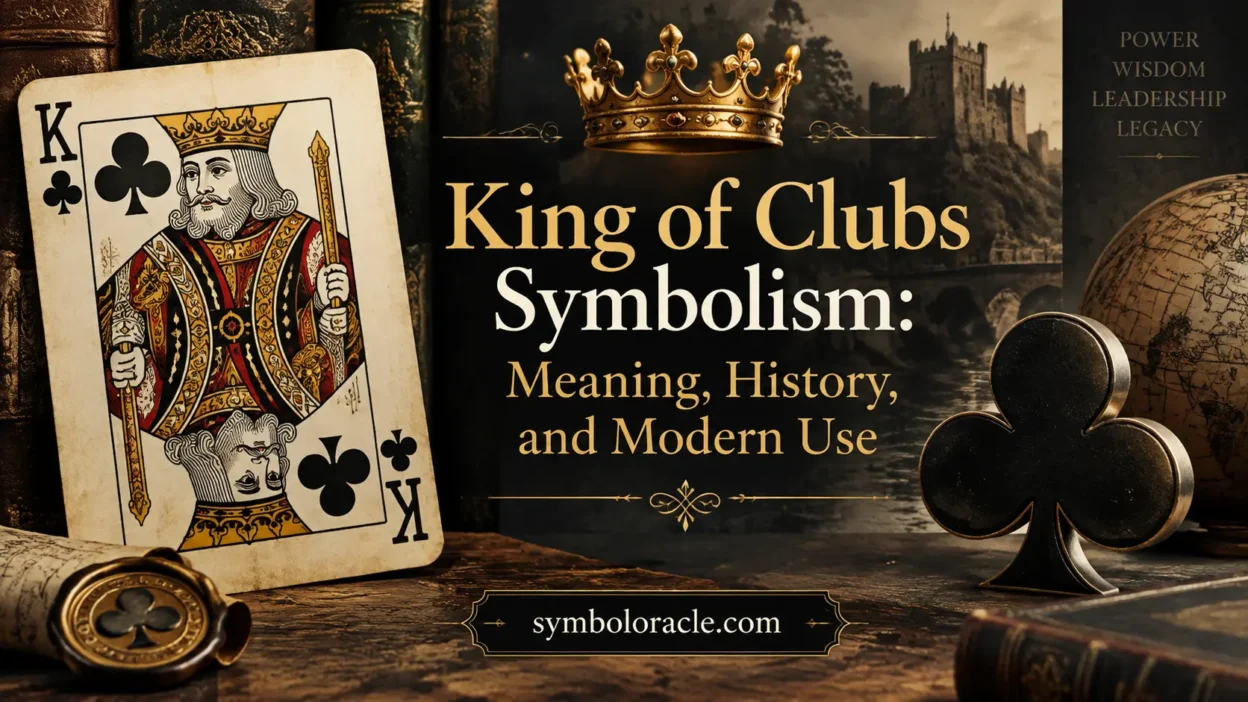
The King of Clubs is a playing card featuring a crowned king alongside the club suit symbol, which looks like a three-leaf shape connected to a stem. In most modern decks, the card follows a traditional royal design with artwork influenced by European court imagery.
People usually see the King of Clubs in:
- Standard card decks
- Casino and gambling artwork
- Tattoos
- Jewelry designs
- Posters and decorative art
- Character designs in movies and games
The card combines two symbolic elements: the king and the club. The king represents social authority and leadership, while the club adds ideas related to action, effort, and material achievement.
What It Commonly Means in the United States
In American culture, the King of Clubs is often interpreted as a symbol of a person who leads through knowledge, confidence, and practical decisions. Unlike symbols based only on physical power, this card often suggests someone who thinks carefully before acting.
Common interpretations include:
| Context | Meaning in the USA | Common Associations | Notes |
|---|---|---|---|
| Personal identity | Confidence and leadership | Ambition, independence | Often used in tattoos |
| Playing cards | Strategy and skill | Games, competition | Connected with card culture |
| Fashion | Bold personality | Style, confidence | Used as a statement design |
| Relationships | Strong character | Loyalty, reliability | Depends on personal meaning |
Many Americans associate the King of Clubs with a “leader” personality: someone who takes responsibility, solves problems, and influences others through ability.
Ancient Roots and Early Playing Card Symbolism
The symbolic foundation of the King of Clubs comes from the history of playing cards. Playing cards likely traveled from Asia into Europe during the medieval period, where European societies developed their own suits, court figures, and artistic styles.
The four kings in European card decks represented rulers and social authority. They were not always tied to specific historical individuals, although some traditions later connected card kings with famous rulers.
The club suit evolved from earlier symbols connected with leaves, weapons, or agricultural tools depending on the card tradition. Over time, clubs became associated with active qualities such as effort, growth, and achievement.
The King of Clubs therefore developed as a combination of royal authority and practical action.
The Meaning of the Club Suit in Symbolism
To understand the King of Clubs, the club symbol itself is important. In many traditional interpretations, clubs represent the physical world, work, ambition, and movement.
Compared with other suits:
- Hearts are often connected with emotions and relationships.
- Diamonds are linked with wealth and value.
- Spades are often associated with challenges, thought, or conflict.
- Clubs are commonly linked with action and development.
Because of this association, the King of Clubs is often viewed as an active ruler rather than a passive figure. The symbolism focuses on making decisions and creating results.
Why Kings Represent Authority and Identity
Kings have been used as symbols of leadership across many cultures. Crowns, thrones, and royal clothing communicate status, responsibility, and social influence.
In symbolic art, a king does not always represent a literal monarch. Instead, the figure can represent:
- Personal confidence
- Self-control
- Experience
- Responsibility
- Achievement
The King of Clubs follows this broader tradition. Someone choosing this symbol may identify with qualities associated with a leader who relies on intelligence and experience.
King of Clubs Symbolism in American Culture
In the United States, playing card symbols have a strong connection with entertainment, competition, and personal expression. Cards appear in everything from casino culture to music, fashion, and tattoo art.
The King of Clubs does not have one official American meaning. Instead, people often give it personal interpretations based on their experiences.
Some common American meanings include:
- A successful personality
- A strategic thinker
- A confident individual
- Someone who creates their own path
- A person who values independence
The symbol can appear in designs representing ambition, entrepreneurship, or overcoming challenges.
Emotional and Psychological Meaning
Symbols often work because people connect images with personal qualities. The King of Clubs can represent the desire to become more capable, respected, and confident.
Psychologically, the image may communicate:
- A need for control over one’s life
- A desire for recognition
- Confidence in decision-making
- A competitive mindset
- A connection to personal goals
For some people, the card represents winning or success. For others, it represents maturity and responsibility.
The meaning depends less on the card itself and more on the story a person attaches to it.
King of Clubs Tattoos and Personal Expression
Card tattoos are popular because they allow people to express identity through recognizable imagery. The King of Clubs tattoo is often chosen by people who want to represent leadership, strategy, or individuality.
Common tattoo interpretations include:
- Confidence after overcoming difficulties
- Personal success
- Competitive spirit
- Respect for traditional card imagery
- A connection to games or chance
Some designs combine the King of Clubs with crowns, roses, flames, clocks, animals, or names to create a more personal meaning.
A tattoo does not automatically represent a single belief. Many people choose card symbols because they appreciate the artwork or the emotional connection.
Use in Fashion, Jewelry, and Design
The King of Clubs appears in clothing, accessories, and decorative designs because playing cards have a recognizable visual style.
Designers often use card imagery to create feelings of:
- Rebellion
- Confidence
- Luxury
- Vintage style
- Mystery
The symbol fits well with streetwear, casino-inspired fashion, and traditional tattoo aesthetics.
Jewelry featuring the King of Clubs may be worn as a reminder of personal goals, leadership qualities, or a meaningful life experience.
Cross-Cultural Views of Card Symbolism
Playing cards developed differently across cultures, so interpretations vary. In many European traditions, kings represented hierarchy and social order.
In some fortune-telling traditions, playing cards were used for reflection and storytelling. These practices created additional meanings around card suits and figures, although interpretations differ widely.
In Asian countries where Western-style cards became popular, card imagery often became connected with entertainment rather than traditional symbolism.
The King of Clubs does not carry one universal meaning. Its symbolism changes according to cultural background and personal use.
Positive and Negative Interpretations
Like many symbols, the King of Clubs can have different interpretations.
Positive meanings often include:
- Leadership
- Intelligence
- Determination
- Responsibility
- Achievement
Negative interpretations may include:
- Overconfidence
- Excessive control
- Aggressive ambition
- Desire for status
The difference depends on how the symbol is presented. A calm king may suggest wisdom, while an aggressive design may suggest dominance.
Misunderstandings and Modern Misuse
Playing card symbols are sometimes misunderstood because they appear in many different communities and styles. A King of Clubs image alone does not have one fixed message.
Some people incorrectly assume that all card symbols represent gambling or risky behavior. While cards are connected with casinos and games, they also represent art, history, competition, and personal identity.
It is important to consider the surrounding design and the person’s intended meaning before making assumptions.
How the Symbol’s Meaning Has Changed Over Time
The King of Clubs began as part of a system representing royal figures and card games. Over time, it moved beyond entertainment and became a symbol used in personal expression.
Modern interpretations focus less on monarchy and more on personal qualities such as confidence, ambition, and strategic thinking.
Today, many people view the card as a representation of becoming the “leader” of their own life rather than ruling over others.
Modern Uses in Pop Culture and Digital Spaces
The King of Clubs appears in movies, video games, illustrations, and online communities where card imagery is used to create memorable characters or visual identities.
Digital creators often use playing card symbols because audiences immediately recognize their meanings. A king card can suggest intelligence, competition, or a high-status personality.
In gaming culture, card symbols frequently represent ranking, skill, and achievement.
Frequently Asked Questions
What does the King of Clubs symbolize?
The King of Clubs commonly symbolizes leadership, confidence, intelligence, and strategic decision-making. Its meaning comes from combining royal imagery with the traditional symbolism of the club suit.
Is the King of Clubs a positive symbol?
Yes, many people view it positively as a sign of ambition, responsibility, and personal strength. However, some interpretations connect it with excessive pride or control depending on the context.
What does a King of Clubs tattoo mean?
A King of Clubs tattoo often represents confidence, success, independence, or a competitive personality. The meaning usually depends on additional tattoo elements and the wearer’s personal story.
Does the King of Clubs have a spiritual meaning?
Some people give playing cards personal or spiritual interpretations, but the King of Clubs does not have one universal religious meaning. Most traditional meanings come from card history and cultural symbolism.
Why are kings important in card symbolism?
Kings represent authority, experience, and leadership in many card traditions. They help create a symbolic hierarchy within the deck.
Is the King of Clubs connected to gambling?
The symbol can appear in gambling-related designs because it comes from playing cards. However, many people use it for artistic, personal, or cultural reasons unrelated to gambling.
Conclusion
The King of Clubs represents a blend of authority, intelligence, and action. Its meaning developed from European playing card traditions but continues to change as people use it in tattoos, fashion, art, and personal expression.
Today, king of clubs symbolism is often understood in the United States as a sign of confidence, strategic thinking, and the ability to lead through skill. Whether used as decoration or a personal symbol, the card reflects ideas about identity, ambition, and the choices people make in their own lives.