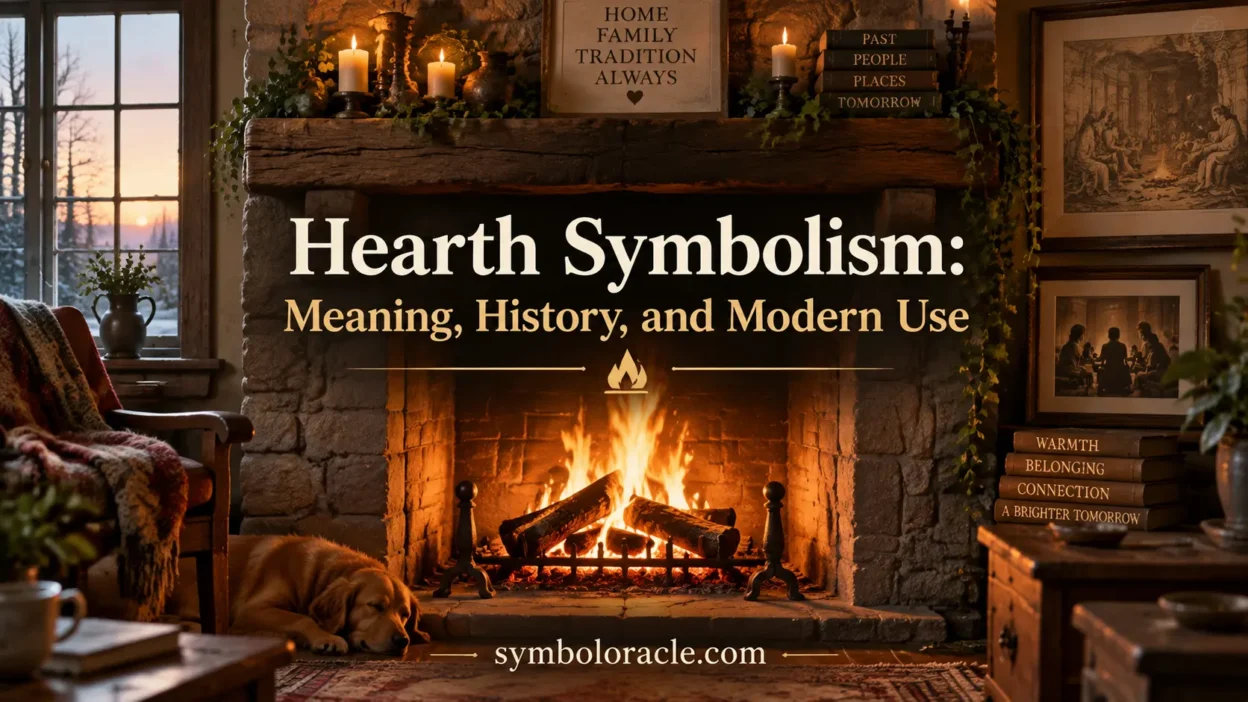
A hearth is more than a physical place where a fire burns. In hearth symbolism, it represents the center of home life, warmth, belonging, family connection, and shared experiences. In modern American culture, the hearth often reflects comfort, security, and the emotional importance of having a place where people gather.
For thousands of years, the hearth served as the heart of a household. Before modern heating and kitchens existed, the fire at the center of a home provided warmth, cooked food, offered light, and created a natural meeting place. Because of this role, many cultures connected the hearth with protection, family traditions, and community bonds.
Today, people still associate hearths with cozy homes, holiday gatherings, fireplaces, and memories created with loved ones. Whether seen in home design, literature, weddings, or seasonal decorations, the hearth continues to represent the idea of a welcoming place where people feel connected.
Quick Answer
Hearth symbolism commonly represents home, comfort, family connection, and emotional security in modern American culture. Historically, the hearth also symbolized survival, protection, community traditions, and the sacred center of household life in many cultures.
TL;DR
- Hearths symbolize home, warmth, and family bonds.
- Ancient fires connected households with survival and protection.
- Americans view hearths as symbols of comfort and belonging.
- Fireplaces often represent gathering and shared memories.
- Some traditions link hearths with household spirits.
- Modern designs use hearth imagery for emotional appeal.
What a Hearth Represents in Everyday Life
A hearth is traditionally the area where a household fire burns, often located in a fireplace or central part of a home. In earlier societies, it was not simply a heating source; it was the place where daily life happened.
People prepared meals near the hearth, gathered after work, told stories, and maintained family traditions around the fire. This practical importance shaped its symbolic meaning.
In the United States today, the hearth is often connected with ideas such as:
- A safe and welcoming home
- Family gatherings
- Emotional comfort
- Hospitality toward guests
- Stability during difficult times
A fireplace in a modern home may not be necessary for survival, but it still creates a visual and emotional connection to older ideas of togetherness.
The Ancient Roots of Hearth Symbolism
The symbolic meaning of the hearth began with humanity’s relationship with fire. Early communities depended on controlled fire for cooking, warmth, protection from animals, and social interaction.
Because the household fire required regular care, many societies treated the hearth as something valuable that represented continuity and responsibility. Keeping the fire alive became connected with maintaining the life of the household itself.
In ancient Greece and Rome, the household hearth held religious importance. Families honored household traditions connected with the fire, and the hearth represented family identity and ancestral connection.
Across Europe and other regions, the central fire often became a symbol of stability. A home without a maintained hearth could represent hardship, while a burning hearth suggested prosperity and safety.
How Americans Interpret the Hearth Today
In the United States, the hearth is strongly associated with the idea of “home.” It appears frequently in discussions about family, comfort, and personal belonging.
American culture often presents the home as a private place of safety away from outside pressures. The hearth fits naturally into this idea because it represents the emotional center of that space.
Common American interpretations include:
| Context | Meaning in the USA | Common Associations | Notes |
|---|---|---|---|
| Home fireplaces | Comfort and relaxation | Family rooms, cozy spaces | Often linked with peaceful living |
| Holiday gatherings | Connection and tradition | Christmas, winter celebrations | Represents shared memories |
| Home design | Warmth and hospitality | Rustic decor, cabins | Creates an inviting atmosphere |
| Literature and media | Belonging and identity | Family stories | Often represents emotional roots |
The hearth is especially common in American holiday imagery. Winter scenes featuring fireplaces, candles, and family gatherings often use hearth imagery to communicate closeness and celebration.
Fire, Family, and the Emotional Meaning of the Hearth
The emotional symbolism of the hearth comes from its connection to human relationships. A fire naturally draws attention and encourages people to sit together, talk, and slow down.
Psychologically, spaces associated with warmth and gathering can create feelings of safety. A fireplace may remind people of childhood homes, family traditions, or meaningful conversations.
The hearth can symbolize:
- Emotional support
- A sense of belonging
- Personal roots
- Stability
- Shared experiences
This explains why fireplaces remain popular in home design even when other heating options are more practical. Their value is often emotional rather than functional.
The Hearth in Mythology and Religious Traditions
Many cultures connected the household fire with spiritual ideas. The hearth was sometimes viewed as a place where the human world and sacred traditions met.
In ancient Greek tradition, Hestia represented the hearth, domestic life, and family unity. Roman traditions included Vesta, whose sacred fire represented continuity and protection.
Some cultures viewed the hearth as a symbolic guardian of the household. Stories and rituals often emphasized respecting fire because it provided life but also required care.
These beliefs show how people historically connected everyday household objects with larger ideas about family, identity, and protection.
Hearth Symbolism in Folklore and Traditional Beliefs
Folklore around the hearth often reflects the importance of the home as a protected space.
European traditions included stories about household spirits or guardians associated with domestic areas. While these beliefs varied widely, many shared the idea that the home had a special character shaped by the people living there.
The hearth became a symbol of:
- Family history
- Household protection
- Respect for tradition
- Connection between generations
Even when people no longer follow these beliefs, the emotional ideas remain familiar. Many people still describe a home as having a certain “spirit” created by memories and relationships.
Why Hearths Appear in American Holidays
Holiday traditions in the United States frequently use hearth imagery because fireplaces represent gathering and celebration.
During winter holidays, images of stockings, fireplaces, candles, and decorated mantels create a feeling of comfort and nostalgia. The hearth becomes a backdrop for family rituals.
Examples include:
- Hanging stockings near fireplaces
- Decorating mantels with seasonal items
- Gathering around fires during cold weather
- Sharing meals and stories at home
These traditions strengthen the association between the hearth and emotional connection.
Hearth Symbolism in Home Design and Architecture
Modern interior design often uses hearth imagery to create a feeling of warmth. A fireplace can become the visual center of a room, similar to how traditional hearths served as the center of household activity.
Design styles that often emphasize hearth symbolism include:
- Rustic cabins
- Farmhouse interiors
- Traditional homes
- Mountain retreats
- Cozy living spaces
Materials such as stone, brick, and wood are commonly used around fireplaces because they reinforce natural and traditional feelings.
The modern fireplace may represent a lifestyle choice rather than a necessity. It suggests relaxation, hospitality, and a connection to simpler forms of living.
Hearth Symbolism in Literature and Popular Culture
Writers and filmmakers often use hearth imagery to represent homecoming, safety, and personal identity.
A character returning to a hearth often represents more than returning to a building. It can symbolize reconnecting with family, memories, or personal values.
Common themes connected with hearth imagery include:
- Finding belonging
- Returning after hardship
- Protecting loved ones
- Preserving traditions
In fantasy stories, the hearth may also appear as a symbol of community and peace, especially when contrasted with dangerous outside environments.
Hearth Tattoos and Personal Symbolism
Although less common than symbols like animals or flowers, hearth tattoos can carry meaningful personal messages.
People who choose hearth imagery may associate it with:
- Family heritage
- A childhood home
- Personal resilience
- A loved one’s memory
- Creating a welcoming life
A hearth tattoo may include additional elements such as flames, houses, initials, or natural imagery to make the meaning more personal.
Unlike some symbols with fixed interpretations, hearth tattoos usually depend heavily on the individual’s life experiences.
Positive and Negative Interpretations of the Hearth
The hearth is mostly viewed positively, but its symbolism can have different meanings depending on context.
Positive meanings include:
- Love
- Protection
- Comfort
- Family unity
- Stability
However, fire itself has another side. A destroyed hearth can symbolize loss, separation, or the end of a household. In stories and historical accounts, an extinguished fire sometimes represents hardship or a broken connection.
This contrast reflects the dual nature of fire: it can provide warmth and life, but it requires care and respect.
Common Misunderstandings About Hearth Symbolism
One misunderstanding is that the hearth only represents traditional family structures. While family is a major part of its meaning, the symbol can represent any place where people experience belonging.
A hearth can symbolize:
- A chosen family
- A community gathering place
- Personal comfort
- Emotional stability
Another misconception is that hearth symbolism is limited to old-fashioned homes. Modern apartments, digital communities, and shared spaces can also carry the same emotional idea of a place where people feel connected.
How Hearth Meaning Has Changed Over Time
The meaning of the hearth has evolved as societies changed. In ancient homes, the hearth was essential for survival. Today, it is often an emotional and decorative feature.
The physical role of the hearth has decreased, but its symbolic role remains strong.
Modern interpretations focus less on maintaining a fire and more on maintaining relationships, traditions, and a feeling of home.
The hearth has moved from a practical necessity to a cultural image representing comfort and connection.
Frequently Asked Questions About Hearth Symbolism
What does a hearth symbolize in American culture?
A hearth commonly symbolizes home, comfort, family connection, and hospitality in American culture. It often appears in holiday traditions, home design, and stories about belonging.
Is a hearth a religious symbol?
A hearth has appeared in many religious and mythological traditions, especially those involving household protection and sacred fire. Today, many people view it more as a cultural symbol than a religious one.
What does a hearth tattoo mean?
A hearth tattoo often represents family roots, personal memories, emotional security, or creating a welcoming life. The meaning usually depends on the person’s own experiences.
Why is the hearth considered the center of a home?
Historically, the hearth was where families cooked, stayed warm, and gathered together. This practical role helped create its association with the emotional center of household life.
Does a fireplace have the same symbolism as a hearth?
A fireplace often carries similar meanings because it continues the traditional idea of a household fire. However, modern fireplaces are usually more decorative and symbolic than traditional hearths.
Can a hearth symbolize community?
Yes. Beyond the family home, a hearth can represent any place where people gather, share experiences, and create a sense of belonging.
Conclusion
The hearth represents one of humanity’s oldest connections between fire, home, and relationships. While its practical purpose has changed, its association with warmth, safety, and gathering remains familiar in modern life.
Today, hearth symbolism reflects more than a fireplace or physical space. It represents the places and relationships that make people feel connected, welcomed, and at home. Whether found in architecture, traditions, stories, or personal artwork, the hearth continues to express the human desire for comfort and belonging.