
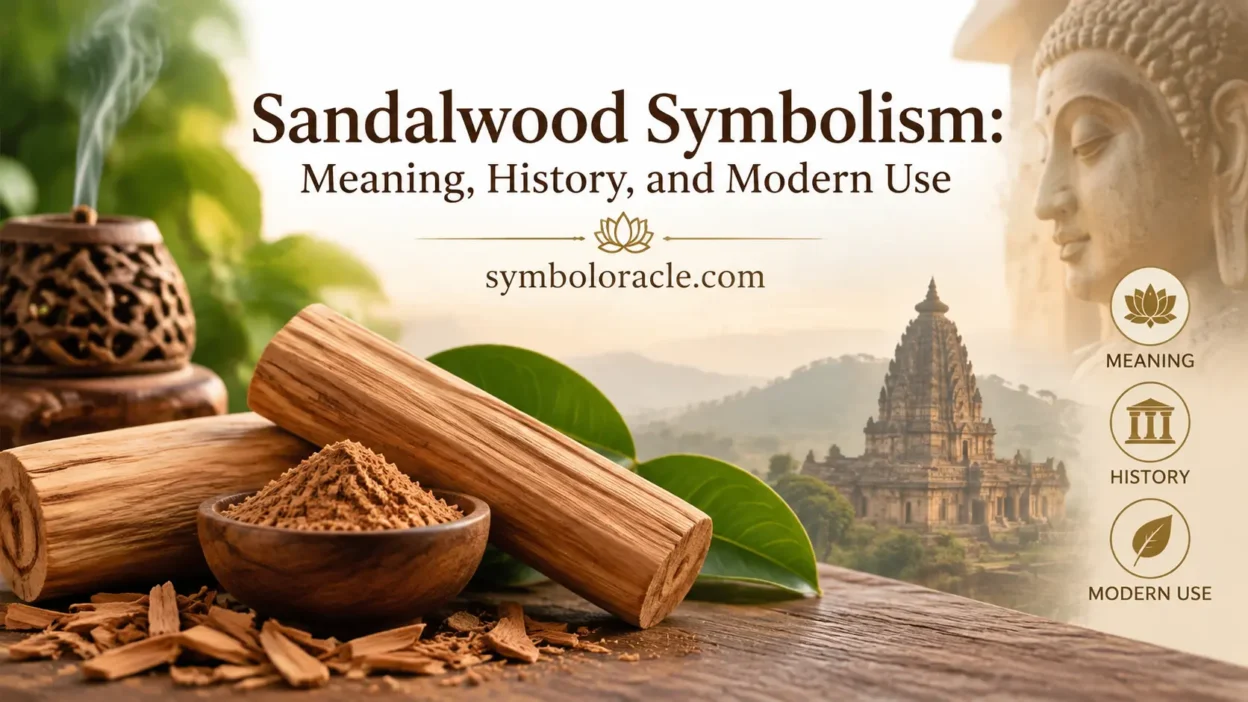
Sandalwood symbolism is often connected with peace, devotion, healing, and emotional balance. The fragrant wood has appeared in religious ceremonies, personal rituals, traditional medicine, and decorative arts across many cultures, making it a symbol that carries both historical and modern meaning.
In the United States, sandalwood is commonly associated with relaxation, mindfulness, natural living, and spiritual practices. People encounter its scent in candles, perfumes, incense, skincare products, meditation spaces, and home designs. Its meaning continues to evolve as Americans combine older traditions with modern wellness and lifestyle choices.
Understanding sandalwood symbolism helps explain why this simple piece of wood has become connected with calm environments, personal reflection, and cultural traditions around the world.
Quick Answer
Sandalwood symbolism commonly represents peace, purity, and relaxation in modern American culture, especially in wellness spaces, meditation practices, and home fragrance. Historically, it has also been associated with religious devotion, ceremonial traditions, and spiritual connection in Asian cultures.
TL;DR
- Sandalwood represents peace, purity, and calm.
- Ancient traditions valued sandalwood for sacred rituals.
- Americans associate it with wellness and relaxation.
- Its scent influences emotions and personal spaces.
- Sandalwood appears in perfumes, decor, and spiritual practices.
What Sandalwood Looks Like and Where People Encounter It
Sandalwood comes from several species of small evergreen trees, especially those in the Santalum genus. The wood is known for its pale color, smooth texture, and naturally sweet, warm fragrance. Unlike many woods that lose their scent after processing, sandalwood can maintain its aroma for many years because its natural oils remain inside the material.
People encounter sandalwood in many forms today. It appears as carved objects, incense sticks, essential oils, perfumes, candles, beads, furniture details, and skincare products. In American homes, sandalwood scents are often used to create a peaceful atmosphere because the fragrance is viewed as comforting and grounding.
The physical qualities of sandalwood helped shape its symbolic meanings. Its lasting fragrance became connected with endurance, memory, and traditions that survive across generations.
What It Commonly Means in the United States
In modern American culture, sandalwood is mainly linked with calmness, mindfulness, and natural wellness. Many people associate the scent with meditation rooms, yoga studios, spas, and relaxing home environments.
Unlike symbols that have one fixed meaning, sandalwood carries different interpretations depending on how people use it. A person may view sandalwood incense as part of a spiritual practice, while another may simply enjoy its warm fragrance as a way to make a room feel comfortable.
Common American interpretations include:
| Context | Meaning in the USA | Common Associations | Notes |
|---|---|---|---|
| Wellness | Calm and relaxation | Meditation, self-care | Common in modern lifestyles |
| Home decor | Warmth and comfort | Candles, fragrance, design | Creates peaceful spaces |
| Spiritual practice | Reflection and devotion | Prayer, mindfulness | Influenced by global traditions |
| Personal fragrance | Confidence and sophistication | Perfume, grooming | Used in luxury products |
| Gifts | Care and thoughtfulness | Handmade items, keepsakes | Often linked with emotional value |
Sandalwood’s popularity in the United States reflects a broader interest in natural materials and intentional living. People often choose it because it creates a sensory experience connected with comfort and personal meaning.
Ancient Roots and Early Symbolism of Sandalwood
Sandalwood gained symbolic importance thousands of years ago because of its fragrance, durability, and rarity. Early societies valued materials that could connect everyday life with religious ceremonies, and sandalwood became one of those important resources.
In parts of India, sandalwood became closely connected with sacred traditions. It was used in temples, religious ceremonies, carvings, and offerings. The wood’s pleasant scent was viewed as suitable for spiritual spaces because it created an atmosphere of respect and devotion.
Ancient Chinese and other East Asian traditions also valued sandalwood for ceremonial and artistic purposes. It was used in incense, carvings, and cultural practices where fragrance played an important role.
The symbolism developed from practical qualities:
- Its long-lasting scent suggested permanence.
- Its clean fragrance represented purity.
- Its use in sacred settings connected it with devotion.
- Its rarity gave it a connection with value and respect.
Over time, these associations moved beyond religious settings and became part of broader cultural ideas about peace, memory, and emotional comfort.
Religious and Spiritual Meanings Across Cultures
Sandalwood has strong connections with religious traditions, especially in South Asia and parts of Asia. Its use in spiritual settings comes from the belief that pleasant scents can support focus, respect, and reflection.
In Hindu traditions, sandalwood paste and incense have been used in worship practices and ceremonies. The wood may be applied during rituals or used as an offering because it represents purity and devotion.
In Buddhist traditions, sandalwood incense is often connected with meditation and mindful awareness. The slow release of fragrance can symbolize patience and attention during spiritual practice.
In some Islamic cultures, sandalwood has also appeared in perfumes and traditional fragrance practices, where pleasant scents hold cultural importance.
For many people today, sandalwood does not require a religious meaning. Some use it simply as a symbol of peaceful moments, personal reflection, or emotional balance.
How Sandalwood Became a Symbol of Peace and Calm
The connection between sandalwood and peace comes largely from human experiences with scent. Fragrance has always influenced how people experience spaces, memories, and emotions.
Sandalwood’s warm, woody aroma is often described as smooth and comforting. Because it has been used in quiet settings such as temples, meditation areas, and relaxation spaces, people began connecting it with stillness and focus.
In American wellness culture, sandalwood is frequently included in products designed for relaxation. Candles, essential oil blends, and bath products often use sandalwood notes to create a feeling of comfort.
This association does not mean sandalwood has a universal emotional effect on everyone. Personal memories, cultural background, and individual preferences influence how people respond to any scent. However, its long history in peaceful environments has helped establish its modern symbolism.
Sandalwood in American Culture and Everyday Life
Sandalwood’s meaning in the United States has developed through a combination of cultural exchange, wellness trends, and interest in traditional crafts. While sandalwood does not have one single American origin story, it has become familiar through products and practices that focus on comfort, reflection, and natural materials.
Many Americans encounter sandalwood through home fragrance. Candles, diffusers, and incense often use sandalwood notes because the scent is considered warm and inviting. Interior designers may include sandalwood-inspired fragrances in spaces meant to feel peaceful, such as bedrooms, reading areas, and meditation corners.
The symbol also appears in personal lifestyle choices. People who practice yoga, meditation, journaling, or mindfulness may use sandalwood products as part of routines that encourage focus and relaxation. In these settings, sandalwood represents creating a pause from busy daily life.
Sandalwood also appears in American consumer culture through:
- Luxury perfumes and colognes
- Handmade wooden crafts
- Natural skincare products
- Spiritual and wellness stores
- Decorative objects
- Aromatherapy products
The modern American view of sandalwood is often less about a specific religious meaning and more about creating an atmosphere associated with peace, simplicity, and intentional living.
The Emotional and Psychological Meaning of Sandalwood
Sandalwood carries emotional associations because scent is strongly connected with memory and mood. A familiar fragrance can remind people of places, people, or important moments in their lives.
Many people connect sandalwood with feelings such as:
- Calmness during stressful moments
- Comfort in personal spaces
- Reflection and quiet thinking
- Warmth and familiarity
- Emotional grounding
The psychological appeal of sandalwood comes from its connection with slow, mindful experiences. Unlike bright or sharp fragrances that create energy, sandalwood is often chosen for spaces where people want a softer atmosphere.
For some individuals, sandalwood may represent emotional stability because it is linked with practices that encourage patience and awareness. For others, it may simply represent a pleasant scent associated with relaxation.
The meaning depends on personal experience, but the repeated use of sandalwood in peaceful settings has shaped its broader cultural identity.
Sandalwood Symbolism in Meditation and Mindfulness Practices
Modern mindfulness culture has helped expand sandalwood’s popularity in the United States. Meditation spaces often use fragrance as a way to create a consistent environment, and sandalwood has become one of the most recognized scents connected with this practice.
Sandalwood beads, incense, and oils are sometimes used during meditation because they represent focus and discipline. The physical act of using a traditional object can help people create a personal routine.
In American wellness communities, sandalwood often symbolizes:
- A moment of stillness
- Personal awareness
- Emotional balance
- Connection with nature
- A thoughtful lifestyle
However, many modern users separate these meanings from specific religious traditions. They may appreciate sandalwood because it supports their personal habits rather than because of a particular belief system.
Why Sandalwood Appears in Perfume and Personal Style
Sandalwood has a long relationship with fragrance because its natural oils create a smooth and lasting scent. In modern perfumery, sandalwood is often used as a base note that adds warmth and depth to a fragrance.
In American fashion and beauty culture, sandalwood scents are often associated with:
- Elegance
- Maturity
- Natural confidence
- Simplicity
- Sophistication
Unlike highly sweet or sharp fragrances, sandalwood often creates a more subtle impression. This has made it popular in luxury perfumes, unisex fragrances, and products marketed toward people who prefer classic scents.
The symbolism of sandalwood in personal style is connected with identity. Choosing a sandalwood fragrance can communicate a preference for natural materials, calm environments, or a refined aesthetic.
Sandalwood in Tattoos and Personal Symbolism
Sandalwood is less common as a tattoo subject than animals, flowers, or religious symbols, but when it appears in body art, it usually represents personal values connected with peace and spirituality.
A sandalwood tattoo may symbolize:
- Inner calm
- Spiritual growth
- Connection with nature
- Respect for tradition
- Personal transformation
Some people combine sandalwood imagery with other symbols, such as lotus flowers, meditation imagery, mandalas, or natural elements. These combinations create a broader message about balance and personal development.
In American tattoo culture, meanings are usually individual rather than fixed. A sandalwood tattoo may reflect someone’s personal journey, cultural appreciation, or connection with peaceful practices.
Sandalwood in Home Decor and Design
Home design has played an important role in bringing sandalwood symbolism into everyday American life. Many people use sandalwood-colored materials and fragrances to create spaces that feel warm and welcoming.
Sandalwood-inspired design often includes:
- Wooden textures
- Neutral colors
- Natural materials
- Minimalist decoration
- Relaxing scents
The symbolism comes from the feeling the environment creates. A room with natural wood, soft lighting, and sandalwood fragrance may communicate comfort and simplicity.
Interior trends that focus on sustainability and natural living have also increased interest in materials associated with nature. Sandalwood fits into this style because it represents a connection between human spaces and the natural world.
Common Misunderstandings About Sandalwood Symbolism
Because sandalwood has religious and spiritual connections, some people misunderstand its meaning or assume it always represents one specific belief system. In reality, its symbolism varies widely across cultures and personal experiences.
A few common misunderstandings include:
Sandalwood always has a religious meaning
Sandalwood has been important in religious traditions, but many people today use it simply for fragrance, decoration, or relaxation.
Sandalwood has the same meaning everywhere
Different cultures have developed their own interpretations. A meaning connected with a temple tradition may not have the same meaning in modern American home design.
Every sandalwood product contains real sandalwood
Many modern products use synthetic sandalwood fragrances because natural sandalwood is valuable and limited. The scent may remain similar while the material and cultural meaning differ.
Understanding these differences helps separate traditional symbolism from modern commercial uses.
Environmental Concerns and the Changing Meaning of Sandalwood
Sandalwood’s popularity has created environmental challenges because some sandalwood species grow slowly and have faced overharvesting. This has influenced how people think about the material today.
In modern conversations, sandalwood can represent both appreciation for nature and responsibility toward protecting natural resources.
Many consumers now consider:
- Sustainable sourcing
- Ethical production
- Alternative fragrances
- Responsible harvesting practices
This change has added a new layer to sandalwood symbolism. Beyond peace and spirituality, it can also represent environmental awareness and respect for natural resources.
How Sandalwood Symbolism Has Evolved Over Time
The meaning of sandalwood has changed as it moved between cultures and generations. Originally valued for practical uses and ceremonial importance, it later became connected with broader ideas of comfort, beauty, and personal well-being.
Its evolution can be understood through several stages:
| Time Period | Main Symbolic Meaning | Cultural Setting |
|---|---|---|
| Ancient societies | Sacred value and purity | Religious ceremonies |
| Traditional Asia | Devotion and meditation | Temples and cultural practices |
| Global trade period | Luxury and rarity | Perfume and craftsmanship |
| Modern America | Calm and wellness | Homes, beauty, mindfulness |
Today, sandalwood represents a mixture of old and new meanings. It can honor cultural traditions while also fitting into modern lifestyles focused on relaxation and personal expression.
Frequently Asked Questions About Sandalwood Symbolism
What does sandalwood symbolize in modern culture?
Sandalwood commonly symbolizes peace, relaxation, and mindfulness in modern culture. Many people associate it with calming spaces, natural living, and personal reflection.
Is sandalwood considered a spiritual symbol?
Yes, sandalwood has spiritual connections in several traditions, especially in Asian religious practices. However, people may also use it without any religious meaning simply because they enjoy its fragrance.
What does a sandalwood tattoo symbolize?
A sandalwood tattoo often represents calmness, personal growth, nature, or a connection with spiritual practices. The meaning depends on the individual’s personal story.
Why is sandalwood used in meditation?
Sandalwood is used in meditation because its fragrance has long been associated with peaceful environments and focused attention. Some people use it as part of a routine that helps create a mindful atmosphere.
Does sandalwood have a positive or negative meaning?
Sandalwood is generally viewed positively and is associated with purity, peace, and respect. Negative interpretations usually come from concerns about environmental damage or cultural misuse rather than the symbol itself.
What does sandalwood represent in American homes?
In American homes, sandalwood often represents comfort, warmth, and relaxation. It appears in candles, fragrances, and decor choices designed to create peaceful environments.
Conclusion
Sandalwood has developed a wide range of meanings through centuries of cultural use. Its fragrance, durability, and role in ceremonies helped connect it with purity, devotion, and reflection, while modern American culture often views it as a symbol of calm living and personal balance.
Today, sandalwood symbolism reflects both traditional heritage and modern lifestyle choices. Whether used in meditation, fragrance, design, or personal expression, sandalwood continues to represent the human desire for peaceful spaces and meaningful connections.
Its story shows how a natural material can carry different meanings across cultures while still remaining relevant in everyday life.


