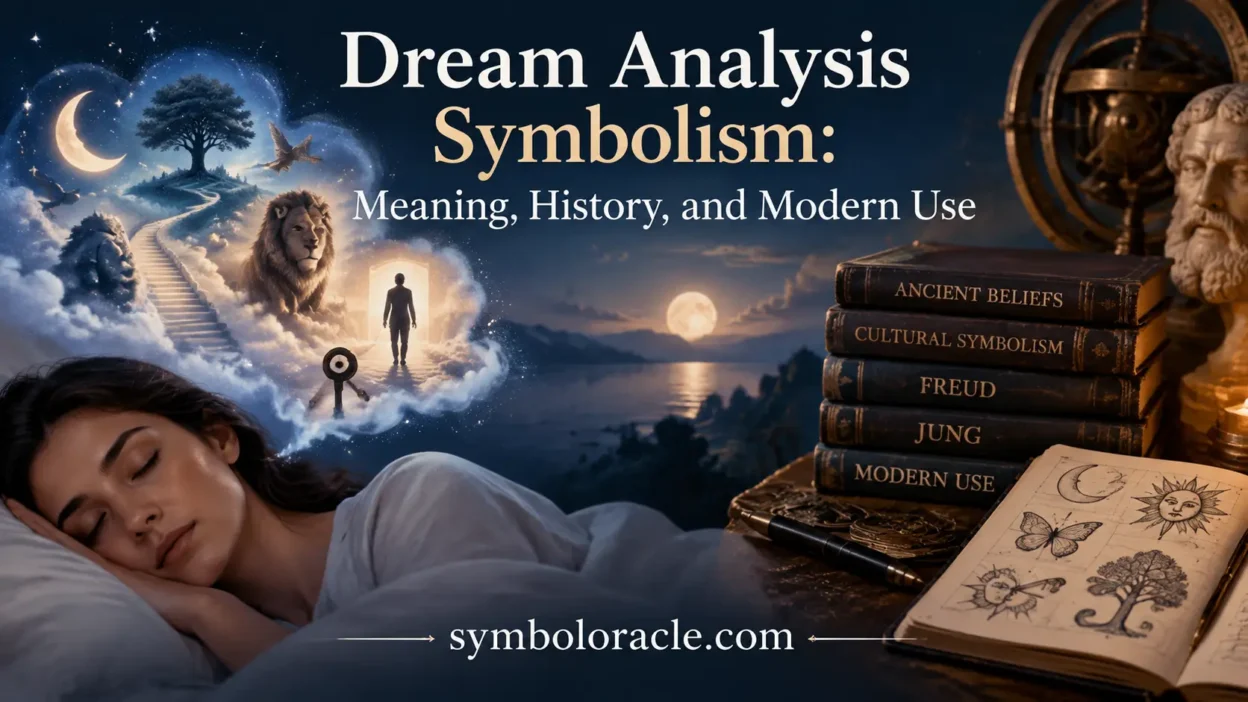
Dreams have long been viewed as a window into thoughts, emotions, memories, and personal experiences. Many people wonder why certain images, places, animals, or situations appear during sleep and what they might represent. Dream analysis symbolism explores how dream elements can carry personal, cultural, and emotional meanings rather than being simple random images.
In the United States, dream interpretation is often connected with self-reflection, psychology, creativity, and personal growth. People may examine dreams to better understand feelings, life changes, fears, relationships, or unresolved experiences. While some traditions view dreams as spiritual messages, modern approaches often focus on the dreamer’s own emotions and life circumstances.
Understanding dream symbols requires looking at both history and personal context. The same image can mean different things for different people depending on their background, memories, and beliefs.
Quick Answer
Dream analysis symbolism commonly represents personal emotions, memories, fears, hopes, and inner experiences in modern American culture. Historically, dreams have also been connected with spiritual guidance, religious beliefs, mythology, and attempts to understand the human mind.
TL;DR
- Dreams often reflect emotions and personal experiences.
- Ancient cultures viewed dreams as spiritual messages.
- Psychology changed modern dream interpretation.
- Americans use dream symbols for self-reflection.
- Symbols can have different meanings for each person.
What Dream Symbols Represent in Modern American Culture
In modern U.S. culture, dream symbols are usually understood as reflections of the dreamer’s thoughts, emotions, and experiences. A dream about water, for example, may connect with feelings of change, calmness, or uncertainty depending on the person’s situation.
Many Americans explore dreams through journals, therapy discussions, books, podcasts, and online communities. The goal is often not to predict the future but to understand personal feelings and patterns.
Dream symbols can also represent common human experiences. Flying may be linked with freedom or ambition, while being chased may connect with stress or avoidance. However, these interpretations are not fixed rules. Personal meaning remains important.
Ancient Roots and Early Symbolism of Dreams
Dream interpretation has existed for thousands of years across many civilizations. Ancient societies often treated dreams as messages connected to gods, spirits, or important events.
In ancient Egypt, dreams were sometimes considered meaningful experiences that could provide guidance. Some people believed certain dreams carried warnings or signs from divine sources.
Ancient Greek and Roman cultures also paid attention to dreams. Some individuals viewed dreams as possible messages from supernatural forces, while others studied them as reflections of human thoughts and emotions.
These early beliefs shaped later ideas about why dreams matter. Over time, dream interpretation moved from mainly spiritual explanations toward psychological approaches.
Religious and Spiritual Meanings Connected With Dreams
Many religions have traditions that include meaningful dreams. In various faith communities, dreams may appear as moments of guidance, reflection, or communication.
In Christianity, Judaism, and Islam, some historical religious texts describe dreams as experiences connected with warnings, wisdom, or divine messages. These interpretations are usually connected with specific religious teachings rather than universal dream rules.
Other spiritual traditions also view dreams as important experiences. Some Indigenous cultures have traditions where dreams connect with identity, community knowledge, and personal understanding.
Today, Americans approach spiritual dream meanings in different ways. Some see dreams as sacred experiences, while others view them mainly through emotional and psychological perspectives.
How Psychology Changed Dream Interpretation
Modern dream analysis became strongly influenced by psychology. Researchers and psychologists began studying dreams as part of human thought, memory, and emotion.
Some psychological approaches suggest that dreams may reflect hidden feelings, personal conflicts, daily experiences, or creative problem-solving. Other researchers focus on how the brain processes memories and emotions during sleep.
Dreams are now often discussed in therapy and mental health settings as a way to explore emotions. A dream itself does not provide a simple answer, but discussing it can help someone notice personal concerns or feelings.
Common Dream Symbols and Their Possible Meanings
Dream images often appear repeatedly across cultures, but their meanings can change based on personal experience.
| Dream Symbol | Meaning in the USA | Common Associations | Notes |
|---|---|---|---|
| Water | Emotional states and change | Calmness, uncertainty, renewal | Meaning depends on water conditions |
| Flying | Freedom or confidence | Goals, independence, imagination | Often linked with personal growth |
| Houses | The self or personal life | Identity, memories, family | Rooms may represent different experiences |
| Animals | Instincts and emotions | Strength, fear, protection | Species and personal feelings matter |
| Roads | Life direction | Choices, transitions, journeys | Common in change-related dreams |
Why Personal Experience Changes Dream Meaning
A major part of dream symbolism comes from individual experience. A symbol does not carry one universal meaning for everyone.
For one person, a dog in a dream may represent friendship and loyalty because of a positive relationship with pets. For another person, it may represent fear because of a difficult past experience.
Personal memories, culture, relationships, and current events all influence dream interpretation. This is why modern approaches often ask what a symbol means to the individual rather than relying only on traditional explanations.
Dream Symbolism in American Culture and Media
Dreams have a strong place in American entertainment, literature, and storytelling. Movies, television shows, and books often use dreams to explore identity, memory, fear, and imagination.
Dream sequences appear in many genres, including science fiction, horror, fantasy, and drama. Writers often use dreams to show a character’s emotions without directly explaining them.
Popular culture has also increased interest in dream interpretation. People discuss unusual dreams online, share experiences, and look for possible meanings behind repeated dream themes.
Emotional and Psychological Meaning of Dreams
Dreams often connect with emotions that people experience while awake. Stress, excitement, sadness, change, and relationships may influence dream content.
A stressful period may lead to dreams involving pressure, confusion, or difficult situations. Positive life changes may appear through dreams involving movement, celebration, or discovery.
Dreams can also help people explore feelings they may not notice during daily life. Writing dreams down after waking can help identify repeated themes and emotional patterns.
Dreams in Self-Reflection and Personal Growth
Many people use dream journals as a tool for self-reflection. Recording dreams can help someone notice connections between daily experiences and nighttime thoughts.
A dream journal may include details such as:
- Main images or symbols
- Strong emotions felt during the dream
- Important people or places
- Personal events happening at the time
This practice does not require believing that dreams have hidden messages. For many people, it simply provides a way to think more carefully about their emotions and experiences.
Dream Symbols in Tattoos, Art, and Design
Dream-related imagery appears frequently in tattoos, artwork, and home decoration. Symbols such as moons, stars, eyes, clouds, and dreamcatchers are often chosen because they represent imagination, reflection, or personal meaning.
In American tattoo culture, dream symbols may represent personal memories, transformation, creativity, or spiritual interests. The meaning usually comes from the person wearing the design.
Artists also use dream imagery to create surreal scenes that combine ordinary objects with unusual settings. This style reflects the connection between dreams and imagination.
Dreamcatchers and Their Modern Symbolism
Dreamcatchers are among the most recognized dream-related symbols in the United States. They come from Indigenous traditions, especially those associated with the Ojibwe people.
Traditionally, dreamcatchers were connected with protection and filtering dreams. Over time, they became widely used in American popular culture as decorative objects associated with dreams and positive intentions.
Because of this wider popularity, some people use dreamcatchers without understanding their cultural background. Respectful use involves recognizing their Indigenous origins rather than treating them only as decoration.
Common Misunderstandings About Dream Symbolism
One common misunderstanding is that every dream symbol has one exact meaning. In reality, dream interpretation is influenced by personal experience and cultural background.
Another misconception is that dreams always predict future events. Some traditions include prophetic dream beliefs, but modern psychological approaches generally focus on emotions, memories, and mental processing.
Dream symbols can provide opportunities for reflection, but they should not replace practical decision-making or professional guidance when someone faces serious concerns.
How Dream Analysis Has Changed Over Time
The meaning of dreams has changed as societies developed new ideas about the mind and human behavior.
Ancient cultures often connected dreams with spiritual messages. Later thinkers explored dreams as reflections of human nature. Modern approaches combine psychology, neuroscience, personal reflection, and cultural understanding.
Today, dream interpretation exists between science, personal meaning, spirituality, and creativity. Different people use dreams in different ways depending on their beliefs.
Modern Uses of Dream Symbolism in Daily Life
People encounter dream symbolism in many areas of modern life:
- Personal journaling
- Therapy conversations
- Creative writing
- Artwork
- Tattoos
- Social media discussions
- Spiritual practices
For some Americans, dreams are a way to explore identity. For others, they are simply interesting experiences that inspire creativity.
The modern view focuses less on finding a single answer and more on understanding how dreams connect with human thoughts and emotions.
Dream Symbols and Digital Culture
The internet has changed how people discuss dreams. Online communities allow people to share unusual dreams and compare interpretations.
Social media has also increased interest in dream meanings, with users creating content about recurring dreams, symbols, and personal experiences.
However, online interpretations can sometimes simplify complex ideas. A symbol found on a general list may not match the dreamer’s personal situation.
FAQ About Dream Analysis Symbolism
What does dream analysis symbolism mean?
Dream analysis symbolism refers to the study of images, events, and themes in dreams and how they may represent emotions, experiences, or ideas. Modern approaches usually focus on personal meaning rather than fixed definitions.
Are dream symbols the same for everyone?
No. A dream symbol can have different meanings depending on a person’s memories, culture, emotions, and life situation. Personal context often matters more than general interpretations.
What do dreams symbolize in American culture?
In the United States, dreams are often viewed as reflections of emotions, creativity, personal experiences, and self-discovery. Some people also connect dreams with spiritual ideas.
Do dream symbols predict the future?
Some traditions believe dreams can contain predictions, but modern psychological views usually interpret dreams as reflections of thoughts, emotions, and memories rather than guaranteed forecasts.
Why do people keep dream journals?
People keep dream journals to remember details, identify patterns, and reflect on emotions or experiences. The practice can support creativity and personal awareness.
What do dream tattoos symbolize?
Dream tattoos often represent imagination, transformation, memories, freedom, or personal beliefs. Their meaning depends on the individual’s reason for choosing the design.
Conclusion
Dreams have been interpreted in many ways across cultures, from spiritual messages to reflections of personal emotions. Modern Americans often view dream symbols as tools for self-understanding, creativity, and emotional reflection.
Dream analysis symbolism shows how ordinary images in dreams can connect with memories, feelings, and personal experiences. While symbols do not have one universal meaning, exploring them can help people better understand their own inner world.
Dreams remain valuable because they encourage curiosity about human thoughts, emotions, and the stories people create in their minds.