
Koi fish are widely recognized as symbols of perseverance, good fortune, prosperity, and personal growth, and Chinese koi fish symbolism connects these colorful fish with stories of determination and transformation. Often shown swimming against strong currents, koi represent the ability to keep moving toward a goal despite obstacles. Their bright colors and graceful movements also make them popular in gardens, paintings, tattoos, and decorative art.
In Chinese culture, koi are especially associated with a traditional legend about carp attempting to cross a powerful waterfall called the Dragon Gate. According to the story, a carp that successfully reaches the top transforms into a dragon. The tale connects persistence with achievement and explains why koi and carp appear in art related to ambition, success, and advancement.
Today, koi imagery appears across cultures, including in American homes, gardens, businesses, and personal designs. Although Chinese and Japanese traditions share related fish symbolism, their histories and customs are not identical. Understanding those differences helps explain what koi represent, how their meanings developed, and why the fish remain recognizable symbols of determination and good fortune.
Quick Answer
Chinese koi fish symbolism commonly represents perseverance, success, prosperity, good fortune, and transformation in modern American interpretations of Chinese cultural imagery. Historically, koi and carp became associated with achievement through Chinese traditions, especially the Dragon Gate legend, in which a determined carp transforms into a dragon.
TL;DR
- Koi symbolize perseverance, ambition, prosperity, and personal transformation.
- The Chinese Dragon Gate legend connects carp with achievement and advancement.
- Different koi colors can suggest different meanings in modern decorative traditions.
- Chinese and Japanese koi symbolism overlap but have distinct cultural histories.
- Koi tattoos often express resilience, personal growth, or a major life change.
- Yin-yang koi designs commonly represent balance, complementary forces, and harmony.
1. What Koi Fish Look Like and Why They Matter
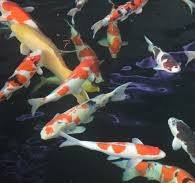
Koi are ornamental varieties of carp, bred for their distinctive colors, patterns, and appearance. Their bodies may display white, red, orange, yellow, black, or blue-gray markings, sometimes arranged in striking patches across the scales. Unlike fish valued mainly for food, ornamental koi are admired for their appearance, movement, and place in carefully maintained ponds.
Their symbolic appeal also comes from their behavior. Carp can survive in a range of freshwater environments, and the image of a fish swimming against a current naturally lends itself to ideas about persistence. This visual association becomes even more meaningful when koi appear in flowing water, beneath waterfalls, or moving toward an obstacle.
In the United States, koi are familiar sights in Japanese-style gardens, botanical gardens, backyard ponds, Asian-inspired artwork, and tattoos. People may appreciate them for their beauty without knowing their cultural history, while others choose koi designs specifically to communicate ambition, resilience, or a commitment to personal development.
The symbolism depends on context. A koi in a peaceful pond may suggest calm and prosperity, while a fish struggling against rushing water may emphasize determination.
2. The Core Meaning of Chinese Koi Fish Symbolism
The most common meanings associated with koi include perseverance, success, prosperity, good fortune, and transformation. These meanings are connected rather than interchangeable.
Perseverance describes the effort to continue despite difficulty. Koi swimming against a current provide a clear visual representation of that idea.
Success relates to reaching a goal after sustained effort. The Dragon Gate story gives this association a traditional narrative foundation.
Prosperity connects koi with abundance, favorable circumstances, and the hope of a secure future. Fish imagery has also appeared in Chinese art and decorative traditions associated with wealth and plenty.
Transformation reflects the change from an ordinary carp into a dragon in the Dragon Gate legend. The transformation represents a dramatic rise in status or ability rather than simply surviving a challenge.
Good fortune expresses the hope that opportunities, favorable outcomes, and material well-being will follow.
These meanings make koi suitable for celebrations of achievement, new beginnings, and long-term goals. However, they are cultural interpretations, not promises that displaying a fish will cause success or attract wealth.
3. The Chinese Dragon Gate Legend
One of the most important stories associated with koi symbolism concerns the Dragon Gate, a legendary waterfall traditionally connected with the Yellow River region in China.
In a common version of the story, carp gather beneath a powerful waterfall. Many cannot overcome the rushing water, but one determined carp succeeds in reaching the top. The carp is then transformed into a dragon, a creature associated in Chinese traditions with authority, auspicious power, and extraordinary ability.
The story turns an ordinary fish into an image of achievement through effort. The carp does not become a dragon simply because it is beautiful or fortunate. Its transformation follows a difficult test, making the legend particularly relevant to education, professional ambition, and personal advancement.
The tale is often summarized as the carp leaping over the Dragon Gate. Modern illustrations may show a fish jumping toward a waterfall or a dragon emerging from turbulent water. These scenes communicate the same central idea: an obstacle can become the threshold to a new stage of life.
The legend is a traditional cultural story, not a biological account of koi transformation. Its value lies in the way it expresses hopes about determination, recognition, and change.
4. Ancient Chinese Ideas About Carp, Education, and Achievement
Carp have a long history in Chinese life as food fish and as subjects of stories, art, and auspicious imagery. Their symbolic significance developed within a culture that valued learning, family continuity, social responsibility, and advancement through education and public service.
The Dragon Gate legend became particularly useful as a metaphor for people facing difficult examinations or seeking positions of distinction. In imperial China, the civil service examination system offered a route into government service, although access to education and success in examinations were far from equal across society.
The image of a carp overcoming the waterfall could therefore express the hope that sustained study would lead to recognition and a higher social position. In modern Chinese-language contexts, references to the carp leaping over the Dragon Gate may still evoke academic achievement, career advancement, or a major personal breakthrough.
This meaning helps explain why koi imagery appears in settings connected with graduation, new jobs, business goals, and other milestones. The fish represents not only the reward at the end of a journey but also the difficult effort that precedes it.
It is important, however, not to assume that every koi image refers directly to the examination tradition. Some are decorative, some emphasize prosperity, and others draw on broader ideas about fish and good fortune.
5. Koi Fish and Prosperity in Chinese Culture
Prosperity is another major association of fish imagery in Chinese art and festive decoration. Fish have long appeared in auspicious designs intended to express hopes for abundance, household well-being, and a favorable year ahead.
A particularly important Chinese wordplay connects fish with abundance. The Mandarin word for fish, yú (鱼), sounds like the word for surplus or abundance, yú (余). This similarity helps explain why fish images appear in New Year decorations and expressions wishing people more than enough for the coming year.
The association is broader than koi alone. Different kinds of fish may appear in traditional paintings, decorative objects, and celebratory imagery. Koi and carp can participate in this wider visual language, especially when shown in pairs, among water plants, or in scenes that suggest fullness and vitality.
In modern homes and businesses, koi artwork may be displayed as a sign of hoped-for prosperity. Some people place fish paintings near entrances, offices, or reception areas because the image feels welcoming and auspicious.
These practices express cultural hopes rather than guaranteeing financial results. The meaning comes from the traditions and intentions attached to the image, not from a proven ability to influence wealth.
6. What Different Koi Colors Can Represent
Koi are bred in many colors and patterns, and modern decorative traditions often assign meanings to individual colors. These interpretations can be useful, but they are not a single universal Chinese system. Specific meanings may vary according to artistic tradition, personal preference, and whether the design draws more heavily on Chinese or Japanese imagery.
| Koi color or pattern | Common modern association | Interpretive context |
|---|---|---|
| Red | Passion, courage, vitality, and strong emotion | Often used in personal art and designs about determination |
| White | Clarity, renewal, and a fresh start | May suggest a new chapter or a clean beginning |
| Gold or yellow | Wealth, prosperity, and achievement | Common in decorative imagery focused on abundance |
| Black | Resilience, overcoming adversity, or strength | Frequently used in modern tattoo interpretations |
| Blue | Calm, stability, and confidence | Often chosen for a composed or reflective design |
| Red and white | Balance between contrasting qualities | Meaning depends on the composition and the creator’s intention |
Color symbolism should be read with care. A red-and-white koi does not carry exactly the same meaning in every Chinese artwork, Japanese pond tradition, or contemporary tattoo. The number of fish, their direction, the surrounding water, and the broader cultural setting may influence the interpretation as much as color does.
For personal artwork, the best approach is to decide what the design should communicate and then choose colors that support that intention.
7. Chinese and Japanese Koi Symbolism: What Is the Difference?
Chinese and Japanese traditions share important connections to carp, perseverance, and auspicious imagery, but koi symbolism should not be treated as identical in both cultures.
In Chinese tradition, the Dragon Gate legend is especially important because it connects a carp’s struggle with advancement and transformation into a dragon. Fish imagery also appears in Chinese visual culture through wordplay associated with abundance and through decorative scenes expressing prosperity.
In Japan, koi became particularly prominent in ornamental pond culture and developed strong associations with courage, perseverance, and determination. Koinobori, the carp-shaped windsocks displayed during Children’s Day celebrations, are a well-known example. Their upward movement in the wind evokes the hope that children will grow strong and thrive.
Japanese koi imagery also became influential in tattooing, where elaborate fish designs may communicate resilience, ambition, and the ability to withstand hardship.
The traditions overlap because both cultures draw on the symbolism of carp and the idea of overcoming obstacles. Still, the Dragon Gate legend has particular importance in Chinese interpretations, while koinobori and certain tattoo conventions are closely associated with Japanese culture.
For American readers, identifying the cultural origin of a specific design provides a more accurate interpretation than describing all koi imagery as simply Asian symbolism.
8. Yin-Yang Koi and the Meaning of Balance
Two koi swimming in a circular formation are often used in contemporary designs inspired by the yin-yang symbol. The composition usually places contrasting fish around a central curve, creating an image of movement and interdependence.
Yin and yang come from Chinese philosophical traditions that describe complementary aspects of existence. They are not simply synonyms for good and evil. Instead, they express how contrasting qualities, such as dark and light or stillness and activity, can depend on one another and change in relation to each other.
When koi are incorporated into this design, the fish add ideas of persistence, movement, and adaptation. Together, the images can suggest balance between opposing demands, such as work and rest, independence and partnership, or ambition and patience.
In modern American tattoos and decorative art, two koi may represent a romantic relationship, a family bond, or the effort to maintain balance during a period of change. These meanings are common contemporary interpretations rather than fixed rules for every traditional design.
The arrangement matters, too. Fish swimming in opposing directions may suggest contrast, while fish moving in a shared circle can emphasize continuity and connection. The creator’s intention and the design’s cultural references should guide the final interpretation.
9. Koi Fish in Feng Shui and Home Design
Koi imagery is popular in spaces designed around Chinese-inspired aesthetics and feng shui, a traditional Chinese practice concerned with the arrangement of environments and their relationship to human experience.
In contemporary feng shui interpretations, fish can be associated with abundance, movement, and prosperity. Koi paintings, pond features, and decorative sculptures may be selected to create an atmosphere of growth and favorable opportunity.
The number and arrangement of fish sometimes receive particular attention in modern decorative guidance. For example, a pair of koi may represent partnership or balance, while a larger group can evoke abundance. Specific number-based interpretations vary among practitioners and traditions, so they should not be presented as universal rules.
In American homes, koi artwork often appears in entryways, offices, gardens, meditation spaces, and living rooms. A painting of koi swimming through clear water can create a feeling of movement and calm, while a dramatic waterfall composition may emphasize persistence.
Practical considerations still matter. A real koi pond requires suitable space, filtration, water quality management, and ongoing care. The fish should not be purchased solely as decorative objects without understanding their needs.
Whether someone approaches koi art through feng shui or simply enjoys its appearance, the image can serve as a reminder of the qualities they want their environment to encourage.
10. Koi Fish Symbolism in the United States
In the United States, koi imagery has several overlapping roles. Some Americans encounter it through Japanese gardens, while others associate it with Chinese decorative art, martial arts communities, tattoo culture, or contemporary wellness and design.
Koi ponds at botanical gardens and cultural institutions often invite visitors to slow down and observe the fish. In these settings, koi can become associated with patience, quiet attention, and a connection with the natural world.
Businesses may display koi artwork because its associations with prosperity and perseverance fit their hopes for growth. Families may choose koi decorations for a garden or home because they symbolize good fortune, harmony, or a meaningful personal milestone.
Koi also appear in American popular culture as visual shorthand for determination. An image of a fish swimming upstream can communicate persistence without requiring a long explanation. This makes the symbol appealing to people who have overcome a difficult experience or are working toward an important goal.
However, koi do not have one uniform meaning across the United States. A person familiar with Chinese folklore may focus on the Dragon Gate legend, while someone who has studied Japanese culture may associate the fish with koinobori or Japanese tattoo art. Others may simply admire the colors and movement.
This range of interpretations reflects how cultural symbols travel and acquire additional meanings when people encounter them in new settings.
11. Koi Tattoos and Personal Identity
Koi tattoos are popular among people who want to represent perseverance, personal growth, ambition, or recovery from hardship. Their flowing shapes and detailed scales also make them suitable for large compositions across the arm, shoulder, back, or leg.
A person who has experienced a major life change might choose a koi swimming against a current to represent continued effort. Someone beginning a new chapter could select a fish rising toward a waterfall to suggest a difficult goal. Two koi might represent a relationship or the effort to balance different parts of life.
In contemporary tattoo culture, direction and color are often assigned additional meanings. For example, an upward-swimming koi is commonly interpreted as continuing a struggle or pursuing a goal, while a downward-swimming fish may be described as having overcome a challenge or moving through a different stage of life. These are modern conventions, not universal rules shared by all Chinese and Japanese traditions.
Cultural awareness matters when choosing a design. Koi imagery is associated with distinct artistic traditions, including Japanese tattooing, so it is worth learning about the style being used rather than combining elements without considering their origins.
A thoughtful tattoo does not need to communicate every possible meaning. Often, one clear personal association, such as persistence through a difficult period, gives the image its significance.
12. Emotional and Psychological Meaning of the Koi
Koi symbolism appeals to people because it turns an abstract quality into a visible action. Persistence can be difficult to explain, but a fish moving against rushing water provides an immediate image of effort under pressure.
The symbolism can also reflect the difference between progress and speed. A person may continue moving toward a goal even when improvement is gradual, uncertain, or difficult for others to recognize. The koi offers a reminder that advancement does not always look dramatic.
Transformation adds another emotional dimension. The carp becoming a dragon represents the hope that a demanding period can lead to a different level of ability, confidence, or responsibility. This can be meaningful during education, career changes, recovery, or other major transitions.
Still, the symbol should not be used to imply that every hardship inevitably leads to success. People face different circumstances, and determination alone cannot overcome every barrier. The koi’s meaning is more realistic when it represents commitment and adaptability rather than a guarantee of victory.
For some people, the fish also suggests calm and continuity. Watching koi move through water can encourage attention to the present moment, while their repeated movement through a pond can evoke patience and the gradual passage of time.
13. Koi Fish in Holidays, Gifts, and Milestones
Koi imagery can be a thoughtful choice for gifts marking educational achievements, new jobs, business openings, birthdays, and other important transitions. Its associations with persistence and advancement make it especially suitable when someone has worked hard to reach a goal.
In Chinese cultural contexts, fish imagery is also relevant to Lunar New Year decorations and gifts because of its association with abundance and surplus. Koi may be used in this broader festive visual language, although not every traditional fish decoration specifically depicts koi.
In Japanese culture, carp-shaped windsocks are displayed during Children’s Day, observed on May 5. These koinobori traditionally express hopes for children’s health, growth, and future success. Their significance is related to carp symbolism, but the custom should not be described as exclusively Chinese.
For American gift-giving, a koi painting or ornament can carry a personal message without requiring a formal ceremony. A graduate might receive artwork symbolizing achievement, while a friend starting a business might appreciate a design representing perseverance and prosperity.
The most considerate choice depends on the recipient. If the gift draws on a specific cultural tradition, understanding that tradition makes the gesture more meaningful than relying on a generalized idea of good luck.
14. Misunderstandings and Cultural Misuse
One common misunderstanding is the belief that every koi color has an ancient, universally accepted meaning. In reality, many color interpretations circulating in tattoo guides and decorative advice are modern conventions that vary by community and artistic style.
Another misconception is that Chinese and Japanese koi traditions are interchangeable. Both cultures have meaningful relationships with carp imagery, but particular stories, celebrations, and artistic practices belong to different historical contexts.
Koi are also sometimes presented as magical objects that automatically attract wealth or guarantee personal success. This oversimplifies traditions that use auspicious images to express hopes, values, and intentions. A decorative fish cannot guarantee financial prosperity or prevent misfortune.
Cultural appropriation can become a concern when designs are used without regard for their origins, especially when a specific religious, ceremonial, or traditional context is involved. Koi imagery is widely shared across contemporary art, so using it is not inherently disrespectful. The important questions are whether the design is represented accurately, whether its source is acknowledged when appropriate, and whether the surrounding culture is treated thoughtfully.
A final mistake is assuming that perseverance means enduring every situation without seeking help. The koi can represent persistence, but practical wisdom also includes recognizing when to change direction, ask for support, or choose a different path.
15. How Koi Symbolism Has Evolved
Koi symbolism has developed through a combination of folklore, everyday life, artistic traditions, and modern personal expression. The carp’s practical importance as a fish provided a foundation for its appearance in Chinese stories and visual culture. The Dragon Gate legend gave it a particularly memorable connection with achievement and transformation.
Over time, carp and koi imagery became associated with broader hopes for prosperity, good fortune, and successful transitions. Japanese ornamental fishkeeping and cultural practices added further visibility to koi, while tattoo art developed its own recognizable visual conventions.
In the United States, koi imagery now appears in settings far removed from its original cultural contexts. People encounter it in gardens, commercial interiors, body art, online illustrations, and gifts. These uses often preserve familiar themes of perseverance and growth while adding personal meanings connected with identity and experience.
The symbol’s evolution demonstrates how cultural imagery can remain recognizable even as its uses change. Understanding its history does not require every modern design to follow one traditional interpretation. It does, however, make it possible to appreciate the differences between inherited meanings and contemporary creative choices.
Frequently Asked Questions
What does a koi fish symbolize in Chinese culture?
Koi and carp commonly symbolize perseverance, advancement, good fortune, and prosperity in Chinese-inspired interpretations. The Dragon Gate legend is especially important because it links a carp’s struggle to a transformation into a dragon.
Is koi fish symbolism Chinese or Japanese?
It is associated with both cultures, but the traditions are not identical. The Chinese Dragon Gate legend emphasizes achievement and transformation, while Japanese customs such as koinobori and Japanese tattoo art have their own distinct meanings.
What does a black koi fish symbolize?
In modern tattoo and decorative interpretations, black koi often represent resilience, strength, or the experience of overcoming adversity. These meanings are not universal traditional rules, so the design’s cultural context and personal intention matter.
What does a koi fish tattoo mean?
A koi tattoo often represents perseverance, ambition, personal growth, or a major life transition. The fish’s direction, colors, and surrounding imagery may influence the interpretation, but individual meaning varies from person to person.
Do koi fish symbolize wealth and good luck?
Yes, koi imagery is commonly associated with prosperity and good fortune, particularly in contemporary Chinese-inspired art and decoration. These associations express cultural hopes and intentions rather than guaranteeing money or favorable outcomes.
What does two koi fish swimming together mean?
Two koi may represent balance, partnership, harmony, or the relationship between contrasting qualities. When arranged around a yin-yang shape, they often express complementary forces, although not every two-fish design has that specific meaning.
Why are koi associated with overcoming obstacles?
The association comes largely from the Dragon Gate legend, in which a carp overcomes a powerful waterfall and transforms into a dragon. The story makes the fish an enduring image of sustained effort leading to achievement.
Conclusion
Chinese koi fish symbolism connects the carp with perseverance, prosperity, good fortune, and transformation. The Dragon Gate legend provides a particularly clear explanation of why the fish represents achievement: the carp must overcome a difficult obstacle before becoming a dragon. Broader Chinese traditions also connect fish imagery with abundance, while Japanese customs and artistic practices contribute related but distinct interpretations.
In modern American culture, koi appear in tattoos, gardens, home decor, gifts, and personal artwork. Their meaning may reflect a cultural tradition, an individual experience, or a hope for the future. Understanding the source of a design helps distinguish historical symbolism from modern creative interpretations.
Ultimately, the koi is a reminder that progress can require patience, effort, and adaptation. Its most useful message is not that every struggle guarantees success, but that a meaningful goal often demands persistence and the wisdom to keep moving forward.