The cowbird symbolism often connects with themes of adaptation, independence, survival, and unusual relationships in nature. Known for its distinctive nesting behavior and close connection with open landscapes, the cowbird has developed symbolic meanings that reflect both admiration and debate.
People encounter cowbirds across much of North America, especially in grasslands, farmland, parks, and suburban areas. Unlike many birds that build nests and raise their own young, cowbirds are famous for laying their eggs in other birds’ nests, a behavior that has shaped both scientific interest and cultural interpretations.
Understanding the cowbird as a symbol requires looking beyond a single meaning. In modern American culture, it can represent flexibility and survival, while its natural behavior also raises questions about responsibility, belonging, and the effects of adaptation.
Quick Answer
Cowbird symbolism commonly represents adaptability, survival, independence, and unconventional ways of finding a place in the world. Historically, its unusual nesting behavior has also connected it with ideas of change, disruption, and complex relationships between species.
TL;DR
- Cowbirds symbolize adaptation and survival.
- Their nesting behavior shapes many interpretations.
- Native traditions viewed birds through ecological balance.
- Americans often see cowbirds as unusual survivors.
- Modern uses include nature art and tattoos.
What a Cowbird Represents in Nature
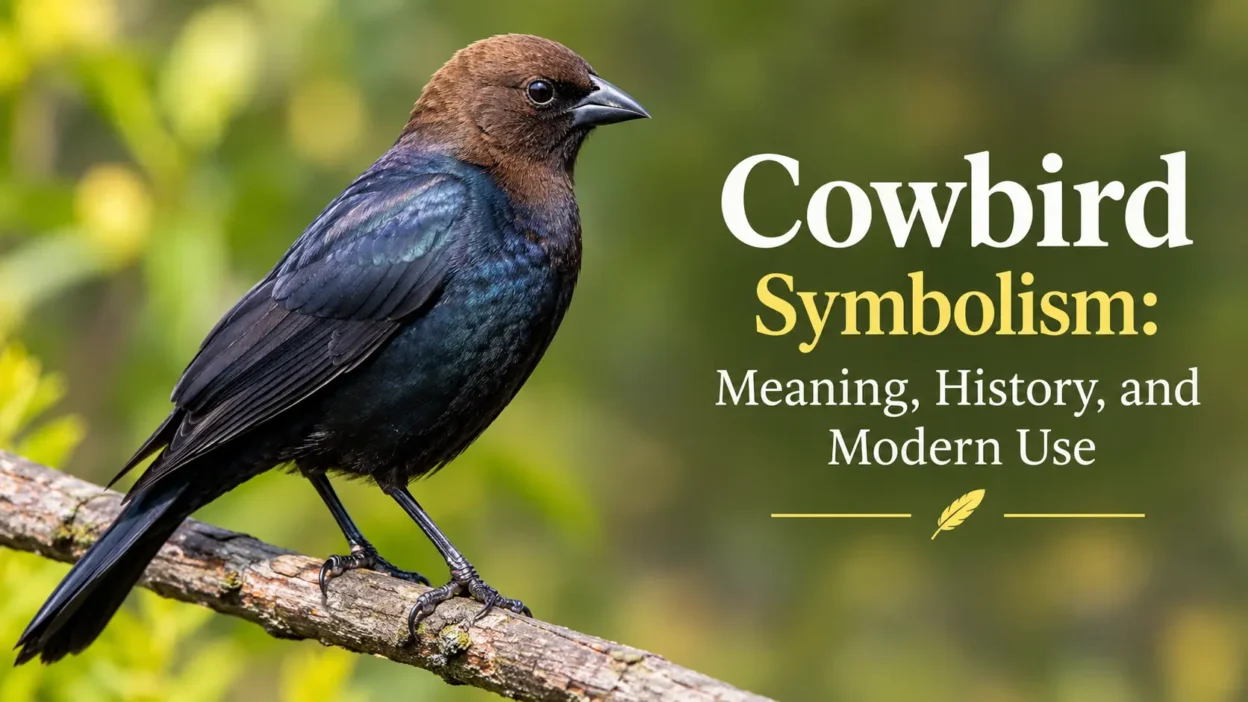
Cowbirds are small to medium-sized songbirds native to North America. The male brown-headed cowbird has a dark body with a brown head, while females have softer brown coloring that helps them blend into their surroundings.
They are commonly found near grazing animals, fields, roadsides, and open habitats. Their name comes from their historical habit of following bison and cattle, feeding on insects disturbed by moving herds.
The cowbird’s most recognized behavior is brood parasitism. Instead of building a nest, the female lays her eggs in the nests of other bird species. The host bird may raise the cowbird chick as its own, sometimes at a cost to its own offspring.
This unusual survival strategy is the foundation for many symbolic interpretations.
The Main Meanings Behind Cowbird Symbolism
The cowbird carries several different meanings depending on the perspective of the observer. Unlike symbols with one fixed interpretation, this bird reflects both positive and challenging aspects of nature.
Common symbolic meanings include:
| Context | Meaning in the USA | Common Associations | Notes |
|---|---|---|---|
| Nature | Adaptation and survival | Flexibility, resilience | Connected to ecological behavior |
| Personal identity | Independence | Finding one’s own path | Often used positively |
| Relationships | Complex connections | Boundaries and responsibility | Inspired by nesting behavior |
| Art and tattoos | Individuality | Uniqueness and change | Personal meanings vary |
| Wildlife discussions | Environmental impact | Balance and disruption | Often debated |
The cowbird can symbolize the ability to survive in changing conditions. At the same time, it reminds people that survival strategies can affect others.
Ancient Roots and Early Symbolic Interpretations
Birds have held symbolic importance in many cultures because they move between the earth and sky. They have often represented communication, freedom, observation, and connection with the natural world.
For many Indigenous peoples of North America, birds were understood through their relationships with ecosystems rather than as isolated symbols. The meaning of a bird depended on its behavior, habitat, and role within the natural environment.
Because cowbirds followed large grazing animals and adapted to human-altered landscapes, their story is closely tied to environmental change. Their presence reflects the relationship between wildlife movement, land use, and survival.
Unlike some birds associated with clear positive symbolism, cowbirds have always inspired more complicated interpretations because their behavior affects other species.
Cowbird Symbolism in Native North American Perspectives
Native traditions across North America contain many examples of birds carrying cultural importance. However, interpretations vary widely between nations, communities, and regions.
The cowbird itself is not universally viewed through one symbolic meaning. Some perspectives focus on observation of animal behavior and ecological relationships rather than assigning simple human characteristics to animals.
The bird’s connection with open land and grazing animals makes it part of a larger story about changing environments. Its behavior can encourage reflection on balance, adaptation, and the responsibilities that come with survival.
When discussing Indigenous symbolism, it is important to avoid treating all Native cultures as having identical beliefs.
What Cowbirds Symbolize in Modern American Culture
In the United States today, cowbirds are often viewed through a mixture of curiosity and scientific understanding.
Many people appreciate the bird as an example of nature’s ability to adapt. Its survival method demonstrates that animals can develop unexpected strategies when environments change.
Others view the cowbird more critically because brood parasitism can reduce the success of certain host bird species. Conservation discussions sometimes describe cowbirds as a challenge for vulnerable birds, especially in habitats changed by human activity.
Because of this, the cowbird represents a more complicated idea than simple freedom or beauty. It reflects the balance between individual survival and the wider community.
Adaptation, Survival, and Personal Identity
One of the strongest modern interpretations of the cowbird is adaptability.
People may connect with the bird because it represents adjusting to new circumstances. Someone who has moved, changed careers, rebuilt their life, or found a different path may see the cowbird as a reminder that survival often requires flexibility.
The cowbird can also represent individuality. It does not follow the traditional pattern expected from many birds, making it a symbol for people who create their own approaches to life.
However, the symbol also encourages reflection. Adaptation is not only about finding a way forward; it also involves understanding how personal choices affect others.
Emotional and Psychological Meaning of the Cowbird
Symbolically, the cowbird can represent emotional themes related to independence and belonging.
Some people associate the bird with:
- Finding a place in unfamiliar environments
- Creating identity outside traditional expectations
- Adjusting after major life changes
- Recognizing complicated relationships
The cowbird may appeal to individuals who feel different from others or who have taken unconventional paths.
At the same time, its behavior can represent the importance of awareness. The bird reminds people that every action exists within a larger network of relationships.
Cowbird Symbolism in Tattoos and Personal Style
Bird tattoos are popular because they allow people to express ideas such as freedom, movement, and personal transformation. A cowbird tattoo adds a more unusual meaning because fewer people choose this bird compared with eagles, ravens, or swallows.
A person may choose a cowbird tattoo to represent:
- Resilience after difficult experiences
- A nontraditional identity
- Connection with nature
- Survival through change
- Acceptance of complexity
The design may include natural elements such as branches, fields, flowers, or landscapes. The final meaning usually comes from the person’s own experiences rather than a universal rule.
Cowbirds in Art, Decor, and Popular Culture
Cowbirds appear less frequently in mainstream decoration than more familiar birds, but they have a place in wildlife art and nature-inspired design.
Artists may use cowbirds to represent:
- Rural landscapes
- North American wildlife
- Environmental awareness
- The relationship between humans and nature
Their unusual behavior also makes them interesting subjects for documentaries, educational materials, and ecological storytelling.
In digital culture, unusual animal symbols often gain attention because they offer more complex meanings than traditional symbols.
Religious and Spiritual Interpretations
The cowbird does not have a widely established religious symbolism across major American religious traditions. However, birds generally appear in many spiritual contexts as symbols of creation, observation, and connection between physical and spiritual worlds.
Some individuals may personally interpret the cowbird as a sign of change, survival, or adaptation. These meanings are personal reflections rather than shared religious teachings.
The bird’s story can encourage contemplation about balance, choices, and the relationship between living things.
Common Misunderstandings About Cowbird Symbolism
A common misunderstanding is that the cowbird represents only negative behavior because of brood parasitism. While its nesting strategy can create problems for some bird populations, it is also a natural evolutionary adaptation.
Another misunderstanding is that every bird symbol has a fixed meaning. Symbolism changes based on culture, personal experience, and context.
The cowbird is better understood as a symbol of complexity. It represents both the ability to survive and the challenges created by certain survival methods.
How Cowbird Meaning Has Changed Over Time
The meaning of the cowbird has changed as human understanding of nature has developed.
Earlier views often focused on the bird’s unusual behavior and its relationship with farms and livestock. Modern interpretations include ecological science, conservation concerns, and personal symbolism.
Today, the cowbird represents a broader conversation about adaptation in a changing world. It shows how an animal can be viewed differently depending on whether someone focuses on survival, impact, or ecological balance.
Why the Cowbird Remains a Meaningful Symbol Today
The cowbird continues to interest people because it does not fit into a simple category. It is neither only admired nor only criticized.
Its story reflects real-life experiences: adapting to circumstances, finding opportunities, creating identity, and understanding consequences.
For many Americans, the bird represents the complicated nature of survival. It reminds us that living systems are connected and that adaptation always happens within a larger environment.
Frequently Asked Questions About Cowbird Symbolism
What does a cowbird symbolize spiritually?
A cowbird may symbolize adaptation, change, and awareness of relationships with others. Spiritual interpretations are personal and vary between individuals rather than following one universal belief.
Is a cowbird a positive or negative symbol?
A cowbird can represent both positive and challenging ideas. It may symbolize resilience and flexibility, while its nesting behavior can also represent disruption or complicated relationships.
What does a cowbird tattoo mean?
A cowbird tattoo often represents individuality, survival, adaptation, or connection with nature. The meaning depends on the person’s reason for choosing the design.
Why are cowbirds considered unusual birds?
Cowbirds are unusual because females often lay eggs in other birds’ nests instead of raising their own young. This behavior is a natural survival strategy known as brood parasitism.
Do Native American cultures have cowbird symbolism?
Interpretations vary among Native American communities. Many Indigenous traditions understand birds through ecological relationships, but there is no single universal cowbird meaning across all cultures.
What does seeing a cowbird represent?
Some people personally interpret seeing a cowbird as a reminder of change, adaptability, or paying attention to relationships. These meanings are individual reflections rather than established rules.
Conclusion
The cowbird represents adaptation, survival, and the complicated relationships that exist in nature. Its unusual behavior has shaped interpretations connected with independence, change, and ecological balance.
While cowbird symbolism does not have one universal definition, it offers a meaningful way to think about resilience and the choices that shape our connections with the world around us. The bird’s story shows that survival can take many forms, and understanding those differences helps people view nature with greater awareness.