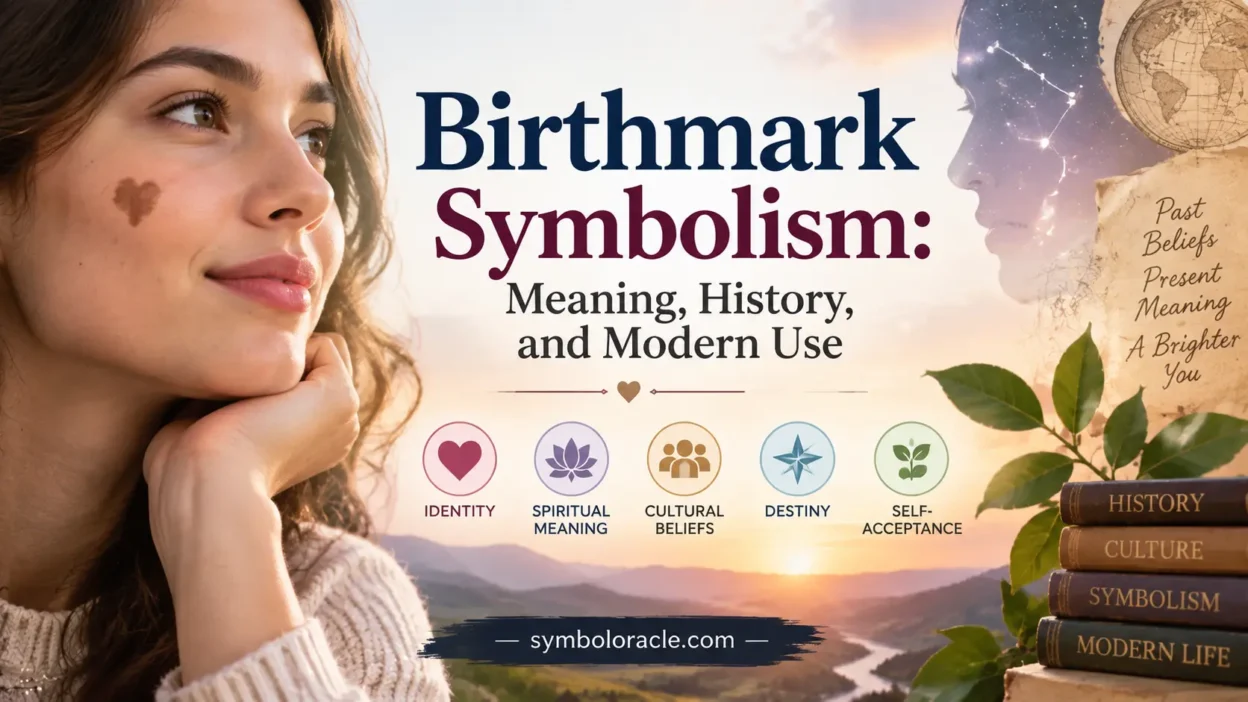
A birthmark is a natural mark that appears on a person’s skin at birth or shortly afterward. For many people, birthmark symbolism represents identity, individuality, personal stories, and the unique features that make someone different. While medicine explains birthmarks through genetics and skin development, cultures around the world have often given them emotional, spiritual, or personal meanings.
In the United States, birthmarks are usually understood as natural parts of a person’s appearance rather than signs of destiny. However, many people still explore their symbolic meanings through family stories, personal beliefs, tattoos, art, and cultural traditions. The way people view birthmarks has changed over time, moving from folklore-based interpretations toward ideas of self-acceptance and individuality.
Understanding birthmark symbolism requires looking at both historical beliefs and modern perspectives. Some traditions connected birthmarks with personality, past experiences, or spiritual ideas, while modern American culture often focuses on confidence, uniqueness, and embracing natural differences.
Quick Answer
Birthmark symbolism commonly represents individuality, personal identity, and the uniqueness of a person’s appearance in modern American culture. Historically, birthmarks have also been connected with folklore, spiritual beliefs, and ideas about personality or life experiences in different cultures.
TL;DR
- Birthmarks often symbolize uniqueness and identity.
- Ancient cultures linked marks with personal stories.
- Americans usually view them as natural features.
- Some traditions connect birthmarks with personality traits.
- Tattoos often preserve birthmark-related memories.
- Modern views focus on acceptance and confidence.
What Is a Birthmark and Why Do People Notice It?
A birthmark is a visible mark on the skin that forms before birth or develops during early childhood. Birthmarks can appear in many forms, including colored patches, raised areas, small spots, or unusual patterns. Some are caused by differences in pigment-producing cells, while others involve blood vessels beneath the skin.
Common types include:
- Pigmented birthmarks, such as moles and café-au-lait spots
- Vascular birthmarks, such as strawberry marks or port-wine stains
- Congenital marks, which are present from birth
People often notice birthmarks because they are permanent features that become part of someone’s appearance. Unlike temporary marks such as scars or bruises, birthmarks are usually seen as a natural part of a person’s body.
The symbolic interest comes from the fact that birthmarks are unique. Two people may have similar features, but a specific mark can become a personal identifier connected to memories, family stories, or self-image.
What Birthmarks Commonly Symbolize in the United States
In modern American culture, birthmarks are most often associated with individuality. They can represent the idea that every person has physical traits that make them different from others.
Many Americans view birthmarks through the lens of self-acceptance. Movements that encourage body confidence have helped change the conversation around visible differences. Instead of hiding unusual features, many people now share their stories and treat them as parts of their personal identity.
Birthmarks may also symbolize:
- Personal uniqueness
- Natural beauty
- Family connections
- Childhood memories
- Self-confidence
- Individual experiences
For some people, a birthmark becomes a reminder of acceptance. A person who once felt uncomfortable about a visible mark may later see it as an important part of their appearance and personal history.
Ancient Roots and Early Symbolic Interpretations
Long before modern science explained birthmarks, many societies created stories to understand unusual physical features. Because birthmarks appeared without obvious causes, people often connected them with spiritual ideas, fate, or inherited qualities.
In some folk traditions, birthmarks were believed to reveal information about a person’s character or future. These beliefs varied widely and were shaped by local customs, religious ideas, and community storytelling.
For example, some European folklore connected certain body marks with personality traits or special qualities. Some Asian traditions associated physical features with ideas about fortune or personal characteristics. These interpretations were cultural beliefs rather than scientific explanations.
The important point is that birthmarks often became symbols because humans naturally search for meaning in unique features. A visible mark could become part of a larger story about who someone was believed to be.
Birthmarks in Folklore and Cultural Traditions
Across different cultures, birthmarks have appeared in myths, family stories, and traditional beliefs. Their meanings have never been universal. A mark considered meaningful in one community might have no special meaning in another.
Some folklore traditions viewed birthmarks as:
| Context | Meaning in the USA | Common Associations | Notes |
|---|---|---|---|
| Personal identity | A unique physical feature | Individuality, confidence | Most common modern view |
| Family stories | A memorable trait | Heritage, connection | Often passed through generations |
| Spiritual beliefs | Personal symbolism | Destiny, life journey | Depends on individual beliefs |
| Tattoos and art | A meaningful design element | Memory, self-expression | Often inspired by personal experiences |
| Body acceptance | Natural beauty | Confidence, inclusion | Common in modern culture |
In many families, birthmarks become part of personal storytelling. Parents may remember a child’s first days by a unique mark, creating emotional connections that continue throughout life.
At the same time, modern understanding recognizes that these meanings come from cultural interpretation rather than scientific evidence. A birthmark does not determine someone’s personality or future, but it can hold personal meaning for the individual.
The Role of Birthmarks in American Identity and Self-Expression
In the United States, identity is often connected with personal expression. Clothing, hairstyles, tattoos, and physical features can all become ways people communicate who they are.
Birthmarks fit into this conversation because they are natural forms of individuality. Some people choose to highlight them, while others may prefer to keep them private. Both choices reflect personal comfort and self-expression.
Social media has also changed how people discuss visible differences. Many individuals share photos and stories about their birthmarks to encourage acceptance and reduce negative attitudes toward unusual physical features.
For some Americans, a birthmark represents a personal signature — something that separates them from others while becoming part of their life story.
Emotional and Psychological Meaning of Birthmarks
Beyond cultural beliefs, birthmarks can carry personal and emotional meanings. Because they are usually present from childhood, many people grow up seeing a birthmark as part of who they are. Over time, the mark may become connected with memories, confidence, insecurity, or personal growth.
For some individuals, a visible birthmark may create challenges during childhood, especially if others make unwanted comments or ask questions. These experiences can influence how someone views their appearance. Later in life, many people develop a stronger sense of acceptance and see their birthmark as a unique feature rather than something that needs to be changed.
Psychologically, birthmarks can represent:
- Self-acceptance
- Individual identity
- Resilience
- Personal history
- Confidence in natural appearance
The meaning often depends on the person’s relationship with the mark. A birthmark does not have a fixed emotional meaning. One person may see it as a reminder of uniqueness, while another may view it simply as a normal physical feature.
Birthmark Symbolism in Tattoos and Personal Art
Tattoos have become one of the most common ways people transform personal experiences into visual symbols. Some individuals create tattoos inspired by their own birthmarks, while others design artwork around a loved one’s birthmark as a reminder of connection and memory.
A tattoo based on a birthmark may symbolize:
- Acceptance of the body
- A personal journey
- Family bonds
- Recovery from insecurity
- Celebrating differences
Some people recreate the shape of a birthmark after removal or medical treatment because the original mark carried emotional importance. Others use artistic designs to highlight the idea that imperfections can become meaningful parts of identity.
In modern tattoo culture, the focus is usually less about supernatural meaning and more about personal storytelling. A birthmark-inspired tattoo often represents an individual experience rather than a shared cultural symbol.
Religious and Spiritual Interpretations of Birthmarks
Different religious and spiritual traditions have developed their own interpretations of birthmarks. These beliefs vary greatly and are usually connected to broader ideas about life, the soul, destiny, or personal purpose.
Some spiritual traditions have viewed unusual physical features as signs connected with a person’s journey. In certain belief systems, birthmarks have been interpreted as reminders of past experiences or spiritual connections. However, these ideas differ among communities and are not part of most mainstream religious teachings.
In many modern American religious communities, birthmarks are generally viewed as natural parts of human creation rather than messages or predictions. Some people may still attach personal spiritual meaning to them based on their own beliefs.
The difference between tradition and personal interpretation is important. A birthmark can hold spiritual meaning for an individual without having a universal religious explanation.
Birthmarks in Pop Culture, Media, and Public Life
Visible birthmarks have appeared in movies, television, fashion, and celebrity culture. When public figures openly discuss their birthmarks, it can influence how society views physical differences.
Media representation has helped move conversations away from treating unusual features as flaws. Characters with visible marks are sometimes presented as memorable, distinctive, or relatable rather than defined by appearance alone.
In fashion and entertainment, natural features have increasingly become part of broader discussions about authenticity. Models and performers with visible differences have challenged traditional ideas about what beauty should look like.
This shift reflects a larger cultural change: many people now value individuality and realistic representation instead of expecting everyone to have identical appearances.
Birthmark Meanings in Different Cultures Around the World
Birthmark interpretations differ widely across cultures. Some societies developed traditional systems that attempted to connect physical marks with personality or life circumstances.
Examples of cultural interpretations include:
- Some European folklore traditions connected marks with personality traits.
- Some Asian traditions linked physical features with fortune-related beliefs.
- Some Indigenous stories included unique body features in personal and family narratives.
- Some spiritual communities viewed unusual marks as meaningful signs.
These interpretations are part of cultural storytelling rather than scientific explanations. The same birthmark could have different meanings depending on where and when a person lived.
Today, global communication has blended many traditions together. People may explore birthmark meanings from different cultures while choosing the interpretation that feels personally meaningful to them.
Common Misunderstandings About Birthmark Symbolism
Because birthmarks have been surrounded by stories for generations, several misunderstandings continue to appear. One common misconception is that a birthmark can predict a person’s personality, abilities, or future.
There is no scientific evidence that birthmarks determine character or life outcomes. Their actual formation is related to biological processes involving skin cells, pigment, or blood vessels.
Another misunderstanding is that every birthmark carries a hidden message. While people may find personal meaning in their marks, symbolism is usually created through culture, family, or personal experience.
A balanced view recognizes both sides: birthmarks can have emotional and cultural meaning while also being natural physical features.
How Birthmark Symbolism Has Changed Over Time
The meaning of birthmarks has shifted as society’s understanding of the human body has changed.
In earlier periods, unexplained physical features were often interpreted through folklore and spiritual explanations. Communities created stories to understand things they could not medically explain.
As science developed, people gained more knowledge about how birthmarks form. This reduced many traditional fears and replaced some explanations with medical understanding.
Today, birthmarks are often viewed through ideas of identity, diversity, and acceptance. Instead of asking only “What does this mark mean?” many people ask “What does this mark mean to me?”
This change reflects a broader cultural movement toward appreciating individual differences.
Modern Uses of Birthmark Symbolism in Design and Creativity
Birthmark symbolism appears in modern creative fields, including art, jewelry, fashion, and personal branding. Artists may use irregular shapes, spots, or natural patterns to represent uniqueness and human individuality.
Designers often use organic patterns inspired by nature because they reflect the idea that no two people are exactly alike. Birthmark-inspired designs may appear in:
- Jewelry patterns
- Illustrations
- Photography projects
- Fashion designs
- Personal artwork
These uses usually focus on authenticity rather than traditional folklore. The symbol becomes a way to celebrate natural variation.
Birthmarks, Beauty Standards, and Body Acceptance
Beauty standards have changed significantly in recent years. Earlier ideas often promoted perfect and uniform appearances, but modern conversations increasingly recognize different body types, skin features, and personal characteristics.
Birthmarks are part of this shift. Many people now share their experiences to show that visible differences do not reduce attractiveness or value.
Body acceptance movements have encouraged people to view unique features as normal parts of human diversity. A birthmark may become a symbol of confidence because someone chooses to embrace what makes them different.
This perspective does not mean every person must feel the same way about their appearance. Acceptance can look different for everyone.
The Positive and Negative Symbolism Associated With Birthmarks
Birthmarks can carry both positive and negative associations depending on cultural background and personal experience.
Positive interpretations may include:
- Uniqueness
- Strength
- Personal identity
- Beauty in differences
- Family connection
Negative interpretations have often come from outdated beliefs, fear, or misunderstanding. Some historical traditions wrongly connected physical differences with negative traits or unusual abilities.
Modern perspectives generally separate appearance from personality. A birthmark describes a physical feature, not a person’s character or worth.
Frequently Asked Questions About Birthmark Symbolism
What does birthmark symbolism mean today?
Birthmark symbolism today usually represents individuality, self-acceptance, and personal identity. Many people see birthmarks as unique features that make someone recognizable rather than signs with fixed meanings.
Do birthmarks have spiritual meanings?
Some spiritual traditions give birthmarks personal or symbolic meanings, but these beliefs vary widely. Most modern interpretations depend on individual faith and personal experience rather than shared rules.
What do birthmarks symbolize in American culture?
In the United States, birthmarks are commonly viewed as natural differences connected with identity and confidence. Many people see them as part of embracing personal appearance and diversity.
Are birthmarks considered lucky symbols?
Some cultural traditions have associated certain birthmarks with luck or special qualities. However, these ideas are folklore and differ between communities.
What does a birthmark tattoo symbolize?
A birthmark tattoo often represents acceptance, memory, individuality, or a personal story. The meaning usually comes from the person’s own experience rather than a universal definition.
Do birthmarks represent past lives?
Some spiritual beliefs connect birthmarks with past-life ideas, but these interpretations are based on specific traditions rather than scientific evidence. Many people view such meanings as personal beliefs.
Conclusion
Birthmarks have been interpreted in many ways across cultures, from traditional folklore to modern ideas about identity and self-expression. While science explains them as natural skin features, people continue to give them personal meaning through family stories, creativity, and individual experiences.
Today, birthmark symbolism is most commonly connected with uniqueness, acceptance, and the idea that natural differences are part of what makes each person distinct. Whether viewed through culture, art, or personal reflection, a birthmark often becomes a reminder of individuality.
The meaning of a birthmark is ultimately shaped by the person who carries it. What was once seen only as an unusual mark can now represent confidence, personal history, and the freedom to embrace what makes someone different.


