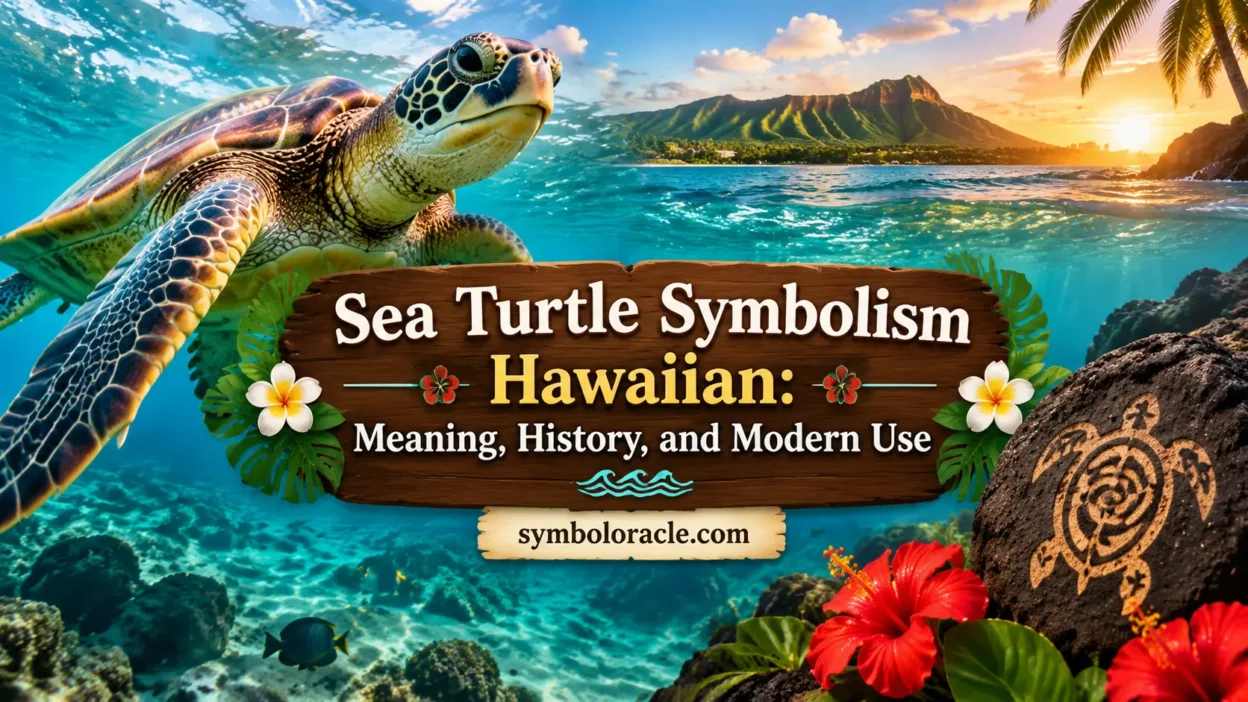
The sea turtle symbolism Hawaiian tradition represents more than an ocean animal; it reflects ideas of protection, guidance, longevity, family connection, and respect for nature. In Hawaiian culture, the sea turtle, especially the green sea turtle known as honu, holds an important place in stories, art, and everyday expressions of connection with the ocean.
People are drawn to the meaning of sea turtles because these animals represent qualities many people value today: patience, resilience, calmness, and a lasting relationship with the natural world. In the United States, Hawaiian sea turtle imagery appears in tattoos, jewelry, artwork, tourism, conservation efforts, and personal designs that express appreciation for island culture.
Understanding this symbol requires looking beyond decoration. The meaning comes from Hawaiian traditions, the role of sea turtles in island ecosystems, and the way modern Americans interpret symbols connected with nature, ancestry, and personal identity.
Quick Answer
Sea turtle symbolism Hawaiian commonly represents protection, family connection, guidance, and harmony with nature in modern American culture. Historically, the honu has been respected in Hawaiian traditions as an ocean creature connected with guardianship, ancestral connections, and respect for the sea.
TL;DR
- Hawaiian sea turtles symbolize protection and guidance.
- Honu represents family bonds and ancestral connections.
- Sea turtles reflect patience and long life.
- Hawaiian culture connects turtles with ocean respect.
- Modern tattoos express identity and nature appreciation.
- Misuse can separate symbols from cultural meaning.
What the Sea Turtle Represents in Hawaiian Culture
In Hawaiian culture, the sea turtle is commonly known as honu, a word associated with the green sea turtle that lives around the Hawaiian Islands. These turtles are not viewed simply as wildlife. They are respected creatures that represent a relationship between people, land, and ocean.
One of the strongest associations of the honu is protection. Many people interpret the sea turtle as a symbol of a guardian presence because of its calm movement, long lifespan, and connection to the waters surrounding the islands.
The honu also represents family and belonging. Hawaiian traditions place strong importance on relationships between generations, and the sea turtle’s long life has made it a natural symbol for continuity and connection.
Unlike symbols that represent speed or sudden change, the turtle reflects patience. Its slow movement reminds people that growth and progress can happen gradually.
The Physical Meaning Behind the Honu Symbol
The symbolism of the sea turtle begins with the animal itself. Sea turtles have several qualities that naturally influence human interpretation.
Their protective shell is one of the most recognizable features. Because the shell provides safety, people often connect turtles with security, defense, and emotional protection.
Their ability to travel long distances across oceans contributes to meanings of navigation and endurance. Sea turtles return to specific beaches to lay eggs, showing a strong connection to place and memory.
Their long lifespan has also created associations with wisdom and survival. In Hawaiian settings, these qualities support the idea that the honu represents a lasting connection between generations.
| Context | Meaning in the USA | Common Associations | Notes |
|---|---|---|---|
| Hawaiian tradition | Protection and connection | Honu, ocean respect, family | Rooted in island culture |
| Tattoos | Personal identity | Strength, travel, protection | Often chosen for personal meaning |
| Conservation | Environmental awareness | Ocean care, wildlife protection | Linked with marine protection efforts |
| Home decor | Calm and nature connection | Beach lifestyle, relaxation | Popular in coastal design |
Ancient Roots and Early Hawaiian Symbolism
The meaning of the honu developed through generations of Hawaiian cultural practices and storytelling. Native Hawaiian traditions often recognize animals as important parts of the natural world rather than separate from human life.
The ocean has always played a central role in Hawaiian society. It provided food, transportation, and a connection between islands. Sea creatures were observed carefully because their behavior influenced navigation, fishing, and understanding of the environment.
Within Hawaiian traditions, certain animals could be associated with aumākua, a concept involving ancestral guardians or family spiritual connections. Some families recognized particular animals as connected with their lineage. Interpretations varied between families, and not every Hawaiian person views the honu in exactly the same way.
This variation is important because Hawaiian symbolism is not a single fixed system. Meanings developed through communities, stories, and personal relationships with the natural world.
Why Sea Turtles Became Symbols of Protection and Guidance
The association between sea turtles and protection comes from several characteristics of the animal.
The turtle’s shell naturally suggests safety. Unlike animals that escape danger through speed, turtles survive through endurance and defense. This has made them a symbol of remaining steady during difficult situations.
Sea turtles also navigate huge ocean distances and return to familiar locations. This behavior has influenced interpretations connected with finding one’s way, returning home, and maintaining connections despite distance.
For many people in Hawaii and across the United States, a sea turtle represents the idea that a person can move through life slowly while still reaching meaningful destinations.
The Role of Sea Turtles in Hawaiian Identity Today
Today, the honu remains an important cultural image in Hawaii. Visitors often encounter sea turtle designs on clothing, souvenirs, artwork, and signs connected with marine conservation.
For many residents, however, the symbol carries more personal meaning. It can represent respect for the islands, responsibility toward the ocean, and appreciation for Hawaiian heritage.
The popularity of the honu has also created challenges. Because sea turtle imagery is widely used in tourism, some people may see it only as a tropical decoration. For others, it represents a living connection to Hawaiian culture and environmental responsibility.
Understanding this difference helps people appreciate the symbol respectfully rather than treating it as a simple beach image.
How Hawaiian Sea Turtle Symbolism Is Understood in the United States
In the United States, Hawaiian sea turtle imagery has become widely recognized as a symbol connected with nature, ocean life, and peaceful living. While its roots come from Hawaiian culture, many Americans encounter the symbol through travel, environmental awareness, art, and personal expression.
For many people, the honu represents a desire to live with greater balance. The turtle’s calm movement and connection to the ocean often appeal to those who value a slower, more thoughtful lifestyle.
In coastal communities, sea turtle symbols frequently appear in local artwork, conservation campaigns, and educational programs. These uses often focus less on spiritual ideas and more on protecting marine ecosystems and respecting wildlife.
At the same time, people who use Hawaiian symbols outside the islands increasingly recognize the importance of understanding their cultural background. A sea turtle tattoo or decoration may carry personal meaning, but learning about the honu’s Hawaiian context creates a more respectful connection.
The Connection Between Honu and Family Traditions
Family connection is one of the most important meanings associated with the Hawaiian sea turtle.
In Hawaiian culture, relationships between generations have traditionally been highly valued. The idea of connection between ancestors, relatives, and future generations appears in many aspects of island life.
Because sea turtles return to familiar places and survive across many years, they naturally became associated with continuity. The honu can represent staying connected to one’s roots while continuing a personal journey.
Some Hawaiian families have specific relationships with certain animals through the concept of aumākua, where an animal may be viewed as a family guardian or ancestral connection. These beliefs are personal and vary among families, so the honu does not carry one identical meaning for every person.
For modern Americans, the sea turtle often symbolizes family loyalty, remembering loved ones, and maintaining connections despite physical distance.
Sea Turtle Symbolism in Tattoos and Personal Style
Sea turtle tattoos are among the most recognizable ocean-inspired designs in modern tattoo culture. People choose them for many reasons, including personal memories, travel experiences, environmental values, and admiration for Hawaiian traditions.
Common tattoo interpretations include:
- protection during life changes
- connection to the ocean
- patience and personal growth
- family relationships
- appreciation for island culture
Some designs include additional elements such as waves, flowers, the sun, or traditional-inspired patterns. Each addition can change the meaning of the artwork.
For example, waves may emphasize a connection with the ocean, while flowers may create associations with beauty, growth, or Hawaiian landscapes. However, people should understand that Hawaiian-inspired designs are not automatically traditional Hawaiian symbols. Many modern tattoo styles combine cultural elements with personal creativity.
A respectful approach recognizes the difference between appreciating a symbol and claiming a cultural meaning that does not belong to the user.
Emotional and Psychological Meaning of the Sea Turtle Symbol
Beyond cultural history, sea turtles carry emotional meanings that explain their popularity.
The turtle’s slow movement often represents patience. In a modern society where speed and constant activity are common, the sea turtle can remind people that progress does not always require rushing.
The shell creates another emotional association: feeling protected. Many people connect with the image because it represents having a safe inner space while facing outside challenges.
The turtle’s ocean journey can also represent resilience. Sea turtles survive changing environments, long migrations, and natural obstacles. This makes them meaningful symbols for people who have experienced major life transitions.
From a psychological perspective, nature symbols often work as personal reminders. A sea turtle image may help someone remember a value, relationship, place, or experience that matters to them.
Sea Turtle Symbolism in Hawaiian Art and Design
The honu appears frequently in Hawaiian-inspired artwork because it connects visual beauty with cultural meaning.
Traditional and contemporary artists may include sea turtles in paintings, carvings, jewelry, clothing, and decorative objects. The symbol often appears alongside other ocean elements, reflecting Hawaii’s close relationship with marine environments.
In modern American home design, sea turtle artwork is especially common in coastal interiors. People often use these designs to create feelings associated with relaxation, beaches, travel, and nature.
However, there is an important distinction between coastal decoration and cultural symbolism. A decorative sea turtle image may simply represent a beach lifestyle, while a culturally meaningful honu design may represent deeper ideas connected with Hawaiian identity and tradition.
Recognizing both interpretations allows people to enjoy the symbol while respecting its origins.
The Environmental Meaning of Sea Turtles in Modern Culture
Today, sea turtles are also powerful symbols of ocean conservation.
Hawaiian green sea turtles face threats from habitat changes, pollution, fishing activity, and climate-related challenges. Conservation efforts have made the turtle a symbol of protecting marine life.
Across the United States, sea turtle imagery appears in environmental education, nonprofit campaigns, and public awareness programs. In these contexts, the symbol represents responsibility rather than only beauty or tradition.
Many people who choose sea turtle designs do so because they care about protecting oceans and wildlife. The image becomes a reminder that humans share natural spaces with other species.
This modern environmental meaning adds another layer to the honu’s symbolism. It connects cultural respect with ecological awareness.
Cross-Cultural Meanings of Sea Turtles Around the World
Although the Hawaiian honu has its own cultural background, sea turtles have meaningful roles in many societies.
In some Pacific Island cultures, turtles are associated with navigation, creation stories, protection, and relationships with the sea. Different island communities have their own traditions and interpretations.
In some Asian cultures, turtles have been linked with longevity, wisdom, and stability. These meanings developed from observations of the animal’s long life and steady nature.
In Indigenous traditions across different regions, turtles may appear in stories about creation, land, water, and balance. These traditions are diverse and should not be combined into one universal interpretation.
The shared pattern across many cultures is that turtles often represent endurance and connection. However, each culture gives the animal meaning through its own history and worldview.
Common Misunderstandings About Hawaiian Sea Turtle Symbolism
Because the honu is popular worldwide, some misunderstandings have developed around its meaning.
One common mistake is treating all sea turtle symbolism as identical. Hawaiian interpretations come from specific cultural traditions and should not be confused with meanings from other places.
Another misunderstanding is assuming that every Hawaiian-inspired turtle design has ancient origins. Many modern designs are contemporary creations influenced by tourism, art trends, and personal expression.
Some people also describe the sea turtle only as a symbol of luck or good fortune. While some individuals may personally associate it with positive experiences, Hawaiian meanings often include broader ideas of responsibility, relationships, and respect for nature.
Understanding these differences creates a more accurate and respectful view of the symbol.
How Sea Turtle Symbolism Has Changed Over Time
The meaning of the sea turtle has evolved as Hawaiian culture, environmental awareness, and global communication have changed. Earlier interpretations were closely connected with relationships between people, ancestors, and the natural world. Modern interpretations often include additional ideas such as conservation, travel, personal identity, and appreciation for ocean life.
In traditional Hawaiian settings, the honu was understood within a broader cultural relationship with the ocean. It was not simply an image to display; it was part of a living environment that supported communities and carried important connections.
As Hawaii became more connected with the wider world, sea turtle imagery reached new audiences. Visitors, artists, and designers began using turtle symbols in clothing, jewelry, and artwork. This expanded awareness of the honu but also changed how some people viewed it.
Today, the sea turtle can represent several overlapping ideas. For some, it reflects Hawaiian heritage. For others, it represents ocean conservation, peaceful living, travel memories, or personal resilience. The meaning depends greatly on the context in which the symbol is used.
Sea Turtle Symbolism in Jewelry, Fashion, and Everyday Objects
Sea turtle designs are common in jewelry and fashion because the symbol combines natural beauty with personal meaning.
Necklaces, bracelets, earrings, and charms featuring sea turtles are often chosen by people who feel connected to beaches, oceans, or island experiences. Some wear these designs as reminders of vacations, meaningful places, or personal values.
In fashion, sea turtle imagery often appears on shirts, hats, bags, and accessories connected with coastal lifestyles. These designs are especially popular in regions where ocean culture plays an important role.
However, a piece of jewelry featuring a sea turtle can have different meanings depending on the wearer. One person may view it as a reminder of Hawaii, while another may see it as a symbol of patience, protection, or environmental responsibility.
The symbol’s flexibility is one reason it remains popular, but understanding its Hawaiian roots adds cultural awareness to personal expression.
The Meaning of Sea Turtles in Hawaiian Tourism and Popular Culture
Tourism has played a major role in spreading awareness of the honu around the world. Many visitors encounter sea turtle imagery while exploring Hawaii through beaches, museums, artwork, and educational experiences.
In popular culture, sea turtles are often shown as peaceful ocean creatures connected with adventure and exploration. Movies, advertisements, and travel media frequently use turtle imagery to create associations with nature and the sea.
While this exposure has helped people appreciate sea turtles, it has also simplified some aspects of Hawaiian symbolism. A symbol that carries cultural meaning can sometimes become reduced to a souvenir image.
A more thoughtful understanding recognizes both sides: the honu is a recognizable symbol of Hawaiian identity, and it is also a living animal that deserves protection and respect.
Positive and Negative Associations of Sea Turtle Symbolism
Most modern interpretations of the sea turtle are positive. The symbol is commonly connected with:
- protection
- patience
- endurance
- family
- environmental care
- connection with nature
These meanings explain why the symbol appears in personal artwork, tattoos, and conservation efforts.
However, the symbol can be misunderstood when separated from its cultural background. Using Hawaiian imagery without learning about its significance may unintentionally turn a meaningful tradition into a simple decoration.
Another issue is the treatment of actual sea turtles. Some visitors may approach or disturb turtles while trying to take photos, not realizing that these animals need space and protection.
Respecting the symbol also means respecting the living creature behind it.
Sea Turtle Symbolism and Personal Identity
For many people, symbols become meaningful because they represent personal experiences.
A person who grew up near the ocean may connect the sea turtle with home and belonging. Someone who traveled to Hawaii may associate it with a life-changing experience. Another person may choose the symbol because it reflects qualities they admire, such as calmness or persistence.
This personal connection explains why sea turtle tattoos and artwork remain popular. The symbol allows people to communicate values without using words.
In modern American culture, identity symbols often combine personal stories with broader cultural meanings. The honu is an example of how a natural image can become part of someone’s individual expression while still carrying a larger history.
Frequently Asked Questions About Sea Turtle Symbolism Hawaiian
What does the Hawaiian sea turtle symbolize?
The Hawaiian sea turtle, or honu, commonly symbolizes protection, family connection, guidance, and respect for the ocean. Its meaning is connected with Hawaiian cultural traditions and the important relationship between island communities and the sea.
What does a sea turtle tattoo mean in Hawaiian culture?
A sea turtle tattoo may represent protection, connection to family, ocean respect, or appreciation for Hawaiian traditions. However, meanings vary depending on the person, design, and cultural background.
Is the sea turtle a spiritual symbol in Hawaiian culture?
The sea turtle can have spiritual and ancestral associations in some Hawaiian traditions, including connections with concepts such as aumākua. These beliefs are personal and vary among families and communities.
Why are sea turtles important in Hawaii?
Sea turtles are important because they are part of Hawaii’s natural environment and cultural identity. They also play a role in ocean ecosystems and have become symbols of marine conservation.
Is the honu only a Hawaiian symbol?
No. Turtles have meanings in many cultures around the world, including associations with longevity, protection, and wisdom. The honu has a specific connection to Hawaiian culture and should be understood within that context.
Can anyone wear a Hawaiian sea turtle symbol?
People can appreciate and wear sea turtle designs, but learning about the symbol’s cultural background shows respect. Understanding the difference between appreciation and misuse helps preserve the meaning behind the image.
Conclusion
The sea turtle represents a connection between people, the ocean, and the natural world. In Hawaiian traditions, the honu carries associations with protection, family relationships, guidance, and respect for life.
Modern Americans often connect sea turtle imagery with conservation, personal memories, coastal identity, and admiration for Hawaiian culture. While the symbol appears in many forms today, its meaning becomes richer when people understand the traditions and values behind it.
Sea turtle symbolism Hawaiian continues to reflect an important idea: lasting connections are built through patience, respect, and care for the world we share.