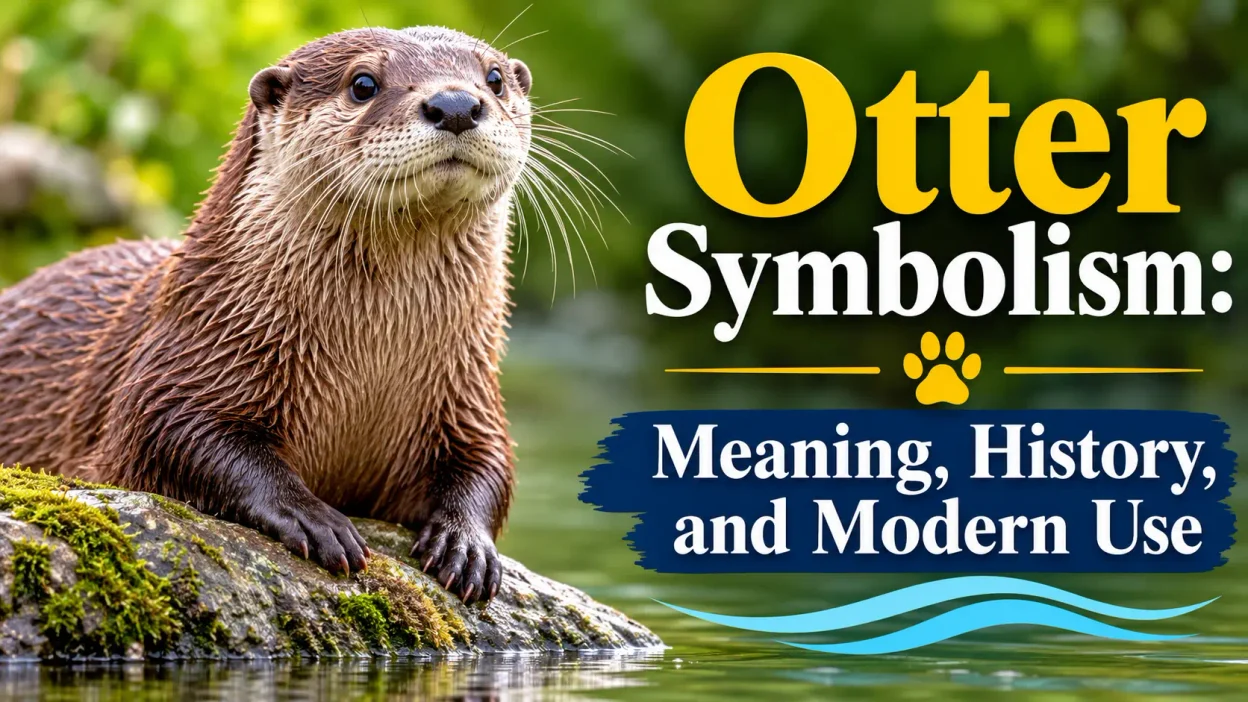
Otter symbolism commonly centers on playfulness, intelligence, emotional connection, and the ability to adapt to changing circumstances. The otter is an aquatic mammal known for its graceful swimming, curious behavior, and habit of playing in water. These qualities have made it an appealing symbol of joy, companionship, flexibility, and a balanced approach to life.
In the United States, otters appear in wildlife photography, children’s stories, conservation campaigns, jewelry, tattoos, and nature-inspired artwork. People often associate them with happiness and friendship because they seem comfortable moving between water and land while remaining active and social.
However, the meaning of an otter is not limited to its cheerful appearance. Different Indigenous traditions have their own teachings and stories involving otters, while the animal’s actual behavior offers additional ways to understand its symbolic associations.
Looking at its natural characteristics, cultural history, and modern representations helps explain why this small aquatic mammal has become such a recognizable symbol.
Quick Answer
Otter symbolism most commonly represents playfulness, friendship, emotional connection, curiosity, and adaptability in modern American culture. In some Indigenous traditions, particularly Anishinaabe teachings, the otter is also associated with unity, cooperation, family protection, and living in harmony with creation.
TL;DR
- Playfulness: Enjoyment, humor, and making room for fun.
- Friendship: Companionship, cooperation, and meaningful social bonds.
- Adaptability: Confidence when navigating changing environments.
- Emotional connection: Affection, trust, and supportive relationships.
- Indigenous traditions: Unity, family responsibility, and harmony with creation.
- Conservation: Healthy waterways, environmental recovery, and ecological balance.
1. What Makes the Otter a Recognizable Symbol
An otter has a distinctive appearance that makes it easy to recognize. Its long, flexible body, rounded face, sensitive whiskers, webbed feet, and thick brown fur are adapted to life in and around water. Its streamlined shape allows it to swim, dive, turn, and move through rivers with remarkable control.
In North America, the river otter is especially familiar. It lives around streams, lakes, marshes, rivers, and coastal environments. Sea otters, which live along the Pacific Coast, have a different appearance and lifestyle, but they share many of the same popular associations.
Several physical characteristics contribute to the animal’s symbolic meaning:
- Its playful movements suggest freedom and enjoyment.
- Its ability to swim and travel on land suggests flexibility.
- Its sensitive whiskers represent awareness and curiosity.
- Its family behavior suggests companionship and care.
- Its relationship with water connects it with emotional life and renewal.
These interpretations are symbolic rather than scientific claims. They come from the ways people observe and understand the animal.
2. The Core Meaning of Otter Symbolism
The most familiar interpretation combines happiness, connection, and adaptability.
An otter does not appear particularly concerned with looking impressive. It moves through its environment with curiosity and energy. Its playful behavior has encouraged people to associate it with enjoying ordinary experiences instead of treating every moment as a serious task.
The animal also represents the importance of relationships. River otters can form family groups, and young otters depend on their mothers while learning to survive. Their social interactions provide a natural foundation for associations with companionship and family responsibility.
Three central ideas summarize its modern symbolism:
Joy without carelessness: The otter represents enjoying life while remaining attentive to responsibilities.
Connection without losing independence: Its social behavior suggests that relationships can support individual growth.
Flexibility without losing direction: Its movement between water and land represents adjusting to circumstances while continuing forward.
For many people, these qualities make the otter an appealing reminder to remain curious, maintain relationships, and avoid allowing daily pressures to eliminate enjoyment.
3. Why Otters Represent Playfulness and Happiness
Playfulness is probably the most recognizable association with otters. They slide down muddy banks, chase one another through water, roll around, and explore their surroundings.
These activities are not simply entertainment. Play can help young otters develop hunting skills, improve coordination, and strengthen social relationships. Adults also engage in playful behavior.
For people watching them, however, these movements communicate something beyond survival. An otter appears to enjoy its surroundings rather than merely move through them.
This has made it a popular symbol of:
- Finding happiness in ordinary experiences.
- Maintaining a sense of humor during difficult periods.
- Making time for recreation and relaxation.
- Approaching unfamiliar situations with curiosity.
- Remembering that productivity is not the only measure of a meaningful life.
In American popular culture, this interpretation often appears in cute animal illustrations, children’s products, greeting cards, and wildlife photography.
An otter can therefore represent a simple personal reminder: enjoying life is not irresponsible, provided that enjoyment exists alongside care and responsibility.
4. Otter Symbolism in Friendship and Relationships
Otters are often associated with friendship because their social behavior makes companionship an important part of their public image.
North American river otters may live alone or in pairs, but they also form family groups. Mothers spend considerable time raising their young, teaching them essential survival skills, and protecting them while they develop independence.
This behavior provides a natural foundation for interpreting the otter as a symbol of supportive relationships.
In personal symbolism, an otter can represent:
Trust: Healthy relationships require people to feel comfortable around one another.
Cooperation: Working together can make difficult situations easier to manage.
Affection: Small expressions of care can strengthen emotional connections.
Independence: Close relationships do not require people to abandon their individuality.
Family protection: Caring for younger or more vulnerable family members is an important responsibility.
An otter is sometimes used to represent a close friendship or romantic relationship. Two otters appearing together in artwork can communicate companionship, affection, and shared experiences.
However, the image should not automatically be interpreted as a symbol of lifelong romantic partnership. River otters do not universally form permanent mating pairs, and their social organization varies.
5. Historical Origins in Indigenous Traditions
Otters have a much older cultural history than their modern appearance in American cartoons, merchandise, and social media might suggest.
For Indigenous communities, animals are not necessarily treated as decorative symbols representing convenient human personality traits. They can have relationships with creation, community responsibilities, spiritual teachings, and particular places.
One documented example comes from the Algonquin Anishinaabe community of Kitigan Zibi.
An oral history preserved by the Canadian Museum of History describes the otter volunteering to help people work together, protect their families, and live in harmony with creation. In this account, the otter receives the responsibility of guiding the Anishinaabeg toward unity. Canadian Museum of History+1
This tradition gives the animal a meaning that goes beyond happiness or entertainment.
It connects the otter with:
- Unity among community members.
- Responsibility toward family and group.
- Cooperation rather than unnecessary conflict.
- Respect for the natural world.
- Maintaining harmony within a community.
It is important not to present this account as a universal Native American belief. Indigenous nations have distinct histories, languages, spiritual traditions, and relationships with animals.
The Anishinaabe teaching is one specific cultural example, not a definition that applies to every Indigenous community.
6. The Otter in Ojibwe Spiritual and Cultural Life
The otter also holds a significant place in documented Ojibwe religious traditions.
Historical accounts of the Midewiwin, a traditional healing and spiritual society among the Ojibwe, describe the otter as an important figure connected with its teachings and ceremonial practices.
The animal appears in accounts involving sacred objects, medicine traditions, and the transmission of spiritual knowledge. Scholarship on Ojibwe relationships with animals also examines the otter’s presence in stories, ceremonial objects, and medicine bags. The ALB Library+1
This history provides a different perspective from modern interpretations that focus almost entirely on the otter’s playful behavior.
Here, the animal is connected with spiritual responsibility, healing traditions, and the relationship between human communities and the natural world.
These traditions should be approached respectfully. A ceremonial animal or object is not simply a decorative motif that can be separated from its cultural setting and assigned a generic meaning.
For contemporary readers, the important distinction is that the otter’s cultural significance can be serious and complex even though the animal often appears cheerful in popular imagery.
7. Sea Otter Symbolism Along the Pacific Coast
Sea otters have their own cultural and historical associations, particularly among Indigenous communities along the Pacific Northwest Coast.
Before European contact, coastal communities maintained longstanding relationships with sea otters. Archaeological evidence confirms that Indigenous people used sea otters for their pelts and other purposes. Historical and cultural accounts also describe the animals as important in traditional stories and relationships. Oregon State University+1
Sea otter pelts were especially valuable. Along parts of the Oregon coast, they were associated with wealth, status, important gifts, and social relationships.
Some traditional narratives also describe sea otters as respected kin or beings capable of relationships with humans. These accounts demonstrate that their significance extended beyond their practical value as a source of material. Elakha Alliance+1
This history adds several associations to the broader cultural understanding of otters:
- Resourcefulness and skill.
- Wealth and social standing in particular historical settings.
- Relationships between people and coastal environments.
- Respect for animals and their place in traditional narratives.
- The importance of sustainable relationships with natural resources.
The history of sea otters also reflects the consequences of commercial exploitation. The maritime fur trade caused severe population declines, changing the relationship between coastal communities, wildlife, and the economy.
8. What Otters Symbolize in Modern American Culture
In contemporary American culture, otters are generally viewed positively.
They appear in aquariums, wildlife documentaries, nature centers, children’s books, environmental campaigns, and educational programs. Their expressive faces and playful movements make them especially recognizable.
Their popularity also makes them useful symbols in different settings.
| Context | Common American Interpretation | Main Association |
|---|---|---|
| Children’s literature | Curiosity and adventure | Discovery |
| Friendship artwork | Companionship and affection | Connection |
| Nature photography | Freedom and enjoyment | Playfulness |
| Environmental campaigns | Healthy aquatic habitats | Conservation |
| Personal tattoos | Adaptability and individuality | Personal growth |
| Indigenous cultural teachings | Unity and responsibility in particular traditions | Community |
Modern interpretations are not all equally rooted in history. Some come from established cultural traditions, while others are contemporary associations inspired by animal behavior.
For example, an American might choose an otter illustration to represent a close friendship without knowing anything about Indigenous otter teachings. Another person might select the same animal because of its connection with a particular cultural story.
Both interpretations can exist, but they should not be confused.
9. Emotional and Psychological Meaning of the Otter
People often connect animal imagery with qualities they want to develop or experiences they want to remember.
The otter is especially suitable for this because its appearance combines energy, curiosity, and social behavior.
Emotional openness
An otter can represent being comfortable expressing affection, enjoying company, and allowing yourself to experience positive emotions.
Resilience
Its ability to move through water, navigate different environments, and find food in changing conditions can suggest the importance of adjusting when life becomes difficult.
Curiosity
Its active and exploratory behavior makes it a natural representation of learning, discovery, and asking questions.
Social confidence
An otter can represent feeling comfortable around others without needing constant approval.
Emotional balance
Because the animal is associated with water, some modern symbolic interpretations connect it with emotional awareness. This is a contemporary metaphor rather than a universal historical belief.
Taken together, these meanings make the otter an appealing personal symbol for people who value kindness, flexibility, and a healthy relationship with enjoyment.
10. Water, Movement, and the Symbolism of Adaptability
Water is an important part of understanding otter imagery.
Otters spend much of their lives in aquatic environments, but they also travel across land. They can dive, swim, rest, hunt, and move between different surroundings.
This makes them useful symbols of adaptability.
In modern symbolic interpretation, water frequently represents emotions, change, uncertainty, and the passage of time. An otter moving through water can therefore suggest the ability to navigate emotional or practical challenges without becoming overwhelmed.
Its movement also offers a useful distinction between flexibility and instability.
An adaptable person does not necessarily change their values whenever circumstances become difficult. Instead, they learn how to respond to different situations while maintaining a clear sense of direction.
An otter can represent:
- Adjusting to new circumstances.
- Learning through experience.
- Remaining curious during periods of change.
- Finding practical solutions.
- Moving forward without demanding complete control.
This interpretation is especially relevant during major life transitions, such as changing careers, starting a new relationship, moving to another place, or entering a new stage of adulthood.
11. Otter Symbolism in Tattoos and Personal Jewelry
Otter tattoos are often chosen by people who appreciate the animal’s appearance or identify with its commonly recognized qualities.
Unlike some animals with strongly established religious or historical associations, otters allow considerable room for personal interpretation.
A tattoo may represent:
- A playful personality.
- A close friendship.
- A meaningful family relationship.
- A personal connection with rivers or the ocean.
- The ability to overcome difficult experiences.
- A commitment to wildlife and environmental protection.
The design can change the intended message.
A swimming otter may suggest freedom and adaptability. Two otters together may represent companionship. An otter holding a shell can communicate curiosity, resourcefulness, or an appreciation of sea life.
Jewelry featuring otters can carry similar meanings. Small pendants, bracelets, and animal-shaped charms are sometimes selected as personal reminders of affection, independence, and enjoyment.
For someone choosing an otter design connected to Indigenous traditions, it is worth understanding the particular community and cultural context rather than treating sacred imagery as a generic fashion style.
12. Otters in Dreams and Personal Interpretation
Dreaming about an otter can be meaningful to the person experiencing it, although there is no scientifically established interpretation that applies to everyone.
The dreamer’s emotions, personal memories, and circumstances are more useful starting points than a fixed dictionary definition.
Some possible interpretations include:
Seeing a playful otter: This might reflect a desire for relaxation, enjoyment, or more time with friends.
Swimming with an otter: The experience could represent comfort with change or a wish to explore unfamiliar situations.
Seeing two otters together: This may bring attention to friendship, affection, or a relationship that matters to the dreamer.
Seeing an injured otter: This could reflect concern about vulnerability, a damaged relationship, or something the dreamer wants to protect.
Watching an otter disappear underwater: This might connect with uncertainty, changing circumstances, or emotions that are difficult to understand.
These are reflective possibilities, not predictions or supernatural warnings.
A useful question is: What did the otter make you feel, and what was happening in your life when you had the dream?
That personal context often matters more than the animal alone.
13. Spiritual Meaning and the Idea of an Otter Spirit Animal
In contemporary spiritual writing, the otter is sometimes described as a spirit animal, totem, or symbolic guide.
These expressions do not have identical meanings across cultures. Some come from specific Indigenous traditions, while others are used broadly in modern spiritual and personal-development communities.
In contemporary interpretations, an otter spirit animal is often associated with:
- Making room for happiness and recreation.
- Building supportive relationships.
- Trusting your ability to adapt.
- Approaching life with curiosity.
- Maintaining emotional flexibility.
- Finding balance between responsibility and enjoyment.
Some people use the phrase otter spirit animal to describe a personality that is friendly, playful, and socially confident.
However, it is important to distinguish modern spiritual language from Indigenous cultural practices. The Anishinaabe and Ojibwe traditions discussed earlier have their own histories and teachings. Their meanings should not be reduced to personality descriptions or universal spiritual labels.
For a general American audience, the most responsible approach is to treat the otter as a personal symbol unless a specific cultural tradition is being discussed.
14. Negative Interpretations and Common Misunderstandings
Otters are generally positive symbols, but not every interpretation is entirely cheerful.
Their association with playfulness can sometimes be misunderstood as a lack of seriousness. Someone who identifies with the animal might be perceived as carefree, but enjoying life does not mean avoiding responsibility.
There are several other misunderstandings worth considering.
Mistaking playfulness for immaturity
The otter’s playful appearance can encourage the idea that it represents childish behavior. A more balanced interpretation is that enjoyment and maturity can exist together.
Assuming every otter symbolizes romance
Two otters appearing together do not necessarily represent romantic commitment. Friendship, family relationships, and cooperation are equally reasonable interpretations.
Treating all Indigenous meanings as identical
There is no single Native American interpretation of the otter. Different communities have their own teachings, stories, and ceremonial relationships with animals.
Confusing symbolic meaning with animal behavior
Otters are wild predators with specific survival needs. Their playful behavior does not mean they are naturally suitable pets or that approaching wild otters is safe.
Ignoring environmental concerns
The animal’s cute appearance can sometimes overshadow the ecological challenges facing its species. Habitat degradation, pollution, and human activity remain important conservation concerns.
Understanding these distinctions helps prevent a pleasant symbol from becoming an inaccurate representation of the animal or its cultural history.
15. The Otter’s Changing Meaning in Modern Conservation
One of the most interesting changes in American otter symbolism comes from wildlife conservation.
During the nineteenth and early twentieth centuries, extensive trapping, habitat destruction, and water pollution reduced river otter populations across many parts of North America.
Some populations disappeared from areas where the animals had previously been common.
Conservation programs, improved water quality, habitat protection, and regulated wildlife management helped restore river otters in several states. The recovery of these animals has become an encouraging example of wildlife restoration in the United States. U.S. Fish & Wildlife Service+2
Colorado provides a particularly useful example. After river otters disappeared from the state, wildlife officials began reintroduction efforts in the 1970s. In 2026, Colorado Parks and Wildlife is recognizing the fiftieth anniversary of its initial restoration efforts. Colorado Parks and Wildlife
This history has added another modern association to the animal: environmental recovery.
Today, an otter appearing in a conservation campaign can represent:
- Cleaner rivers and lakes.
- Protection of aquatic ecosystems.
- Responsible wildlife management.
- The value of restoring damaged habitats.
- Cooperation between communities and conservation organizations.
River otters are also considered useful indicators of aquatic habitat quality because their populations can be affected by pollution and environmental changes. National Zoo+1
The animal’s meaning has therefore expanded beyond personal happiness and companionship. It can also represent the possibility of repairing relationships between people and the natural environment.
16. How Otter Symbolism Has Evolved Over Time
The meaning of the otter has developed through several different cultural and historical contexts.
In Indigenous traditions, particular otter stories and ceremonial practices connect the animal with spiritual responsibilities, healing, family relationships, and community life.
In coastal communities, sea otters also became associated with valuable natural resources, trade, wealth, and relationships with the ocean.
During the expansion of commercial fur trading, their pelts became highly sought after. This period brought significant changes to otter populations and human relationships with the animals.
In modern American popular culture, the otter is more commonly associated with cuteness, happiness, friendship, and playfulness. Wildlife documentaries, aquariums, children’s entertainment, and conservation campaigns have helped shape this image.
The development can be summarized as follows:
| Period or Context | Main Symbolic Association | Cultural Background |
|---|---|---|
| Indigenous traditions | Unity, healing, and responsibility | Specific community teachings |
| Pacific Northwest coastal history | Wealth, status, and relationships with nature | Sea otter traditions and trade |
| Nineteenth-century fur trade | Economic value and commercial exploitation | Demand for valuable pelts |
| Twentieth-century wildlife awareness | Wildlife protection | Conservation movements |
| Contemporary America | Happiness, friendship, and adaptability | Popular culture and personal symbolism |
| 2025–2026 | Environmental recovery and ecological responsibility | Modern conservation efforts |
These meanings do not replace one another completely. Historical traditions, personal interpretations, and contemporary wildlife associations continue to exist alongside each other.
The modern otter is therefore more than a cheerful animal illustration. Its symbolism reflects changing ideas about relationships, nature, culture, and human responsibility.
Frequently Asked Questions
1. What does an otter symbolize spiritually?
In contemporary spiritual interpretations, an otter commonly represents joy, emotional flexibility, friendship, curiosity, and adaptability. Some specific Indigenous traditions associate the animal with community unity, healing, and family responsibility.
2. What does an otter symbolize in a tattoo?
An otter tattoo often represents a playful personality, meaningful friendships, independence, or the ability to adapt to life’s changes. Two otters together may represent a close personal relationship or family connection.
3. Is an otter a symbol of good luck?
Some people interpret seeing an otter as an encouraging sign associated with happiness, positive relationships, and new experiences. However, there is no universal historical tradition establishing the otter as a good-luck symbol.
4. What does seeing two otters together symbolize?
Two otters together can represent companionship, cooperation, affection, and mutual support. Their meaning may be especially personal when the image reminds someone of a friendship, romantic relationship, or family bond.
5. What does an otter symbolize in Native American culture?
Meanings vary between Indigenous nations. In one documented Algonquin Anishinaabe oral history, the otter serves as a guardian of unity, encouraging people to protect their families and work together in harmony with creation.
6. What does a sea otter symbolize?
A sea otter can represent adaptability, resourcefulness, and a connection with the ocean. In some Pacific Northwest Indigenous histories, sea otters also have associations with wealth, status, traditional stories, and relationships between coastal communities and nature.
7. Is otter symbolism positive or negative?
Otters are generally associated with positive qualities, including happiness, friendship, curiosity, and flexibility. However, their meaning depends on the cultural setting and personal context, and their wild behavior should not be confused with their friendly appearance in popular imagery.
Conclusion
Otter symbolism brings together several qualities that people value: happiness, friendship, adaptability, curiosity, and emotional connection. Its playful behavior makes it an appealing representation of enjoying ordinary experiences, while its social and family behavior provides associations with cooperation and care.
Its cultural history adds further meaning. Particular Indigenous traditions connect the otter with unity, healing, and responsibility, while Pacific Northwest coastal histories reveal its importance in relationships between people, animals, and natural resources. Modern conservation has also made the animal a recognizable representation of environmental recovery.
Ultimately, the otter reminds us that a meaningful life can include both responsibility and enjoyment. Its most familiar lesson is simple: stay curious, value your relationships, adapt when circumstances change, and make room for happiness along the way.