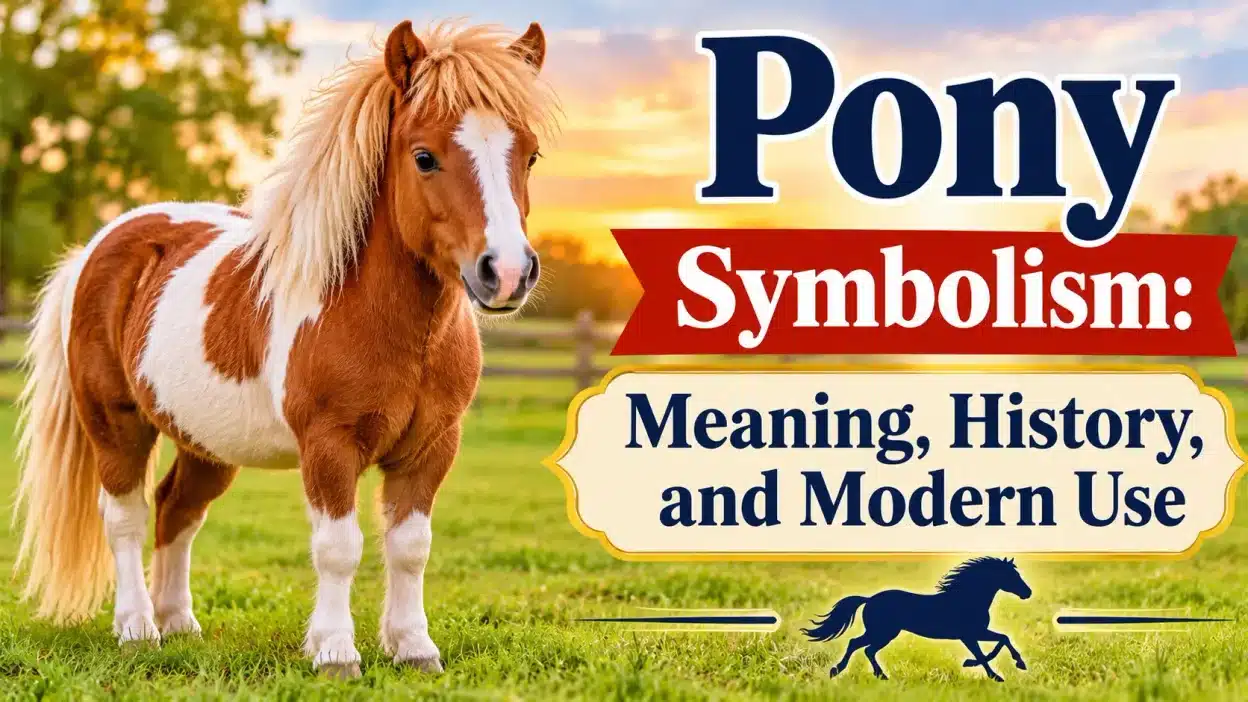
A pony often symbolizes childhood, innocence, friendship, freedom, and quiet strength. In pony symbolism, the animal’s small size and approachable appearance suggest gentleness, while its endurance, intelligence, and independent nature represent qualities that are not always obvious at first glance. For many Americans, ponies also bring back memories of childhood, family farms, riding lessons, and the excitement of meeting an animal that feels both friendly and adventurous.
Unlike some animals that carry one dominant cultural meaning, ponies have several overlapping associations. Their connection with children gives them a softer image than larger horses, but their history as working animals reveals a different side: determination, usefulness, and the ability to endure difficult conditions.
Today, ponies appear in children’s stories, toys, artwork, equestrian sports, tattoos, fashion, and popular entertainment. Understanding their symbolism requires looking beyond their appearance and considering how people have interacted with them across generations.
Quick Answer
Pony symbolism commonly represents childhood, innocence, friendship, freedom, and gentle independence in modern American culture. Historically, ponies have also represented endurance, hard work, adaptability, and the ability to remain strong despite physical limitations.
TL;DR
- Childhood: Ponies often represent innocence, imagination, and happy early memories.
- Friendship: Their approachable image suggests trust, companionship, and affection.
- Freedom: Their connection with open landscapes and riding represents independence.
- Resilience: Their working history reflects endurance and practical strength.
- Individuality: Their spirited nature can represent confidence and personal independence.
- Modern culture: Ponies remain popular in children’s entertainment, art, fashion, and tattoos.
1. What a Pony Represents as a Symbol
A pony is a small horse, generally classified by equine height and physical characteristics rather than age. Ponies often have compact bodies, sturdy legs, thick manes, and strong builds. Some breeds are especially recognizable for their thick coats and full tails.
Their appearance influences how people interpret them. A pony looks approachable compared with a large riding or draft horse, but it is still an energetic, intelligent animal capable of considerable physical work.
This combination creates several symbolic associations:
- Gentleness: A pony’s familiar appearance makes it an image of kindness and approachability.
- Innocence: Its connection with children’s activities gives it a youthful meaning.
- Strength: Its sturdy build represents physical endurance and determination.
- Independence: Its spirited behavior suggests individuality and self-direction.
- Companionship: Its relationship with riders and handlers represents trust and connection.
These meanings are not fixed rules. A pony in a children’s illustration may represent happiness, while a pony running across a mountain landscape may suggest freedom and independence.
The setting, behavior, and artistic presentation all influence the interpretation.
2. Childhood, Innocence, and Imagination
One of the most familiar associations of ponies in the United States is childhood.
For generations, ponies have appeared in children’s books, birthday celebrations, riding lessons, toys, stuffed animals, and family photographs. Their relatively small size makes them easier for children to approach than many larger horses, although proper supervision and handling remain essential.
This connection has helped establish the pony as a symbol of childhood wonder.
A child who sees a pony may imagine riding through a field, exploring a farm, or developing a special friendship with an animal. In stories, ponies frequently become companions who help young characters experience independence and adventure.
The symbolism also connects with nostalgia. Adults may associate ponies with childhood vacations, grandparents’ farms, summer camps, or their first experience riding an animal.
A pony in a painting or photograph can therefore represent more than an animal. It may recall a period when life felt simpler and everyday experiences seemed full of possibilities.
However, innocence does not mean weakness. The pony’s physical strength adds another dimension to its youthful image.
3. Friendship, Trust, and Companionship
Ponies are often portrayed as loyal companions, especially in children’s entertainment and family-oriented artwork.
Their symbolism comes partly from the relationship people develop with individual animals. A pony that recognizes its handler, responds to familiar commands, and becomes comfortable around a rider can create a sense of mutual trust.
This relationship makes the animal a natural symbol of friendship.
Unlike a purely decorative image, a pony can represent companionship built through regular care and attention. Feeding, grooming, exercising, and learning to handle an animal require patience. These activities can teach children responsibility while helping them develop confidence.
A pony may therefore communicate several related ideas:
- A dependable friend who provides comfort.
- A companion who encourages personal growth.
- A relationship based on patience and trust.
- Affection that does not depend on words.
- The importance of caring for another living creature.
In modern American imagery, this association appears in children’s illustrations, greeting cards, farm-themed decorations, and personalized gifts.
The symbolism is particularly suitable for someone who values animals or remembers a meaningful relationship with a childhood pony.
4. Freedom, Adventure, and Independence
A pony standing in a pasture may suggest peacefulness, but a pony running across an open field communicates something different.
Movement changes the interpretation.
A running pony can represent freedom, exploration, and the desire to experience life without unnecessary restrictions. Its movement across natural landscapes creates an image of independence.
For American audiences, this association connects with familiar ideas about rural life, open spaces, outdoor recreation, and the American West.
Pony riding can also symbolize a child’s first experience of independence. Learning to guide an animal introduces responsibility while allowing the rider to make decisions and develop practical skills.
The animal is not simply being controlled. A successful partnership requires communication, awareness, and cooperation.
This makes the pony a useful symbol of balanced independence: having the confidence to explore while recognizing the importance of responsibility.
A pony running without a rider may suggest personal freedom, while one carrying a young rider may represent confidence gained through experience.
5. Strength, Resilience, and Determination
The pony’s small stature can create a misleading impression of weakness.
In reality, many pony breeds are exceptionally sturdy. Their compact bodies, strong legs, and ability to work in challenging environments have helped them survive and serve people for centuries.
The Shetland pony provides a particularly clear example. Originating in Scotland’s Shetland Islands, the breed developed in a demanding environment where hardiness and efficient use of available resources mattered.
Shetland ponies were historically used for agricultural work, carrying peat, transporting materials, and other demanding tasks. During the nineteenth century, they were also employed in British coal mines because their size and strength suited underground conditions. Shetland Pony Stud Book Society+1
This history gives the pony a meaning beyond cuteness.
It can represent:
- Persistence when circumstances are difficult.
- Strength that does not depend on appearance.
- Practical intelligence and adaptability.
- The ability to accomplish demanding tasks.
- Confidence without the need to dominate others.
In personal symbolism, a pony may represent someone who is underestimated but consistently proves capable.
It can also remind people that physical size, social position, or outward appearance does not determine a person’s value.
6. Ancient and Historical Roots of Pony Symbolism
The word pony entered English during the seventeenth century and originally referred to a small horse. The distinction between a pony and a horse has developed through later breeding practices and modern classification. Etymology, Origin & Meaning+1
However, the history of the animals themselves is much older.
Small equines existed in the Shetland Islands during the Bronze Age, and archaeological discoveries indicate that people in the region had access to ponies long before modern breed registries existed.
For island communities, these animals were practical resources. They helped with transportation, agricultural activities, and carrying materials across difficult terrain.
Their historical importance encouraged associations with usefulness, survival, and reliability.
It is important to distinguish pony symbolism from the broader symbolism of horses. Horses have appeared in ancient mythology, royal imagery, warfare, religious traditions, and ceremonial art. Ponies share some of those associations, but their own history also emphasizes smaller-scale work, local communities, and close relationships with people.
There is no single ancient universal meaning specifically assigned to ponies. Their symbolic associations developed through different regional experiences rather than one shared belief system.
7. Pony Symbolism in American Culture
In the United States, ponies have a particularly strong connection with childhood, family recreation, rural communities, and equestrian activities.
The Shetland pony became familiar to American families during the nineteenth century. These ponies were introduced to the United States during that period and gradually became popular for riding, driving, breeding, and children’s activities. US Equestrian+1
Today, American pony culture includes several different traditions.
Children’s riding and family life: Ponies are associated with riding lessons, summer camps, petting farms, and first experiences with horses.
County fairs and agricultural communities: Pony exhibitions and driving competitions connect the animal with farming traditions and rural entertainment.
Western imagery: The word pony also appears in the history and language of the American West. It can evoke ranch life, frontier travel, and historical representations of Native American horsemanship.
Popular entertainment: Children’s television, books, toys, and animated characters have made ponies familiar symbols of imagination and friendship.
The American Shetland pony is also recognized in organized equestrian activities, including youth riding, driving, jumping, and in-hand competitions. US Equestrian
These different uses explain why the pony can represent both childhood innocence and serious athletic ability.
8. The Pony and Native American Horse Traditions
The pony has an important place in the history of the American West, particularly in discussions of Native American horse culture.
Horses were introduced to North America by Europeans during the sixteenth century. Over subsequent generations, horses became central to the economies, transportation systems, hunting practices, warfare, and cultural lives of numerous Indigenous communities.
Among several Plains peoples, horses became valuable measures of wealth, mobility, and social standing. Their importance extended into artistic traditions, ceremonies, storytelling, and personal relationships. National Museum of the American Indian+1
The term war pony became familiar in American historical language for horses associated with Indigenous warriors.
These animals were not merely transportation. Their care, training, and relationship with their riders mattered greatly. Some communities decorated horses with designs connected to personal visions, protection, or other culturally specific meanings.
For example, historical research on Cheyenne horse decoration discusses the relationship between painted designs, spiritual beliefs, and the protection of war horses. Buffalo Bill Center of the West
This history adds associations of partnership, mobility, courage, and cultural identity to the broader symbolism of ponies.
There is an important distinction, however: Indigenous nations have different histories and traditions. A generic image of a pony should not be presented as having one universal Native American spiritual meaning.
Nor should modern decorative uses of Indigenous horse imagery be confused with the cultural traditions from which particular designs originated.
9. Pony Meanings in Different Cultural Traditions
Pony symbolism varies according to the history of the animal and the relationship a community has developed with it.
In some places, the pony is primarily a working animal. In others, it is associated with childhood, recreation, or regional identity.
Scottish traditions: The Shetland pony is closely connected with the history of the Shetland Islands. Its hardiness and ability to work in challenging conditions make it an important regional symbol of endurance and adaptability.
British industrial history: The use of ponies in coal mines connects them with labor, hardship, and the working history of industrial communities. Their contribution was considerable, although the conditions in which some worked were difficult.
European children’s culture: Ponies became familiar figures in children’s stories, riding traditions, toys, and illustrations. Their association with young riders strengthened their connection with innocence and companionship.
North American Indigenous history: Horses and ponies became important in the lives of numerous Indigenous communities, particularly across the Great Plains. Their meanings included mobility, wealth, partnership, and cultural identity, with specific interpretations differing between nations.
These examples show why it is misleading to assign every pony the same spiritual or historical meaning. A pony associated with an island farming community carries a different history from one represented in a Western historical painting.
10. Emotional and Psychological Meaning of a Pony
A pony can create an emotional response before someone consciously considers its symbolic meaning.
Its familiar appearance, movement, and relationship with people may bring feelings of comfort, excitement, affection, or nostalgia.
Several psychological associations help explain this response.
Comfort and emotional safety
A calm pony can represent a peaceful relationship with the natural world. Its presence in artwork may communicate a desire for a gentler, more relaxed environment.
Confidence and personal growth
For a child learning to ride, a pony can represent the transition from uncertainty to confidence. Developing the ability to guide an animal requires patience, practice, and courage.
Nostalgia and memory
A pony may remind an adult of an earlier stage of life, particularly experiences involving family, outdoor activities, or childhood friendships.
Self-acceptance
Because ponies are smaller than many horses but remain capable and strong, they can represent the idea that a person does not need to fit conventional expectations to be valuable.
Emotional independence
A spirited pony can symbolize someone who values personal freedom but still appreciates meaningful relationships.
These interpretations are not psychological diagnoses or universal rules. Personal memories and cultural background influence which association feels most relevant.
11. What Different Pony Colors Can Symbolize
Color can change the emotional impression of pony artwork, illustrations, and decorative objects.
However, color symbolism is interpretive rather than a fixed characteristic of the animal. A pony’s natural coat color does not establish its personality or spiritual significance.
| Pony Color | Common Symbolic Association | Emotional Impression |
|---|---|---|
| White | Innocence, peace, and purity | Calm and gentle |
| Black | Independence, mystery, and confidence | Bold and serious |
| Brown | Stability, reliability, and connection with nature | Warm and grounded |
| Gray | Experience, maturity, and balance | Quiet and thoughtful |
| Chestnut | Energy, warmth, and determination | Lively and expressive |
White ponies often appear in fantasy illustrations because their appearance fits familiar visual ideas about purity and innocence.
Black ponies can communicate independence or strength, particularly when depicted against a dramatic background.
Brown ponies are frequently associated with farms, countryside settings, and everyday companionship. Their natural appearance makes them suitable for artwork focused on rural life.
These meanings depend on the artwork. A white pony in a peaceful meadow may suggest innocence, while a white pony in a competitive show setting may communicate elegance and discipline.
12. Pony Symbolism in Dreams and Personal Reflection
Dream interpretations involving ponies often focus on childhood memories, personal confidence, independence, and emotional relationships.
However, dreams do not have universally established meanings. The details of the experience and the dreamer’s personal associations matter more than a fixed symbolic dictionary.
Some common interpretations include:
- Seeing a friendly pony: May reflect a desire for companionship, comfort, or simpler experiences.
- Riding a pony: May represent growing confidence or learning to take responsibility.
- Watching a pony run freely: May reflect a desire for independence or a change in routine.
- Caring for a pony: May connect with responsibility, affection, and nurturing relationships.
- Seeing a frightened pony: May reflect concern about vulnerability or a situation that feels difficult to control.
- Seeing a strong pony: May represent determination and the ability to manage challenges.
The emotional atmosphere of the dream is important.
For example, riding a pony happily through an open field creates a different impression from struggling to control a frightened animal.
Rather than treating a dream as a prediction, it can be more useful to ask what the pony reminds you of and which feelings were strongest during the experience.
13. Why Ponies Appear in Tattoos, Jewelry, and Personal Style
Pony imagery has a distinctive place in personal expression because it combines recognizable animal symbolism with childhood associations.
People may choose pony designs for sentimental reasons, their love of horses, or the qualities they associate with the animal.
Tattoos: A pony tattoo can represent childhood memories, a beloved animal, independence, or a connection with rural life. A running pony may emphasize freedom, while a small pony portrait may preserve the memory of a particular animal.
Jewelry: Pony pendants, charms, and bracelets are often associated with affection, childhood gifts, and personal memories. They can also be meaningful to people involved in equestrian activities.
Clothing and accessories: Pony illustrations appear on children’s clothing, bags, accessories, and decorative patterns. In adult fashion, equestrian-inspired designs may communicate an interest in traditional riding culture.
Home decor: Pony pictures, figurines, and illustrations are common in children’s bedrooms, playrooms, and farmhouse-style interiors. They can create a friendly atmosphere and reflect a connection with animals.
Personal gifts: A pony-themed gift may represent encouragement, affection, or a shared memory between family members.
The meaning becomes more personal when the design represents a real animal or a particular experience.
14. Ponies in Children’s Entertainment and Modern Digital Culture
Modern entertainment has helped maintain the pony’s association with imagination and friendship.
Ponies appear in animated programs, illustrated books, online games, children’s merchandise, and social media content. Their recognizable shape makes them easy to adapt into friendly fictional characters.
One major example is My Little Pony, a franchise that developed into a recognizable part of American children’s entertainment. Its colorful characters, fictional communities, and friendship-centered stories expanded the pony’s cultural identity beyond real-life equestrian activities.
In digital culture, pony imagery can communicate several things:
- A playful or youthful personality.
- Affection for animals.
- An interest in fantasy and animated entertainment.
- A cheerful or welcoming online identity.
- Nostalgia for childhood interests.
Social media also gives people opportunities to share photographs of their own ponies, riding experiences, competitions, and animal-care routines.
Not every modern pony image has a symbolic purpose. Sometimes people simply enjoy the animal’s appearance or want to share a memorable experience.
Nevertheless, repeated appearances in entertainment and digital communities continue to strengthen the pony’s association with friendship, imagination, and individuality.
15. Common Misunderstandings About Pony Symbolism
Several misconceptions can lead people to misunderstand what a pony represents.
1. Ponies represent weakness because they are small.
This interpretation overlooks their physical abilities. Many pony breeds are strong, hardy, and capable of demanding work. Their history makes them useful symbols of resilience rather than weakness.
2. Every pony symbolizes childhood.
Childhood is a common modern association, but ponies also have connections with agriculture, transportation, industrial labor, equestrian competition, and regional heritage.
3. Ponies and horses have identical symbolic meanings.
They share many associations, including freedom, movement, and companionship. However, ponies have additional cultural connections with children, smaller communities, and working traditions.
4. A pony always represents gentleness.
Ponies can be energetic, stubborn, independent, and difficult to handle. Their spirited nature can make them symbols of individuality and determination.
5. Pony symbolism has one universal spiritual meaning.
There is no single interpretation accepted across all cultures or religions. Meaning depends on historical context, personal experience, and the way the animal is represented.
Recognizing these differences makes pony symbolism more useful and historically accurate.
16. How Pony Symbolism Has Changed Over Time
The pony’s symbolic identity has developed alongside changing human relationships with animals.
In earlier agricultural societies, ponies were valued mainly for practical reasons. They carried materials, transported people, and helped communities manage difficult landscapes. Their associations with strength and usefulness came from everyday experience.
During the industrial period, their employment in mines added associations with labor, hardship, and endurance. The animal’s small size was an advantage in confined spaces, but the work could involve harsh conditions.
During the nineteenth and twentieth centuries, changing patterns of transportation and recreation gradually gave ponies more visibility as riding and companion animals.
In the United States, their popularity among families strengthened their connection with children, leisure, and rural recreation. Organized equestrian activities also demonstrated that ponies could be capable competitors rather than simply children’s animals.
Popular entertainment added another transformation. Fictional ponies became colorful characters associated with imagination, friendship, and self-expression.
Today, the pony carries several meanings at once:
- Its working history represents endurance and usefulness.
- Its relationship with children represents innocence and companionship.
- Its movement represents freedom and independence.
- Its individual character represents confidence and personality.
- Its place in modern entertainment represents imagination and nostalgia.
The evolution is not a complete replacement of older meanings. Instead, newer associations have developed alongside the animal’s historical identity.
Frequently Asked Questions
1. What does a pony symbolize spiritually?
A pony can represent freedom, companionship, resilience, innocence, and personal growth in spiritual or personal interpretations. These meanings are not part of one universally recognized religious tradition, so individual beliefs and cultural backgrounds influence the interpretation.
2. Is a pony a symbol of good luck?
A pony is sometimes used as a positive symbol of happiness, opportunity, and good experiences. However, there is no widely established American tradition that treats ponies as universal good-luck animals.
3. What does a pony tattoo mean?
A pony tattoo can represent childhood memories, affection for horses, independence, or a meaningful relationship with a particular animal. Its meaning may become more personal when the design includes a recognizable breed, name, or landscape.
4. What does a white pony symbolize?
A white pony commonly represents innocence, peace, purity, and gentleness in modern decorative and artistic imagery. In fantasy artwork, it may also represent hope or an idealized connection with nature.
5. What does a running pony symbolize?
A running pony often represents freedom, energy, independence, and the desire to explore. Its movement across an open landscape can suggest personal growth or a willingness to move beyond familiar surroundings.
6. What is the difference between horse and pony symbolism?
Both animals can represent freedom, strength, movement, and companionship. Ponies are more strongly associated with childhood, approachability, resilience, and close relationships with families, although these distinctions are cultural tendencies rather than fixed rules.
7. Does seeing a pony in a dream have a special meaning?
A pony in a dream may bring attention to childhood memories, independence, friendship, or personal confidence. Its behavior and your emotional reaction are more useful for personal reflection than assuming the dream predicts a particular event.
Conclusion
Pony symbolism brings together childhood innocence, friendship, freedom, independence, and resilience. Its familiar appearance makes it an approachable symbol, while its working history reveals an animal capable of remarkable strength and endurance.
In American culture, ponies occupy several roles. They are companions in childhood memories, participants in equestrian activities, familiar figures in entertainment, and reminders of the country’s agricultural and Western heritage. Their meaning also varies across historical periods and cultural traditions.
Ultimately, a pony represents more than its small size or friendly appearance. It reminds us that gentleness can exist alongside strength, independence can coexist with companionship, and meaningful abilities are not always obvious at first glance.