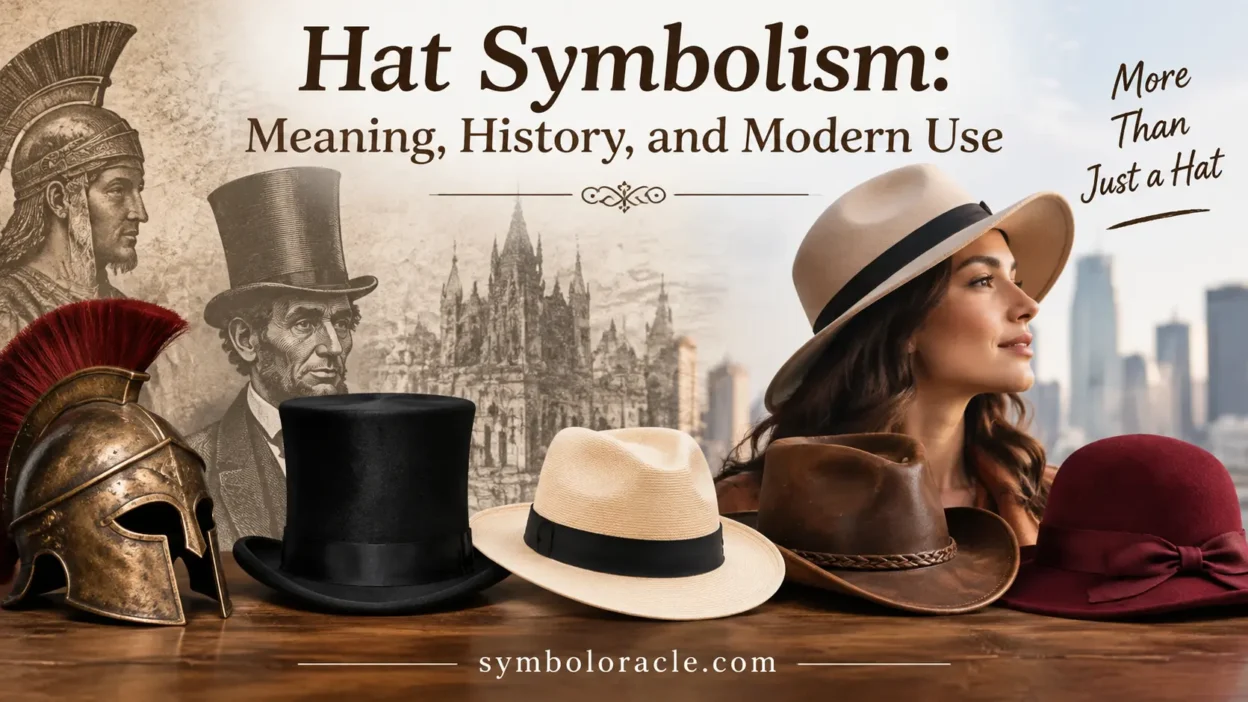
Hats have long carried meanings beyond their practical purpose, and hat symbolism reflects ideas about identity, status, tradition, personality, and social belonging. A simple hat can communicate a person’s profession, cultural background, beliefs, fashion choices, or connection to a specific group.
In modern American culture, hats appear everywhere: from baseball caps and cowboy hats to graduation caps, religious head coverings, and fashion pieces. People often choose hats because they represent something about who they are or how they want others to see them.
The meaning of a hat depends on its style, history, and context. A cowboy hat may suggest independence and Western heritage, while a graduation cap represents achievement and a new stage of life. Understanding these meanings shows why hats remain important symbols in everyday life.
Quick Answer
Hat symbolism commonly represents identity, personal style, achievement, and social belonging in modern American culture. Historically, hats have also symbolized authority, profession, tradition, religion, and social status across different societies.
TL;DR
- Hats symbolize identity, status, and personal expression.
- Different cultures gave hats unique meanings.
- American hats often reflect work, sports, and traditions.
- Fashion uses hats to communicate personality.
- Some hats carry religious or ceremonial importance.
- Modern meanings continue changing with society.
What a Hat Represents Beyond Fashion
A hat is a wearable object placed on the head, but its meaning often extends beyond appearance. Throughout different societies, headwear has been used to show rank, occupation, beliefs, achievements, and membership in a community.
Because the head is associated with thought, personality, and identity, objects worn on the head often receive symbolic attention. A crown communicates leadership, a military cap represents service, and a graduation cap marks educational success.
In everyday American life, hats can send quick visual messages. Someone wearing a baseball cap may express support for a team, a cowboy hat may suggest a connection to Western culture, and a handmade hat may show creativity or individual taste.
What It Commonly Means in the United States
In the United States, hats usually symbolize identity, lifestyle, achievement, and connection. Unlike some historical societies where hats clearly displayed social rank, modern American hat meanings are often more personal.
A hat can show belonging to a community. Sports fans wear team caps to display loyalty, veterans may wear service-related hats to honor their experiences, and workers may wear specific hats connected to their professions.
Hats also represent personal choice. Many Americans use hats as fashion accessories that help create a certain image, from casual and relaxed to elegant and traditional.
| Context | Meaning in the USA | Common Associations | Notes |
|---|---|---|---|
| Baseball cap | Casual identity and interests | Sports, youth culture, comfort | One of the most common everyday hats |
| Graduation cap | Achievement and education | Success, transition, goals | Used in ceremonies and celebrations |
| Cowboy hat | Independence and heritage | Western culture, rural life | Connected with ranching traditions |
| Religious headwear | Faith and devotion | Community, belief, tradition | Meaning varies by religion |
| Fashion hat | Personality and style | Creativity, confidence | Often chosen for appearance |
Ancient Roots and Early Symbolism of Hats
The symbolic use of hats dates back thousands of years. Early civilizations used head coverings not only for protection from weather but also to communicate social position and cultural identity.
In ancient Egypt, certain crowns and head coverings represented royal authority and connection to religious power. Pharaohs wore specific crowns that distinguished them from ordinary people and showed their role as rulers.
In ancient Greece and Rome, different forms of headwear could represent occupation, achievement, or social position. Wreath-like crowns made from plants were awarded to victorious athletes, military leaders, and honored citizens.
European societies later developed strong traditions around hats. Certain styles indicated wealth, profession, or social class. Elaborate hats often showed access to expensive materials and skilled craftsmanship.
Over time, hats became less restricted to social classes and became more connected with personal expression.
Hats as Symbols of Authority and Status
For many centuries, hats represented power and social position. Leaders, religious figures, military officials, and judges often wore distinctive headwear to separate themselves from others.
Crowns are among the clearest examples. A crown immediately communicates leadership, royalty, and responsibility. Even in countries without monarchies, crown imagery continues to represent achievement and excellence.
Academic caps also carry this tradition. The graduation cap developed from European academic clothing and became a symbol of education, knowledge, and accomplishment. In the United States, tossing graduation caps into the air has become a widely recognized celebration of completing an important educational milestone.
Professional hats also carry symbolic meaning. A chef’s tall hat, a firefighter’s helmet, or a military service cap instantly connects the wearer with a role and responsibility.
Hat Symbolism in American History
Hats have played an important role in American history because they often reflected work, region, and cultural movements.
The cowboy hat became strongly associated with the American West. Although its practical purpose was protection from sun and weather, movies and popular culture transformed it into a symbol of independence, adventure, and frontier identity.
The top hat became connected with formal occasions and influential figures in the 19th and early 20th centuries. It represented professionalism, wealth, and social respectability.
Baseball caps developed from sports culture and later became everyday symbols of casual American style. Today, they represent everything from hometown pride to political messages and brand identity.
Different communities also used hats to preserve cultural traditions. Religious groups, immigrant communities, and cultural organizations have maintained specific forms of headwear as symbols of heritage and belonging.
Religious and Spiritual Meanings Connected to Hats
Across many religions and traditions, hats and other forms of head covering represent respect, devotion, humility, or connection to a spiritual community. The meaning usually comes from beliefs about honoring sacred spaces, showing discipline, or recognizing a person’s relationship with faith.
In Judaism, the kippah (or yarmulke) is worn by many Jewish men and some Jewish women as a sign of reverence and awareness of God. It represents humility and recognition of a higher spiritual presence.
In Islam, different forms of head coverings can carry religious, cultural, and personal meanings. For many Muslims, head coverings represent modesty, faith, and cultural identity. Practices vary widely between communities and individuals.
In Christianity, certain forms of religious headwear have appeared among clergy members and religious orders. Items such as bishops’ mitres or traditional clerical coverings often represent religious authority and service.
In some Buddhist traditions, ceremonial hats worn by monks and spiritual leaders can represent teachings, lineage, and religious roles. These meanings are connected to specific communities rather than all Buddhist practices.
In the United States, religious hats often represent both personal belief and cultural heritage. They can help individuals maintain traditions while living in a diverse society.
How Hats Express Identity and Belonging
One of the strongest modern meanings of hats is identity. People often wear hats to communicate something about themselves without saying a word.
A sports cap may show loyalty to a favorite team. A university hat may represent school pride. A military-style hat may honor service or family history. A handmade or vintage hat may express creativity and individuality.
Hats also help people feel connected to groups. Members of organizations, clubs, and communities often use matching hats as symbols of unity. A shared hat style can create a sense of belonging among people with similar interests or experiences.
In American culture, this identity function is especially visible at events. Fans wear team hats at games, graduates wear caps during ceremonies, and festival attendees often use hats to show personality and participation.
The meaning of a hat is often created by the wearer. The same type of hat can represent tradition for one person and fashion for another.
Emotional and Psychological Meaning of Wearing a Hat
Hats can influence how people feel about themselves and how others perceive them. Clothing choices often affect confidence, mood, and self-expression, and hats are a noticeable part of personal appearance.
Some people wear hats because they feel more comfortable or confident with them. A favorite hat may become connected with memories, achievements, or important moments.
A hat can also create a sense of transformation. A person wearing a cowboy hat, formal hat, or costume hat may feel connected to a particular role or personality. This explains why hats are common in performances, celebrations, and themed events.
From a psychological perspective, hats can function as identity signals. They allow people to communicate interests, values, and social connections quickly.
However, meanings are not universal. A hat that represents confidence or tradition in one setting may have a completely different interpretation in another.
Hat Symbolism in Fashion and Personal Style
Fashion has transformed hats from practical items into symbols of creativity and self-expression. Designers and individuals use hats to create visual impressions and communicate personal taste.
Different hat styles often create different associations:
- Fedora: Often connected with classic style, mystery, or vintage fashion.
- Beanie: Commonly associated with casual comfort and youth culture.
- Wide-brim hat: Often linked with elegance, protection, or artistic style.
- Bucket hat: Associated with streetwear, outdoor activities, and changing fashion trends.
- Beret: Connected with artistic expression and European-inspired fashion.
In the United States, fashion hats often move between generations and social groups. A style that becomes popular in one decade may return later with a new meaning.
Social media has increased the role of hats in personal branding. Influencers, musicians, and public figures often use distinctive headwear to create recognizable images.
Why Hats Appear in Tattoos and Artwork
Although hats are less common tattoo symbols than animals, flowers, or objects, they can carry personal meanings when included in body art.
A cowboy hat tattoo may represent freedom, rural roots, adventure, or a connection to Western culture. A graduation cap tattoo may celebrate education, perseverance, or reaching an important goal.
A top hat may symbolize elegance, performance, or connection to a particular character or era. A magician’s hat can represent creativity, imagination, and entertainment.
Artists may also combine hats with other symbols. A hat alongside a skull, flower, clock, or animal can create a more personal message based on the wearer’s experiences.
The meaning of a hat tattoo depends heavily on the individual. Unlike some traditional symbols with widely accepted meanings, hat tattoos are often highly personal.
Hat Symbolism in Movies, Music, and Popular Culture
Popular culture has shaped how many Americans understand hats. Films, television, and music often turn specific hat styles into recognizable symbols.
The cowboy hat became strongly connected with Western movies and characters who represent independence, justice, and adventure. Country music artists also use cowboy hats as part of their public image.
The fedora became associated with certain entertainers, detectives, and fictional characters. Depending on the context, it can suggest sophistication, mystery, or a vintage aesthetic.
Musicians have also used hats as signature identity markers. A recognizable hat style can become part of an artist’s image and help audiences remember them.
In animation and storytelling, hats often reveal personality. A character’s hat may show their profession, background, or role in a story before they even speak.
Common Misunderstandings About Hat Symbolism
Because hats carry cultural meanings, they are sometimes misunderstood or judged without considering context.
A hat style may have different meanings depending on location, generation, and community. Assuming that every person wearing a certain hat shares the same beliefs or values can lead to incorrect conclusions.
Some historical hats have also been separated from their original meanings through popular culture. For example, a style that once represented a specific social group may later become a general fashion choice.
Certain hats have been used by groups with controversial messages. When this happens, it is important to distinguish between the object itself and the specific way individuals or organizations use it.
A hat’s symbolism comes from history, culture, and human choices. The item alone does not always define the meaning.
How Hat Meanings Continue to Change
The meaning of hats continues to evolve as society changes. New fashion trends, social movements, and cultural conversations influence how people interpret different styles.
In earlier periods, hats often showed social position or profession. Today, they are more likely to represent personality, interests, and lifestyle choices.
Digital culture has also changed hat symbolism. Online communities often use hats, avatars, and virtual accessories to represent identity in digital spaces.
Sustainable fashion has created new interest in handmade, vintage, and locally produced hats. For some people, these choices symbolize environmental awareness and appreciation for craftsmanship.
The future meaning of hats will continue developing because symbols change with the people who use them.
Positive and Negative Associations of Hat Symbolism
Like many symbols, hats can carry both positive and negative interpretations depending on context.
Positive associations include:
- Achievement and success
- Cultural heritage
- Creativity and individuality
- Professional identity
- Community connection
Negative associations may appear when certain hats are connected with stereotypes, exclusion, or political conflicts. These meanings usually come from specific historical situations rather than the basic object itself.
Understanding the background of a hat helps separate genuine cultural meaning from assumptions or stereotypes.
Frequently Asked Questions About Hat Symbolism
What does a hat symbolize?
A hat can symbolize identity, status, profession, tradition, and personal expression. Its meaning depends on the style of hat and the cultural setting where it appears.
What does wearing a hat symbolize in American culture?
In the United States, wearing a hat often represents personal style, group identity, hobbies, or cultural connections. Hats are commonly used to show support for sports teams, schools, professions, and communities.
What does a cowboy hat symbolize?
A cowboy hat commonly symbolizes Western heritage, independence, outdoor life, and connection to ranching traditions. In popular culture, it is often linked with adventure and self-reliance.
Are hats considered religious symbols?
Some hats and head coverings have religious importance in specific traditions. Their meanings can include respect, faith, humility, and connection to a religious community.
What does a graduation cap symbolize?
A graduation cap symbolizes education, achievement, and reaching an important life milestone. In American culture, it represents hard work and the transition into a new chapter.
Can hats have negative meanings?
Yes, certain hats can develop negative associations when they become connected with harmful movements or stereotypes. The meaning depends on the historical and social context rather than the hat alone.
Conclusion
Hats represent much more than clothing. They communicate identity, achievement, tradition, profession, and personal style across different cultures and generations. In the United States, hats continue to serve as everyday symbols that help people express who they are and what communities they value.
Hat symbolism has changed over time, moving from clear markers of status and authority toward more personal forms of expression. Whether worn for fashion, faith, work, celebration, or memory, a hat often carries a story created by the person wearing it.
The meaning of a hat comes from the connection between the object, the culture around it, and the individual who chooses it.