Fish have carried symbolic meanings across many cultures, but freshwater species often connect more closely with everyday human experiences. Trout, known for its movement through clear rivers, mountain streams, and lakes, often represents adaptability, persistence, renewal, and a connection with nature. Trout symbolism appears in American outdoor culture, artwork, tattoos, and personal identity because the fish reflects qualities many people admire.
Unlike symbols that depend mainly on mythology or religion, the trout’s meaning often comes from direct observation. People see trout surviving in changing waters, traveling against currents, and adapting to different environments. These natural behaviors have shaped how many communities understand the fish.
In the United States, trout is especially connected with fishing traditions, conservation, wilderness, patience, and peaceful outdoor experiences. It can represent personal growth, independence, and respect for natural ecosystems.
Quick Answer
Trout symbolism commonly represents resilience, adaptability, patience, and a strong connection with nature in modern American culture. Historically, trout has also been associated with survival, abundance, renewal, and the relationship between humans and freshwater environments.
TL;DR
- Trout represents resilience and adapting to change.
- Rivers shaped trout’s connection with renewal.
- Americans associate trout with outdoor identity.
- Tattoos often express freedom and perseverance.
- Conservation adds modern environmental meaning.
What the Trout Represents in the United States
In the United States, trout often symbolizes endurance and balance because of the environment where it lives. Trout survive in cold streams, fast-moving rivers, and changing conditions, which makes the fish a natural image of adjustment and strength.
Many Americans connect trout with outdoor values such as patience, independence, and respect for wildlife. Fly fishing communities, hikers, and conservation groups often view trout as more than a fish species. It represents a relationship between people and natural spaces.
The meaning also changes depending on personal experience. For one person, trout may represent childhood fishing trips. For another, it may symbolize a peaceful escape from busy modern life.
| Context | Meaning in the USA | Common Associations | Notes |
|---|---|---|---|
| Fishing culture | Patience and skill | Rivers, outdoors, tradition | Linked with recreational fishing |
| Nature symbolism | Balance and adaptation | Water, wilderness, ecosystems | Reflects survival in changing environments |
| Tattoos | Personal growth and freedom | Adventure, identity | Often chosen by outdoor enthusiasts |
| Conservation | Environmental responsibility | Clean water, wildlife | Represents healthy habitats |
The Physical Characteristics That Shape Its Meaning
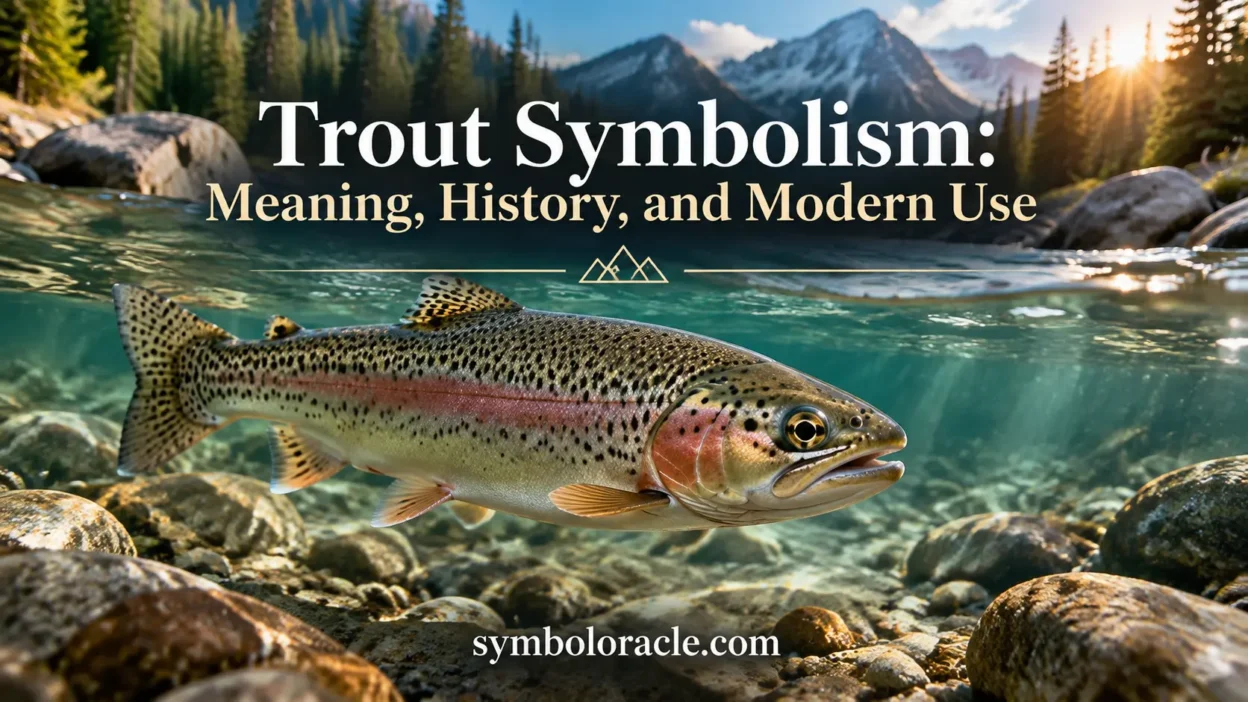
The trout’s appearance plays an important role in its symbolism. Many trout species have colorful patterns, including spots, silver scales, and shades of green, brown, pink, and red. These natural details make the fish visually connected with beauty and diversity.
Trout are also recognized for their ability to move through flowing water. Their environment influences their symbolic meaning because rivers often represent movement, change, and the passage of time.
The combination of beauty and survival creates a symbol that feels both calm and determined. A trout is not usually associated with aggression. Instead, it represents quiet strength and the ability to continue moving forward.
Ancient Roots and Early Symbolic Connections
Humans have depended on freshwater fish for thousands of years, and fish symbolism appears in many early cultures. While trout specifically does not have the same worldwide mythological presence as larger fish symbols, freshwater fish often represented food, survival, and connection to natural resources.
In European traditions, river fish were sometimes connected with abundance because healthy waters provided nourishment for communities. Trout became particularly valued in regions with clear mountain streams where fishing supported local traditions.
Over time, the trout moved from being simply a source of food to becoming a symbol connected with landscapes, recreation, and appreciation for the natural world.
Trout Meaning in Native and Indigenous Traditions
Indigenous communities across North America have long maintained relationships with freshwater environments. Fish often hold meanings connected with seasonal cycles, survival, respect for animals, and responsible use of natural resources.
The specific meaning of trout varies among different Indigenous nations because each community has its own traditions and stories. However, many Indigenous perspectives emphasize the importance of treating animals and ecosystems with respect rather than viewing them only as resources.
Modern interpretations should avoid combining unrelated traditions into one general meaning. The symbolism of trout is best understood by recognizing the diversity of Indigenous cultures.
Why Trout Became Important in American Outdoor Culture
Trout became strongly connected with American outdoor identity through fishing traditions. Rivers and streams across the country became places where people practiced patience, learned skills, and spent time away from urban environments.
Fly fishing especially influenced the cultural meaning of trout. The activity requires observation, timing, and understanding natural patterns. Because of this, trout became associated with mindfulness and careful attention.
In many American communities, catching trout is not only about the fish itself. It represents experiences shared with family, friends, and nature.
Emotional and Psychological Meaning of Trout
Symbolically, trout often represents qualities people want to develop in their own lives.
Its movement through water can suggest flexibility during difficult situations. Instead of resisting every obstacle, trout survive by responding to their environment.
The fish may also represent calm determination. Unlike symbols connected with force or dominance, trout reflects quiet progress. It suggests that strength can come from patience, awareness, and persistence.
For some people, trout imagery creates an emotional connection to peaceful places and meaningful memories.
Trout Symbolism in Tattoos and Personal Identity
Trout tattoos are popular among people who identify with fishing, outdoor activities, and wilderness experiences. The design can communicate personal values without needing words.
Common meanings behind trout tattoos include:
- Love for nature
- Connection with rivers or hometown landscapes
- Personal transformation
- Independence
- Appreciation for outdoor traditions
The style of the tattoo can change the meaning. A realistic trout may represent a specific fishing memory, while a more artistic design may focus on adventure or personal symbolism.
Some people choose trout tattoos after major life changes because the fish represents adapting while continuing forward.
Trout in Art, Jewelry, and Home Decor
Trout imagery appears in artwork, clothing, jewelry, and home decorations, especially in regions with strong fishing cultures. The fish often appears alongside mountains, forests, rivers, and outdoor scenes.
In home design, trout artwork can create a connection with nature and outdoor recreation. It is common in cabins, lake houses, and spaces designed around wilderness themes.
Jewelry featuring trout can carry personal meaning, such as remembering a favorite fishing location or celebrating an outdoor lifestyle.
Religious and Spiritual Interpretations of Trout
Trout does not have one universal religious meaning, but fish symbolism has appeared in several spiritual traditions.
In Christianity, fish imagery has a long history and can represent faith, community, and spiritual identity. However, trout itself is usually not a central Christian symbol.
In broader spiritual interpretations, freshwater fish may represent renewal because water is often associated with cleansing and new beginnings. These meanings depend heavily on personal belief rather than a fixed tradition.
Cross-Cultural Views of Freshwater Fish Symbols
Different cultures have viewed fish as symbols of prosperity, survival, and connection with water.
In some Asian traditions, fish represent abundance and good fortune. In European folklore, fish often appear in stories involving rivers, transformation, and natural forces.
Trout’s meaning remains more regional than universal. Its strongest symbolic connections come from places where people interact closely with freshwater environments.
The Environmental Meaning of Trout Today
Modern trout symbolism increasingly connects with conservation. Healthy trout populations depend on clean water, balanced ecosystems, and responsible environmental practices.
Because trout are sensitive to water conditions, they have become a reminder of environmental health. Many conservation efforts use trout as an example of why protecting rivers and streams matters.
For Americans who care about nature, trout can represent responsibility toward future generations and the protection of outdoor spaces.
Common Misunderstandings About Trout Symbolism
One common misunderstanding is assuming trout has a single hidden meaning. Symbolism depends on culture, personal experiences, and context.
Another mistake is treating trout as only a fishing symbol. While fishing is an important connection, the fish can also represent resilience, environmental awareness, and personal memories.
Trout should also not be confused with every fish symbol. Different species carry different histories and associations.
How Trout Symbolism Has Changed Over Time
The meaning of trout has evolved from practical survival to cultural identity. Earlier communities often valued trout because it provided food and supported local economies.
Later, especially in the United States, trout became connected with recreation, conservation, and personal experiences in nature.
Today, the symbol combines traditional ideas of survival with modern values such as environmental care, outdoor adventure, and personal growth.
Modern Uses of Trout Symbolism in Popular Culture
Trout imagery appears in outdoor brands, fishing communities, social media, and regional artwork. It often communicates an appreciation for simple experiences and natural environments.
Outdoor enthusiasts may use trout images to show their connection with rivers, camping, hiking, or fishing. Conservation organizations may use trout imagery to represent clean water campaigns.
The symbol remains popular because it connects personal identity with a larger appreciation for nature.
Frequently Asked Questions
What does trout symbolism mean?
Trout symbolism usually represents resilience, adaptability, patience, and a connection with nature. In the United States, it is especially linked with fishing traditions, outdoor experiences, and environmental awareness.
What does a trout tattoo symbolize?
A trout tattoo often represents personal connection with rivers, outdoor lifestyles, freedom, and perseverance. Many people choose it to remember meaningful places or experiences involving nature.
Is trout a spiritual symbol?
Trout is not a universal religious symbol, but some people connect it with renewal, balance, and personal growth because of its relationship with water. These meanings depend on individual beliefs.
Why is trout important in American culture?
Trout is important in American culture because it connects with fishing traditions, wilderness recreation, and conservation efforts. It represents the relationship between people and freshwater environments.
Does trout symbolize good luck?
Some people associate fish with abundance and good fortune, but trout itself is not universally considered a luck symbol. Its meaning is more commonly connected with endurance and nature.
What does a trout represent in environmental symbolism?
A trout represents healthy ecosystems because it depends on clean water and balanced habitats. Many people view it as a reminder to protect rivers and natural resources.
Conclusion
Trout has become a meaningful symbol because it connects everyday human experiences with the natural world. Its ability to survive in flowing waters has inspired associations with patience, flexibility, and steady progress.
In modern America, trout symbolism reflects outdoor identity, conservation values, personal memories, and respect for freshwater environments. Whether seen in tattoos, artwork, or fishing traditions, the trout represents a quiet reminder that adaptation and balance are essential parts of life.


