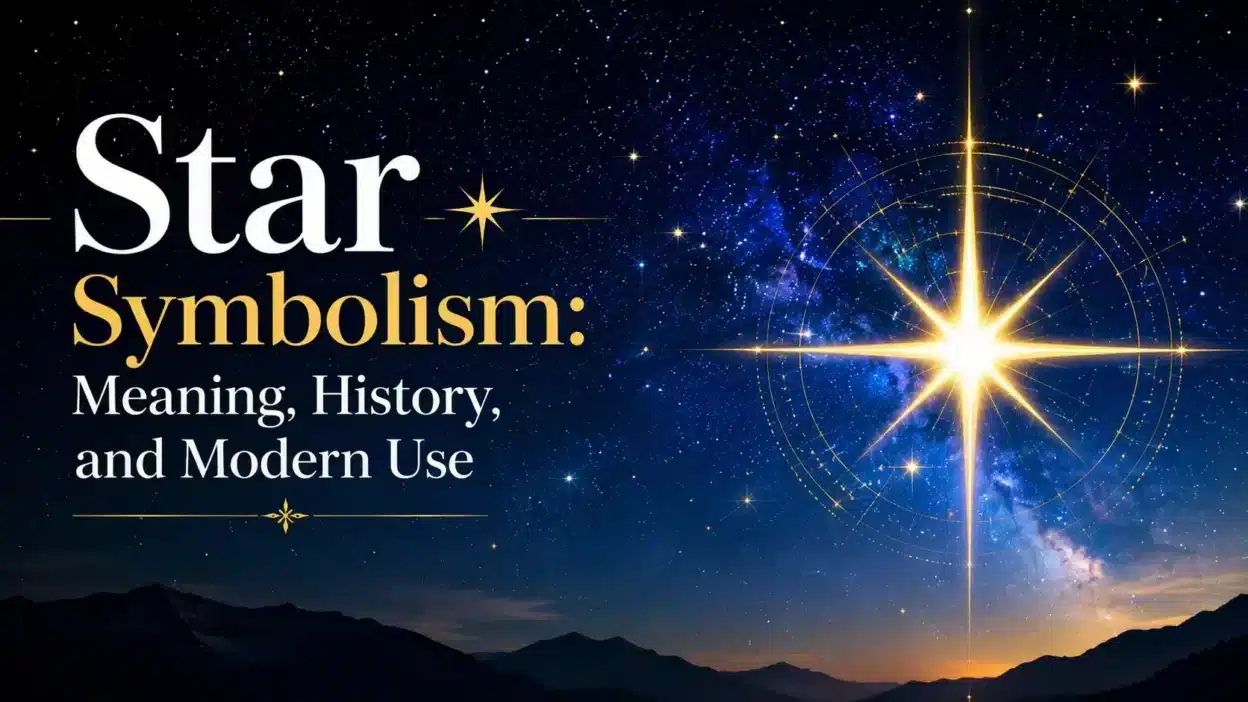
From the American flag to holiday decorations, jewelry, tattoos, and military insignia, stars are among the most recognizable symbols in everyday life. Star symbolism is widely associated with hope, guidance, achievement, inspiration, and the pursuit of goals. Although the symbol has ancient roots, it continues to hold practical and emotional meaning in modern American culture.
People have looked toward the night sky for thousands of years. Before maps and GPS, stars helped travelers navigate oceans and deserts. They also inspired stories, religious traditions, and scientific curiosity. Over time, the image of a single star became much more than an astronomical object—it became a visual shorthand for direction, excellence, and possibility.
Today, stars appear in everything from graduation decorations and military medals to Christmas ornaments, fashion, architecture, and social media graphics. While their meanings vary across cultures, the star remains one of the world’s most positive and enduring symbols.
Quick Answer
Star symbolism most commonly represents hope, guidance, achievement, and aspiration in modern American culture. Historically, stars also symbolized divine guidance, navigation, protection, and humanity’s connection to the heavens across many civilizations.
TL;DR
- Stars commonly symbolize hope and guidance.
- Ancient cultures linked stars to divine order.
- Americans associate stars with freedom and achievement.
- Stars remain popular in tattoos and jewelry.
- Meanings vary across cultures and religions.
- Modern symbolism emphasizes inspiration and possibility.
What a Star Represents
A star is a luminous celestial body visible in the night sky. While science explains stars as massive spheres of glowing gas, symbolism focuses on what people believe they represent rather than what they physically are.
The simple five-pointed star has become the most familiar symbolic form in Western culture, although six-, seven-, and eight-pointed stars also carry their own meanings. Because stars shine in darkness, they naturally became symbols of light overcoming uncertainty.
Unlike many symbols tied to a single culture, stars have developed similar meanings independently around the world because nearly every civilization has observed the same night sky.
The Core Meaning of Stars Today
In the United States, stars most often symbolize:
- Hope during difficult times
- Personal achievement
- Dreams and ambition
- Direction in life
- Freedom and national identity
- Excellence and recognition
- Inspiration
- Optimism
These meanings appear throughout American society. Gold stars reward schoolchildren, stars decorate military uniforms, celebrities earn stars on famous walkways, and phrases such as “reach for the stars” encourage people to pursue ambitious goals.
The common thread is progress. A star points toward something worth striving for rather than something already achieved.
Ancient Roots and Early Symbolism
Long before telescopes existed, people relied on stars to understand the world around them.
Ancient Egyptians connected stars with the afterlife and believed certain stars represented eternal existence. Mesopotamian civilizations associated celestial bodies with powerful deities who influenced earthly events.
In ancient Greece, stars became woven into mythology. Heroes, animals, and legendary figures were believed to have been placed among the constellations after death, preserving their stories in the night sky.
Ancient Romans continued many of these beliefs while also using stars to represent divine approval and imperial authority.
Because stars followed predictable paths across the sky, they also symbolized order. Their regular movement suggested that the universe operated according to consistent patterns, making stars signs of stability and reliability.
Stars in American Culture
Few countries use stars as prominently as the United States.
The fifty stars on the American flag represent the fifty states, making the symbol one of national unity and shared identity. Beyond the flag, stars appear throughout government seals, military decorations, police badges, and official emblems.
Stars are also connected with achievement in everyday life. Gold stars reward children’s accomplishments, restaurants receive star ratings, and athletes earn “all-star” recognition for exceptional performance.
During patriotic holidays such as Independence Day, stars reinforce themes of liberty, courage, and national pride. At Christmas, the star placed atop many trees represents both tradition and hope for the future.
Because Americans encounter stars in so many positive settings, the symbol generally carries optimistic associations rather than negative ones.
Religious and Spiritual Interpretations
Stars hold important places in several religious traditions.
In Christianity, the Star of Bethlehem represents divine guidance, leading the Wise Men to the birthplace of Jesus. It has become one of the most recognized Christmas symbols.
Judaism is closely associated with the Star of David, a six-pointed geometric symbol representing Jewish identity, heritage, and faith. While distinct from a generic star, it demonstrates how star imagery became deeply meaningful within religious life.
Islamic art frequently incorporates stars into architectural and decorative patterns, emphasizing harmony, beauty, and the ordered nature of creation.
Many Indigenous cultures across North America viewed the stars as ancestors, guides, or storytellers whose movements reflected important seasonal knowledge.
Although interpretations differ, stars consistently represent something beyond ordinary human experience.
Stars in Mythology and Folklore
Stories about stars appear in nearly every civilization.
Greek mythology transformed heroes into constellations after remarkable lives or tragic deaths.
Norse traditions connected certain stars with gods and legendary journeys across the heavens.
Many Native American communities developed oral traditions explaining constellations as animals, hunters, or spirits that taught moral lessons and preserved cultural history.
European folklore often treated shooting stars as signs that wishes might come true or that significant change was approaching. While these beliefs are not based on science, they continue to influence modern customs and popular sayings.
These stories helped people explain the sky before astronomy became a scientific discipline.
Emotional and Psychological Meaning
Stars often symbolize emotional resilience because they remain visible even during the darkest hours of the night.
Psychologically, people connect stars with:
- Hope after hardship
- Personal growth
- Confidence
- Curiosity
- Imagination
- Purpose
- Optimism
A star can also remind people that their lives are part of something much larger. Looking at the night sky often encourages reflection, gratitude, and perspective.
Unlike symbols tied primarily to wealth or status, stars usually communicate inner aspirations rather than material success.
Why Stars Are Popular in Tattoos
Star tattoos remain among the most requested tattoo designs in the United States because they are simple, recognizable, and adaptable.
People often choose stars to represent:
- Achieving an important goal
- Military service
- Family members
- Personal freedom
- Hope during recovery
- Memorials for loved ones
- A life-changing journey
Different styles create different meanings. A single star may symbolize individual identity, while multiple stars can represent family, milestones, or important life experiences.
Nautical stars, in particular, have long symbolized finding one’s way home, drawing from maritime navigation traditions.
Stars in Jewelry, Fashion, and Home Décor
Star designs have become timeless decorative elements.
Necklaces, earrings, bracelets, and rings featuring stars often express optimism or celebrate personal milestones. Unlike symbols tied to specific fashion trends, stars remain popular across generations.
Home décor frequently includes stars during holidays, especially Christmas and Independence Day, but they also appear year-round in nursery themes, rustic farmhouse designs, and celestial-inspired interiors.
Fashion designers use stars to suggest creativity, confidence, or individuality. Because the symbol is widely recognized, it communicates positive ideas without requiring explanation.
Stars in Digital Culture and Popular Media
Modern technology has expanded the symbolism of stars.
Digital platforms use stars to mark favorites, bookmarks, and important content. Consumers rate products using star systems, making stars shorthand for quality and approval.
Entertainment has also reinforced the symbol’s connection with success. Hollywood stars, music icons, and sports celebrities are often described as “stars,” linking celestial imagery with exceptional talent.
Social media graphics frequently use stars to celebrate achievements, birthdays, graduations, and milestones.
Although the settings have changed dramatically from ancient navigation, the underlying symbolism of excellence and recognition remains remarkably consistent.
Common Symbolic Meanings Across Different Cultures
| Context | Meaning in the USA | Common Associations | Notes |
|---|---|---|---|
| American Flag | Unity and freedom | Patriotism, identity | Represents all fifty states |
| Navigation | Guidance | Direction, safety | Rooted in maritime history |
| Christmas | Hope and faith | Star of Bethlehem | Seasonal religious tradition |
| Tattoos | Personal goals | Growth, remembrance | Meaning varies by individual |
| Awards | Achievement | Excellence, success | Common in education and entertainment |
| Night Sky | Wonder | Curiosity, exploration | Shared across many cultures |
How Star Symbolism Has Changed Over Time
The meaning of stars has evolved alongside human understanding of the universe.
Ancient civilizations often viewed stars as supernatural beings or divine messages.
As astronomy developed, scientific explanations replaced many older beliefs about the physical nature of stars. However, the symbolic meanings did not disappear. Instead, they shifted toward personal inspiration, exploration, and achievement.
During the twentieth century, space exploration added another layer of symbolism. The Moon landing, satellite technology, and deep-space missions encouraged Americans to associate stars with discovery, innovation, and human curiosity.
Today, stars represent possibility more than destiny. Rather than predicting the future, they inspire people to imagine what the future could become.
Common Misunderstandings About Star Symbolism
One misconception is that every star symbol has a universal meaning. In reality, the significance depends on its design, cultural setting, and historical background.
Another misunderstanding is that stars always represent religion. While some star symbols are religious, many are entirely secular and simply communicate hope, achievement, or guidance.
People also sometimes confuse different star designs. A five-pointed decorative star, the Star of David, and various ceremonial stars each have distinct histories and meanings. Recognizing these differences helps avoid cultural misunderstandings.
Why the Star Remains Relevant Today
Despite rapid technological change, stars continue to inspire people because they represent goals rather than possessions.
Graduates decorate caps with stars. Businesses award star employees. Travelers still admire star-filled skies in national parks. Parents decorate children’s rooms with celestial themes that encourage curiosity and imagination.
Even in an era dominated by digital technology, stars continue to remind people that progress begins with looking beyond the present moment.
Their enduring appeal comes from their flexibility. A star can represent a nation, a family memory, a religious tradition, an artistic style, or a personal dream without losing its instantly recognizable form.
Frequently Asked Questions
What does a star symbolize in modern culture?
In modern American culture, a star most often symbolizes hope, achievement, guidance, and ambition. It is commonly used to celebrate accomplishments, recognize excellence, and encourage people to pursue their goals.
What does a star tattoo usually mean?
A star tattoo often represents personal growth, important milestones, independence, or guidance through life’s challenges. Individual meaning varies depending on the design and the person’s experiences.
Are stars considered lucky symbols?
Many people consider stars symbols of good fortune because they have long been associated with guidance and positive outcomes. While beliefs differ, stars are generally viewed as encouraging rather than unlucky.
What do stars mean in Christianity?
In Christianity, stars often represent divine guidance, especially through the Star of Bethlehem. They also symbolize hope, faith, and God’s presence during important moments.
Why are stars used on the American flag?
The stars on the American flag represent the fifty states of the United States. Together they symbolize unity, equality among the states, and the nation’s continued growth throughout its history.
Do different star shapes have different meanings?
Yes. Five-pointed stars commonly represent achievement or guidance, while six-pointed stars are closely associated with Jewish identity through the Star of David. Other star designs may carry cultural, religious, or artistic meanings depending on their context.
Conclusion
Stars have inspired people for thousands of years because they combine scientific reality with enduring cultural meaning. They have guided travelers, shaped religious traditions, influenced mythology, and become universal symbols of hope, achievement, and direction.
Today, star symbolism remains deeply woven into American life through national identity, education, holidays, fashion, art, and personal expression. Although interpretations continue to evolve, the enduring image of a star reminds people that even the smallest point of light can represent purpose, possibility, and the courage to keep moving forward.