Flowers are often associated with beauty, celebration, remembrance, and human connection. When flowers are dried and preserved, they take on additional layers of meaning that go beyond the fresh blooms themselves. Today, dried flowers symbolism is commonly connected to memory, lasting affection, resilience, and the desire to preserve meaningful moments.
In the United States, dried flowers appear in home décor, weddings, memorial displays, scrapbooks, art projects, and personal keepsakes. Many people keep them because they represent an experience they do not want to forget.
The symbolism of dried flowers has evolved over centuries. While fresh flowers often symbolize life, growth, and new beginnings, dried flowers frequently represent endurance, reflection, and the passage of time. Understanding their meaning helps explain why they remain popular even after their original freshness has faded.
Quick Answer
Dried flowers commonly symbolize cherished memories, lasting love, and the preservation of meaningful experiences in modern American culture. Historically, they have also represented remembrance, the passage of time, resilience, and the ability to find beauty beyond a flower’s brief bloom.
TL;DR
- Often symbolize memory and remembrance.
- Represent lasting love and emotional connection.
- Reflect resilience and endurance through change.
- Used in weddings, memorials, and home décor.
- Meanings vary across cultures and traditions.
- Modern symbolism emphasizes preservation and nostalgia.
What Are Dried Flowers?
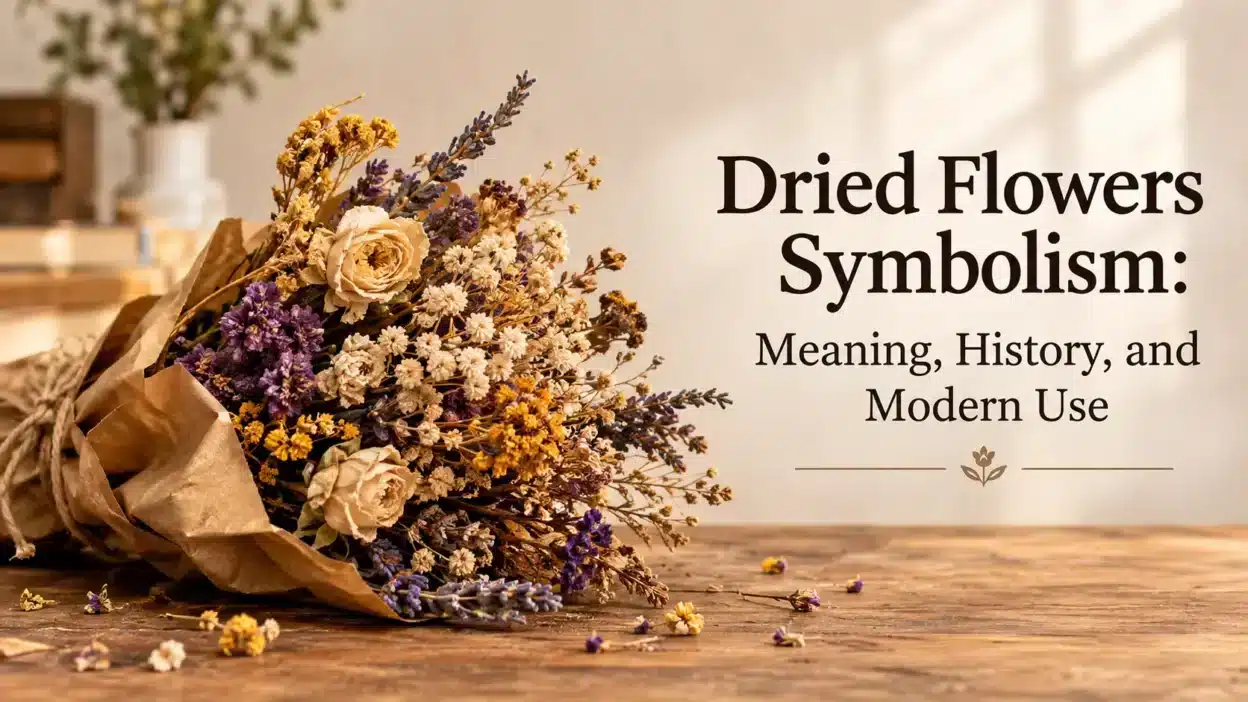
Dried flowers are natural flowers that have been preserved by removing moisture while retaining much of their shape, color, and structure. People dry flowers by hanging them upside down, pressing them, or using preservation techniques designed to extend their lifespan.
Unlike fresh bouquets that last only days or weeks, dried flowers can remain intact for months or even years. This physical durability contributes directly to their symbolic meaning. Because they survive beyond their natural blooming period, they often become symbols of permanence and remembrance.
People encounter dried flowers in wreaths, framed artwork, wedding keepsakes, memorial arrangements, and decorative displays throughout homes and businesses.
The Core Meaning of Dried Flowers Today
In contemporary American culture, the most common meaning of dried flowers is preserving something valuable from the past.
Many people save flowers from important occasions such as weddings, anniversaries, graduations, or funerals. The flowers become physical reminders of emotions, relationships, and milestones. Their symbolism centers on the idea that meaningful experiences can continue to matter long after the moment itself has passed.
Dried flowers also symbolize continuity. Although they have changed form, they remain recognizable. This quality makes them powerful reminders that people, relationships, and memories can evolve without losing their importance.
How Dried Flowers Became Symbolic
The symbolism of dried flowers developed naturally from human attempts to preserve beauty and memory.
For centuries, people have collected and saved meaningful plants and flowers. In many societies, flowers were dried and stored in books, lockets, journals, and family keepsakes. Preserved flowers often marked important life events, allowing individuals to maintain a tangible connection to a specific person or moment.
As preservation methods improved, dried flowers became more than practical souvenirs. They evolved into symbols of remembrance and emotional attachment. Their lasting nature encouraged people to associate them with enduring feelings rather than temporary experiences.
Dried Flowers and the Passage of Time
One of the strongest symbolic themes associated with dried flowers is time itself.
Fresh flowers bloom, reach their peak, and eventually fade. Dried flowers visibly reflect this natural process. They remind people that life changes and that beauty can exist in different stages rather than only at its beginning.
For some, dried flowers symbolize maturity and wisdom. Just as a flower changes over time, people gain experience and perspective throughout life. The preserved bloom serves as a reminder that aging and transformation are natural parts of existence.
Rather than resisting change, dried flowers often symbolize acceptance of it.
Symbolism of Memory and Remembrance
Memory is perhaps the most widely recognized symbolic meaning of dried flowers.
People frequently preserve flowers received from loved ones or gathered during important events. The dried flowers become emotional markers connected to personal stories.
A pressed rose from a wedding bouquet, for example, may symbolize the commitment made on that day. Flowers saved from a funeral may represent continuing love for someone who has died.
Because of this connection to memory, dried flowers often appear in:
- Memorial displays
- Family keepsake boxes
- Scrapbooks
- Memory journals
- Commemorative artwork
Their symbolism focuses less on loss itself and more on remembering what remains important.
Dried Flowers as Symbols of Lasting Love
Many people associate dried flowers with enduring romantic relationships.
Fresh flowers are often given as expressions of affection. When those flowers are preserved, they can symbolize a desire for the relationship and its memories to endure.
This symbolism explains why dried flowers have become popular in wedding traditions. Couples frequently preserve bouquets or floral arrangements after ceremonies. The flowers become reminders of vows, partnership, and shared experiences.
The symbolic message is simple: while circumstances may change, meaningful emotional bonds can remain.
Resilience and Survival Through Change
Dried flowers are also symbols of resilience.
A flower that has lost its moisture but retained its form can represent strength during difficult periods. Although it has experienced change, it still exists and maintains part of its original beauty.
For this reason, some people view dried flowers as reminders of personal growth after hardship. They may symbolize:
- Recovery after loss
- Emotional endurance
- Adaptability
- Survival during challenging times
- Personal transformation
This interpretation has become increasingly common in modern wellness and self-reflection communities.
What Dried Flowers Symbolize in the United States
American interpretations of dried flowers are strongly connected to personal memory and individuality.
Unlike some symbols tied to specific religious or cultural traditions, dried flowers are often understood through personal experience. Their meaning depends largely on the story attached to them.
In the United States, dried flowers frequently symbolize:
| Context | Meaning in the USA | Common Associations | Notes |
|---|---|---|---|
| Weddings | Lasting commitment | Preserved bouquets | Popular keepsake tradition |
| Memorials | Remembrance | Honoring loved ones | Common in memory displays |
| Home décor | Nostalgia | Vintage aesthetics | Widely used in interior design |
| Gifts | Enduring affection | Meaningful relationships | More personal than fresh flowers |
| Personal keepsakes | Preserved memories | Important life moments | Often tied to specific events |
Their versatility allows them to carry different meanings while maintaining a common theme of preservation.
Cross-Cultural Views of Dried Flowers
Different cultures have interpreted preserved flowers in various ways.
In parts of Europe, dried flowers have long been associated with remembrance and family history. Preserved floral arrangements often appeared in homes as decorative objects connected to tradition.
Certain East Asian traditions value preserved natural materials as reminders of seasonal change and impermanence. The changing condition of flowers can symbolize life’s temporary nature and encourage appreciation for the present.
In many cultures, dried flowers are not viewed negatively. Instead, they represent continuity, reflection, and respect for the passage of time.
Religious and Spiritual Associations
Dried flowers do not hold one universal religious meaning, but they appear within various spiritual and faith-related contexts.
Some religious communities use preserved flowers in memorial displays or ceremonial decorations. Their lasting nature can symbolize enduring faith, remembrance, or the continuation of spiritual bonds.
In broader spiritual symbolism, dried flowers are often interpreted as reminders that physical forms change while emotional, moral, or spiritual values can remain.
However, meanings vary significantly between traditions, and dried flowers generally carry more personal symbolism than formal religious significance.
Why Dried Flowers Are Popular in Modern Décor Dried Flowers Symbolism
The popularity of dried flowers in contemporary interior design has strengthened their symbolic role.
Many Americans incorporate dried flowers into homes because they evoke comfort, warmth, and nostalgia. Their muted colors and natural textures create a sense of connection to nature without requiring constant maintenance.
Symbolically, they can represent:
- Appreciation for the past
- Simplicity
- Sustainability
- Natural beauty
- Emotional grounding
Their growing presence in homes reflects a cultural preference for meaningful objects that tell personal stories.
Dried Flowers in Art, Fashion, and Social Media
Modern creative culture has given dried flowers new symbolic dimensions.
Artists often use preserved flowers to explore themes such as memory, identity, loss, and transformation. Fashion designers incorporate dried floral imagery to suggest romance, nostalgia, or natural elegance.
On social media, dried flowers frequently appear in lifestyle photography. Their symbolism often aligns with:
- Mindfulness
- Reflection
- Slow living
- Personal storytelling
- Appreciation of life’s meaningful moments
This modern interpretation expands their meaning beyond traditional remembrance.
Common Misunderstandings About Dried Flowers
Some people assume dried flowers symbolize death or negativity because they are no longer fresh.
While dried flowers can appear in memorial contexts, their symbolism is usually broader and more positive. Most modern interpretations focus on preserving memories rather than mourning alone.
Another misunderstanding is that dried flowers represent something lost forever. In reality, their symbolism often emphasizes what remains rather than what has disappeared. They highlight continuity, remembrance, and emotional endurance.
Context plays a major role in determining their meaning.
How the Meaning of Dried Flowers Has Changed Over Time
The symbolism of dried flowers has shifted alongside cultural attitudes.
Historically, preserved flowers often served practical and sentimental purposes. They were keepsakes connected to specific events or relationships.
Today, their symbolism includes additional themes such as sustainability, intentional living, and appreciation for natural imperfections. Many people view dried flowers as reminders that beauty does not disappear simply because it changes form.
This modern perspective has broadened their appeal and helped maintain their relevance in contemporary culture.
When Dried Flowers Can Carry Negative Meanings
Although most interpretations are positive, dried flowers can occasionally symbolize sadness, endings, or unresolved emotions.
For some individuals, preserved flowers may serve as reminders of relationships that ended or loved ones who have passed away. In these contexts, they can represent longing or nostalgia.
However, even these meanings are often balanced by themes of remembrance and continuity. Negative interpretations tend to depend on personal experiences rather than universal symbolism.
FAQs
What do dried flowers symbolize most commonly?
Dried flowers most commonly symbolize memory, lasting love, and the preservation of meaningful experiences. They often represent the desire to hold onto important moments and relationships.
Are dried flowers a positive symbol?
In most situations, yes. They are generally associated with remembrance, resilience, appreciation of the past, and emotional continuity rather than negative meanings.
What do dried flowers mean in a relationship?
In relationships, dried flowers often symbolize enduring affection and treasured memories. Many people preserve flowers from special occasions as reminders of their emotional connection.
Do dried flowers have religious symbolism?
There is no single religious meaning attached to dried flowers. Some faith traditions use them in memorial or ceremonial settings, while others view them as symbols of remembrance and continuity.
What do dried flowers symbolize in home décor?
In home décor, dried flowers frequently symbolize nostalgia, comfort, simplicity, and a connection to meaningful memories. They also reflect appreciation for natural beauty.
Can dried flowers symbolize grief?
Yes, they can symbolize grief in memorial contexts. However, they more often represent remembrance and continuing emotional bonds rather than sadness alone.
Why are dried flowers popular today?
Their popularity comes from both aesthetic and symbolic appeal. People value them as sustainable decorative elements and as reminders that meaningful experiences can be preserved and remembered.
Conclusion
Dried flowers occupy a unique place in symbolism because they combine beauty with permanence. Unlike fresh blooms that quickly fade, preserved flowers remind people that meaningful experiences can continue to hold value long after the original moment has passed.
Across history and cultures, dried flowers have represented remembrance, endurance, change, and emotional connection. In modern America, dried flowers symbolism is most often linked to preserving memories, honoring relationships, and finding value in life’s transitions.
Their lasting appeal comes from a simple idea: even when something changes form, it can still carry meaning, beauty, and a connection to the stories that matter most.