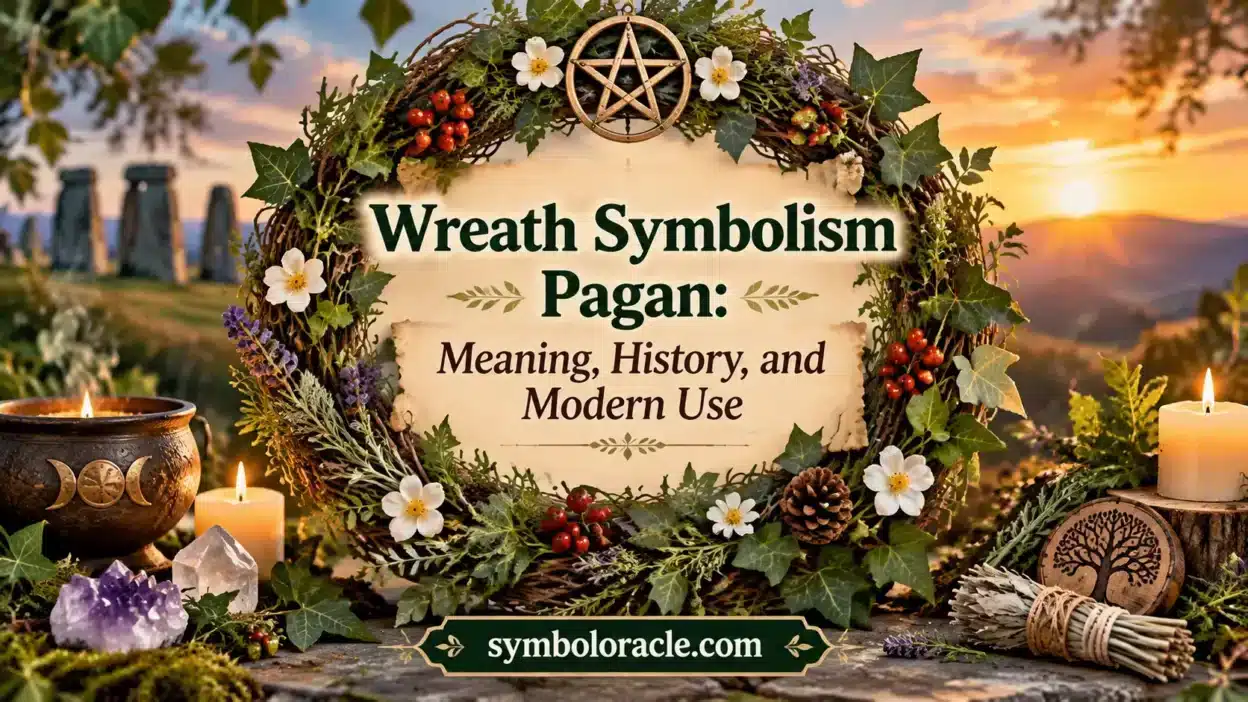
A wreath is a circular arrangement of leaves, flowers, branches, or other materials that people have used for decoration and symbolic expression for thousands of years. In discussions about wreath symbolism pagan, many people are exploring how ancient seasonal traditions, nature worship, and later cultural practices influenced the meanings attached to wreaths.
Today, wreaths appear on front doors, graves, wedding venues, holiday displays, memorial spaces, and artistic designs across the United States. While many modern wreath traditions are connected to Christmas, remembrance, and decoration, their older meanings often relate to nature cycles, renewal, victory, protection, and the continuing movement of life.
Understanding the history of wreath symbolism helps separate ancient cultural practices from modern assumptions. A wreath can carry different meanings depending on its materials, setting, religion, and personal interpretation.
Quick Answer
Wreath symbolism pagan commonly represents nature’s cycles, renewal, seasonal change, and the connection between humans and the natural world. Historically, circular wreaths appeared in various pre-Christian traditions as symbols of life, victory, protection, and seasonal rituals, while modern Americans often associate wreaths with holidays, remembrance, welcome, and decoration.
TL;DR
- Wreaths symbolize cycles, renewal, and nature.
- Ancient cultures used wreaths for honor and celebration.
- Pagan traditions connected wreaths with seasonal changes.
- Americans use wreaths for holidays and remembrance.
- Circular shapes represent continuity and connection.
- Modern meanings depend on context and materials.
What Does a Wreath Look Like and Where Is It Found?
A wreath is a circular decoration usually made by weaving or arranging natural or artificial materials around a central opening. Traditional materials include evergreen branches, flowers, herbs, leaves, vines, berries, and tree branches.
The circle is one of the most important features of the wreath. Unlike an object with a clear beginning and ending point, a circle suggests continuation, repetition, and movement. This shape is one reason wreaths became connected with ideas like seasons returning, life cycles, and lasting bonds.
In the United States, people commonly see wreaths in many settings:
- Front doors welcoming guests
- Christmas and winter holiday decorations
- Funeral and memorial ceremonies
- Wedding celebrations
- Seasonal home décor
- Military and public remembrance events
- Handmade crafts and personal art
Although wreaths are often treated as decorative objects today, their shape and materials have carried symbolic meanings for generations.
What Wreaths Commonly Symbolize in Modern American Culture
In modern America, wreaths do not have one single meaning. Their symbolism changes depending on where and why they are used.
A wreath on a front door often communicates hospitality and welcome. Seasonal wreaths made with autumn leaves, flowers, or evergreen branches help people mark changes in the year and create a connection between home and nature.
At memorial services, wreaths represent respect, remembrance, and honor. Their circular form can suggest that memories continue even after someone has died.
During weddings, flower wreaths and floral arrangements often represent unity, commitment, and celebration. The circle can symbolize a relationship without an ending point.
For many Americans interested in nature-based spirituality, wreaths may also represent seasonal awareness and appreciation for natural cycles. This interpretation connects with older traditions that viewed plants, sunlight, and changing seasons as meaningful parts of human life.
| Context | Meaning in the USA | Common Associations | Notes |
|---|---|---|---|
| Front door décor | Welcome and hospitality | Home, warmth, seasonal style | Common modern use |
| Memorial wreaths | Respect and remembrance | Honor, grief, memory | Used at funerals and ceremonies |
| Wedding wreaths | Unity and commitment | Love, partnership, celebration | Often made with flowers |
| Pagan-inspired designs | Nature cycles and renewal | Seasons, plants, earth traditions | Personal spiritual interpretation varies |
| Holiday wreaths | Celebration and tradition | Christmas, winter, family gatherings | One of the most familiar uses |
Ancient Roots of Wreath Symbolism
The symbolic use of wreaths existed long before modern holiday traditions. Ancient Mediterranean cultures, especially the Greeks and Romans, used circular plant arrangements for ceremonies, competitions, and religious occasions.
In ancient Greece, wreaths made from plants such as laurel were connected with achievement and honor. Victorious athletes, poets, and leaders sometimes received plant crowns as recognition of excellence.
Romans also used wreaths in public ceremonies and celebrations. Different plants carried different associations. Laurel, for example, became linked with victory and status.
These traditions were not identical to modern pagan practices, but they show that plants arranged in circular forms already carried symbolic meaning in ancient societies.
The importance of plants came from their connection to agriculture, survival, and seasonal change. Communities depended on natural cycles, so leaves, flowers, and evergreen plants often became ways to express ideas about life, growth, and renewal.
How Pagan Traditions Connected Wreaths With Nature Cycles
The word “pagan” describes a wide range of pre-Christian and nature-centered religious traditions rather than one single belief system. Because these traditions differed across regions and time periods, wreath meanings also varied.
Many modern pagan interpretations connect wreaths with the Wheel of the Year, a modern framework used by some pagan communities to mark seasonal festivals. These celebrations often focus on events such as solstices, equinoxes, planting periods, and harvest times.
Within these modern practices, wreaths may represent:
- The changing seasons
- The return of sunlight
- Growth and harvest
- The relationship between people and nature
- Personal transformation
Evergreen wreaths became especially meaningful because evergreen plants remain green during colder months. In many cultures, plants that stay alive during winter represented endurance and the continuation of life.
However, it is important to distinguish modern pagan symbolism from ancient evidence. Some wreath traditions have clear historical roots, while others are modern interpretations inspired by older nature-related customs.
The Role of Plants in Pagan-Inspired Wreath Meanings
The materials used in a wreath often influence its symbolism. Different plants have developed their own cultural associations over time.
Evergreens, such as pine, fir, and cedar, are commonly linked with endurance because they remain green through winter. They are often used in seasonal decorations because they visually represent life continuing during a difficult season.
Flowers may represent beauty, growth, love, or celebration. The specific meaning depends on the flower and cultural background.
Herbs and aromatic plants have also appeared in various traditions. Some cultures valued certain plants for healing, protection, or ritual purposes, although modern interpretations are often influenced by personal beliefs rather than shared historical rules.
The meaning of a wreath is therefore created by a combination of:
- Shape
- Materials
- Season
- Cultural background
- Personal intention
A simple evergreen wreath and a colorful spring flower wreath may both be circular, but they communicate different ideas.
Wreath Symbolism in American Holiday Traditions
In the United States, wreaths are strongly connected with seasonal celebrations, especially winter holidays. The most familiar example is the evergreen wreath displayed during Christmas. While many people view it as a Christian holiday decoration today, the use of greenery during winter existed in several cultures before modern Christmas customs developed.
Evergreen plants became meaningful because they stayed alive during the coldest months when many other plants lost their leaves. For some cultures, this suggested endurance and the return of warmer seasons. Over time, these ideas blended with different religious and cultural traditions.
Modern Americans use holiday wreaths in many ways:
- Evergreen wreaths symbolize seasonal celebration and warmth.
- Spring wreaths represent renewal and new beginnings.
- Autumn wreaths reflect harvest, gratitude, and seasonal change.
- Memorial wreaths express respect and remembrance.
The same object can carry different meanings depending on the person using it. A family hanging a wreath on a door may simply be decorating their home, while another person may see the same wreath as a reminder of nature’s cycles.
Pagan Wreaths Compared With Christian and Secular Meanings
Wreath symbolism often creates confusion because similar designs appear in different traditions. A circular wreath can exist within pagan-inspired practices, Christian celebrations, and completely secular decoration.
Some modern pagan communities use wreaths to represent seasonal transitions, natural cycles, and the relationship between humans and the earth. These interpretations often focus on nature and the changing year.
Christian traditions developed their own meanings for wreaths. The Advent wreath, for example, became associated with preparation, reflection, and the Christmas season. Its candles are often connected with themes such as hope, peace, joy, and love.
Secular use is also extremely common. Many people choose wreaths because they represent beauty, hospitality, or seasonal style without attaching a religious meaning.
A wreath’s meaning cannot always be determined by appearance alone. Context matters.
| Tradition or Use | Wreath Meaning | Common Example |
|---|---|---|
| Nature-based spirituality | Seasonal cycles and connection with nature | Solstice or seasonal wreaths |
| Christianity | Preparation and celebration | Advent wreaths |
| Secular decoration | Welcome and beauty | Door decorations |
| Memorial traditions | Respect and remembrance | Funeral wreaths |
Emotional and Psychological Meaning of Wreaths
Symbols often influence emotions because people connect visual patterns with memories and experiences. Wreaths are especially interesting because their circular shape naturally suggests continuity.
A wreath placed on a home can create a feeling of belonging. It marks a space as cared for and welcoming. This is one reason door wreaths remain popular in American homes.
In memorial settings, wreaths help communicate feelings that can be difficult to express with words. Flowers, greenery, and circular arrangements become visible signs of respect and remembrance.
The materials also influence emotional responses. Bright flowers may create feelings of happiness and celebration, while darker greenery may create a quieter feeling connected with reflection.
From a psychological perspective, people often use symbols like wreaths to connect personal experiences with larger ideas such as:
- Family traditions
- Seasonal memories
- Personal identity
- Life transitions
- Community belonging
Wreath Symbolism in Tattoos and Personal Style
Wreath designs have become popular in tattoos and personal artwork because they are visually simple but open to many interpretations.
A person may choose a wreath tattoo to represent growth, balance, achievement, remembrance, or a connection with nature. The meaning often depends on the plants included and the person’s personal story.
Common wreath tattoo styles include:
- Floral wreaths connected with beauty and growth
- Laurel wreaths linked with achievement and victory
- Evergreen wreaths associated with endurance
- Herb wreaths inspired by nature-based traditions
Unlike some symbols with fixed meanings, wreath tattoos are highly personal. Two people may have similar designs but completely different reasons for choosing them.
In modern American tattoo culture, wreaths are often combined with names, dates, animals, quotes, or other symbols to create a personal message.
Wreaths in Jewelry, Fashion, and Creative Design
Beyond tattoos, wreath imagery appears in jewelry, clothing patterns, logos, and artwork. Designers often use wreath shapes because they communicate harmony and completeness.
A small wreath pendant may represent a personal connection to nature or a meaningful life event. A floral wreath design in fashion may simply create a romantic or natural aesthetic.
The circular shape works well in design because it creates visual balance. It can frame words, initials, symbols, or images while adding a sense of unity.
In branding and creative work, wreaths are sometimes used to suggest:
- Tradition
- Craftsmanship
- Quality
- Community
- Natural products
However, the meaning depends on the surrounding design. A wreath used by a gardening company communicates something different from a wreath used in a memorial setting.
Modern Wreath Use in American Homes and Digital Culture
Today, wreaths remain common because they combine decoration with personal expression. Many Americans change wreaths throughout the year to match seasons, holidays, or personal taste.
Popular modern styles include:
- Minimalist dried-flower wreaths
- Handmade craft wreaths
- Rustic farmhouse designs
- Seasonal holiday wreaths
- Natural woodland-inspired wreaths
Social media has also influenced wreath culture. Platforms focused on home design and crafts have made wreath-making a popular creative activity. People share designs based on seasons, celebrations, and personal style.
In digital spaces, wreath images are often used to communicate ideas such as:
- Celebration
- Appreciation
- Nature appreciation
- Peaceful living
- Handmade creativity
The symbol continues to change because people adapt it to their own experiences.
Cross-Cultural Meanings of Wreaths Around the World
Although this article focuses on the United States, wreath symbolism developed across many regions.
In ancient Greece and Rome, plant crowns and wreaths were connected with honor, achievement, and public recognition. In some European traditions, wreaths became connected with seasonal celebrations and religious observances.
In parts of Eastern Europe, greenery and circular decorations have appeared in traditions connected with weddings, harvests, and seasonal events.
In many cultures, the circle itself carries broad symbolic associations. It can represent:
- Continuity
- Unity
- Completion
- Repetition of natural cycles
However, meanings are never identical across cultures. A wreath should always be understood within its specific historical and social setting.
Common Misunderstandings About Pagan Wreath Symbolism
Because wreaths appear in both religious and nonreligious settings, people sometimes make assumptions about what they represent.
One misunderstanding is that every wreath has a pagan meaning. This is inaccurate. Many wreaths today are simply decorations or are connected with Christian, cultural, or personal traditions.
Another misunderstanding is that all ancient wreath practices belonged to one unified pagan system. Historical evidence shows that different societies used plant arrangements in different ways.
Modern pagan communities may give wreaths specific meanings, but those meanings reflect particular beliefs and practices rather than a universal interpretation shared by all ancient cultures.
Understanding the symbol requires looking at context instead of assigning one fixed meaning.
How Wreath Symbolism Has Changed Over Time
The meaning of wreaths has evolved as societies changed. Ancient communities often connected plants with nature, agriculture, honor, and seasonal events.
Later traditions adapted wreaths for religious ceremonies, public recognition, and celebrations. In modern America, wreaths became especially associated with home decoration, holidays, remembrance, and personal expression.
This evolution shows how symbols are not permanent. People continue to reshape them according to their beliefs, experiences, and cultural environment.
A wreath used thousands of years ago and a wreath hanging on a modern American front door may look similar, but the meaning behind each one can be very different.
Frequently Asked Questions About Wreath Symbolism Pagan
What does a pagan wreath symbolize?
A pagan wreath commonly symbolizes nature cycles, seasonal change, renewal, and the relationship between humans and the natural world. Meanings vary depending on the specific tradition and materials used.
Are wreaths originally pagan symbols?
Wreaths have roots in several ancient cultures, including Greek and Roman traditions. Some modern pagan practices use wreath imagery, but wreaths are not exclusive to pagan beliefs.
What does an evergreen wreath symbolize?
An evergreen wreath often represents endurance, continued life, and resilience because evergreen plants remain green during winter. In modern America, it is also strongly connected with holiday decoration.
Do wreath tattoos have a specific meaning?
Wreath tattoos do not have one universal meaning. They may represent growth, achievement, remembrance, nature, or personal milestones depending on the design and the wearer’s intention.
Is a Christmas wreath a pagan symbol?
A Christmas wreath is generally understood today as a holiday decoration, often connected with Christian traditions or seasonal celebration. Some historical influences involve older winter greenery customs, but modern meanings vary widely.
What does a wreath on a door symbolize?
A wreath on a door commonly symbolizes welcome, hospitality, and seasonal celebration. Some people also use it to express connection with nature or personal traditions.
Conclusion
Wreaths are among the most adaptable symbols because their meaning changes with culture, materials, and personal use. They can represent welcome, remembrance, celebration, seasonal change, or a connection with nature.
The history of wreath symbolism pagan shows how ancient ideas about plants and cycles of life influenced later traditions, while modern Americans continue creating new meanings through holidays, décor, art, and personal expression.
A wreath is not defined by one belief system. Its meaning comes from the story people attach to it, making it a symbol that continues to evolve with each generation.