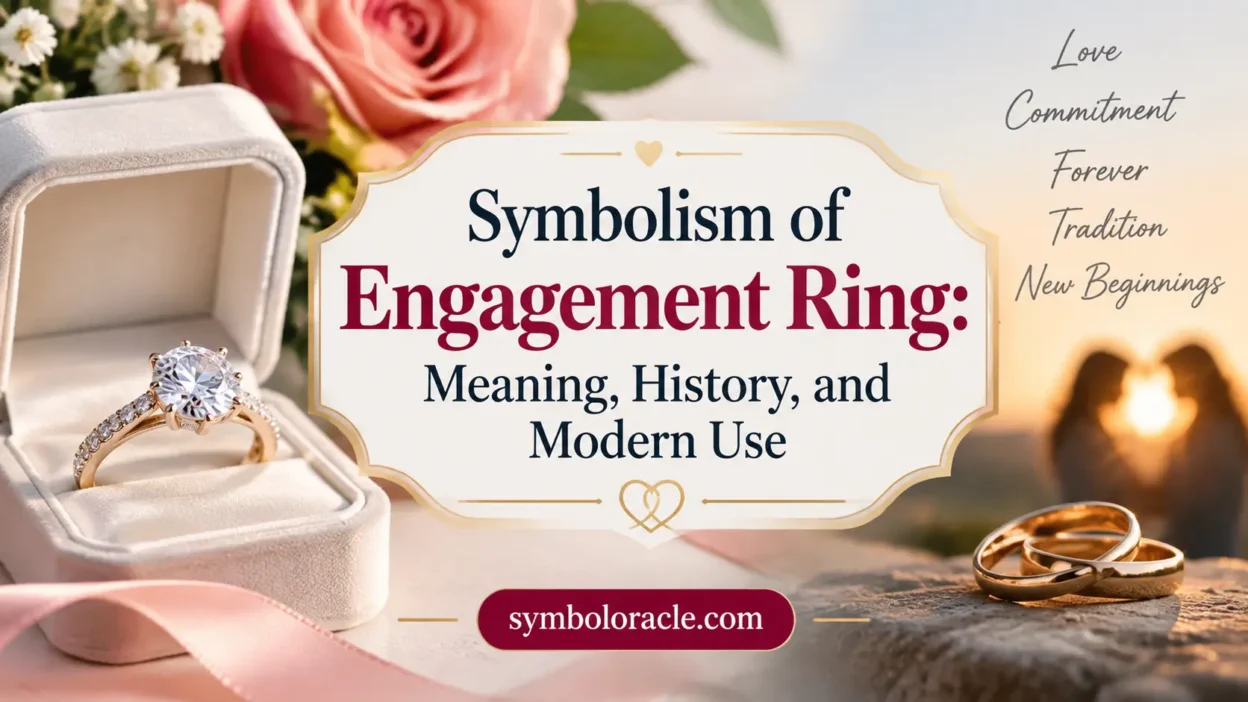
An engagement ring is more than a piece of jewelry; it is a visible sign of commitment, partnership, and a promise of marriage. The symbolism of engagement ring comes from centuries of traditions surrounding love, loyalty, agreements, and social bonds. In modern American culture, people often view an engagement ring as a personal expression of devotion and a public announcement of an important life decision.
While many people associate engagement rings with romance today, their meaning has changed over time. Different societies have connected rings with promises, legal agreements, family relationships, and personal identity. Understanding these meanings reveals why a small circular band continues to hold such importance in weddings and relationships.
Quick Answer
The symbolism of engagement ring commonly represents love, commitment, and the promise of a future marriage in modern American culture. Historically, engagement rings have also symbolized agreements, loyalty, social bonds, and the intention to create a lasting partnership.
TL;DR
- Engagement rings symbolize commitment and future marriage.
- Ancient rings represented agreements and social promises.
- Diamonds became linked with modern engagement traditions.
- Americans use rings as personal relationship symbols.
- Ring designs reflect identity, values, and lifestyle.
What an Engagement Ring Represents Today
In the United States, an engagement ring usually represents a serious commitment between two people who plan to marry. It communicates that a relationship has moved into a new stage and that both partners have chosen a shared future.
The circular shape of a ring often represents continuity because it has no visible beginning or end. Many people connect this shape with ideas of lasting partnership and ongoing support.
However, the meaning of an engagement ring is not identical for everyone. Some couples view it as a romantic tradition, while others see it as a personal symbol without strict cultural expectations. The value of the ring may come from its emotional meaning rather than its price or material.
For many Americans, the ring serves several purposes at once:
- A reminder of a personal promise
- A symbol recognized by family and friends
- A celebration of a relationship milestone
- A piece of jewelry connected to personal memories
The Ancient Roots of Ring Symbolism
The use of rings as symbols of connection dates back thousands of years. Ancient Egyptians used circular rings made from materials such as reeds, leather, and bone. The circle was associated with eternity because it appeared endless.
In ancient Rome, rings were connected with marriage agreements and social contracts. Roman betrothal rings could represent a formal promise between families or partners. These early examples were not identical to modern engagement rings, but they established the idea of using a ring to mark commitment.
Over time, rings became associated with legal, emotional, and social promises. The object itself became less important than the meaning people attached to giving and receiving it.
How Engagement Rings Developed in Western Culture
The tradition of engagement rings evolved gradually in Europe. During medieval times, rings became connected with marriage arrangements among wealthy families. They could represent financial agreements, family alliances, and future unions.
One major shift occurred in the 15th century when diamond engagement rings became associated with marriage proposals among European nobility. A famous example involved Archduke Maximilian of Austria, who reportedly gave a diamond ring to Mary of Burgundy in 1477.
For many centuries, engagement rings remained mainly associated with wealthier groups. Their popularity expanded later as jewelry became more accessible and marketing campaigns helped establish the diamond ring as a common symbol of engagement.
Why Diamonds Became Associated With Engagement Rings
Diamonds are now one of the most recognized materials used in engagement rings, but this association developed relatively recently.
Diamonds gained popularity because people connected them with qualities such as:
- Strength
- Durability
- Clarity
- Long-lasting value
These physical characteristics became linked with the idea of a strong and lasting relationship.
In the United States, diamond engagement rings became especially common during the 20th century. Advertising and changing social customs helped create the expectation that diamonds represented romantic commitment.
Today, many couples still choose diamonds, but alternatives such as sapphires, emeralds, lab-grown diamonds, and family heirloom stones have become increasingly common.
| Context | Meaning in the USA | Common Associations | Notes |
|---|---|---|---|
| Marriage proposal | Commitment and future partnership | Love, trust, promise | Most common modern meaning |
| Diamond ring | Enduring relationship | Strength, durability | Not required for engagement |
| Family heirloom | Connection across generations | Heritage, memories | Adds personal history |
| Custom design | Individual expression | Identity, creativity | Reflects personal values |
The Meaning of Engagement Rings in American Culture
In American society, engagement rings are closely connected with wedding traditions and relationship milestones. A proposal often includes presenting a ring as a public symbol that a couple intends to marry.
The ring may appear in:
- Proposal photographs
- Social media announcements
- Family celebrations
- Wedding planning events
- Personal keepsake collections
For many Americans, showing an engagement ring is not only about displaying jewelry. It can represent excitement, a new chapter, and recognition of a shared decision.
At the same time, cultural attitudes are changing. Some couples choose inexpensive rings, matching bands, or no engagement ring at all. The meaning increasingly depends on the couple rather than a fixed social rule.
Emotional and Psychological Meaning of Engagement Rings
People often attach strong emotional value to engagement rings because they connect a physical object with an important personal memory.
The ring can act as a reminder of:
- The moment of the proposal
- The relationship journey
- A partner’s promise
- Shared future goals
Psychologically, objects connected to major life events can become meaningful because they preserve memories. A ring worn every day may serve as a constant reminder of a relationship and personal identity.
The emotional importance often comes from the story behind the ring rather than the materials used to create it.
Religious and Spiritual Interpretations of Engagement Rings
Engagement rings have different meanings across religious communities. In many Christian traditions, rings are connected with marriage ceremonies and promises of faithfulness.
Some religious groups emphasize the commitment represented by the ring rather than the object itself. The ring may serve as a visible reminder of vows, responsibility, and partnership.
Jewish wedding traditions traditionally focus more strongly on the wedding ring used during the ceremony rather than a separate engagement ring. However, many Jewish couples today also participate in engagement ring customs influenced by broader American culture.
Other cultures and religions may have their own traditions surrounding marriage jewelry, showing that engagement symbols vary widely around the world.
Cross-Cultural Meanings of Engagement Rings
Although engagement rings are especially common in Western societies, similar symbols of commitment exist in many cultures.
In some countries, couples exchange rings during engagement periods. In others, different jewelry, family gifts, or ceremonies mark the promise of marriage.
Examples include:
- Gold jewelry traditions in parts of South Asia
- Family exchanges connected with marriage agreements
- Cultural ceremonies involving symbolic gifts
These traditions show that commitment symbols often reflect local values, family structures, and social customs.
How Engagement Ring Designs Express Identity
Modern engagement rings often communicate personal style as much as relationship status.
People choose different designs based on:
- Fashion preferences
- Family traditions
- Ethical concerns
- Budget considerations
- Personal symbolism
Popular choices include:
- Vintage rings representing history and nostalgia
- Minimalist rings reflecting simple design preferences
- Colored gemstones showing individuality
- Custom rings created around personal stories
The design itself can become part of the symbol. A unique ring may represent a couple’s personality and shared experiences.
Engagement Rings in Fashion and Digital Culture
Social media has changed how people share engagement moments. Engagement announcements, proposal videos, and ring photographs are common across platforms.
The ring has become part of visual storytelling. People often share details about:
- The proposal location
- The ring style
- The meaning behind the design
- The couple’s journey
At the same time, digital culture has created conversations about expectations and comparisons. Some people question whether social media creates pressure around ring size, cost, or appearance.
Modern interpretations increasingly focus on personal meaning rather than following a single standard.
Common Misunderstandings About Engagement Rings
Several assumptions about engagement rings are cultural expectations rather than universal truths.
One common misunderstanding is that an engagement ring must be expensive to represent genuine love. Many couples choose affordable rings or alternatives that better match their circumstances.
Another misconception is that diamonds are the only meaningful choice. Many people select different stones because of personal connections, family history, or ethical preferences.
The symbol comes from the commitment behind the ring, not from a specific material or price.
The Changing Meaning of Engagement Rings
The meaning of engagement rings continues to evolve as relationships and social values change.
Modern couples may:
- Choose rings together
- Select nontraditional designs
- Use inherited jewelry
- Avoid traditional engagement customs
- Prioritize experiences over expensive purchases
These changes show that symbols are not fixed. Their meanings develop as communities create new ways to express love and commitment.
Modern Alternatives and New Interpretations of Engagement Rings
The traditional engagement ring remains popular, but modern couples have expanded what an engagement symbol can look like. Many people now choose options that better represent their personalities, values, or relationship stories.
Some couples select:
- Lab-grown diamonds because they offer a different approach to sourcing and cost.
- Colored gemstones such as sapphires, rubies, or emeralds for a distinctive appearance.
- Vintage rings because they carry historical character and previous generations’ memories.
- Custom designs that include personal details, meaningful dates, or unique features.
- Simple bands for people who prefer a minimal style.
These choices show that the meaning of an engagement ring is moving away from strict traditions and toward personal expression. The symbol remains connected to commitment, but the way people represent that commitment continues to change.
Engagement Rings in Art, Literature, and Popular Culture
Engagement rings appear frequently in movies, novels, television shows, and artwork because they represent important moments in human relationships.
In storytelling, a ring may symbolize:
- A promise between characters
- A turning point in a relationship
- Family expectations
- Loyalty or conflict
- Personal transformation
Films and television often use the proposal scene as an emotional milestone. The presentation of a ring can communicate a character’s intentions without requiring lengthy explanations.
Literature has also used rings as symbols of agreements, devotion, and social connection. These examples show that engagement rings carry meanings beyond jewelry; they function as recognizable cultural symbols.
The Role of Family and Tradition in Engagement Ring Meaning
For many people, an engagement ring connects personal love with family traditions. A ring may be passed down from parents or grandparents, creating a link between generations.
Family heirloom rings often represent:
- Shared history
- Family memories
- Respect for previous generations
- Continuity between past and future
However, not every couple follows inherited traditions. Some people prefer a completely new design that reflects their own relationship rather than family history.
Both choices demonstrate that the meaning of an engagement ring depends on the story attached to it.
Environmental and Ethical Discussions Around Engagement Rings
Modern conversations about engagement rings increasingly include questions about responsible sourcing and environmental impact.
Some buyers consider:
- Where gemstones come from
- How materials are produced
- Labor practices involved in mining
- Environmental effects
These concerns have influenced interest in alternatives such as recycled metals, vintage jewelry, and lab-created stones.
For many Americans, ethical choices have become part of the symbolism. The ring may represent not only commitment to a partner but also personal values and social responsibility.
Common Symbolic Meanings of Ring Materials and Designs
Different engagement ring features can carry additional meanings depending on cultural beliefs and personal interpretation.
| Ring Feature | Common Symbolic Meaning | Modern Interpretation |
|---|---|---|
| Diamond | Strength and durability | Long-term commitment |
| Gold | Value and tradition | Stability and heritage |
| Sapphire | Loyalty and sincerity | Individual style |
| Vintage design | History and connection | Appreciation of the past |
| Custom engraving | Personal bond | Unique relationship story |
These meanings are not universal rules. Many people choose designs based simply on beauty, preference, or personal memories.
Why People Continue to Value Engagement Rings
The popularity of engagement rings continues because they combine several important human ideas into one object. They represent a decision, a memory, and a visible reminder of a relationship.
A ring can hold emotional importance because it marks a specific moment in time. Years after a proposal, the same piece of jewelry may remind someone of the beginning of a marriage journey.
The continuing appeal of engagement rings comes from their ability to carry personal stories. Two rings may look similar, but their meanings can be completely different because each belongs to a different relationship.
Controversies and Changing Views About Engagement Rings
Although engagement rings are widely accepted symbols of commitment, they are also connected with debates about tradition, consumer culture, and social expectations.
Some people criticize the pressure surrounding expensive rings or believe advertisements have influenced unrealistic expectations. Others argue that the tradition provides a meaningful way to celebrate commitment.
There are also discussions about whether engagement rings reinforce outdated ideas about marriage or gender roles. Some couples respond by changing the tradition, such as choosing rings together or exchanging rings equally.
These debates show that symbols can have different meanings depending on personal experiences and cultural perspectives.
Frequently Asked Questions About Engagement Ring Symbolism
What does an engagement ring symbolize in American culture?
An engagement ring commonly symbolizes a promise of marriage, commitment, and a shared future. In the United States, it is often viewed as a visible sign that a couple has decided to build a life together.
Why is an engagement ring shaped like a circle?
The circular shape is often associated with continuity because it has no clear beginning or ending point. Many people connect this design with ideas of lasting partnership and ongoing commitment.
Do engagement rings have religious meaning?
The meaning varies between religions and communities. Some traditions connect rings with marriage vows and faithfulness, while others focus more on the commitment itself rather than the jewelry.
What does a diamond engagement ring symbolize?
A diamond engagement ring is commonly associated with durability, strength, and lasting love. However, many people choose diamonds for cultural tradition, appearance, or personal preference rather than symbolism alone.
Can an engagement ring symbolize something besides marriage?
Yes. Some people use engagement rings to represent personal promises, long-term partnerships, or meaningful commitments outside traditional marriage customs.
What does a family heirloom engagement ring symbolize?
A family heirloom ring often represents connection between generations, shared memories, and respect for family history. Its value may come from emotional meaning rather than financial worth.
Are nontraditional engagement rings still meaningful?
Yes. Many couples choose unique rings, different gemstones, or simple designs while keeping the same core meaning of commitment and partnership.
Conclusion
An engagement ring represents much more than a decorative piece of jewelry. Across cultures and generations, it has been connected with promises, relationships, family traditions, and personal identity.
The symbolism of engagement ring continues to change as people create new ways to express commitment. While diamonds and traditional designs remain popular, modern couples increasingly focus on the story, values, and emotions behind their chosen rings.
Ultimately, the meaning of an engagement ring comes from the promise it represents and the personal journey shared by the people who wear it.


