
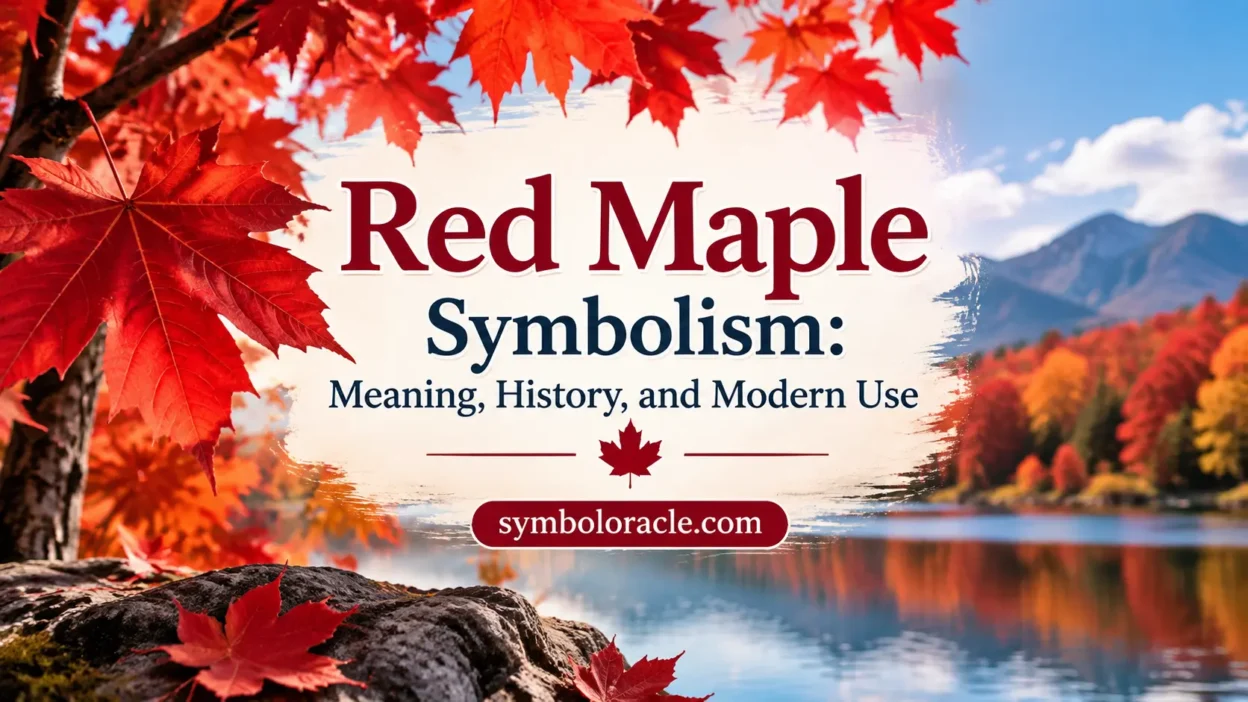
The red maple symbolism is closely connected with change, resilience, beauty, and the natural cycles of life. In the United States, the red maple tree is often recognized as a symbol of seasonal transformation because of its brilliant autumn leaves and its ability to grow across many different landscapes.
Beyond its visual appeal, the red maple carries meanings connected to adaptation, strength, and renewal. Its changing colors remind many people of personal growth, important life transitions, and the value of embracing different stages of life.
From Native American traditions and early American landscapes to modern gardens, artwork, tattoos, and environmental identity, the red maple continues to represent a relationship between people and the natural world.
Quick Answer
Red maple symbolism commonly represents change, resilience, beauty, and renewal in modern American culture, especially through its autumn colors and ability to thrive in different environments. Historically, the tree has also been associated with strength, connection to nature, and seasonal transformation.
TL;DR
- Red maple represents change and personal growth.
- Autumn leaves symbolize beauty in transition.
- The tree reflects resilience across environments.
- Americans connect it with forests and seasonal identity.
- Maple imagery appears in art, tattoos, and design.
What Is the Red Maple Tree and Where Is It Found?
The red maple (Acer rubrum) is a deciduous tree native to North America. It is known for its three-lobed leaves, smooth gray bark when young, and bright red flowers, buds, and autumn foliage.
The tree grows widely across the eastern and central United States, from New England forests to southern wetlands. Because it adapts well to different soils and climates, it has become one of the most recognizable native trees in American landscapes.
Its seasonal transformation is one reason people attach symbolic meaning to it. During spring, red maple trees produce small red flowers before their leaves fully appear. In autumn, the leaves may turn shades of red, orange, and yellow, creating a visual reminder of change and renewal.
The tree’s ability to move through dramatic seasonal shifts while remaining rooted in one place has shaped many of its symbolic interpretations.
The Core Meaning of Red Maple Symbolism
The most common meanings connected with the red maple include:
| Context | Meaning in the USA | Common Associations | Notes |
|---|---|---|---|
| Autumn colors | Change and transition | Seasons, maturity, reflection | Linked with falling leaves |
| Tree growth | Strength and resilience | Stability, endurance | Represents adaptation |
| Natural landscapes | Connection with nature | Forests, conservation | Common in outdoor identity |
| Personal designs | Individual growth | Tattoos, artwork | Often represents life journeys |
| Seasonal traditions | Beauty and renewal | Fall celebrations | Connected with American autumn culture |
The red maple’s symbolism comes mainly from its visible relationship with time. Unlike symbols based on myths or written traditions, much of its meaning comes from observing the tree itself.
Its leaves do not remain the same throughout the year. They change, fall, and return again. For many people, this natural cycle represents the idea that transformation is a normal part of life.
Ancient Roots and Early Symbolism of Maple Trees
Maple trees have held cultural importance among various Indigenous peoples of North America. Different communities developed their own relationships with maple species, including their uses for food, tools, and seasonal practices.
Maple trees were valued because they provided resources while also reflecting seasonal patterns. The spring movement of sap and the changing appearance of leaves connected maple trees with renewal and natural cycles.
However, meanings varied between cultures. There was no single universal interpretation of the red maple. Symbolic associations depended on the traditions, environment, and experiences of each community.
European settlers later encountered maple trees in North America and developed their own appreciation for them. Maple became connected with the identity of the continent’s forests and eventually became an important part of American landscape traditions.
Why Red Maple Represents Change and Transformation
The strongest symbolic connection of the red maple comes from its seasonal transformation.
During summer, the tree displays green leaves that support growth and energy. When temperatures change in autumn, pigments within the leaves create vivid red shades before the leaves fall.
This process has often been viewed as a natural example of transformation. The tree does not lose its value when it changes. Instead, its seasonal transition creates a different kind of beauty.
For this reason, people often associate red maple imagery with:
- accepting life changes
- moving through personal transitions
- growing older with confidence
- adapting to new situations
The symbolism is not about avoiding change. It reflects the idea that change can create new forms of beauty.
Red Maple Symbolism in American Culture
In the United States, red maple trees are strongly connected with autumn identity. Their colors appear in seasonal photography, home decoration, artwork, and outdoor experiences.
Many Americans associate red maple forests with:
- fall vacations
- family gatherings
- hiking traditions
- changing seasons
- childhood memories
The tree is especially meaningful in regions where autumn foliage becomes part of local culture. Communities often celebrate fall landscapes through festivals, scenic drives, and outdoor events.
Unlike some symbols tied to specific beliefs, the red maple usually carries a broad cultural meaning. People may appreciate it from environmental, emotional, artistic, or personal perspectives.
The Emotional and Psychological Meaning of the Red Maple
Natural symbols often influence how people understand their own experiences. The red maple can represent emotional ideas connected with acceptance and balance.
Its yearly cycle offers a visual reminder that growth includes periods of change. A person may connect with the tree after moving to a new place, ending a chapter of life, or beginning something different.
Psychologically, nature symbols like the red maple can provide feelings of:
- calmness
- belonging
- stability
- connection with the environment
The tree’s rooted structure combined with its changing leaves creates an interesting contrast. It suggests that people can remain grounded while still evolving.
Red Maple Symbolism in Native and Cross-Cultural Traditions
Maple trees have different meanings across cultures, and interpretations should not be combined into one universal belief.
In some Indigenous North American traditions, maple species were valued for practical uses and their relationship with seasonal cycles. The gathering of maple sap became an important seasonal activity for many communities.
In East Asian cultures, maple leaves are often associated with autumn beauty and reflection. Japanese maple symbolism, for example, commonly connects with seasonal appreciation and the temporary nature of beauty.
Although these traditions involve different maple species and cultural contexts, they share a common appreciation for the tree’s changing appearance.
The Meaning of Red Maple in Tattoos and Personal Art
Red maple tattoos often represent personal experiences rather than a fixed meaning.
Someone may choose a red maple leaf tattoo to symbolize:
- a major life transition
- connection to a hometown or region
- appreciation for nature
- family memories
- personal resilience
The red leaf design is popular because it combines recognizable natural imagery with personal interpretation.
Some people choose realistic leaf designs, while others use minimalist outlines, watercolor styles, or seasonal forest scenes. The meaning depends largely on the individual’s story.
Red Maple in Home Decor, Fashion, and Design
Red maple imagery appears frequently in American design because it combines natural beauty with seasonal warmth.
People use maple leaf patterns in:
- wall art
- textiles
- seasonal decorations
- jewelry
- outdoor landscaping themes
The symbol often creates feelings of comfort and connection with nature. Autumn-inspired designs frequently use red maple colors because they create associations with warmth, gathering, and changing seasons.
Unlike symbols that depend on specific cultural knowledge, the red maple is easily understood visually. A single red leaf can communicate an idea of autumn without explanation.
Red Maple and Environmental Identity
The red maple has also become connected with environmental awareness and appreciation for native landscapes.
Because it is a native North American tree that supports local ecosystems, it can represent:
- conservation
- respect for forests
- biodiversity
- connection to local environments
Many homeowners plant red maples because they provide shade, seasonal beauty, and habitat value. The tree’s presence in neighborhoods and parks strengthens its connection with everyday American life.
Its symbolism has expanded from personal meaning to a broader appreciation of natural spaces.
Common Misunderstandings About Red Maple Symbolism
Although red maple symbolism is generally positive, some misunderstandings exist.
One common mistake is assuming that every culture gives maple trees the same meaning. Symbolism changes depending on location, history, and cultural experience.
Another misunderstanding is treating the red maple as a symbol with one official definition. Unlike national symbols or religious icons with established meanings, natural symbols often develop through personal and cultural interpretation.
The red maple is meaningful because people connect their own experiences with its natural qualities.
How Red Maple Symbolism Has Changed Over Time
The meaning of the red maple has evolved alongside American relationships with nature.
Early interpretations focused more on practical value, including food sources, materials, and seasonal resources. Over time, the tree became increasingly connected with landscape beauty, identity, and emotional reflection.
Modern interpretations often focus on personal growth and environmental appreciation. A red maple today may represent a childhood memory, a connection to a region, or a reminder of life’s changing stages.
Its meaning has expanded rather than replaced earlier associations.
Modern Uses of Red Maple Symbolism
Today, red maple symbolism appears in many forms of creative expression.
Common modern uses include:
- tattoo designs
- jewelry collections
- nature photography
- seasonal artwork
- landscaping themes
- social media imagery
- educational materials about forests
The symbol works well in modern culture because it communicates ideas without requiring a specific belief system.
A red maple leaf can represent someone’s love of nature, appreciation for autumn, personal transformation, or connection to a place.
Frequently Asked Questions
What does a red maple symbolize?
A red maple commonly symbolizes change, resilience, beauty, and renewal. Its autumn transformation is the main reason people associate it with personal growth and seasonal cycles.
Is red maple symbolism positive?
Yes, red maple symbolism is usually viewed positively. Most interpretations focus on adaptation, natural beauty, strength, and acceptance of change.
What does a red maple tattoo mean?
A red maple tattoo may represent personal transformation, a connection to nature, family memories, or a meaningful place. The meaning depends on the person wearing it.
Does the red maple have Native American symbolism?
Maple trees have cultural importance among various Indigenous communities, but meanings differ between traditions. The tree has been valued for its resources and relationship with seasonal cycles.
Why are red maple leaves associated with autumn?
Red maple leaves turn bright colors in autumn because natural pigments become visible as seasons change. This transformation has influenced their symbolic connection with transition and renewal.
Is the red maple a symbol of America?
The red maple is strongly associated with American landscapes, especially eastern forests and autumn scenery. However, it is not the official national tree symbol of the United States.
Conclusion
The red maple represents change, resilience, and the beauty found in natural cycles. Its ability to transform with the seasons while remaining firmly rooted has made it a meaningful image in American culture.
From forests and family memories to tattoos and modern design, red maple symbolism continues to reflect how people understand growth, transition, and connection with the natural world. Its meaning comes not from one fixed tradition, but from the many ways people experience and interpret this remarkable tree.


