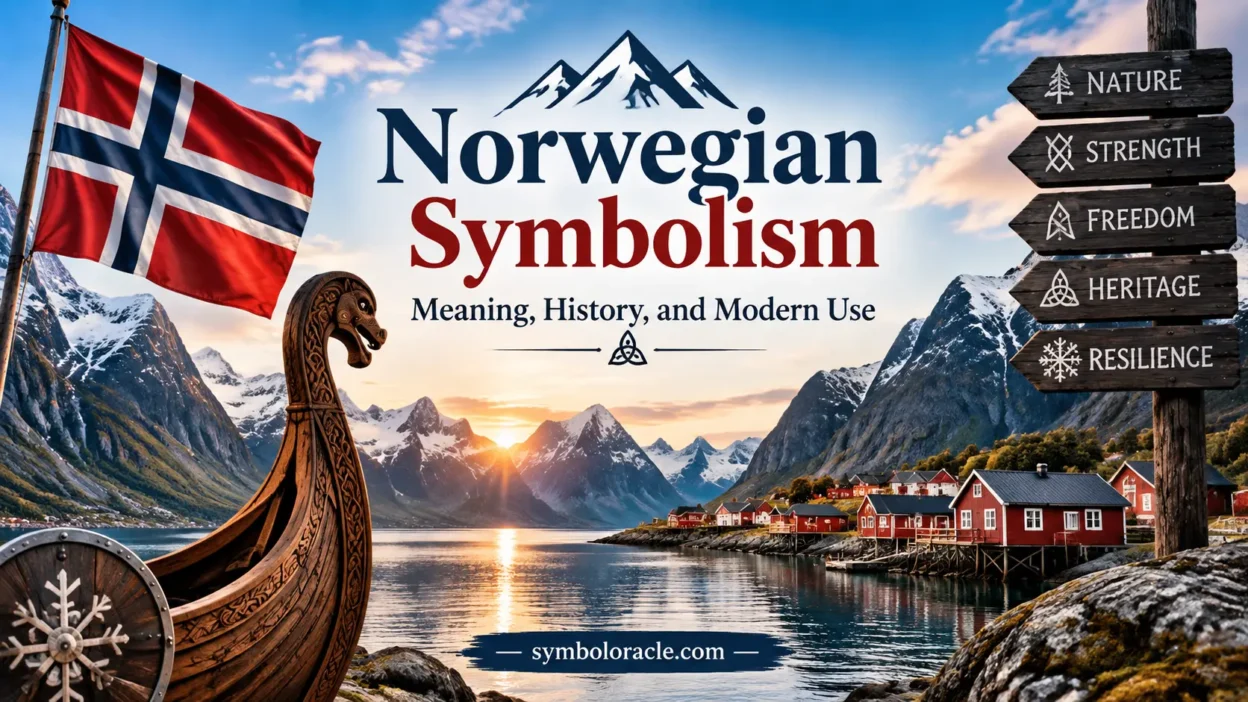
Norwegian symbolism reflects the ideas, landscapes, traditions, and cultural values connected with Norway. Norwegian symbolism often represents nature, resilience, exploration, heritage, independence, and the relationship between people and the natural world.
From Viking-era traditions to modern Scandinavian design, Norwegian symbols carry meanings shaped by geography, folklore, religion, and national identity. Americans often encounter these symbols through Nordic art, ancestry, tattoos, home décor, literature, and popular culture.
Understanding these symbols helps explain why images like the Norwegian flag, mountains, fjords, runes, animals, and traditional patterns continue to appear far beyond Norway’s borders.
Quick Answer
Norwegian symbolism commonly represents connection to nature, personal strength, cultural heritage, and exploration in modern American culture. Historically, it has also reflected Norse mythology, Viking traditions, spiritual beliefs, and Norway’s relationship with its landscape.
TL;DR
- Norwegian symbols reflect nature, heritage, and resilience.
- Mountains and fjords represent strength and endurance.
- Viking symbols connect with Norse traditions.
- Americans use Nordic imagery for identity and design.
- Modern meanings often differ from ancient beliefs.
What Norwegian Symbols Represent in Modern Culture
Norwegian symbolism is closely connected with the country’s environment and cultural history. Norway’s mountains, forests, oceans, and northern climate influenced many traditional meanings.
In modern American culture, Norwegian-inspired symbols are often associated with:
- adventure and exploration
- family heritage
- simplicity and craftsmanship
- independence
- respect for nature
Many people with Norwegian ancestry use these symbols to express connection with their roots. Others appreciate them because Scandinavian design and mythology have become influential in fashion, art, and entertainment.
| Context | Meaning in the USA | Common Associations | Notes |
|---|---|---|---|
| Nature symbols | Strength and balance | Mountains, forests, fjords | Connected with outdoor identity |
| Viking imagery | Courage and exploration | Ships, warriors, runes | Often adapted in modern culture |
| Nordic patterns | Heritage and craftsmanship | Textiles, décor | Common in Scandinavian design |
| Norwegian flag | Pride and ancestry | National identity | Used during cultural celebrations |
| Mythological symbols | Tradition and storytelling | Norse gods, legends | Often separated from historical beliefs |
Ancient Roots and Early Symbolism in Norway
Norwegian symbolism developed through several historical layers. Before Christianity reached Norway, Norse communities used symbols connected with mythology, nature, and spiritual beliefs.
The Viking Age strongly influenced Norwegian cultural imagery. Objects such as ships, weapons, carvings, and runes carried meanings related to protection, identity, fate, and social status.
Runic writing was not only a communication system. Some people believed certain symbols had protective or spiritual qualities, although modern interpretations often simplify or reinterpret their original uses.
After Christianity became established in Norway, older traditions blended with Christian symbols. This created a cultural landscape where ancient Norse ideas and later religious influences existed together.
Nature as the Foundation of Norwegian Symbolism
Norway’s landscape plays one of the biggest roles in its symbolic traditions. The country’s mountains, seas, forests, and northern skies shaped how people understood their relationship with the world around them.
Mountains often represent:
- stability
- endurance
- challenges overcome
- connection to ancestral lands
Fjords represent movement, transformation, and the meeting point between land and water. In art and literature, they frequently appear as symbols of beauty, isolation, and survival.
The ocean also carries importance because Norway has a long maritime history. Fishing, exploration, and trade created a cultural connection between Norwegian identity and the sea.
Viking Symbols and Their Changing Meanings
Viking-related imagery is among the most recognized forms of Norwegian symbolism today. Symbols associated with Vikings often appear in movies, tattoos, jewelry, and fantasy culture.
Common Viking-inspired symbols include:
- longships
- axes
- shields
- ravens
- runes
- mythological figures
In the United States, these images are often interpreted as signs of courage, adventure, and personal strength.
However, modern interpretations do not always match historical meanings. Many Viking symbols used today come from a mixture of archaeological discoveries, folklore, entertainment, and modern artistic adaptation.
The Role of Norse Mythology in Norwegian Symbols
Norse mythology influenced many traditional Norwegian symbols. Stories about gods, heroes, and supernatural beings shaped cultural ideas about fate, bravery, wisdom, and natural forces.
Figures from Norse mythology are often connected with specific themes:
- Odin is commonly associated with wisdom and knowledge.
- Thor is associated with strength and protection.
- Freyja is linked with beauty, love, and fertility.
Modern audiences often view these figures through books, films, games, and popular media. These portrayals sometimes emphasize fantasy elements rather than historical religious beliefs.
Norwegian Symbolism in American Heritage and Identity
In the United States, Norwegian symbols often appear among communities with Scandinavian ancestry. Norwegian-American traditions developed through immigration waves, especially during the 19th and early 20th centuries.
People may use Norwegian symbols during:
- cultural festivals
- family celebrations
- genealogy projects
- heritage events
- home decoration
The Norwegian flag, traditional clothing, folk art, and handmade crafts can serve as reminders of family history.
For many Americans, these symbols represent personal heritage rather than a direct connection to ancient traditions.
Norwegian Patterns, Art, and Scandinavian Design
Norwegian symbolism also appears through decorative patterns and craftsmanship. Traditional textiles, wood carving, and folk art often use repeated shapes inspired by nature.
Popular design elements include:
- geometric patterns
- floral motifs
- animal imagery
- winter-inspired designs
Modern Scandinavian design has influenced American interiors through its focus on simplicity, function, and natural materials.
In this context, Norwegian-inspired design often symbolizes comfort, balance, and thoughtful living.
Animal Symbolism in Norwegian Culture
Animals appear frequently in Norwegian folklore and artwork. They often represent qualities people admire or fear.
Examples include:
Bear: Often connected with strength and wilderness.
Wolf: Can represent independence, survival, and the untamed natural world.
Raven: Appears in Norse mythology and is often associated with knowledge and observation.
Horse: Historically connected with travel, work, and mythology.
In modern American use, these animals are often chosen for tattoos or artwork because of their symbolic qualities rather than their original cultural meanings.
Norwegian Symbolism in Tattoos and Personal Expression
Nordic-inspired tattoos have become popular in the United States. People often choose these designs to represent personal values, ancestry, or admiration for Scandinavian culture.
Common tattoo themes include:
- runes
- Viking ships
- mountains
- wolves
- ravens
- Nordic knots
A tattoo’s meaning depends heavily on the person wearing it. The same symbol may represent family heritage for one person and personal courage for another.
Because symbols can change meaning across cultures, it is important to understand their origins rather than relying only on modern interpretations.
Religious and Spiritual Meanings of Norwegian Symbols
Norwegian symbolism includes both pre-Christian and Christian influences.
Before Christianity, Norse communities followed belief systems involving gods, spirits, and natural forces. Symbols could represent protection, destiny, and relationships between humans and the universe.
Later Christian traditions introduced new symbols and interpretations. Churches, crosses, and religious artwork became part of Norwegian cultural expression.
Today, many people appreciate Norwegian symbols from a historical or artistic perspective rather than a religious one.
Common Misunderstandings About Norwegian Symbols
Some Norwegian symbols are misunderstood because modern culture often changes their original context.
A few common misconceptions include:
- assuming all Viking symbols had magical meanings
- treating Norse mythology as identical to historical Norwegian beliefs
- connecting every Nordic symbol with ancient traditions
- ignoring differences between Norwegian culture and broader Scandinavian cultures
Some symbols have also been misused by extremist groups. These modern uses do not represent the full historical or cultural meaning of Norwegian traditions.
Understanding context helps separate cultural heritage from modern political or ideological misuse.
How Norwegian Symbolism Has Evolved Over Time
Norwegian symbols have changed as society changed. A symbol once connected with mythology or daily survival may now represent heritage, creativity, or personal identity.
For example:
- Viking ships once represented transportation and exploration.
- Today they often symbolize adventure and discovery.
- Traditional patterns once identified regional craftsmanship.
- Today they are used in global fashion and design.
This evolution shows how symbols remain meaningful while adapting to new generations.
Norwegian Symbols in Modern Media and Popular Culture
Norwegian-inspired imagery appears frequently in entertainment, especially through interest in Vikings, fantasy stories, and historical themes.
Modern examples include:
- films featuring Norse legends
- video games using Nordic settings
- fantasy artwork inspired by mythology
- documentaries about Scandinavian history
These portrayals introduce Norwegian symbols to global audiences, including Americans who may have little direct connection to Norway.
Why Norwegian Symbols Continue to Matter Today
Norwegian symbolism remains relevant because it connects personal identity with larger ideas about nature, history, and human experience.
For some people, these symbols represent ancestry. For others, they represent qualities such as courage, simplicity, and respect for the environment.
Their continued popularity shows how cultural symbols can travel across borders while gaining new meanings.
Frequently Asked Questions
What does Norwegian symbolism represent?
Norwegian symbolism commonly represents nature, heritage, resilience, and exploration. Many symbols also connect with Viking history, folklore, and Scandinavian traditions.
What do Norwegian Viking symbols mean today?
Modern interpretations often associate Viking symbols with strength, courage, and adventure. Their meanings today may differ from their original historical uses.
Are Norwegian symbols connected to religion?
Some Norwegian symbols come from Norse religious traditions, while others developed through Christianity and cultural practices. Their meanings depend on historical and modern context.
What does the Norwegian flag symbolize?
The Norwegian flag represents national identity, independence, and cultural pride. Its design reflects Norway’s historical relationship with other Nordic countries.
Why do Americans use Norwegian symbols?
Americans often use Norwegian symbols to express ancestry, appreciation for Scandinavian culture, or personal connections with ideas like exploration and nature.
Are Nordic and Norwegian symbols the same?
They overlap but are not identical. Norwegian symbols specifically relate to Norway, while Nordic symbols include traditions from several northern European countries.
Are Viking symbols always historically accurate?
Not always. Some modern Viking imagery combines historical evidence with popular culture, fantasy, and modern interpretations.
Conclusion
Norwegian symbolism represents a connection between people, history, and the natural world. Its meanings come from Norway’s landscapes, Norse traditions, craftsmanship, and changing cultural identity.
Today, Norwegian symbolism continues to appear in American art, tattoos, design, and heritage celebrations. While meanings have evolved over time, these symbols remain reminders of exploration, resilience, and cultural memory. Understanding their origins allows people to appreciate them with greater accuracy and respect.