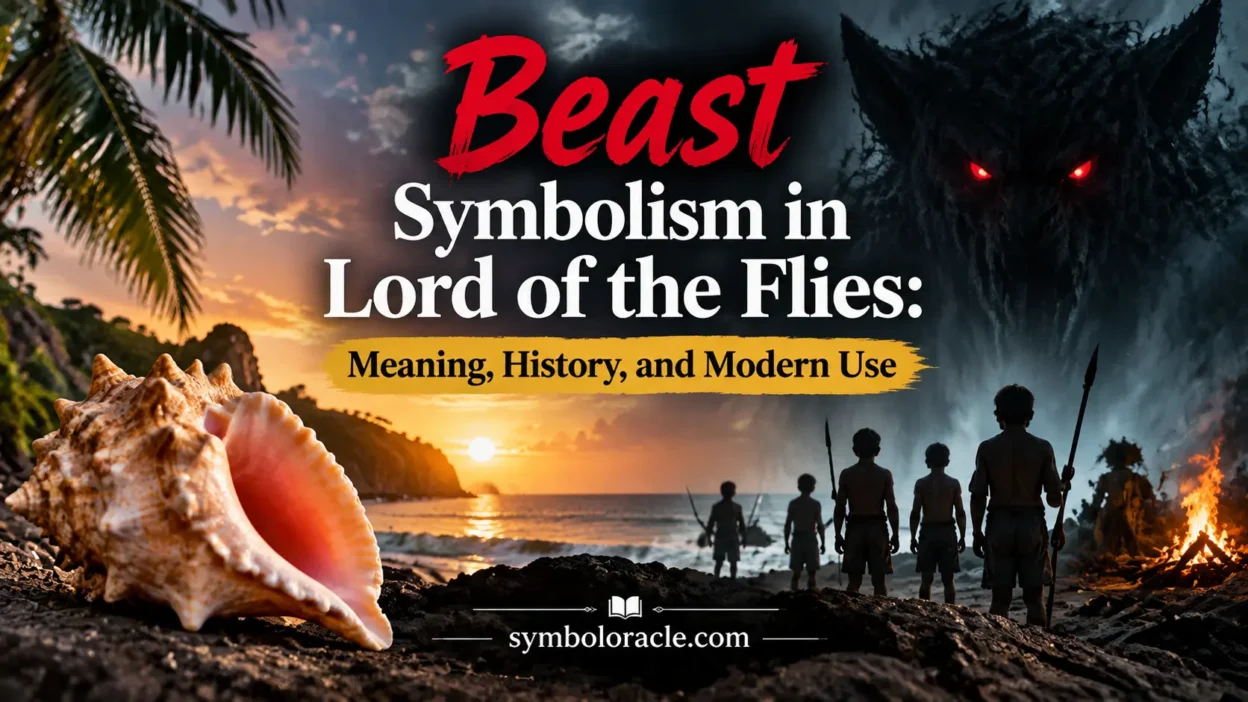
William Golding’s novel Lord of the Flies uses the idea of a “beast” to explore fear, human nature, violence, and the struggle between civilization and chaos. Beast symbolism in Lord of the Flies represents the fears people create when they face uncertainty, but it also reflects the darker impulses that can exist within human behavior.
The beast is not simply a physical creature in the story. It becomes a symbol of fear, imagination, guilt, and the hidden parts of human nature that appear when social rules disappear. Golding’s use of this symbol continues to interest American readers because the themes connect with modern discussions about leadership, group behavior, conflict, and morality.
In the United States, the novel is often studied in schools because it raises questions about whether people are naturally cooperative or whether fear and competition can lead communities toward destruction.
Quick Answer
Beast symbolism in Lord of the Flies commonly represents fear, the unknown, and the destructive instincts humans may hide beneath civilized behavior. In literature and modern American discussions, the beast also reflects psychological struggles between order, morality, and chaos.
TL;DR
- The beast represents fear and imagined threats.
- Golding connects the beast with human violence.
- The symbol reflects conflict between civilization and chaos.
- American readers often view it as a lesson about society.
- The beast remains relevant in modern culture.
What the Beast Represents in Lord of the Flies
The beast is one of the most important symbols in William Golding’s novel because it changes meaning as the story develops. At first, the young boys stranded on the island believe the beast is a dangerous creature hiding somewhere nearby.
Their fear grows because they cannot see or understand the threat. The unknown becomes frightening, and the boys begin to organize their lives around avoiding something they cannot prove exists.
As the story continues, the beast becomes less about an external monster and more about the fear and violence inside human beings. Golding suggests that the greatest danger may not come from outside forces but from human choices.
The beast symbolizes the idea that people can create their own fears and sometimes allow those fears to control their actions.
The Literary Role of the Beast in Golding’s Novel
William Golding published Lord of the Flies in 1954 during a period when the world was still dealing with the effects of World War II. The novel reflected concerns about human aggression, political conflict, and the limits of civilization.
The beast serves as a literary device that allows Golding to examine human behavior. Instead of directly explaining human darkness, he uses a symbol that the characters must confront.
The boys’ belief in the beast changes the way they behave. Their fear influences their decisions, creates division, and allows certain characters to gain power by promising protection.
The symbol shows how fear can affect communities when people do not question their assumptions.
Ancient Roots of Monster and Beast Symbolism
The use of beasts as symbols has existed in stories for thousands of years. Across mythology and folklore, creatures often represented dangers, human weaknesses, or forces beyond human control.
Ancient Greek myths included creatures such as the Minotaur and the Hydra, which represented challenges that heroes needed to overcome. Religious traditions also used animal imagery to represent temptation, evil, strength, or moral struggles.
Golding builds on this long tradition but changes the meaning. Instead of placing the beast outside humanity, he suggests that the real conflict exists within people themselves.
The beast becomes a modern version of an ancient symbolic idea: the struggle between human values and destructive instincts.
Why Fear Creates the Beast in the Story
Fear is the foundation of the beast’s symbolism. The boys are isolated from the world they know, and their uncertainty creates anxiety.
Without adults, rules, or familiar systems, they begin searching for something to explain their situation. The beast becomes a focus for their fear.
This reflects a common human response to uncertainty. When people feel threatened, they may create explanations based on emotions rather than evidence.
In modern American culture, this idea appears in discussions about rumors, misinformation, and social panic. The beast represents how fear can become powerful even when the original threat is unclear.
The Beast and Human Nature
One of Golding’s central ideas is that civilization does not completely remove human aggression. The rules of society can control behavior, but people may still experience anger, jealousy, and the desire for power.
The beast represents these hidden impulses.
The novel suggests that darkness is not only found in villains or outsiders. It can appear through ordinary people when social structures collapse.
This interpretation has made the beast an important symbol in conversations about psychology, leadership, and group behavior.
| Context | Meaning in the USA | Common Associations | Notes |
|---|---|---|---|
| Literature classes | Human fear and violence | Morality, society, conflict | Commonly studied in schools |
| Psychology discussions | Hidden instincts | Emotions, aggression, fear | Connects with human behavior |
| Leadership studies | Power struggles | Control, influence, decision-making | Shows effects of fear-based leadership |
| Popular culture | Inner conflict | Personal struggles, identity | Appears in modern storytelling |
The Beast Symbolizes the Breakdown of Civilization
The boys begin the story trying to create rules and maintain order. They hold meetings, create responsibilities, and attempt to follow democratic ideas.
However, their society slowly breaks apart.
The beast becomes a symbol that shows how fragile civilization can be. When fear becomes stronger than cooperation, people may abandon shared values.
The novel does not suggest that civilization is meaningless. Instead, it shows that communities require responsibility, trust, and moral choices to survive.
This message remains relevant in the United States, where discussions about social responsibility and community relationships continue.
The Beast and the Conch Shell Connection
The conch shell is another major symbol in Lord of the Flies, representing order, authority, and democratic discussion.
The beast contrasts with the conch. While the conch represents rules and cooperation, the beast represents fear and disorder.
As the boys lose respect for the conch, the influence of the beast grows stronger.
Together, these symbols show a conflict between two forces: the desire for organized society and the pull toward chaos.
Religious and Moral Interpretations of the Beast
Some readers interpret the beast through religious symbolism. The idea of an inner struggle between good and evil appears in many religious traditions.
The beast can be viewed as a representation of temptation, sin, or the moral challenges humans face.
However, Golding’s symbol is not limited to one religious interpretation. The novel allows readers to explore broader questions about responsibility, guilt, and human choices.
Different readers may understand the beast according to their own cultural and moral perspectives.
How Americans Understand the Beast Symbol Today
In the United States, the beast is often interpreted as a symbol of internal struggles rather than a literal monster.
Students commonly discuss it as a representation of fear, violence, and the consequences of losing social responsibility.
The symbol also connects with modern topics such as:
- fear-driven decisions
- group pressure
- conflict between individuals and communities
- the importance of ethical leadership
Because these issues continue to appear in everyday life, the beast remains meaningful for modern audiences.
Psychological Meaning of the Beast Symbol
From a psychological perspective, the beast represents fears that people may project onto the world around them.
Humans often create symbols to understand difficult emotions. A monster or beast can represent anxiety, uncertainty, or parts of ourselves that we do not want to acknowledge.
In Lord of the Flies, the boys struggle because they believe the danger exists outside them. The deeper message is that their own behavior becomes the real threat.
The beast can therefore represent the conflict between self-control and impulse.
The Beast in Modern Media and Popular Culture
The idea of an inner beast appears frequently in modern movies, books, and television.
Many stories use monsters or creatures to represent personal struggles rather than actual enemies. Characters may fight external threats while also confronting fear, anger, or guilt within themselves.
This connection keeps the symbolism of the beast familiar to modern audiences.
In American entertainment, similar themes appear in stories about survival, identity, and moral choices.
Tattoo and Personal Symbolism of the Beast
Although Lord of the Flies is not commonly associated with a specific tattoo tradition, the idea of a beast can appear in personal symbolism.
People who choose beast imagery may use it to represent:
- overcoming fear
- personal strength
- inner conflict
- survival
- independence
The meaning depends heavily on the individual and the specific creature shown.
A lion, wolf, or mythical beast may communicate different ideas than Golding’s symbolic beast, which focuses more on fear and human behavior.
Common Misunderstandings About the Beast Symbol
One common misunderstanding is that the beast represents only evil.
The symbol is more complex. It represents fear, but it also represents the human capacity for violence and the psychological forces behind harmful choices.
Another misunderstanding is that the beast is simply an imaginary creature. While the boys imagine a physical monster, the deeper meaning comes from what the idea of the beast reveals about them.
The symbol works because it connects an imagined threat with real human behavior.
How the Meaning of the Beast Has Changed Over Time
When Lord of the Flies was first published, many readers connected the beast with concerns about war and human destruction.
Over time, interpretations expanded. Modern readers often connect the symbol with psychology, social behavior, leadership, and community problems.
The core meaning remains connected to fear and human nature, but each generation finds new ways to understand the symbol.
This ability to support different interpretations is one reason the novel continues to be discussed.
Frequently Asked Questions
What does the beast symbolize in Lord of the Flies?
The beast symbolizes fear, violence, and the darker parts of human nature. It represents both the imagined danger the boys fear and the real danger created by their own actions.
Is the beast a real creature in Lord of the Flies?
No, the beast is not a traditional monster. The boys believe it exists, but its main importance comes from what it represents psychologically and socially.
Why are the boys afraid of the beast?
The boys fear the beast because they are isolated, uncertain, and separated from normal society. Their fear grows as they struggle to understand their situation.
What does the beast symbolize in modern American culture?
Many Americans interpret the beast as a symbol of fear, social conflict, and personal struggles. It is often discussed as a lesson about responsibility and human behavior.
Is the beast a symbol of evil?
The beast can represent destructive behavior, but it is not only a symbol of evil. It also represents fear, insecurity, and the challenges humans face when controlling their impulses.
How is the beast different from other monster symbols?
Many monster symbols represent an outside threat. The beast in Lord of the Flies is different because it reflects problems that exist within human beings themselves.
Conclusion
The beast in Lord of the Flies remains one of literature’s clearest symbols of fear, human conflict, and the struggle between civilization and chaos. William Golding uses the idea of the beast to show that people often fear outside dangers while ignoring the challenges within themselves.
Beast symbolism in Lord of the Flies continues to matter because its message applies beyond the fictional island. It encourages readers to think about how fear influences decisions, how communities respond to uncertainty, and how individuals choose between cooperation and destruction.
The symbol remains relevant because it reflects a question that every society must consider: how can people protect their values when facing fear and conflict?


