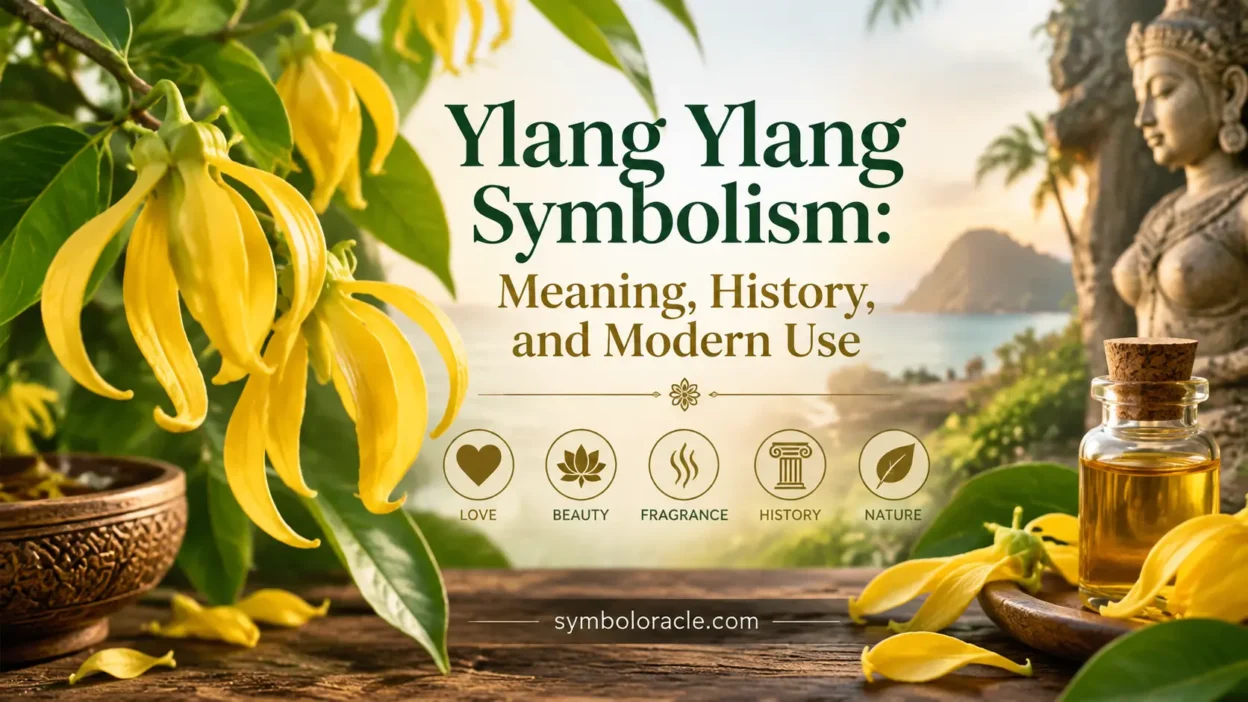
Ylang ylang symbolism is often connected with love, relaxation, beauty, and emotional balance in modern American culture. This tropical flower, known for its sweet fragrance and delicate appearance, has gained attention in aromatherapy, personal care, weddings, and home design. Its meaning comes from a combination of traditional uses, cultural practices, and the feelings people associate with its scent.
The ylang ylang flower grows on the Cananga tree, a tropical plant native to parts of Southeast Asia. Its long, narrow petals and strong floral aroma have made it valued not only as a botanical ingredient but also as a symbol of affection, calmness, and natural beauty.
Today, Americans often encounter ylang ylang in essential oils, perfumes, candles, skincare products, and wellness spaces. Understanding its symbolism helps explain why this flower continues to appear in settings connected with comfort, romance, and self-care.
Quick Answer
Ylang ylang symbolism commonly represents love, relaxation, emotional harmony, and beauty in modern American culture, especially in wellness, fragrance, and personal spaces. Historically, the flower has been associated with romance, celebration, and traditional healing practices in tropical regions.
TL;DR
- Ylang ylang represents love, calm, and emotional connection.
- The flower originated from Southeast Asian tropical traditions.
- Americans associate it with wellness and relaxation.
- Its fragrance influences perfume and self-care culture.
- Weddings often use it for romantic symbolism.
- Modern meanings focus on comfort and balance.
What Is the Ylang Ylang Flower?
Ylang ylang comes from the flowers of the Cananga odorata tree, a tropical evergreen found in regions such as Indonesia, the Philippines, and other parts of Southeast Asia. The flower has long, drooping petals that usually appear yellow-green before becoming more intensely yellow as they mature.
Unlike many flowers valued mainly for their appearance, ylang ylang is especially recognized for its fragrance. The scent is sweet, floral, and slightly exotic, which makes it a popular ingredient in perfumes and aromatic products.
The flower is harvested for its essential oil, which is used in fragrance production and traditional practices. Because scent often creates strong emotional memories, ylang ylang became connected with feelings of affection, comfort, and peaceful environments.
What Does Ylang Ylang Commonly Symbolize in the United States?
In the United States, ylang ylang is mainly viewed as a symbol of relaxation, romance, and personal well-being. Many people encounter it through aromatherapy, candles, bath products, and beauty items rather than through traditional flower symbolism.
Its meanings are often shaped by modern wellness culture. A person using ylang ylang oil may associate it with creating a calm home atmosphere, reducing everyday stress, or making a personal space feel more inviting.
The flower is also connected with:
| Context | Meaning in the USA | Common Associations | Notes |
|---|---|---|---|
| Aromatherapy | Calm and relaxation | Stress relief, peaceful spaces | Common in wellness products |
| Romance | Love and attraction | Perfume, couples, intimacy | Linked with floral fragrance |
| Home decor | Comfort and beauty | Candles, scents, relaxation areas | Creates a welcoming feeling |
| Weddings | Affection and celebration | Bouquets, decorations | Used for romantic themes |
| Personal care | Self-confidence and care | Skincare, perfumes | Associated with beauty routines |
Ancient Roots and Early Cultural Symbolism
Ylang ylang has deep connections with tropical Asian cultures where the flower grew naturally. In regions such as the Philippines and Indonesia, communities used the flower for celebrations, traditional practices, and personal decoration.
In some Southeast Asian traditions, ylang ylang flowers were placed in homes, used in ceremonies, or worn because of their pleasant fragrance. The flower became connected with hospitality and social gatherings because its scent helped create an inviting environment.
The exact symbolic meanings varied between communities. Some traditions emphasized romance, while others focused more on beauty, celebration, or spiritual practices.
Rather than having one universal meaning, ylang ylang developed different associations depending on the culture using it.
Ylang Ylang in Romance, Love, and Relationships
Ylang ylang is strongly linked with romance because of its fragrance and historical use in personal and ceremonial settings.
Flowers have long played a role in expressing emotions, and ylang ylang became associated with affection because people used it in situations involving relationships and celebrations. Its sweet scent created an atmosphere that many connected with closeness and attraction.
In modern American culture, ylang ylang appears in:
- romantic candles
- couples’ wellness products
- perfumes
- wedding arrangements
- anniversary gifts
The symbolism is usually emotional rather than formal. People often choose ylang ylang because it represents creating a warm, intimate environment.
The Connection Between Ylang Ylang and Relaxation
One of the strongest modern meanings of ylang ylang is relaxation. Its essential oil is widely used in aromatherapy, where people associate certain scents with emotional comfort and peaceful routines.
Many Americans use ylang ylang fragrance in:
- meditation spaces
- bedrooms
- bath products
- massage oils
- home diffusers
The flower does not represent relaxation because of a single ancient rule. Instead, its meaning developed through repeated human experiences with its scent and the environments where it is commonly used.
For many people, ylang ylang represents taking time for themselves and creating moments of calm in busy daily life.
Emotional and Psychological Meaning of Ylang Ylang
Flowers often gain symbolic meanings because humans connect natural objects with emotions. Ylang ylang’s scent, appearance, and traditional uses have contributed to several emotional associations.
Common emotional interpretations include:
- Comfort: The fragrance can create a familiar and soothing atmosphere.
- Affection: Its romantic use connects it with caring relationships.
- Confidence: Perfume and beauty products often use it to represent personal expression.
- Balance: Wellness communities connect it with peaceful routines.
These meanings are personal interpretations rather than fixed psychological rules. Different people may experience the scent differently based on memories, culture, and individual preferences.
Ylang Ylang Symbolism in Weddings and Celebrations
Ylang ylang can appear in weddings because flowers often represent love, commitment, and celebration. Its tropical appearance and fragrance make it attractive for ceremonies with romantic or natural themes.
In the United States, couples may choose ylang ylang-inspired elements for:
- floral arrangements
- wedding scents
- decorative themes
- gift items
The flower fits especially well with outdoor weddings, beach themes, and celebrations that emphasize nature.
Its symbolism in weddings is usually based on ideas of affection, beauty, and creating memorable experiences.
Cross-Cultural Meanings of Ylang Ylang
Different cultures have developed their own relationships with ylang ylang.
In parts of Southeast Asia, the flower has been connected with traditional ceremonies, beauty practices, and community celebrations. Its fragrance made it valuable in social and personal settings.
In modern global culture, including the United States, ylang ylang has become strongly connected with wellness, fragrance, and lifestyle products.
The meaning has shifted from being mainly regional to becoming part of international beauty and self-care culture.
Ylang Ylang in Perfume, Beauty, and Fashion
The perfume industry has played a major role in spreading ylang ylang symbolism. Because of its distinctive floral scent, it became an important ingredient in luxury fragrances and personal care products.
In beauty culture, ylang ylang often communicates:
- elegance
- femininity
- natural beauty
- sophistication
Many people associate floral fragrances with identity and mood. Choosing a scent can become a way of expressing personality, making ylang ylang part of personal symbolism.
Why People Use Ylang Ylang in Home Decor
Home fragrance has become a major part of modern American lifestyle culture. Candles, diffusers, and room sprays allow people to shape how their homes feel.
Ylang ylang is often chosen for spaces designed to feel:
- peaceful
- welcoming
- comfortable
- romantic
A flower’s symbolism in home decor often comes from the experience it creates rather than a strict traditional meaning.
For many homeowners, ylang ylang represents creating a relaxing environment where they can recharge.
Ylang Ylang in Tattoos and Personal Symbolism
Although ylang ylang tattoos are less common than roses, lotus flowers, or lilies, some people choose the flower because of its personal meanings.
A ylang ylang tattoo may represent:
- love
- emotional healing
- peaceful living
- appreciation for nature
- personal growth
The meaning depends heavily on the individual. Tattoo symbolism is usually a personal statement rather than a fixed cultural message.
Some people choose ylang ylang because it reminds them of a special place, relationship, or life experience.
Common Misunderstandings About Ylang Ylang Symbolism
A common misunderstanding is that every flower has one universal meaning. In reality, flower symbolism changes across cultures and time periods.
Ylang ylang is sometimes described with exaggerated spiritual claims that are not shared across all traditions. Historical uses and personal beliefs should be separated from claims that present symbolism as a guaranteed fact.
The most widely accepted meanings of ylang ylang come from its fragrance, cultural uses, and modern associations with beauty and relaxation.
How Ylang Ylang Meaning Has Changed Over Time
The symbolism of ylang ylang has evolved as the flower moved from local traditions into global markets.
Originally, many meanings developed from everyday use in tropical communities. Later, international trade introduced ylang ylang oil to perfume and wellness industries.
Today, the flower represents a mixture of:
- traditional floral appreciation
- modern self-care culture
- romantic symbolism
- natural beauty trends
Its meaning continues to change as new generations use it in different ways.
Modern Uses of Ylang Ylang Symbolism in American Culture
In 2025–2026, ylang ylang appears in many areas of American lifestyle culture.
Common modern uses include:
- essential oil products
- wellness brands
- luxury fragrances
- natural beauty products
- wedding designs
- home scent collections
- social media lifestyle content
The flower fits current interests in mindfulness, personal spaces, and natural ingredients.
Rather than representing one specific idea, ylang ylang now reflects a combination of emotional comfort, beauty, and intentional living.
Frequently Asked Questions About Ylang Ylang Symbolism
What does ylang ylang symbolize?
Ylang ylang commonly symbolizes love, relaxation, beauty, and emotional comfort. In modern American culture, it is often connected with wellness routines, fragrance, and romantic settings.
Is ylang ylang a symbol of love?
Yes, ylang ylang is often associated with love because of its historical use in romantic and ceremonial contexts. Its sweet fragrance has helped create connections with affection and intimacy.
What does ylang ylang mean in weddings?
In weddings, ylang ylang can represent romance, celebration, and creating a memorable atmosphere. Couples may use it in floral designs or scents because of its elegant fragrance.
Does ylang ylang have spiritual symbolism?
Some cultures connect ylang ylang with traditional ceremonies and personal rituals. However, spiritual meanings vary, and there is no single interpretation shared by all groups.
What does a ylang ylang tattoo symbolize?
A ylang ylang tattoo may represent love, calmness, nature, or personal memories. The meaning usually depends on the person who chooses the design.
Why is ylang ylang used in perfumes?
Ylang ylang is used in perfumes because of its rich floral scent and ability to blend with other fragrance notes. Its aroma has become associated with elegance and personal expression.
Is ylang ylang symbolism positive or negative?
Ylang ylang symbolism is generally positive, with associations involving beauty, affection, and relaxation. Negative interpretations are uncommon and usually come from individual experiences rather than traditional meanings.
Conclusion
Ylang ylang has developed a wide range of meanings through its fragrance, cultural history, and modern uses. In the United States, it is mainly recognized as a symbol of love, relaxation, beauty, and personal comfort.
While traditions have shaped its associations over time, people today often connect the flower with creating peaceful spaces, expressing affection, and enjoying natural beauty. Ylang ylang symbolism continues to evolve as it appears in wellness, design, fragrance, and personal expression.
The flower’s meaning comes not from one fixed definition but from the experiences and emotions people attach to it.


