
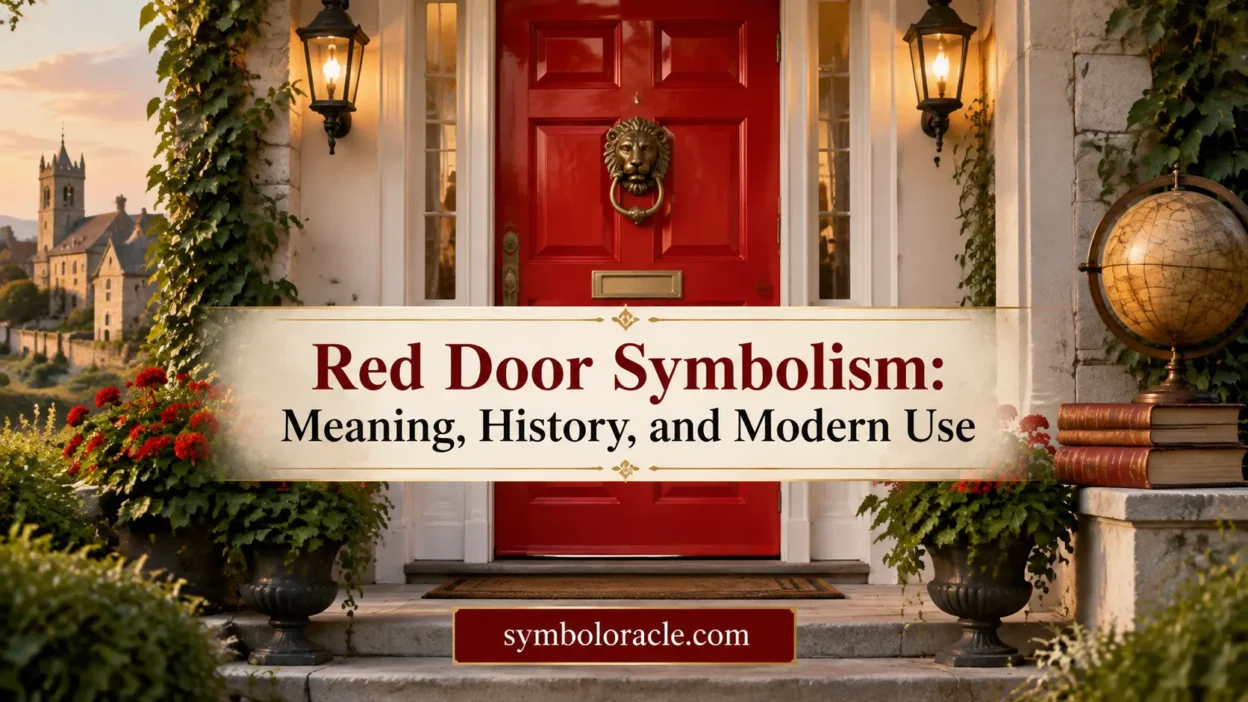
A red door is more than a bright design choice. Across homes, churches, historic buildings, and modern spaces, the Red Door Symbolism often represents welcome, protection, identity, and transformation. In the United States, people commonly choose red doors to create a warm entrance, show personality, or connect with traditions that give the color special meaning.
The meaning behind a red door changes depending on location, culture, and personal belief. Some people see it as a sign of hospitality, while others connect it with strength, celebration, or spiritual ideas. Understanding these meanings helps explain why red doors continue to appear in American neighborhoods, architecture, and personal spaces.
A red front door can make a home feel memorable and inviting, but its meaning goes beyond appearance. The color red has carried emotional and cultural associations for centuries, and doors have long represented the boundary between private life and the outside world.
Quick Answer
Symbolism of a red door commonly represents welcome, warmth, protection, and a positive entrance in modern American culture. Historically, red doors have also been connected with religious traditions, hospitality, safety, and important life transitions.
TL;DR
- Red doors often symbolize welcome and hospitality.
- Churches used red doors for spiritual meanings.
- American homes use red doors for personality.
- Red represents energy, confidence, and warmth.
- Door symbolism connects with life transitions.
- Modern designs use red for visual identity.
What a Red Door Represents in Modern American Culture
In the United States, a red door is often viewed as a friendly and noticeable entrance. Many homeowners choose this color because it creates a feeling of warmth and makes a house stand out from surrounding properties.
A red door can communicate confidence. Unlike neutral colors such as white, gray, or beige, red attracts attention and suggests that the people inside are comfortable expressing individuality. For some homeowners, it reflects creativity and a desire to make their property feel unique.
The meaning is not fixed. A person may choose a red door simply because they like the color. However, cultural associations influence how many people interpret it. Visitors often connect a red entrance with friendliness, celebration, or a welcoming atmosphere.
Why Doors Carry Symbolic Meaning
Doors have always represented more than physical entry points. They mark the space between inside and outside, private and public, familiar and unknown.
Because of this role, doors appear in many symbolic traditions. Walking through a doorway can represent entering a new stage of life, beginning a journey, or leaving something behind. Weddings, funerals, religious ceremonies, and cultural celebrations often include door-related traditions.
The color placed on a door adds another layer of meaning. Red is one of the most emotionally noticeable colors, so combining red with a doorway creates a symbol that people naturally remember.
The Historical Roots of Red Door Traditions
The meaning of red doors developed through different traditions rather than coming from one single origin. Various cultures connected red with important ideas such as protection, celebration, and spiritual significance.
In some Christian traditions, red doors became associated with churches and sacred spaces. The color could represent the blood of Christ, sacrifice, and faith. Some historic churches painted their doors red as a visual reminder of religious beliefs.
In other settings, red doors represented safety and importance. A clearly visible entrance helped identify significant buildings and created a sense of distinction.
The exact meaning depended on the community using the symbol. A red door in one region might carry religious meaning, while another might simply represent wealth, style, or hospitality.
Religious Meaning of Red Doors
Red doors have a noticeable place in Christian architecture, especially among some churches and historic religious buildings. The color red can symbolize sacrifice, devotion, and spiritual commitment.
Some churches use red doors to represent the blood of Jesus Christ and important moments in Christian history. Others associate the color with the presence of faith and the importance of the building as a sacred gathering place.
In some Protestant traditions, a red church door has also been linked with sanctuary. Historically, churches could provide protection for people seeking safety, and a distinctive entrance helped identify the church as a place of refuge.
However, not every red church door has the same meaning. Some churches choose red because it matches architectural style, restoration choices, or local traditions.
Red Doors and Hospitality Traditions
One of the most common meanings connected with red doors is hospitality. A red entrance can suggest that guests are welcome and that the home is a place of connection.
This idea appears in several cultural traditions where homes and gathering spaces use noticeable entrances to communicate openness. A bright door makes an invitation feel more visible.
In American neighborhoods, red doors are often associated with friendly homes where people want their entrance to feel inviting. The meaning is especially common in residential design, where homeowners use color to influence the emotional feeling of a space.
A red door does not guarantee a welcoming personality, but it can create that first impression.
The Meaning of Red in Color Psychology
Red is one of the strongest colors in human perception. It is commonly associated with energy, passion, courage, and attention.
Because red naturally stands out, it is often used where people need to notice something quickly. This includes signs, branding, sports uniforms, and architectural details.
When used on a door, red can make an entrance feel active and memorable. It may suggest confidence and personality rather than quiet simplicity.
At the same time, red can have different emotional effects. Some people see it as exciting and warm, while others may associate it with intensity or urgency. Personal experiences and cultural background influence interpretation.
Red Doors in American Home Design
Modern American homeowners often use red doors as a design statement. The color can work with traditional houses, farmhouses, brick homes, and contemporary architecture.
A red door can create contrast against common exterior colors such as:
- White siding
- Gray walls
- Natural wood
- Stone exteriors
- Dark roofing
Interior designers often use red doors when they want an entrance to become a focal point. The door becomes an element of personality rather than just a functional part of the building.
In many neighborhoods, a colorful front door reflects the homeowner’s taste and willingness to experiment with design.
Red Doors and Personal Identity
A front door is one of the first things people notice about a home. Because of this, color choices can become a form of personal expression.
A red door may communicate that a homeowner values:
- Creativity
- Confidence
- Tradition
- Hospitality
- Strong visual style
For some people, painting a door red represents a fresh start or a change in identity. A simple renovation can mark a new chapter, such as moving into a new home or creating a different atmosphere.
The meaning comes from both cultural associations and personal intention.
Red Door Symbolism in American Public Spaces
Red doors appear not only on private homes but also on public buildings, historic properties, and community spaces across the United States. Their meaning often depends on the purpose of the building and the people who use it.
Historic buildings sometimes preserve red doors because they reflect architectural traditions from earlier periods. A red entrance can help a structure feel important or recognizable without requiring large decorative changes.
In some communities, red doors appear on buildings connected with gathering, service, or celebration. The color can create a sense of openness and make an entrance easier to identify.
American interpretation of a red door is usually flexible. Unlike some symbols with strict meanings, a red door often combines tradition with personal style.
Cross-Cultural Meanings of Red Doors
Although red doors are popular in the United States, similar ideas appear in different cultures around the world. Red has been an important color in many societies, but its meaning changes depending on history and tradition.
In some Chinese traditions, red represents luck, happiness, celebration, and prosperity. A red entrance may be used during important events or celebrations because the color is considered positive.
In European traditions, red doors have sometimes been connected with churches, protection, and social identity. Historic homes and religious buildings occasionally used red entrances to create a memorable appearance.
In Scottish tradition, a red door has sometimes been associated with a homeowner who has paid off their mortgage, although this interpretation is more of a modern cultural story than a universal historical rule.
These examples show that red doors do not have one global definition. Their meaning develops from local customs, beliefs, and personal choices.
Red Door Symbolism in Literature and Popular Culture
Doors frequently appear in stories because they represent choices, opportunities, and changes. When a writer describes a red door, the color often adds emotional meaning to the scene.
A red door in fiction may suggest:
- A hidden opportunity
- A turning point
- A memorable location
- A character’s personality
- A sense of curiosity
Writers and filmmakers use colors carefully because viewers naturally connect colors with emotions. A red door can create a strong visual image that helps audiences remember a location or understand a character’s situation.
However, the meaning depends on the story. A red door does not automatically represent danger, mystery, or romance. Context determines interpretation.
Emotional and Psychological Meaning of a Red Door
The emotional effect of a red door comes from the combination of color and location. A door is already a meaningful object because it represents entry, movement, and connection. Adding red creates a stronger visual signal.
Psychologically, people often notice red faster than many other colors. This attention-grabbing quality can make a red doorway feel important or inviting.
Some emotional associations include:
| Context | Meaning in the USA | Common Associations | Notes |
|---|---|---|---|
| Home entrance | Welcome and personality | Warmth, friendliness | Often chosen for curb appeal |
| Church doorway | Faith and devotion | Spiritual connection | Meaning varies by denomination |
| Historic building | Tradition and importance | Heritage, identity | Often preserved for style |
| Interior design | Confidence and creativity | Energy, boldness | Used as an accent color |
| Personal artwork | Individual expression | Change, emotion | Depends on the creator |
A red door can create a feeling before someone even enters a space. This is why many designers consider entrance colors an important part of a building’s personality.
Red Doors in Tattoos and Personal Style
Red door tattoos are less common than symbols like hearts, roses, or animals, but when they appear, they often represent personal experiences rather than a fixed meaning.
A person may choose a red door tattoo to represent:
- A new beginning
- A meaningful home
- A place from childhood
- A personal transformation
- An important memory
The doorway itself can represent movement between different parts of life, while the red color adds emotional intensity.
Tattoo symbolism is always personal. Two people with similar red door tattoos may have completely different reasons for choosing the design.
Red Doors in Holidays and Seasonal Decoration
Red is strongly connected with many American celebrations, especially during the winter holiday season. Red doors often appear with wreaths, lights, and seasonal decorations.
During Christmas, red doors may contribute to feelings of warmth, tradition, and celebration. The color connects with familiar holiday themes such as:
- Holly berries
- Santa Claus traditions
- Holiday decorations
- Family gatherings
Outside of holidays, some homeowners keep red doors year-round because they enjoy the welcoming appearance. The color can create a festive feeling without being limited to one season.
Common Misunderstandings About Red Door Symbolism
Because symbols change across cultures, some claims about red doors become exaggerated. A common mistake is assuming every red door has a hidden message.
For example, some people believe every red door means a specific thing, such as wealth, protection, or a particular social status. These ideas may come from certain traditions but are not universal rules.
A homeowner may paint a door red simply because:
- They like the color.
- It matches the house.
- They want a bold design choice.
- They enjoy a classic look.
Symbolism adds meaning, but personal preference remains one of the biggest reasons people choose this color.
Positive and Negative Interpretations of Red Doors
Red doors are usually connected with positive ideas, but interpretations can vary.
Positive associations include:
- Welcome
- Courage
- Celebration
- Protection
- Confidence
- Energy
Possible negative associations may include:
- Intensity
- Anger
- Warning
- Aggression
These interpretations depend heavily on context. A red door on a cheerful home may feel inviting, while the same color used in a different setting may create another impression.
The meaning comes from the environment, culture, and individual perception.
How Red Door Meaning Has Changed Over Time
The symbolism of red doors has evolved as societies changed. Earlier meanings often connected the color with religion, protection, or social traditions.
Today, many Americans view red doors mainly through the lens of design and personal expression. A homeowner may appreciate traditional meanings while also choosing the color simply because it creates a beautiful entrance.
Modern culture has expanded the meaning rather than replacing older interpretations. Religious, historical, emotional, and design meanings can exist together.
Why Red Doors Remain Popular Today
Red doors continue to attract attention because they combine simplicity with strong visual impact. A person does not need extensive decoration to make an entrance memorable.
In modern America, red doors appear in:
- Residential neighborhoods
- Interior design projects
- Historic restorations
- Photography
- Social media home tours
- Architectural features
Their popularity comes from flexibility. A red door can look traditional, modern, elegant, playful, or dramatic depending on the surrounding design.
The symbol remains popular because it allows people to express identity while connecting with familiar cultural ideas.
Frequently Asked Questions About Red Door Symbolism
What does a red door symbolize in American culture?
A red door commonly symbolizes welcome, warmth, and personal expression in American culture. Many homeowners choose red doors because they create an inviting entrance and make a home feel distinctive.
Does a red door have a religious meaning?
In some Christian traditions, red doors represent faith, sacrifice, and spiritual importance. However, many red doors today are chosen for design reasons rather than religious symbolism.
What does a red door mean on a house?
A red door on a house often suggests hospitality, confidence, and a welcoming personality. It may also simply reflect the homeowner’s favorite color or design preference.
Are red doors considered good luck?
Some cultures associate red with good fortune, protection, or prosperity. However, beliefs about luck vary, and there is no universal rule that every red door brings good luck.
What does a red door tattoo symbolize?
A red door tattoo may represent a new chapter, a meaningful place, personal memories, or transformation. The meaning depends on the person wearing the tattoo.
Why do churches have red doors?
Some churches use red doors to represent Christian beliefs, including sacrifice and devotion. Others use them because of historical architectural traditions or visual style.
Is a red door always a positive symbol?
A red door is often viewed positively, but meanings can change depending on context. The same color may suggest warmth in one setting and intensity in another.
Conclusion
A red door is a simple architectural feature with many layers of meaning. In the United States, it is most commonly associated with welcome, individuality, and a memorable entrance, while historical traditions connect it with faith, protection, and important spaces.
The symbolism of a red door continues to change as people use the color in homes, art, architecture, and personal expression. Its meaning depends on culture, history, and the intention behind the choice.
Whether found on a historic church, a family home, or a modern design project, a red door remains a recognizable symbol of entrance, identity, and connection.


