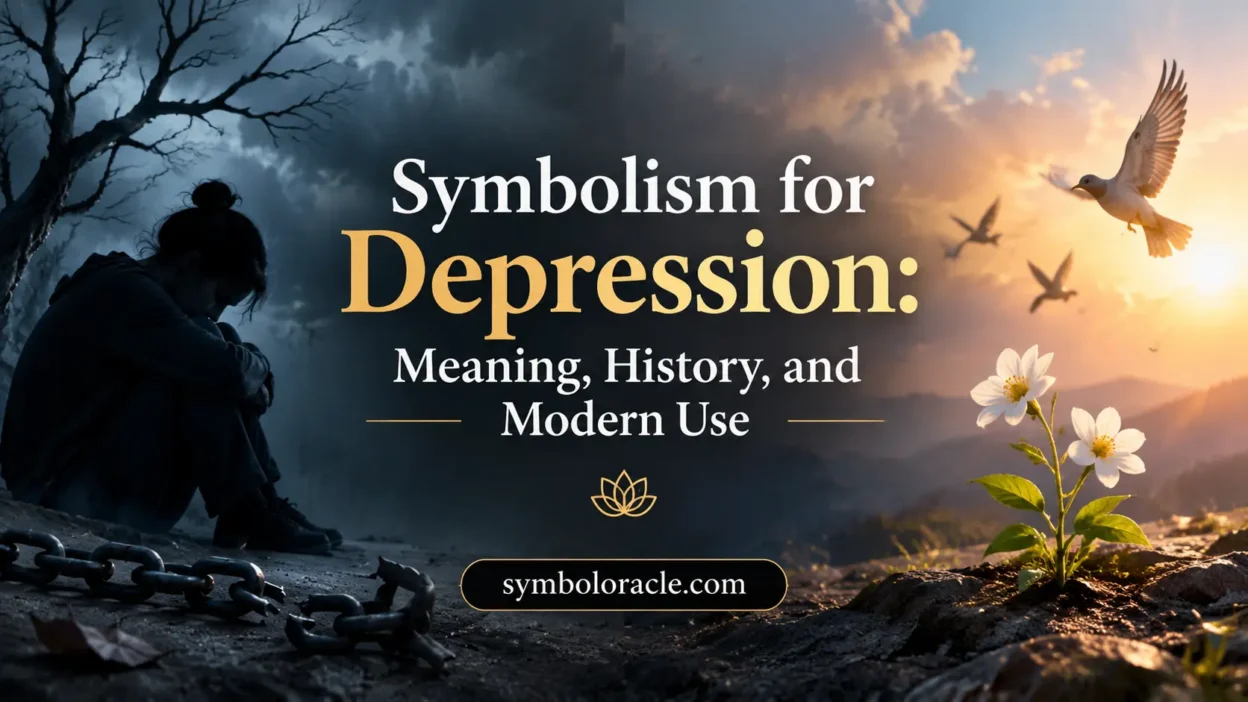
Depression is a complex human experience that has often been represented through symbols, colors, objects, and artistic expressions. Symbolism for depression helps people communicate emotions that can be difficult to describe with words, including sadness, isolation, exhaustion, grief, and the search for healing.
Across American culture, symbols connected with depression appear in art, literature, tattoos, mental health awareness campaigns, and personal expression. These symbols do not define depression itself, but they provide visual ways for people to discuss emotional struggles and recovery.
Understanding these symbols requires looking at history, psychology, and modern cultural use. A symbol that represents sadness in one setting may represent resilience, awareness, or hope in another.
Quick Answer
Symbolism for depression commonly represents emotional pain, loneliness, internal struggle, and the need for understanding in modern American culture. Historically, symbols connected with darkness, storms, and mourning have expressed grief and hardship, while modern symbols often focus on awareness, support, and recovery.
TL;DR
- Depression symbols express difficult emotions and personal experiences.
- Dark imagery often represents sadness, isolation, and struggle.
- Modern symbols promote awareness and emotional support.
- Art provides a language for invisible mental health challenges.
- Meanings vary across cultures, individuals, and situations.
What Depression Symbols Represent in Modern America
In the United States, symbols associated with depression are often used to make invisible emotional experiences visible. Depression is a mental health condition, but many people experience it differently. Some describe it as emptiness, while others describe it as feeling disconnected, overwhelmed, or unable to find motivation.
Because emotions are difficult to display physically, people often turn to visual symbols. A drawing, tattoo, color choice, or object can communicate feelings without requiring a detailed explanation.
Common meanings associated with depression symbolism include:
- Emotional heaviness
- Loneliness and isolation
- Inner conflict
- Loss and grief
- The process of healing
- Hope after hardship
Modern interpretations have shifted away from seeing sadness only as weakness. Many Americans now use these symbols as reminders of survival, self-awareness, and conversations about mental health.
Common Symbols Associated With Depression
Depression does not have one universal symbol. Instead, different images have developed meanings based on personal experience, culture, and artistic traditions.
Some commonly recognized symbols include:
| Symbol | Meaning in the USA | Common Associations | Notes |
|---|---|---|---|
| Rain clouds | Sadness and emotional heaviness | Tears, difficult periods | Often used in art and writing |
| Broken objects | Loss or emotional pain | Trauma, change, recovery | Meaning depends on context |
| Dark colors | Serious emotions | Grief, isolation, reflection | Not always negative |
| Empty spaces | Loneliness or absence | Distance, quietness | Common in visual art |
| Butterflies | Transformation and recovery | Growth, healing | Often represents moving forward |
These symbols are not medical definitions of depression. They are cultural expressions that help people communicate emotions.
Ancient Roots of Darkness and Sadness Symbolism
The connection between darkness and sadness has existed across many societies. Before modern psychology developed, people used natural events and physical objects to describe emotional states.
Night, shadows, storms, and winter were often connected with hardship because they represented times of uncertainty or limited visibility. In literature and folklore, darkness frequently appeared as a metaphor for difficult experiences.
However, darkness did not always represent something negative. Many traditions also connected darkness with reflection, rest, mystery, and transformation.
Over time, these meanings influenced modern art and storytelling. Today, a dark image may represent emotional struggle, but it can also represent self-discovery or a period of change.
The Role of Color in Depression Symbolism
Colors are among the most common ways people express emotions. Artists, designers, and individuals often use specific colors to represent moods connected with depression.
Blue is one of the strongest examples. In American culture, the phrase “feeling blue” has long been associated with sadness. The connection between blue and melancholy appears in music, paintings, fashion, and everyday language.
Gray is another common color linked with depression symbolism. It often represents emotional numbness, uncertainty, or a lack of energy.
Black can represent grief, seriousness, or emotional pain. However, it can also symbolize strength, elegance, and protection depending on the context.
Color meanings are not fixed. A person wearing black clothing may be expressing sadness, personal style, cultural identity, or confidence.
Depression Symbolism in American Art and Literature
American artists and writers have frequently used symbols to explore emotional struggles. Literature often uses weather, landscapes, and objects to represent inner experiences.
Rain, empty rooms, abandoned places, and quiet landscapes are common artistic images connected with sadness. These symbols allow audiences to understand emotions without directly describing them.
In modern American art, depression symbolism often focuses on honesty rather than tragedy. Many creators use artwork to discuss mental health openly and challenge the idea that emotional struggles should remain hidden.
Visual storytelling has become especially important because it creates opportunities for conversations about experiences that many people find difficult to explain.
Psychological Meaning Behind Depression Symbols
From a psychological perspective, symbols help people organize and communicate emotions. Humans naturally use images and metaphors to understand complex feelings.
A person experiencing depression may connect with symbols of darkness because they reflect feelings of isolation or exhaustion. Another person may choose symbols of growth because they represent recovery.
Symbolic expression can serve several purposes:
- Communicating emotions to others
- Creating personal meaning
- Processing difficult experiences
- Building identity and connection
For many people, choosing a symbol is not about celebrating sadness. Instead, it can represent recognition of a challenge and the effort to move through it.
Depression Symbols in Tattoos and Personal Expression
Tattoos are one of the most personal forms of symbolism. Many people choose designs connected with depression because they represent experiences, memories, or personal growth.
Popular tattoo themes include:
- Rain clouds
- Broken hearts
- Semicolons
- Butterflies
- Flowers growing through difficult conditions
- Mountains or paths
The semicolon became widely recognized in mental health discussions as a symbol connected with continuing one’s story during difficult moments.
However, tattoo meanings are highly personal. The same image may represent sadness for one person and strength for another.
The Semicolon and Mental Health Awareness
The semicolon is one of the most recognizable modern symbols connected with mental health awareness. Its meaning comes from writing: a semicolon indicates a pause rather than the end of a sentence.
Many people adopted the symbol to represent choosing to continue despite emotional struggles.
In American culture, the semicolon is often associated with conversations about depression, anxiety, self-harm prevention, and emotional support.
Its meaning has also expanded beyond one specific issue. Some people use it as a general reminder of resilience and the importance of continuing through difficult periods.
Religious and Spiritual Interpretations of Depression Symbols
Different religious traditions have interpreted suffering, sadness, and emotional hardship in various ways.
Many faith traditions include stories about people experiencing despair, grief, and uncertainty. Symbols such as light after darkness, brokenness becoming restoration, or journeys through hardship often appear in religious teachings.
For some individuals, symbols connected with depression may represent faith, patience, forgiveness, or renewal.
However, depression is also understood today as a mental health condition. Religious interpretations and medical understanding can exist together, depending on personal beliefs.
Depression Symbolism in Social Media and Digital Culture
Social media has changed how people share emotional experiences. Images, emojis, illustrations, and short messages are now common ways to communicate feelings.
Online spaces often use symbols such as:
- Cloud emojis
- Rain imagery
- Black-and-white photography
- Sad artwork
- Mental health awareness graphics
These symbols can create connection by helping people recognize shared experiences.
At the same time, digital culture can sometimes simplify serious mental health topics. A symbol may represent a temporary mood rather than clinical depression, so context matters.
Positive Meanings Hidden Within Depression Symbols
Although many depression symbols begin with sadness, they often develop additional meanings over time.
A storm can represent difficulty but also the possibility of calmer weather. A broken object can represent damage but also repair. A dark period can represent struggle but also personal growth.
This shift reflects a broader change in American conversations about mental health. Many people now view emotional challenges as experiences that deserve support rather than shame.
Symbols can therefore represent both pain and progress.
Common Misunderstandings About Depression Symbolism
Depression-related symbols are sometimes misunderstood because people assume every dark image represents negativity.
For example, black clothing, gray artwork, or quiet imagery may be interpreted as sadness, but they can also express creativity, identity, or personal style.
Another misunderstanding is that symbols alone explain someone’s mental health. A tattoo or image cannot reveal a person’s emotional condition.
Symbols communicate possibilities, not complete stories. Personal meaning always matters.
How Depression Symbolism Has Changed Over Time
The meaning of depression-related symbols has changed alongside society’s understanding of mental health.
In earlier periods, sadness was often expressed through mourning traditions, religious imagery, and artistic metaphors. Modern culture has added new symbols connected with awareness, conversation, and recovery.
Today, many symbols focus less on hiding emotional pain and more on acknowledging it.
This evolution reflects changing attitudes toward mental health in the United States. People increasingly use symbolism as a way to encourage openness and support.
Depression Symbolism in Modern Design and Culture
Designers, filmmakers, musicians, and brands often use emotional symbols to create specific moods.
In movies and television, empty rooms, muted colors, rain scenes, and isolated characters are frequently used to represent emotional struggle.
In fashion and personal style, darker colors or minimalist designs may communicate seriousness, reflection, or individuality.
Modern use of depression symbolism depends heavily on context. The same image can create different meanings depending on where and how it appears.
Frequently Asked Questions
What is the most common symbol for depression?
There is no single official symbol for depression. Common representations include rain clouds, dark colors, empty spaces, and the semicolon, each carrying different meanings related to sadness, struggle, or resilience.
Does the color blue symbolize depression?
Blue is commonly associated with sadness in American culture, especially through expressions like “feeling blue.” However, blue can also represent calmness, trust, and stability.
What does a semicolon tattoo mean in mental health?
A semicolon tattoo often represents continuing one’s story through difficult experiences. Many people associate it with mental health awareness and resilience.
Are depression symbols always negative?
No. Many depression symbols include themes of healing, growth, and survival. Their meaning depends on the person using them and the surrounding context.
Why do people use symbols to represent depression?
Symbols allow people to communicate emotions that may be difficult to describe directly. They can create understanding, connection, and personal expression.
What does darkness symbolize in depression?
Darkness often represents sadness, isolation, uncertainty, or emotional difficulty. In some contexts, it can also represent reflection, transformation, and personal change.
Conclusion
Symbols connected with emotional struggles help people express experiences that are often difficult to explain. Symbolism for depression represents feelings such as sadness, isolation, and hardship while also reflecting awareness, resilience, and recovery.
In modern American culture, these symbols are used in art, tattoos, conversations, and personal identity. Their meanings continue to change as society develops a more open understanding of mental health.
A symbol cannot tell someone’s entire story, but it can create a starting point for empathy, communication, and support.


