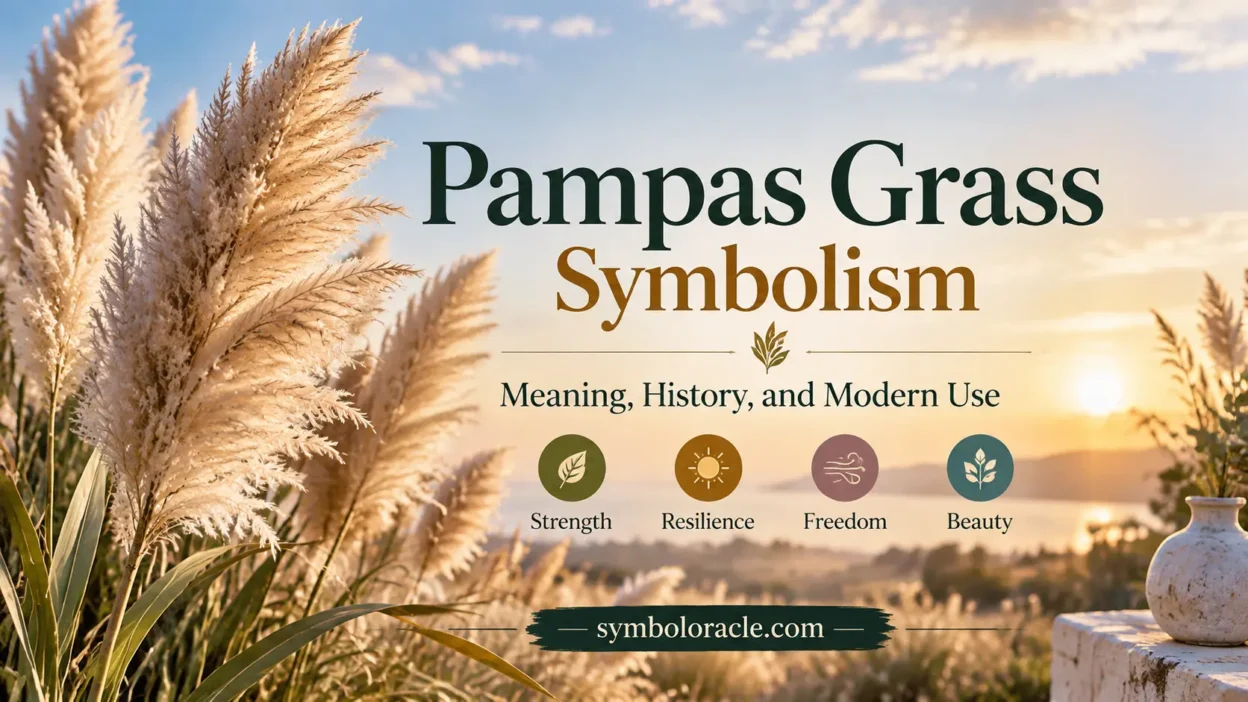
Pampas grass is a tall ornamental grass known for its soft, feathery plumes and elegant appearance. In modern American design, pampas grass symbolism often represents beauty, freedom, natural simplicity, and a calm connection with nature. Its popularity in weddings, home decor, and creative spaces has turned it into a recognizable symbol of relaxed elegance.
People are drawn to pampas grass because it combines a wild natural look with a refined decorative style. Unlike many flowers that rely on bright colors, pampas grass creates meaning through texture, movement, and its connection to open landscapes.
The symbol has changed over time. While it began mainly as a practical plant used in landscapes and gardens, modern culture has attached new meanings to it through interior design, celebrations, photography, and personal expression.
Quick Answer
Pampas grass symbolism commonly represents natural beauty, freedom, peace, and effortless elegance in modern American culture, especially in weddings and home decor. Historically, it has been connected with grassland landscapes, resilience, and the beauty of the natural world.
TL;DR
- Pampas grass represents freedom, softness, and natural elegance.
- Its origins come from South American grassland environments.
- Americans often use it in weddings and interior design.
- Its neutral colors suggest calm and simplicity.
- Modern trends link it with bohemian and minimalist styles.
What Pampas Grass Looks Like and Where People See It
Pampas grass is a large perennial grass that produces tall stems topped with fluffy, plume-like flowers. The plant can grow several feet high, creating a dramatic shape that moves with the wind.
The grass is native to South America, especially regions of Argentina, Brazil, Uruguay, and surrounding areas. Its natural environment includes open plains and grasslands where it adapted to changing weather conditions.
Today, people commonly see dried pampas grass in:
- homes and offices
- wedding decorations
- floral arrangements
- event spaces
- photography backgrounds
- garden landscapes
Its appearance creates a balance between softness and strength. The tall stems suggest openness, while the delicate plumes create a feeling of warmth and comfort.
What It Commonly Means in the United States
In the United States, pampas grass has developed several popular symbolic meanings connected to modern lifestyle and design.
The most common associations include:
| Context | Meaning in the USA | Common Associations | Notes |
|---|---|---|---|
| Home Decor | Calm and natural beauty | Minimalism, comfort, warmth | Often used in neutral interiors |
| Weddings | Romance and elegance | Simplicity, lasting memories | Popular in modern floral designs |
| Gardens | Resilience and nature | Growth, openness, landscapes | Represents outdoor beauty |
| Personal Style | Individual expression | Freedom, creativity | Used in artistic settings |
| Photography | Soft visual appeal | Luxury, peaceful atmosphere | Common in modern aesthetics |
Many Americans associate pampas grass with a slower, more natural lifestyle. It fits trends that emphasize organic materials, neutral colors, and spaces designed for relaxation.
Ancient Roots and Early Connections to Grassland Symbolism
Pampas grass itself does not have one universal ancient symbolic meaning like the rose, lotus, or olive branch. However, grasses have carried symbolic importance across many cultures because they represent survival, renewal, and the relationship between people and the land.
In grassland regions, tall grasses often symbolize adaptation. They survive strong winds, seasonal changes, and difficult conditions while continuing to grow.
Because pampas grass comes from South American landscapes, its earliest meaning is connected more to its environment than to a specific religious or mythological tradition. It reflects the character of open plains: space, movement, and endurance.
Over time, gardeners and designers began valuing the plant not only for survival but also for its visual qualities.
How Pampas Grass Became Popular in American Culture
Pampas grass became increasingly popular in American homes and events because it matched several modern design movements.
During the late 20th and early 21st centuries, interior designers began using dried plants as alternatives to traditional floral arrangements. Pampas grass became especially attractive because it could maintain its appearance for a long time without constant care.
Its popularity grew through:
- minimalist interior design
- bohemian home styles
- outdoor wedding trends
- social media photography
- natural decorating movements
Unlike fresh flowers that represent temporary beauty, dried pampas grass suggests something more lasting. This quality helped shape its modern symbolism around stability and simplicity.
Pampas Grass Symbolism in Weddings and Celebrations
In American weddings, pampas grass often represents natural romance and understated elegance.
Couples choose it for:
- ceremony backdrops
- table decorations
- bouquets
- reception designs
- outdoor celebrations
Its neutral shades allow it to blend with many wedding themes, including rustic, coastal, modern, and bohemian styles.
Symbolically, many people view it as representing:
- a peaceful partnership
- a strong foundation
- beauty without excess
- harmony with nature
Unlike traditional wedding flowers that may carry specific cultural meanings, pampas grass usually communicates a personal aesthetic choice rather than a fixed tradition.
The Meaning of Pampas Grass in Home Decor
Interior design has played a major role in shaping the modern symbolism of pampas grass.
In American homes, it often represents:
- simplicity
- comfort
- natural living
- artistic taste
- peaceful surroundings
The plant works especially well in spaces that use wood, stone, linen, and other natural materials. Its soft texture can make a room feel warmer while maintaining a clean appearance.
For many homeowners, decorating with pampas grass is less about following a tradition and more about creating an atmosphere that feels relaxed and connected to nature.
Emotional and Psychological Associations
People often respond emotionally to natural forms because they remind them of outdoor environments and living landscapes.
Pampas grass can create feelings associated with:
- calmness
- openness
- comfort
- nostalgia
- creativity
Its gentle movement resembles natural landscapes where wind and plants interact. This visual connection can make indoor spaces feel less artificial.
The plant’s muted colors also contribute to its emotional appeal. Neutral tones are often used in environments designed for rest and balance.
Cross-Cultural Meanings of Grass and Natural Plants
Although pampas grass does not have one shared meaning worldwide, similar grasses and plants carry symbolic importance in different cultures.
In many societies, grasses represent:
- fertility because they grow and spread
- endurance because they survive changing conditions
- connection to land because they grow naturally from the earth
In some Indigenous traditions, grasses and other plants hold important relationships with place, agriculture, and community. However, pampas grass itself should not automatically be assigned meanings from unrelated plant traditions.
Its modern symbolism comes mainly from landscape design, decoration, and personal interpretation.
Pampas Grass in Fashion, Tattoos, and Personal Expression
Pampas grass appears less often in tattoos than symbols like flowers, animals, or celestial images, but it has gained attention among people who appreciate botanical designs.
When used in tattoos or artwork, it may represent:
- independence
- peaceful living
- appreciation for nature
- personal growth
In fashion and photography, pampas grass often appears as a visual symbol of softness and artistic identity.
Its popularity reflects a broader interest in natural imagery as a way to express personality and lifestyle choices.
Modern Social Media and Digital Symbolism
Social media has strongly influenced the popularity of pampas grass.
Images featuring pampas grass often appear in:
- wedding inspiration posts
- home design content
- lifestyle photography
- creative portfolios
Online, the plant is frequently associated with a clean, elegant, and nature-inspired aesthetic.
However, digital popularity can sometimes simplify symbolism. A plant that originally grew in open landscapes may become mainly recognized as a decoration trend. Understanding both meanings helps explain why it remains popular.
Common Misunderstandings About Pampas Grass Symbolism
Because pampas grass became a major design trend, some meanings attached to it are exaggerated or misunderstood.
One common mistake is assuming that pampas grass has one ancient universal meaning shared by all cultures. In reality, its symbolism developed gradually through geography, design, and modern use.
Another misunderstanding comes from assigning spiritual meanings without cultural evidence. Personal interpretations are valid, but they should be separated from established historical meanings.
The plant’s strongest associations remain connected to nature, beauty, resilience, and modern design.
How Pampas Grass Symbolism Has Changed Over Time
The meaning of pampas grass has shifted from a landscape plant to a cultural design symbol.
Earlier associations focused on:
- natural environments
- grassland ecosystems
- gardening value
Modern interpretations focus more on:
- home aesthetics
- celebrations
- personal expression
- peaceful living
This change shows how symbols evolve. A plant does not need an ancient legend to gain meaning; everyday human choices can shape cultural symbolism over time.
Positive and Negative Associations in Modern Culture
Most modern interpretations of pampas grass are positive, but some debates have appeared around its use.
Positive associations include:
- elegance
- creativity
- natural beauty
- relaxation
Negative associations usually come from concerns about trends becoming overly commercialized or from confusion caused by online symbolism claims.
The plant itself does not carry a fixed positive or negative message. Meaning depends on the context in which people use and interpret it.
Why Pampas Grass Remains Popular Today
Pampas grass continues to appeal to Americans because it combines practicality with visual meaning.
It lasts longer than many fresh flowers, works across different design styles, and creates a connection between indoor spaces and natural environments.
Its popularity reflects a broader cultural interest in:
- sustainable decoration
- organic materials
- peaceful home environments
- nature-inspired design
The plant’s symbolism remains flexible, allowing different people to connect with it in personal ways.
Frequently Asked Questions
What does pampas grass symbolize?
Pampas grass commonly symbolizes natural beauty, freedom, calmness, and simple elegance. In modern American culture, it is especially connected with home decoration, weddings, and nature-inspired design.
Is pampas grass considered a romantic symbol?
Yes, many people use pampas grass as a romantic decoration because of its soft appearance and popularity in weddings. Its meaning usually comes from modern design choices rather than an ancient romantic tradition.
What does pampas grass mean in home decor?
In home decor, pampas grass often represents comfort, simplicity, and a connection to natural elements. Designers use it to create warm and relaxed spaces.
Does pampas grass have a spiritual meaning?
Pampas grass does not have one universally recognized spiritual meaning. Some individuals connect it with growth, peace, or nature, but these interpretations are personal rather than shared across all traditions.
What does pampas grass symbolize in a tattoo?
A pampas grass tattoo may represent independence, natural beauty, resilience, or a peaceful lifestyle. The meaning depends on the person’s own connection to the symbol.
Why is pampas grass popular in weddings?
Pampas grass is popular in weddings because it creates an elegant natural look and works well with many themes. Couples often choose it for its softness, texture, and lasting appearance.
Is pampas grass symbolism positive or negative?
Pampas grass is generally viewed positively in modern culture. Most people associate it with beauty, calmness, creativity, and natural simplicity.
Conclusion
Pampas grass has developed from a South American grassland plant into a widely recognized symbol of natural beauty and modern elegance. Its meaning comes less from ancient mythology and more from the ways people use nature to express comfort, creativity, and personal style.
Today, pampas grass symbolism reflects a connection between outdoor landscapes and modern living spaces. Whether used in weddings, homes, artwork, or personal expression, it continues to represent a quiet appreciation for simplicity and the natural world.


