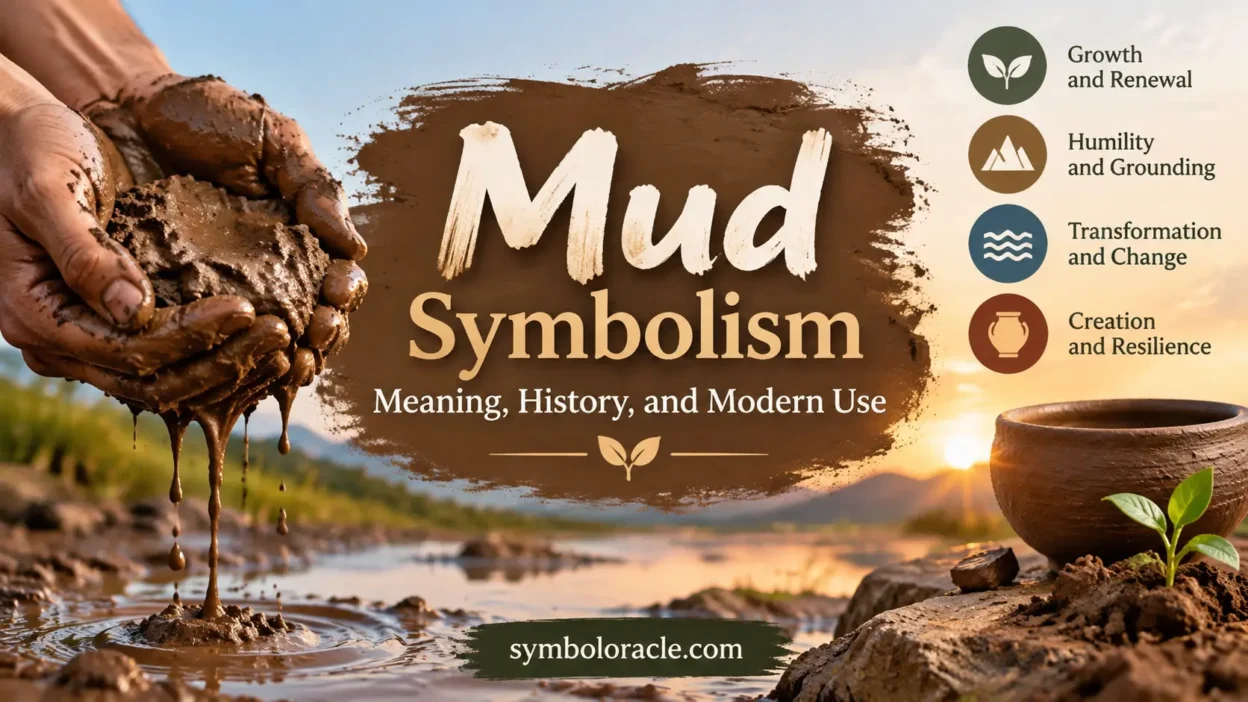
Mud is one of the most familiar materials on Earth. It appears after rainfall, along riverbanks, in gardens, on farms, and in places where humans build and create. Although it may seem ordinary, mud symbolism carries meanings connected to creation, transformation, humility, survival, and the relationship between humans and the natural world.
In modern American culture, mud often represents connection to the earth, personal growth, and the process of becoming something new. From gardening and farming traditions to art, spirituality, and personal expression, mud reflects both physical reality and symbolic ideas about change.
People have used mud for thousands of years to create homes, pottery, artwork, and sacred objects. Because it can be shaped, dried, broken down, and reshaped, many cultures have connected mud with human life itself: a reminder that identity and experiences continue to evolve.
Quick Answer
Mud symbolism commonly represents grounding, transformation, and connection to nature in modern American culture. Historically, mud has also been associated with creation, fertility, survival, and humanity’s relationship with the earth.
TL;DR
- Mud symbolizes connection with nature and the earth.
- Ancient cultures linked mud with creation and survival.
- Americans often view mud as growth and renewal.
- Mud art represents creativity and transformation.
- Negative meanings include disorder and difficulty.
- Modern uses appear in tattoos, design, and storytelling.
What Mud Represents in Modern American Culture
In the United States, mud is usually understood through practical experiences rather than a single fixed meaning. A person may associate mud with childhood memories, outdoor adventures, farming, construction, or natural landscapes.
One of the strongest modern interpretations is grounding. Mud connects people to the physical world because it comes directly from soil and water, two basic elements needed for life. For many Americans interested in gardening, hiking, environmental awareness, or outdoor lifestyles, mud represents a return to natural simplicity.
Mud can also symbolize growth through difficulty. A muddy path suggests challenges, uncertainty, or a period of transition, but it also suggests movement. Someone walking through mud is often seen as continuing forward despite obstacles.
In personal storytelling, mud may represent:
- learning through experience
- rebuilding after hardship
- accepting imperfections
- staying connected to one’s roots
- creating something meaningful from simple materials
Unlike symbols that represent perfection or purity, mud often reflects reality. It is messy, imperfect, and constantly changing.
Ancient Roots and Early Symbolism of Mud
Mud gained symbolic importance because early human societies depended on earth materials for survival. Before modern construction materials existed, people used mud mixed with straw, clay, and other natural materials to create shelters, storage containers, and tools.
Many ancient creation stories connect humans with earth or clay-like substances. These traditions often describe humanity as being formed from the ground, emphasizing a connection between people and the natural world.
Mud’s symbolic connection to creation developed because it has a unique quality: it can become something new. Wet earth can be shaped into a structure, object, or artwork before becoming solid. This process made mud a natural symbol of formation and possibility.
Agricultural societies also connected mud with fertility. Soil mixed with water supports plant growth, making muddy ground a sign of productive land, seasonal cycles, and renewal.
Mud Symbolism in Creation Stories and Religious Traditions
Across different cultures, earth-based materials appear in stories about human origins. These traditions vary widely, but many share the idea that humans are connected to the material world around them.
In some religious interpretations, earth or clay represents humility because humans come from the ground and remain connected to creation. Mud can represent the balance between physical existence and spiritual identity.
In Christian traditions, imagery involving dust, earth, and creation has influenced how some people understand human beginnings and humility. In other cultural traditions, clay and earth materials appear in stories about ancestors, life creation, and the relationship between humans and nature.
The symbolic meaning depends heavily on the tradition. Mud is not universally considered sacred or positive; in some contexts, it represents human limitations, imperfection, or the temporary nature of physical life.
The Connection Between Mud and Transformation
One of the most common symbolic ideas behind mud is transformation. Mud is not a final state. It is a stage between separate elements: soil and water becoming something that can change shape.
This makes mud a useful symbol for personal development. A person experiencing change may relate to mud as a representation of uncertainty before growth.
Examples include:
- rebuilding after a difficult experience
- starting a new career path
- developing a new identity
- recovering from mistakes
- learning through challenges
Mud does not represent an instant transformation. Instead, it represents a process. The material must be worked, shaped, and given time before it becomes something stable.
This idea appears often in creative fields. Artists who work with clay, earth pigments, and natural materials often view transformation as part of the creative journey.
Mud in Nature, Farming, and Environmental Symbolism
Mud has a strong connection with natural cycles. Rain creates mud, plants grow from soil, and ecosystems depend on the relationship between water and earth.
For farmers and gardeners, muddy ground often represents preparation and potential. A freshly watered field may look messy, but it provides the conditions needed for future growth.
In environmental discussions, mud can symbolize:
| Context | Meaning in the USA | Common Associations | Notes |
|---|---|---|---|
| Gardening | Growth and renewal | Soil, planting, harvest | Represents natural cycles |
| Outdoor life | Adventure and resilience | Hiking, camping, exploration | Often linked with experience |
| Farming | Productivity | Crops, seasons, land | Connected to survival |
| Art | Creativity and change | Pottery, sculpture | Shows transformation |
| Personal symbolism | Growth through struggle | Challenges, rebuilding | Reflects life experiences |
Modern environmental movements often use earth-based imagery to encourage people to reconnect with natural systems. Mud represents the physical foundation that supports ecosystems.
Why Mud Can Symbolize Humility and Simplicity
Mud does not have the polished appearance of precious metals, gemstones, or luxury materials. Because of this, it often represents modesty and simplicity.
In American culture, ideas of humility connected to mud appear in several ways. Outdoor communities may value getting “dirty” as part of authentic experiences. Farmers, gardeners, and craftspeople often view contact with soil as meaningful work rather than something negative.
Mud can remind people that important things often begin in simple forms. A seed grows in soil. A building may begin with raw materials. A creative project may start with an imperfect first attempt.
The symbol challenges the idea that value always comes from appearance. Mud suggests that usefulness and potential can exist beneath an ordinary surface.
Mud Symbolism in American Art and Creative Expression
Mud has played an important role in American art because it connects creativity with natural materials. Artists who work with clay, earth pigments, and handmade ceramics often use earth-based materials to explore themes of identity, history, memory, and human connection.
Pottery is one of the clearest examples of mud’s creative symbolism. A piece of clay begins as soft earth but can become a useful object, sculpture, or artwork through human skill. This process represents patience, craftsmanship, and transformation.
In contemporary American art, mud and clay may represent:
- connection to ancestral practices
- appreciation for handmade objects
- environmental awareness
- personal storytelling
- acceptance of natural imperfections
The visible marks left in clay, such as fingerprints or uneven textures, are often valued because they show the human role in creation. Unlike factory-made materials, earth-based art can preserve signs of individual effort.
Mud also appears in land art and environmental artwork, where artists use natural materials to explore humanity’s relationship with landscapes. In these settings, mud represents belonging, change, and the temporary nature of physical creations.
Mud Symbolism in Tattoos and Personal Identity
Mud is not among the most common tattoo symbols, but when people choose earth-related imagery, the meaning is usually personal. Mud tattoos often connect with themes of resilience, nature, transformation, and personal history.
Someone may choose mud-related imagery because it represents a difficult period that led to growth. The symbol can express the idea that challenges shaped their character rather than defining their limitations.
Common ideas associated with mud-inspired tattoos include:
- returning to one’s roots
- surviving difficult conditions
- personal transformation
- connection with the outdoors
- acceptance of imperfection
Mud may also appear indirectly through symbols such as footprints, soil, plants growing from earth, clay designs, or natural landscapes. These images often communicate a relationship with the environment or a meaningful life journey.
The interpretation depends on the individual. A mud symbol does not have one universal tattoo meaning, and personal experiences usually determine its significance.
Emotional and Psychological Meaning of Mud
Mud can create mixed emotional responses because it represents both comfort and discomfort. For some people, it brings memories of nature, childhood, and outdoor experiences. For others, it represents difficulty, uncertainty, or unpleasant situations.
Psychologically, mud can symbolize being in a transitional phase. A muddy path is neither completely clear nor completely blocked. It suggests movement through a complicated period.
Positive emotional associations include:
- stability
- patience
- renewal
- authenticity
- connection
Negative associations may include:
- confusion
- feeling stuck
- disorder
- embarrassment
- hardship
This contrast makes mud an interesting symbol. It reflects real human experiences rather than only positive or negative ideas.
Life often includes uncertain stages where people are still developing, learning, and adjusting. Mud represents that unfinished condition before clarity arrives.
Mud in Dreams and Personal Interpretation
Dream interpretations involving mud vary widely because dreams depend on personal experiences, emotions, and cultural background. Mud may appear as a symbol connected to emotions, challenges, or personal circumstances.
Some common interpretations include:
- Walking through mud may represent facing obstacles or slow progress.
- Being covered in mud may reflect feelings of vulnerability or change.
- Clean mud or fertile soil may suggest growth and renewal.
- Escaping muddy conditions may represent overcoming difficulties.
These interpretations are not scientific facts or universal rules. Dream symbolism is personal, and the same image can mean different things to different people.
A person who enjoys hiking may view mud positively, while someone dealing with a stressful situation may associate it with frustration.
Mud in Home Design, Decor, and Lifestyle
Natural materials have become increasingly popular in American home design, especially among people interested in sustainable living and organic aesthetics. Earth-inspired colors, textures, and materials often create feelings of warmth and connection.
Mud-based materials such as adobe, clay finishes, and natural earth tones appear in some architectural and interior design styles.
In decor, mud-related symbolism may communicate:
- simplicity
- comfort
- natural beauty
- handcrafted quality
- environmental awareness
Earth tones inspired by mud, including browns, tans, and warm neutral shades, are often used to create calm spaces. These colors are associated with stability because they visually connect interiors with the natural world.
Modern design does not usually use mud as a literal symbol but often draws from its visual qualities.
Cross-Cultural Meanings of Mud Around the World
Different societies have developed their own interpretations of mud based on geography, religion, and daily life.
In regions where agriculture has been central for generations, mud often represents fertility and survival because productive land depends on healthy soil and water.
In many Indigenous traditions around the world, earth materials can represent connection with ancestors, land, and community. However, meanings vary between groups and should not be treated as identical.
In parts of Asia, Africa, and the Middle East, mud has historically been used in architecture because it provides practical benefits such as insulation and availability. These buildings also carry cultural meanings related to adaptation and harmony with the environment.
Across cultures, one shared theme appears repeatedly: mud represents the relationship between human life and the earth.
Negative Meanings and Common Misunderstandings About Mud
Although mud often represents growth and connection, it also has negative symbolic meanings.
Because mud can be messy and difficult to move through, people sometimes associate it with disorder, confusion, or unwanted situations. Expressions like “being stuck in the mud” describe feeling unable to make progress.
Mud has also been used metaphorically in negative ways, especially when describing criticism, conflict, or attempts to damage someone’s reputation. These meanings come from the idea of throwing dirt or creating a mess.
However, these negative associations do not define the symbol completely. They represent only one side of mud’s meaning.
A balanced interpretation recognizes both aspects:
- Mud can represent difficulty, but also growth.
- Mud can appear messy, but also create life.
- Mud can represent a temporary state before transformation.
How Mud Symbolism Has Changed Over Time
The meaning of mud has evolved as societies changed. In early human communities, mud was primarily connected with survival because it provided materials for homes, tools, and farming.
As technology developed, people relied less on mud for everyday necessities. However, its symbolic importance remained through art, storytelling, spirituality, and environmental awareness.
Today, mud often represents a return to natural values in a highly digital world. Many people use earth-related symbols to express a desire for authenticity, simplicity, and connection.
The modern interpretation of mud combines ancient ideas with contemporary concerns:
- environmental responsibility
- personal growth
- creativity
- emotional resilience
- respect for natural materials
Mud remains meaningful because it represents something universal: the process of becoming.
Frequently Asked Questions About Mud Symbolism
What does mud symbolize spiritually?
Mud is often associated with creation, humility, and connection to the earth in spiritual interpretations. Some traditions view earth materials as reminders of human origins and the relationship between physical life and nature.
Is mud a positive or negative symbol?
Mud can represent both positive and negative ideas. It may symbolize growth, fertility, and transformation, while also representing confusion, difficulty, or obstacles depending on the context.
What does a mud tattoo symbolize?
A mud-inspired tattoo may represent resilience, personal growth, connection with nature, or overcoming challenges. The meaning depends on the person’s experience and the design used.
Why is mud connected with transformation?
Mud represents transformation because it changes form easily. Wet earth can become a shaped object, making it a symbol of development, creativity, and change.
What does mud represent in American culture?
In the United States, mud is often connected with outdoor experiences, farming, gardening, creativity, and personal growth. It can represent a practical connection to nature and life’s challenges.
Does mud have meaning in different religions?
Yes, earth and clay imagery appears in several religious traditions, often connected with creation and human origins. Interpretations vary depending on the specific belief system.
Conclusion
Mud represents the connection between humans and the natural world. It reflects creation, change, resilience, and the imperfect stages that shape personal growth.
From ancient building materials to modern art, gardening, tattoos, and environmental design, mud symbolism continues to represent the idea that valuable things can come from simple beginnings.
Rather than representing only dirt or disorder, mud reminds people that transformation often happens through processes that are unfinished, uncertain, and constantly changing. Its meaning comes from the relationship between the earth beneath us and the experiences that shape who we become.


