
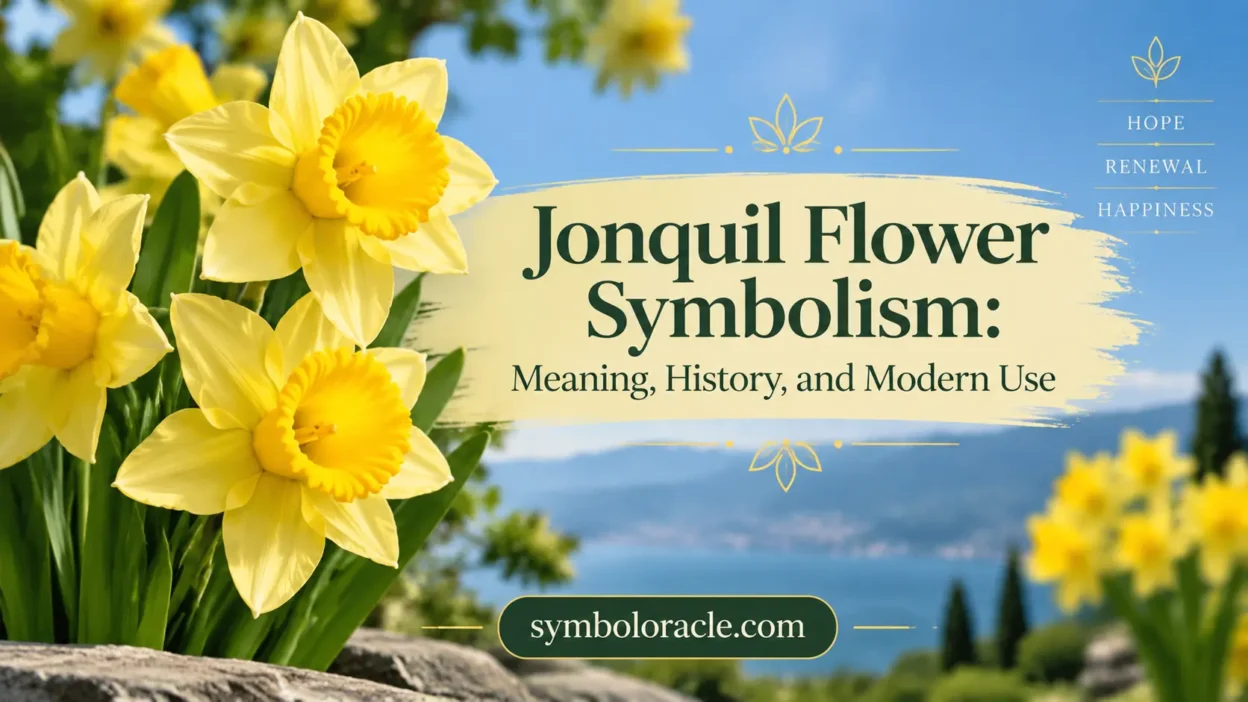
Flowers often carry meanings that go beyond their appearance. People use them to express emotions, mark important moments, remember loved ones, and add personal meaning to gardens, artwork, and traditions. The jonquil flower symbolism is especially connected with affection, renewal, remembrance, and the arrival of spring.
Jonquils are small, fragrant flowers related to daffodils, known for their bright yellow blooms and sweet scent. Their appearance during the early spring season has made them a symbol of new beginnings and hope in many cultures. In the United States, people often associate jonquils with seasonal change, gardening traditions, friendship, and thoughtful gifts.
Understanding the meaning of jonquils requires looking at both their natural characteristics and the cultural stories that developed around them. Their symbolism has changed over time, moving from traditional flower language into modern uses such as home design, tattoos, celebrations, and personal expression.
Quick Answer
Jonquil flower symbolism commonly represents renewal, affection, happiness, and the fresh beginnings associated with spring in modern American culture. Historically, jonquils have also been linked with remembrance, friendship, desire, and emotional connections through traditional flower meanings.
TL;DR
- Jonquils symbolize spring renewal and fresh starts.
- Their yellow color represents joy and optimism.
- Traditional meanings include affection and remembrance.
- Americans connect jonquils with gardens and seasonal celebrations.
- Modern uses include decor, gifts, and personal tattoos.
What Is a Jonquil Flower?
A jonquil is a flowering plant from the daffodil group, specifically associated with the species Narcissus jonquilla. It produces clusters of small, fragrant yellow flowers on slender stems and usually blooms in early spring.
Although many people use “jonquil” and “daffodil” interchangeably, jonquils have distinct characteristics. Their flowers are often smaller than common daffodils, and their leaves are narrow and rounded compared with the flatter leaves of many other narcissus varieties.
Jonquils are popular garden plants because they return every year and require relatively little maintenance. Their ability to appear after winter has helped shape their symbolic connection with persistence, renewal, and the return of warmer days.
In American gardens, jonquils are often planted near homes, pathways, and flower beds where their bright blooms signal the changing season.
What It Commonly Means in the United States
In modern American culture, jonquils are most often associated with positive emotions and seasonal renewal. Their early spring appearance makes them a natural symbol of moving forward after difficult periods.
The most common meanings include:
- Renewal: Jonquils represent fresh beginnings because they bloom after winter.
- Joy: Their yellow petals are connected with happiness and warmth.
- Affection: Traditional flower meanings often connect jonquils with caring relationships.
- Memory: Their connection with springtime rituals can make them meaningful for remembrance.
Many Americans view jonquils as flowers that represent optimism without being overly formal. They are often chosen for personal gardens, spring arrangements, and gifts between friends or family members.
Ancient Roots and Early Symbolism of Jonquils
The symbolic history of jonquils comes from their connection with the broader narcissus flower family. The name “Narcissus” comes from Greek mythology, where the figure Narcissus was associated with beauty and self-reflection.
According to Greek mythology, Narcissus became known for his extraordinary beauty and his fixation on his own reflection. The story later influenced interpretations of the narcissus flower, sometimes connecting it with themes of self-awareness, beauty, and caution against excessive pride.
However, jonquils developed their own meanings separate from the myth. Their smaller size, fragrance, and spring blooming period created associations with gentler ideas such as affection, hope, and emotional warmth.
Over time, European flower traditions expanded the symbolic meanings of narcissus varieties, including jonquils. During the Victorian era, flowers were often used to communicate emotions that people did not openly express. Jonquils became part of this language of flowers, carrying messages of admiration and emotional attachment.
How Jonquils Became Associated With Spring Renewal
The connection between jonquils and renewal comes largely from their natural growing cycle. After cold winter months, these flowers emerge when temperatures begin to rise and landscapes start changing.
For many cultures, spring represents restoration and movement. Plants that return year after year are often viewed as reminders that growth can follow periods of difficulty.
In the United States, this meaning appears in several ways:
- Spring gardens use jonquils as signs of seasonal transition.
- Flower arrangements featuring jonquils often celebrate new chapters.
- Gardeners plant them as symbols of returning beauty each year.
Unlike flowers associated with only one event or holiday, jonquils have a broader seasonal meaning. They represent the general idea of beginning again.
The Meaning of Jonquil’s Yellow Color
Color plays an important role in flower symbolism, and the bright yellow shade of many jonquils influences how people interpret them.
Yellow flowers are commonly associated with:
| Context | Meaning in the USA | Common Associations | Notes |
|---|---|---|---|
| Spring gardens | Renewal and growth | New seasons, fresh starts | Linked to blooming after winter |
| Gifts | Happiness and friendship | Appreciation, kindness | Often chosen for cheerful messages |
| Home decor | Warmth and brightness | Comfort, welcoming spaces | Adds natural energy to rooms |
| Memorial settings | Hope and remembrance | Memory, continued connection | Meaning depends on personal context |
In American culture, yellow is often connected with sunshine, optimism, and friendliness. This makes yellow jonquils especially suitable for celebrations and everyday expressions of care.
However, color meanings are not universal rules. A person’s experience, cultural background, and personal memories can influence what a jonquil represents to them.
Jonquil Symbolism in American Gardening Culture
Gardening has played an important role in how Americans experience flower symbolism. Jonquils are valued not only for their appearance but also for their reliability and seasonal timing.
Many gardeners plant jonquils because they return each year without needing to be replanted. This quality has contributed to their association with endurance and continuity.
In American neighborhoods, jonquils often appear in:
- Cottage gardens
- Historic gardens
- Spring landscaping projects
- Community planting areas
- Personal flower beds
For many people, seeing jonquils bloom every spring creates a connection between nature and memory. A flower planted years earlier can become linked with a home, family tradition, or meaningful moment.
Emotional and Psychological Meaning of Jonquils
Flowers can influence emotions through their colors, scents, and personal associations. Jonquils are often connected with feelings of comfort, optimism, and emotional warmth.
Their fragrance is one reason they stand out among spring flowers. The scent can create memories connected with gardens, childhood experiences, or seasonal celebrations.
Psychologically, jonquils may represent:
- A fresh start after change
- Hope during uncertain times
- Appreciation for simple beauty
- Connection with nature
These interpretations do not mean the flower has a fixed emotional effect on everyone. Instead, symbolism develops through personal experiences and shared cultural meanings.
Jonquils in Traditional Flower Language
During the Victorian era, flowers were sometimes used as a communication system. People exchanged bouquets with specific meanings when direct emotional expression was restricted by social customs.
In traditional flower language, jonquils were associated with ideas such as:
- Desire
- Affection
- Sympathy
- Friendship
The exact meanings varied depending on the source and region. Flower symbolism was never a single universal dictionary; different cultures and traditions often assigned different interpretations.
Today, most people do not follow strict Victorian flower codes, but these historical associations still influence how jonquils are understood in gifts and floral arrangements.
Jonquil Symbolism in Weddings, Gifts, and Special Occasions
Jonquils are not as common in wedding arrangements as roses, lilies, or peonies, but they carry meanings that fit many personal celebrations. Their connection with affection, hope, and new beginnings makes them suitable for occasions where people are starting a new chapter.
In weddings, jonquils can represent:
- Growing affection between partners
- A hopeful future together
- The continuation of love through changing seasons
- Appreciation and friendship
Their smaller size and gentle fragrance make them useful as accent flowers in bouquets, table decorations, and spring-themed events.
As gifts, jonquils often communicate a message of warmth rather than dramatic romance. A bouquet may express appreciation for a friend, encouragement during a difficult time, or happiness for someone entering a new stage of life.
Unlike flowers with stronger traditional meanings, jonquils allow the giver and receiver to create their own interpretation.
Cross-Cultural Meanings of Jonquil Flowers
The symbolism of jonquils changes depending on cultural background and historical setting. Since jonquils belong to the Narcissus family, some meanings overlap with daffodils and other narcissus flowers.
In Mediterranean regions, where jonquils originated, the flower has long been valued for its fragrance and beauty. Its connection with spring growth reflects seasonal renewal and the return of life after colder months.
In Chinese traditions, narcissus flowers have been associated with good fortune, prosperity, and celebrations of the new year. Floral traditions often emphasize their ability to represent positive beginnings.
In Western traditions, jonquils have carried several meanings at the same time:
| Culture or Tradition | Symbolic Meaning | Common Context |
|---|---|---|
| Western flower language | Affection and desire | Gifts and romantic messages |
| Mediterranean heritage | Beauty and fragrance | Gardens and cultural identity |
| Chinese traditions | Good fortune and renewal | New Year celebrations |
| Modern American culture | Hope and friendship | Decor, gardens, gifts |
These interpretations show that flowers rarely have one fixed meaning. Their symbolism develops through history, geography, and personal experiences.
Religious and Folklore Connections
Jonquils do not hold one universal religious meaning, but flowers from the Narcissus family appear in several traditional stories and beliefs.
In Christian-influenced cultures, spring flowers such as daffodils and jonquils have sometimes been connected with resurrection and renewal because they appear around the same season as Easter celebrations. Their return after winter can represent restoration and new life.
Ancient Greek mythology provides another important connection. The Narcissus story links the flower family with the tale of a young man known for his beauty and self-absorption. This association created a secondary meaning involving self-reflection and vanity.
However, most modern uses of jonquils focus on positive themes such as spring, affection, and happiness rather than the cautionary themes from mythology.
Why Jonquils Appear in Art and Design
Artists and designers often use flowers because they communicate emotions without words. Jonquils offer visual qualities that make them attractive symbols:
- Bright yellow color suggests warmth.
- Small clustered blooms suggest connection.
- Fragrance creates associations with memory.
- Spring timing suggests change and growth.
In American home design, jonquil-inspired patterns may appear in:
- Floral artwork
- Wallpaper designs
- Seasonal decorations
- Garden photography
- Handmade crafts
The flower’s simple shape allows it to fit both traditional and modern styles. It can represent countryside charm, spring freshness, or personal memories connected with nature.
Jonquil Tattoos and Personal Expression
Flower tattoos often represent personal experiences rather than traditional meanings alone. A jonquil tattoo may symbolize a person’s connection to renewal, family memories, springtime, or emotional growth.
Common reasons people choose jonquil designs include:
- Remembering a meaningful person
- Representing a fresh start
- Celebrating a birth month
- Showing appreciation for nature
- Expressing optimism after change
A person with Mediterranean family roots may choose a jonquil because of its cultural connection, while another person may choose it simply because they associate the flower with a special place or memory.
Unlike symbols with strict meanings, floral tattoos often become personal stories.
Jonquils in Modern Digital Culture
In modern digital spaces, flowers are often used as emotional symbols. Jonquils may appear in:
- Social media photography
- Digital artwork
- Seasonal posts
- Lifestyle content
- Gardening communities
Online flower symbolism tends to simplify traditional meanings. Many modern discussions highlight jonquils as symbols of happiness, spring, positivity, and affection.
However, digital interpretations can sometimes make flower meanings appear more universal than they actually are. A flower’s meaning depends on context, culture, and individual choice.
Common Misunderstandings About Jonquil Symbolism
Several misunderstandings surround jonquils because they are closely related to daffodils and other narcissus flowers.
Jonquils and daffodils are exactly the same
Many people use the names interchangeably, but botanically they are different. Jonquil refers specifically to Narcissus jonquilla and related hybrids, which are known for narrow leaves, clustered blooms, and strong fragrance.
Jonquils only represent happiness
While happiness is a common modern association, traditional meanings also include affection, desire, sympathy, and remembrance.
The Narcissus myth defines all modern meanings
The Greek myth influences the broader symbolism of the Narcissus family, but most people today associate jonquils with spring and positive emotions rather than vanity.
How Jonquil Meaning Has Changed Over Time
The meaning of jonquils has evolved as societies changed.
Early interpretations were shaped by mythology, seasonal cycles, and agricultural traditions. Later, Victorian flower language introduced more specific emotional meanings connected with affection and relationships.
Today, Americans usually view jonquils through a combination of:
- Gardening experiences
- Seasonal traditions
- Personal memories
- Floral design
- Gift giving
Modern symbolism is less about following strict rules and more about choosing meanings that match personal experiences.
Positive and Negative Symbolism of Jonquils
Like many historic symbols, jonquils have both positive and cautionary interpretations.
| Symbolic Side | Meaning | Explanation |
|---|---|---|
| Positive | Renewal | Connected with spring growth |
| Positive | Affection | Used to express care and appreciation |
| Positive | Hope | Represents moving forward |
| Cautionary | Vanity | Linked to the Narcissus myth |
| Cautionary | Unreturned affection | Appears in some traditional flower meanings |
The positive meanings dominate modern American use, while the negative associations mainly come from mythology and older symbolic traditions.
Frequently Asked Questions About Jonquil Flower Symbolism
What does a jonquil flower symbolize?
A jonquil flower commonly symbolizes renewal, affection, friendship, and hope. Traditional flower meanings also connect it with desire and the wish for affection to be returned.
Are jonquils and daffodils the same flower?
Jonquils and daffodils belong to the same Narcissus family, but they are not identical. Jonquils usually have smaller clustered flowers, narrow leaves, and a stronger fragrance compared with many common daffodils.
What does a jonquil tattoo mean?
A jonquil tattoo can represent personal growth, spring renewal, affection, or a meaningful memory. The meaning usually depends on the person’s own connection with the flower.
Are jonquils good flowers for gifts?
Yes. Jonquils are often given to express appreciation, friendship, encouragement, or affection. Their bright color and fragrance make them suitable for many personal occasions.
Does jonquil have a religious meaning?
Jonquils do not have one official religious meaning, but their spring blooming period has led some cultures to connect them with renewal and new life.
Can jonquils symbolize sadness?
In some traditional interpretations, jonquils can represent sympathy, longing, or sorrow. These meanings are less common today than their associations with happiness and renewal.
Conclusion
Jonquils represent a combination of seasonal change, emotional connection, and personal meaning. Their early spring blooms have made them symbols of renewal and hope, while traditional flower language connects them with affection, desire, and remembrance.
In modern American culture, jonquil flower symbolism is usually understood through gardens, gifts, artwork, and personal experiences rather than strict symbolic rules. Whether used to celebrate a new beginning, honor a memory, or simply enjoy their beauty, jonquils remain flowers that connect nature with human emotions.
Their meaning continues to grow because people bring their own stories to the flowers they choose.


