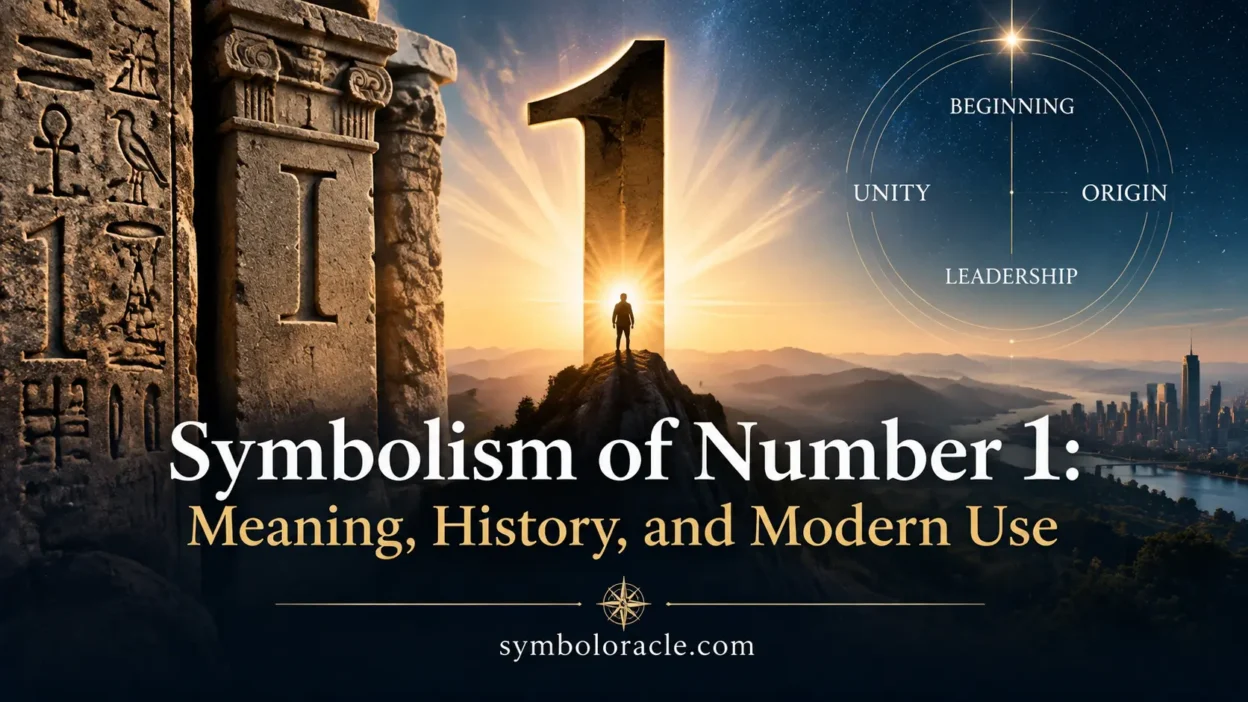
Numbers appear everywhere in daily life, from addresses and dates to rankings, sports, business, and personal milestones. Among them, symbolism of number 1 is often connected with beginnings, individuality, leadership, and the idea of being first. In modern American culture, the number 1 frequently represents achievement, independence, and a desire to stand out.
People have assigned meanings to numbers for thousands of years. Some interpretations come from mathematics, religion, philosophy, art, and cultural traditions, while others developed through everyday experiences. The meaning of number 1 changes depending on the situation, but many cultures view it as a symbol of unity, origin, and starting something new.
Understanding the symbolism behind number 1 helps explain why it appears in celebrations, branding, personal identity, spiritual discussions, and popular culture. While some interpretations are based on tradition rather than proven facts, the number continues to carry strong emotional and cultural associations.
Quick Answer
Symbolism of number 1 commonly represents new beginnings, independence, leadership, and personal achievement in modern American culture. Historically, it has also been connected with unity, creation, divine oneness, and the idea of a single origin in many philosophical and religious traditions.
TL;DR
- Number 1 represents beginnings and fresh starts.
- It symbolizes independence and personal identity.
- Ancient traditions linked it with unity and creation.
- Americans use it for success and achievement.
- Spiritual views often connect it with oneness.
- Modern design uses it to express uniqueness.
What Number 1 Looks Like and Where People See It
The number 1 is the first whole number after zero and is written as a simple vertical symbol. Its shape appears straightforward, yet its meaning has expanded far beyond mathematics. People encounter it constantly in everyday situations, including rankings, sports jerseys, apartment numbers, calendars, grades, and product labels.
In the United States, number 1 is strongly associated with being the best or achieving the highest position. A person who finishes first in a competition earns the top rank. A product labeled “Number 1” often suggests popularity, quality, or success.
The simplicity of the number also contributes to its symbolism. Unlike complex numbers with multiple digits, 1 represents something singular. It points toward one person, one choice, one beginning, or one central idea.
What It Commonly Means in the United States
In American culture, number 1 is most often connected with achievement and individuality. The phrase “number one” is commonly used to describe excellence, leadership, or importance.
A company may call itself the “number one choice” to show confidence. Athletes wear number 1 to represent competition and recognition. Students may view earning the first position as a sign of hard work and success.
The number also connects with American ideas of independence. The cultural focus on individual goals, personal growth, and self-reliance often matches the symbolic meaning of one person creating their own path.
However, the meaning is not always about competition. Number 1 can also represent unity, such as one family, one community, or one shared purpose.
| Context | Meaning in the USA | Common Associations | Notes |
|---|---|---|---|
| Achievement | Being first or successful | Winning, excellence, leadership | Common in sports and competitions |
| Personal Identity | Individuality | Independence, confidence | Often linked with self-expression |
| New Beginnings | Starting something new | Goals, changes, opportunities | Used during life transitions |
| Relationships | Unity and connection | Partnership, family, teamwork | Represents togetherness |
| Design & Branding | Simplicity and importance | Recognition, trust, popularity | Used in logos and marketing |
Ancient Roots and Early Symbolism of Number 1
The symbolic meaning of number 1 developed alongside early human attempts to understand counting, existence, and the universe. Ancient societies recognized one as the beginning point of all counting systems because every larger number builds from it.
In ancient philosophy, the idea of one often represented the source from which everything else developed. Some thinkers viewed unity as the foundation of reality because all things could be traced back to a single origin.
Ancient Greek philosophers explored ideas related to unity and oneness. For some traditions, one represented the starting point of order and existence. It was not only a mathematical value but also a concept connected with structure and balance.
Early civilizations also used single marks or symbols to represent ownership, identity, and important records. The idea of “one” helped humans organize the world around them.
Number 1 in Religious and Spiritual Traditions
Many religions associate the number 1 with unity and a single divine source. These interpretations vary widely, but the common theme is the idea of one central power, creator, or truth.
In monotheistic traditions, the concept of one God is a major belief. The number can represent devotion, unity, and the relationship between humanity and the divine.
In Christianity, Judaism, and Islam, the idea of one God reflects the importance of unity and spiritual connection. The number itself is not considered magical, but it can represent a theological idea.
Some spiritual movements and modern practices also connect number 1 with personal awareness, intention, and new beginnings. These interpretations are based on belief systems rather than scientific evidence, but they remain meaningful to many individuals.
Why Number 1 Represents New Beginnings
The connection between number 1 and new beginnings comes from its position as the first counting number. It naturally represents the start of a sequence.
People often associate the number with major life changes:
- Starting a new job
- Beginning a relationship
- Moving to a new place
- Creating a personal goal
- Entering a new stage of life
In American culture, the start of a new year is one of the clearest examples. January 1 represents a fresh calendar beginning, and many people use it as a time for resolutions and personal improvement.
The number does not guarantee change, but it serves as a reminder that every journey begins with a first step.
Number 1 as a Symbol of Leadership and Achievement
In modern American culture, number 1 is closely tied to leadership and success. Being “number one” usually means reaching the highest position in a group, competition, or industry. This connection appears in sports, business, education, and entertainment.
Athletes often choose or receive the number 1 jersey because it represents confidence, excellence, and recognition. A champion may be described as the “number one player,” showing that the number has become a shortcut for achievement.
Businesses also use this association. Companies frequently describe their products or services as a “number one choice” because consumers often connect the phrase with reliability and quality. While these claims are sometimes marketing language rather than objective facts, the cultural meaning remains strong.
The leadership symbolism of number 1 comes from its position at the beginning of a sequence. It suggests someone or something that takes the first step, sets direction, or creates a new path.
The Emotional and Psychological Meaning of Number 1
Numbers can carry personal meanings because humans naturally connect symbols with memories, experiences, and emotions. Number 1 often creates feelings related to confidence, independence, and motivation.
For many people, seeing the number may represent a personal milestone. A first home, first achievement, first child, or first major success can give the number emotional importance.
Psychologically, the idea of one can represent individuality. It reminds people of personal identity and the ability to make independent choices. In a culture that often values self-expression, number 1 can symbolize confidence and personal responsibility.
At the same time, focusing only on being first can create pressure. The number may also remind people that success is not only about competition but also about personal growth and meaningful progress.
Number 1 in American Holidays, Events, and Public Life
The number 1 appears in many American traditions and public moments because it marks beginnings, anniversaries, and important milestones.
New Year’s Day on January 1 is one of the most recognizable examples. The date represents a new chapter and encourages reflection, goal setting, and personal improvement.
The number also appears in national celebrations, historical dates, and community events. A first anniversary, first birthday, or first official event often receives special attention because the beginning of something carries emotional value.
In public life, number 1 frequently represents priority. The phrase “first responders,” for example, highlights people who arrive first during emergencies. Here, the number represents responsibility and service rather than competition.
Number 1 in Tattoos and Personal Style
People often choose number tattoos because numbers can represent private memories, important dates, or personal beliefs. Number 1 tattoos may symbolize independence, leadership, personal achievement, or a fresh start.
Some people use the number to represent:
- Being the first in their family to reach a goal
- A personal transformation
- A birth date or meaningful event
- A reminder to stay confident
Minimalist tattoo styles often use simple numbers because they allow the wearer to create personal meaning without a complicated design.
However, tattoo symbolism depends heavily on the individual. A number 1 tattoo does not have one universal meaning. Its importance comes from the story connected to it.
Number 1 in Jewelry, Fashion, and Home Decor
The number 1 appears in jewelry and decorative designs because people often enjoy symbols that represent personal identity. A necklace, ring, or bracelet featuring the number may represent confidence, uniqueness, or an important life moment.
In home decor, the number can create a feeling of simplicity and focus. Modern design often uses single numbers on signs, artwork, and personalized decorations because they create a clean visual style.
Personalized items featuring number 1 are especially common for:
- Birth celebrations
- Graduation gifts
- Anniversary displays
- Achievement awards
- Custom artwork
The meaning usually comes from the owner’s connection to the number rather than the symbol alone.
Cross-Cultural Meanings of Number 1
Although number 1 has strong meanings in American culture, other societies have developed their own interpretations.
In Chinese traditions, numbers can carry cultural associations based on pronunciation and beliefs. Number meanings may vary depending on language, history, and social context.
In some Eastern philosophies, one represents unity and the connection between all things. The idea of a single source or beginning appears in several philosophical traditions.
In Western religious traditions, one often represents divine unity. In other cultural settings, it may represent independence, authority, or the beginning of a cycle.
These interpretations show that numbers gain meaning from human culture. The number itself remains the same, but societies create different stories around it.
The Role of Number 1 in Business and Branding
Brands often use number 1 because consumers quickly understand its association with leadership and quality. A company that presents itself as “number one” is attempting to create an image of trust and superiority.
The symbol works because people naturally understand rankings. First place usually represents success, and businesses use that connection in advertising.
Examples of branding uses include:
- “#1 choice”
- “Number one service”
- “First-class experience”
- “The original”
However, modern consumers also recognize that marketing language can exaggerate. The symbolic meaning of number 1 remains powerful, but claims connected to it should still be evaluated carefully.
Common Misunderstandings About Number 1 Symbolism
Because numbers often appear in spiritual and cultural discussions, misunderstandings can develop around their meanings. Some people believe number 1 always carries a specific message or prediction, but interpretations differ widely.
Number symbolism is mainly a cultural and personal practice. It can help people reflect on ideas like goals, identity, and change, but it does not provide scientific proof about future events.
Another misunderstanding is that number 1 only represents success or superiority. In reality, it can also represent cooperation, unity, and the beginning of shared experiences.
The meaning depends on context. A number 1 on a championship trophy has a different meaning from a number 1 on a family keepsake.
How the Meaning of Number 1 Has Changed Over Time
The meaning of number 1 has evolved as societies changed. Early interpretations focused on counting, existence, and unity. Later cultures connected it with leadership, achievement, and personal identity.
In the modern United States, the number has become strongly connected with individual success. Popular culture, advertising, sports, and technology have strengthened the idea that being first represents excellence.
Digital culture has also changed how people interact with numbers. Online usernames, rankings, game scores, and social media trends frequently use number 1 to show importance or originality.
Despite these changes, the basic idea remains consistent: number 1 represents a beginning point.
Modern Digital Culture and Number 1
Technology has introduced new ways people use number symbolism. Online platforms often rank content, users, and achievements, making “number one” a familiar digital expression.
People may use the number in usernames, passwords, gaming profiles, and online identities because it feels simple and memorable.
In entertainment, a number 1 ranking on music charts or streaming lists represents popularity and public recognition. These rankings reinforce the cultural connection between one and success.
At the same time, digital culture has made the number more competitive. Being first can create pressure, but it can also inspire creativity and improvement.
Controversies and Misuse of Number 1 Symbolism
Like many symbols, number 1 can be misunderstood or used in ways that create confusion. Some groups may assign special meanings to numbers based on personal beliefs, ideology, or superstition.
The number itself does not contain a fixed message. Its meaning depends on the cultural or personal framework surrounding it.
Historically, number 1 has represented unity, creation, and leadership in many traditions. Modern misuse occurs when people remove a symbol from its original context and give it a completely different meaning.
Understanding history helps separate traditional symbolism from modern interpretations that may not have strong cultural foundations.
Frequently Asked Questions
What does number 1 symbolize spiritually?
Number 1 is often associated with unity, creation, and a single source in many spiritual traditions. These meanings depend on individual beliefs and cultural backgrounds rather than universal rules.
What does a number 1 tattoo mean?
A number 1 tattoo may represent independence, achievement, a new beginning, or a personal milestone. The meaning usually comes from the wearer’s own experience.
Is number 1 considered a lucky number?
Some cultures view number 1 positively because it represents beginnings and success. However, ideas about luck vary between traditions and personal beliefs.
Why is number 1 important in American culture?
In the United States, number 1 often represents achievement, leadership, and being the best. It appears frequently in sports, business, education, and personal celebrations.
Does number 1 always mean success?
No. While number 1 is often linked with winning and achievement, it can also represent unity, identity, and starting something new.
What does number 1 mean in religion?
Many religions connect number 1 with divine unity or the idea of one creator. The interpretation differs among religious traditions.
Conclusion
Numbers gain meaning through human experiences, traditions, and cultural stories. Symbolism of number 1 reflects ideas of beginnings, independence, leadership, unity, and personal identity across many societies.
In the United States, the number is especially connected with achievement and being first, but its meaning extends beyond competition. It can represent a new chapter, a personal goal, or a shared purpose.
Whether it appears in a celebration, design, tattoo, business name, or personal memory, number 1 continues to remind people of starting points and possibilities. Its meaning comes not only from the symbol itself but from the stories people attach to it.


