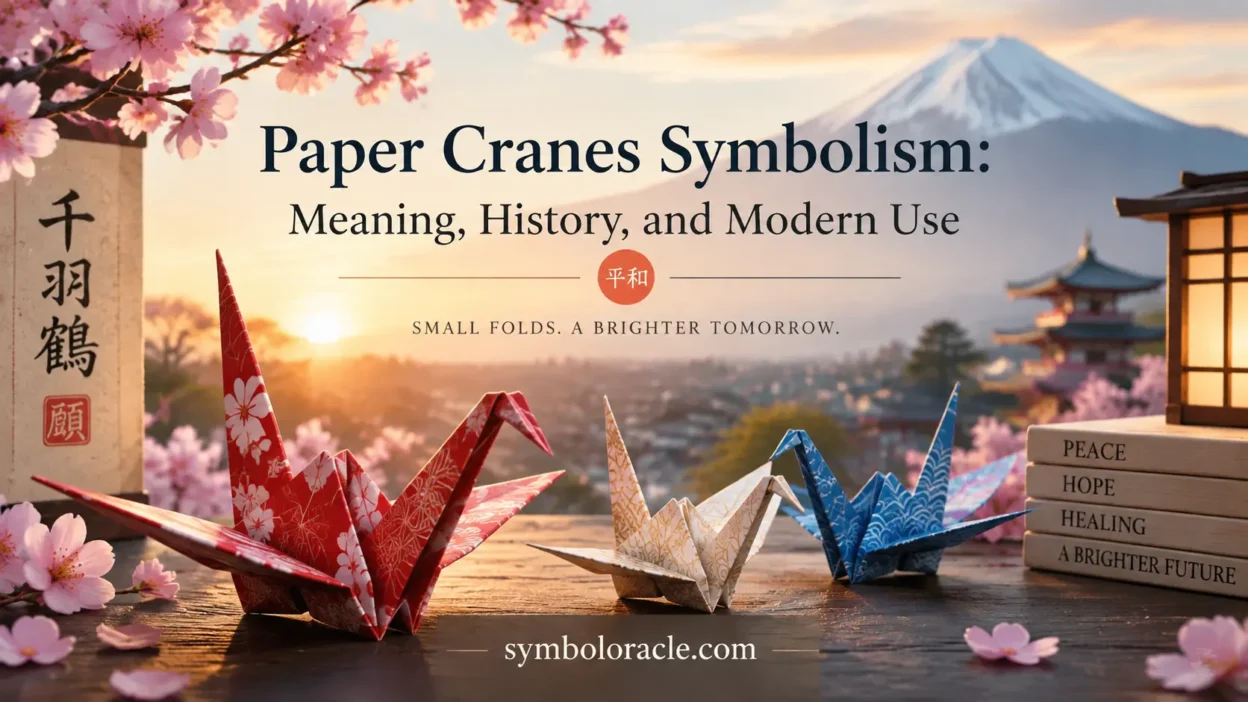
Paper cranes are folded paper birds created through the Japanese art of origami. Today, paper cranes symbolism commonly represents hope, peace, healing, and wishes for a better future. People around the world recognize these delicate creations as signs of compassion, remembrance, and human connection.
Although a paper crane looks simple, its meaning comes from centuries of cultural tradition, personal expression, and global events. In the United States, paper cranes often appear during memorials, art projects, weddings, celebrations, and peace movements because they communicate care without needing words.
Quick Answer
Paper cranes symbolism commonly represents hope, peace, healing, and positive wishes in modern American culture, especially in memorials, art, and personal celebrations. Historically, the symbol grew from Japanese origami traditions and became connected with wishes, longevity, and peace through cultural stories and global remembrance.
TL;DR
- Paper cranes represent hope, peace, and healing.
- Origami traditions shaped their modern meaning.
- Americans use cranes for remembrance and unity.
- The symbol connects with Japanese cultural stories.
- Folded cranes appear in art, gifts, and memorials.
What a Paper Crane Represents Today
A paper crane is a folded paper figure shaped like a bird with wings, a long neck, and a pointed beak. While the object itself is made from a simple sheet of paper, its meaning comes from the intention behind creating it.
In modern American culture, paper cranes are most often associated with hope and peace. People may fold cranes during difficult moments, create them for someone facing illness, or display them after a tragedy as a message of support.
The act of folding also adds meaning. Each crease requires attention and patience, making the crane a symbol of care, effort, and personal dedication. A handmade crane often carries emotional value because someone spent time creating it rather than simply purchasing an object.
Paper cranes can express different feelings depending on the situation:
| Context | Meaning in the USA | Common Associations | Notes |
|---|---|---|---|
| Memorials | Remembrance and peace | Loss, healing, respect | Often used after tragedies |
| Gifts | Good wishes and care | Friendship, support | Represents personal effort |
| Weddings | Hope for the future | Love, happiness, commitment | Used as decorations |
| Art projects | Unity and awareness | Community, creativity | Common in schools and museums |
| Peace movements | Nonviolence and harmony | Global understanding | Connected with activism |
The Origins of Origami and the Paper Crane Tradition
The history of paper cranes begins with origami, the Japanese art of paper folding. The word “origami” comes from Japanese terms meaning “folding” and “paper.” Although paper folding practices developed in several cultures, Japan became especially known for transforming folding into a refined artistic tradition.
Paper was once expensive and difficult to produce, so early Japanese paper folding was connected with ceremonies and special occasions. As paper became more accessible, origami became a creative activity enjoyed by many people.
The crane became one of the most recognized origami figures because cranes already held important cultural meanings in Japan. The bird was associated with longevity, good fortune, and happiness. Traditional beliefs connected cranes with long life because the bird was known for its graceful appearance and long lifespan.
Over time, folding a paper crane became linked with expressing wishes and hopes. This connection helped the crane move beyond decoration and become a symbol carrying emotional messages.
Why the Crane Became a Symbol of Hope and Longevity
The crane has held symbolic importance in Japan for generations. In Japanese folklore, cranes are often viewed as special birds connected with good fortune and a long life. This belief influenced the meaning of folded paper cranes.
One traditional idea says that folding many origami cranes can bring a wish or blessing. The exact number and details vary depending on the story, but the general idea remains that patience and dedication can represent a sincere hope.
This symbolism became especially meaningful because folding hundreds or thousands of cranes requires time. The process itself becomes part of the message. A person who folds cranes is showing commitment, care, and belief in a positive outcome.
In the United States, this meaning connects with familiar ideas such as:
- sending encouragement during illness
- creating handmade memorials
- supporting peace efforts
- celebrating important life events
The crane is not viewed as a guarantee of an outcome. Instead, it represents human hope and the desire to bring comfort during uncertain moments.
The Story of Sadako Sasaki and the Global Peace Meaning
One of the biggest reasons paper cranes became recognized worldwide is the story of Sadako Sasaki, a Japanese girl who survived the atomic bombing of Hiroshima during World War II but later developed radiation-related illness.
According to widely shared accounts, Sadako folded paper cranes while hoping for recovery. Her story became connected with the idea of peace and the suffering caused by war. After her death, her classmates and supporters helped create memorial efforts honoring children affected by the bombing.
The story transformed the paper crane into an international symbol of peace. In the United States and many other countries, paper cranes are now displayed during discussions about war, nuclear weapons, and the importance of protecting human life.
However, the symbol should be understood carefully. The paper crane is not only about tragedy. Its broader meaning includes resilience, compassion, and the ability of people to create hope after painful experiences.
Paper Cranes Symbolism in American Culture
In the United States, paper cranes have developed meanings beyond their Japanese origins. Americans often encounter them through schools, museums, community projects, memorial spaces, and cultural events.
Schools frequently use paper cranes in educational activities because they combine creativity with lessons about history, empathy, and global cultures. Students may fold cranes while learning about Japan, World War II, or peacebuilding.
Community groups also use large collections of paper cranes to represent collective support. Hundreds or thousands of folded cranes displayed together can show how individual actions create a larger message.
American interpretations often focus on:
- hope during difficult situations
- remembering people who have passed away
- encouraging kindness
- celebrating cultural exchange
- promoting peace
The meaning changes depending on the person and situation, but the central idea remains connected to care and positive intentions.
Emotional and Psychological Meaning of Folding Cranes
The process of folding a paper crane can carry emotional meaning beyond the final object. Many people find repetitive creative activities calming because they require focus and patience.
Origami can become a form of mindful activity. Folding paper forces a person to slow down, follow steps, and pay attention to small details. For some people, this process provides a peaceful moment during stressful experiences.
A paper crane may communicate emotions that are difficult to express directly. Someone might give a folded crane to show:
- “I am thinking about you.”
- “I support you.”
- “I remember this person.”
- “I hope things improve.”
Because the object is handmade, it often feels more personal than a mass-produced decoration.
Paper Cranes in Japanese Culture and Other Traditions
The meaning of paper cranes is strongly connected with Japanese culture, where cranes have long represented good fortune, longevity, and happiness. In traditional Japanese art and stories, cranes are often shown as graceful creatures connected with harmony and positive outcomes.
The crane’s reputation comes partly from its appearance and behavior. Its elegant movements, long lifespan, and seasonal migrations contributed to its association with endurance and prosperity. These ideas influenced how the bird appeared in paintings, textiles, ceremonies, and decorative objects.
The paper crane carries these older meanings while adding a human element. A folded crane represents not only the bird itself but also the time, patience, and intention of the person who creates it.
Other cultures have their own interpretations of cranes and similar birds. In some East Asian traditions, cranes can represent wisdom, loyalty, and a connection between the earthly world and spiritual ideas. In Western cultures, birds often symbolize freedom, transformation, and the movement between different stages of life.
Although meanings vary, many cultures connect birds with hope because they move between the ground and sky. This connection helps explain why paper cranes became a symbol that people around the world can understand.
Religious and Spiritual Interpretations of Paper Cranes
Paper cranes are not a religious symbol in the same way as crosses, crescents, or other faith-specific objects. However, many people connect them with spiritual ideas such as compassion, peace, gratitude, and the value of life.
In some Buddhist-influenced Japanese traditions, cranes are viewed positively because they represent qualities such as patience and a peaceful existence. The act of carefully folding paper can also reflect ideas of mindfulness and awareness.
In the United States, people from different backgrounds may use paper cranes in spiritual or reflective settings without attaching them to one specific religion. They may appear during:
- meditation gatherings
- remembrance ceremonies
- community healing events
- interfaith programs
The symbol works well in these settings because it focuses on universal human experiences rather than requiring a specific belief system.
Paper Cranes as Symbols of Peace and Remembrance
One of the strongest modern meanings of paper cranes is peace. This association became especially visible after World War II when the crane became connected with remembrance and the hope of preventing future conflicts.
Many peace organizations, schools, and communities use paper cranes as visual reminders of the human cost of violence. Large displays of folded cranes often represent many individuals coming together for a shared message.
For memorial events, paper cranes can represent:
- honoring someone’s memory
- offering comfort after loss
- recognizing shared humanity
- choosing hope after tragedy
Unlike symbols that focus only on sadness, the crane often combines remembrance with optimism. It acknowledges difficult experiences while suggesting that healing and understanding remain possible.
Paper Cranes in Tattoos and Personal Expression
Paper crane tattoos have become popular because they combine artistic beauty with personal meaning. A tattooed crane may represent a person’s connection to hope, change, peace, or an important life experience.
People choose paper crane tattoos for many reasons, including:
- overcoming a difficult period
- honoring a loved one
- celebrating personal growth
- expressing creativity
- showing appreciation for Japanese art
The design can also be customized. Some people add flowers, names, dates, colors, or other symbols to make the tattoo more personal.
A colored paper crane may create additional associations. For example:
| Design Element | Common Meaning | Personal Interpretation |
|---|---|---|
| White crane | Peace and purity | Calmness or healing |
| Blue crane | Trust and hope | Emotional balance |
| Red crane | Love and passion | Strong personal connection |
| Multiple cranes | Unity and support | Community or family bonds |
| Broken or incomplete crane | Struggle and recovery | Growth after challenges |
Tattoo meanings are always personal, so the same design can represent different experiences for different people.
Paper Cranes in Home Decor and Design
Paper cranes are also used in interior design because their shape creates a feeling of movement, creativity, and simplicity. They often appear in handmade decorations, wall art, hanging installations, and cultural displays.
In American homes, paper crane decorations may be chosen because they create a peaceful atmosphere. They can add a handmade touch to spaces while representing positive values such as kindness and hope.
Designers may use paper cranes in:
- children’s rooms
- creative studios
- cultural exhibitions
- wedding decorations
- event spaces
Large hanging installations made from many cranes can create an impressive visual effect. The individual cranes may look simple, but together they create a larger artistic statement.
Paper Cranes in Weddings and Celebrations
Paper cranes sometimes appear in weddings because they symbolize wishes for happiness, harmony, and a long-lasting relationship. Couples may include folded cranes in centerpieces, decorations, invitations, or handmade gifts.
The appeal comes from the idea that each folded crane represents care and effort. A collection of cranes can symbolize the time and attention invested in building a shared future.
In American wedding culture, paper cranes may also represent:
- cultural appreciation
- creativity
- family involvement
- hopes for a peaceful marriage
They are especially meaningful for couples who value handmade details and symbols connected with personal stories.
Paper Cranes in Modern Digital Culture
The paper crane has also found a place in online communities and digital creativity. People share origami designs, tutorials, artwork, and personal stories through social media platforms.
Digital culture has helped introduce paper cranes to people who may never have learned origami traditionally. Videos and online guides make the craft accessible worldwide.
Online, paper cranes are often associated with:
- creative hobbies
- mental wellness activities
- inspirational messages
- cultural learning
- artistic expression
The symbol’s simple appearance makes it easy to recognize even when used in digital illustrations, logos, and graphics.
Common Misunderstandings About Paper Crane Symbolism
Because paper cranes have become globally popular, some meanings are sometimes simplified or misunderstood.
One common misunderstanding is that folding cranes always guarantees a wish will come true. The tradition is better understood as an expression of hope, dedication, and positive intention rather than a promise of a specific result.
Another misunderstanding is that paper cranes belong only to Japanese culture. While Japan has played the most important role in shaping their modern meaning, the symbol has become part of international conversations about peace, art, and compassion.
It is also important to avoid separating the crane from its historical background. Using the symbol respectfully means recognizing its connection to Japanese traditions and the experiences that shaped its global meaning.
How Paper Crane Meaning Has Changed Over Time
The meaning of the paper crane has continued to evolve. Originally connected with Japanese origami traditions and the crane’s cultural associations, it later gained worldwide recognition as a symbol of peace and remembrance.
Today, paper cranes can represent both personal and collective experiences. A single folded crane may express a private hope, while thousands displayed together may represent a public message.
The symbol has moved through several stages:
- traditional Japanese art and beliefs
- personal wishes and celebrations
- post-war peace movements
- global cultural exchange
- modern creative expression
This evolution shows how symbols change when people carry them into new environments. The paper crane remains connected to its origins while continuing to gain new meanings.
Controversies and Misuse of Paper Crane Symbolism
Paper cranes are generally viewed as a positive symbol, but their worldwide popularity has sometimes created misunderstandings about their cultural meaning. When a symbol moves from one culture into another, people may use it without fully understanding its background.
One concern is cultural simplification. Some people recognize paper cranes only as a decorative object and overlook their connection to Japanese history, origami traditions, and peace movements. Using the symbol respectfully means recognizing that it carries emotional and cultural importance for many communities.
Another issue is turning meaningful symbols into simple trends. A paper crane used only because it looks attractive may lose some of its original context. However, cultural exchange is not automatically negative. Learning about the symbol’s origins and using it thoughtfully can create appreciation rather than misunderstanding.
The paper crane has also sometimes been connected only with sadness because of its association with war remembrance. While this history is important, the symbol represents more than tragedy. It also expresses resilience, compassion, friendship, and the possibility of healing.
Positive and Negative Interpretations of Paper Cranes
Like many symbols, paper cranes can carry different meanings depending on the situation. Most interpretations are positive, but emotional context can influence how people understand them.
| Interpretation | Positive Meaning | Possible Negative Association |
|---|---|---|
| Hope | Encouragement and optimism | Unrealistic expectations |
| Peace | Harmony and understanding | Used without historical awareness |
| Memory | Honoring loved ones | Connected with grief |
| Change | Personal growth and transformation | Reminder of difficult periods |
| Tradition | Cultural appreciation | Cultural misunderstanding |
The symbol itself is not positive or negative by nature. Its meaning depends on the intention behind its use and the experience of the person viewing it.
Why People Connect With Paper Cranes Today
Paper cranes remain meaningful because they combine simplicity with personal effort. A person does not need expensive materials or advanced skills to create one. A single sheet of paper can become an object carrying a message.
In modern life, many people look for ways to express emotions beyond digital communication. A handmade crane offers something physical and personal in a world where many interactions happen through screens.
People connect with paper cranes because they represent:
- patience during uncertainty
- care for another person
- hope after hardship
- creativity through simple materials
- connection between individuals
The symbol works because it allows people to participate. Folding a crane is an action, not just an idea.
Paper Cranes in Art, Museums, and Public Spaces
Artists and communities often use paper cranes to create large-scale installations. Thousands of folded cranes displayed together can transform a simple craft into a public statement.
These installations are commonly created for:
- peace exhibitions
- cultural festivals
- remembrance events
- educational programs
- community art projects
The visual impact comes from repetition. One crane may appear delicate and small, but many cranes together represent collective effort.
In museums and cultural spaces, paper cranes are often used to introduce visitors to origami, Japanese culture, and stories connected with peace and memory.
The Role of Paper Cranes in Healing and Human Connection
Many people use paper cranes during emotional experiences because the activity creates a sense of participation. Folding can become a way to process feelings, show support, or create a connection with others.
For example, communities may fold cranes after a natural disaster or public tragedy to express sympathy and solidarity. The cranes become a visible reminder that people are offering care and support.
The meaning does not come only from the finished object. It also comes from the time spent creating it and the relationship between the person who folds it and the person who receives or sees it.
Paper Cranes Compared With Other Bird Symbols
Birds frequently appear as symbols because their ability to fly creates associations with freedom, movement, and transformation. However, different birds carry different cultural meanings.
| Bird Symbol | Common Meaning in the USA | Difference From Paper Cranes |
|---|---|---|
| Dove | Peace and reconciliation | More directly linked with religious and peace traditions |
| Eagle | Strength and national identity | Often connected with power and leadership |
| Owl | Wisdom and knowledge | Focuses on learning rather than hope |
| Butterfly | Change and transformation | Represents life stages rather than human-made wishes |
| Paper Crane | Hope, peace, and care | Created through personal action |
The paper crane stands apart because it is not simply a bird symbol. It combines the meaning of the crane with the meaning of the person who folds it.
Frequently Asked Questions About Paper Cranes Symbolism
What does a paper crane symbolize?
A paper crane usually symbolizes hope, peace, healing, and good wishes. In modern American culture, it is often used to express support, remembrance, and compassion during meaningful moments.
Why are paper cranes associated with peace?
Paper cranes became strongly connected with peace because of their role in remembrance efforts after World War II, especially through stories connected with Hiroshima. Today, many people use them to represent the desire for a more peaceful world.
What does a paper crane tattoo mean?
A paper crane tattoo can represent personal hope, overcoming challenges, emotional healing, or a connection to Japanese art. The meaning depends on the individual’s experience and the design choices included.
Are paper cranes a religious symbol?
Paper cranes are not a specific religious symbol, but some people connect them with spiritual ideas such as compassion, mindfulness, gratitude, and reflection. Their meaning is usually cultural and personal rather than tied to one faith.
What do paper cranes mean in Japanese culture?
In Japanese culture, cranes are associated with longevity, good fortune, and happiness. Origami cranes developed additional meanings related to wishes, patience, and hope.
Is making paper cranes good luck?
Some traditions connect folding cranes with wishes and blessings, but they are better understood as symbols of dedication and hope rather than guaranteed luck. The act of folding represents care and intention.
Why do people hang thousands of paper cranes?
Large collections of paper cranes are often displayed to represent unity, remembrance, peace, or a shared hope. Each individual crane represents one person’s contribution to a larger message.
Conclusion
Paper cranes represent hope, peace, remembrance, and human connection. Their meaning developed from Japanese origami traditions and expanded through global stories, personal experiences, and public expressions of compassion.
Today, paper cranes symbolism continues to appear in American culture through memorials, artwork, tattoos, celebrations, and community projects. The symbol remains meaningful because it connects a simple creative action with larger ideas about kindness and resilience.
A folded piece of paper becomes more than an object when someone creates it with intention. The paper crane shows how small acts of care can carry messages that reach beyond language and culture.


