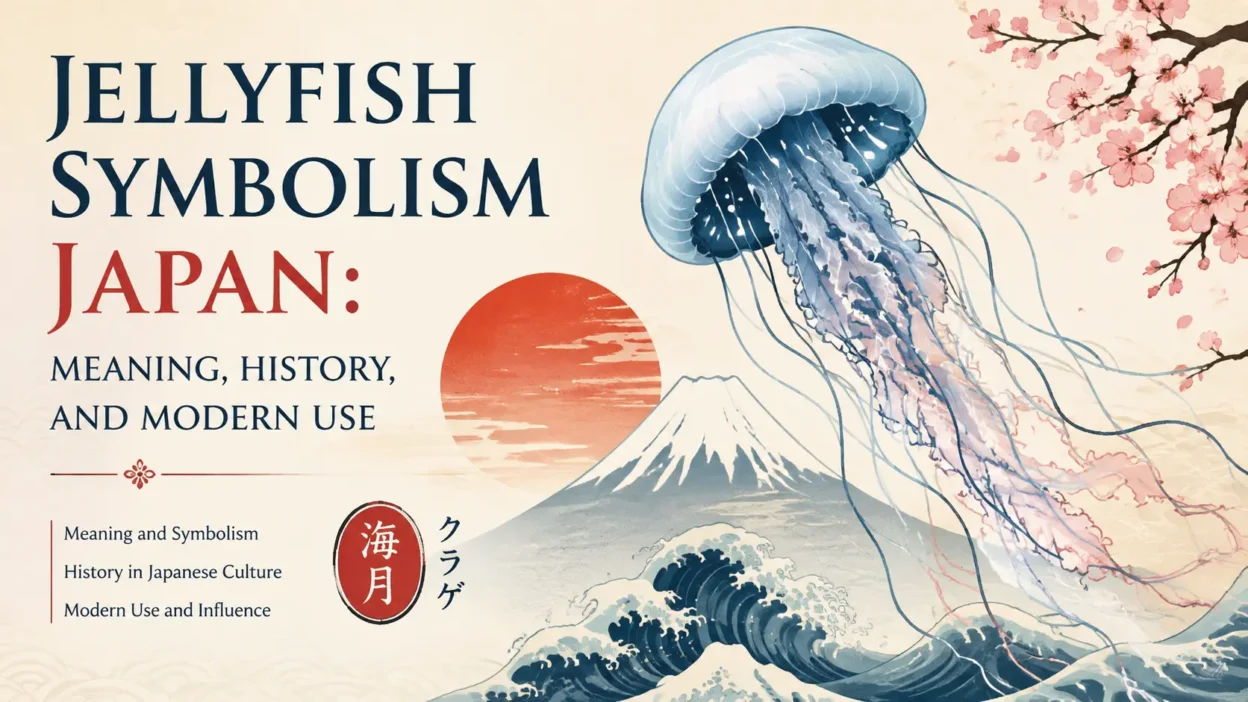
Jellyfish have long been connected with the ocean, movement, and mystery, and jellyfish symbolism Japan reflects a unique blend of natural observation, folklore, and artistic interpretation. In Japanese culture, the jellyfish, known as kurage (海月), is often associated with the sea, the moon, adaptability, and the delicate balance between beauty and danger.
Unlike symbols that come from fixed religious traditions, jellyfish meanings developed through stories, language, art, and the relationship between Japanese communities and the surrounding ocean. Their transparent bodies, floating movement, and connection to underwater worlds have made them an interesting subject in Japanese imagination.
Today, many people in the United States encounter jellyfish symbolism through tattoos, aquarium art, fashion, animation, and ocean-inspired designs. While interpretations vary, the jellyfish often represents flexibility, transformation, emotional sensitivity, and the ability to move with changing circumstances.
Quick Answer
Jellyfish symbolism Japan commonly represents adaptability, harmony with nature, and emotional balance in modern interpretations. Historically, Japanese folklore connected jellyfish with ocean spirits, sea deities, and lessons about humility and transformation.
TL;DR
- Jellyfish symbolize adaptability and natural flow.
- Japanese folklore links them with ocean legends.
- Kurage connects jellyfish with sea and moon imagery.
- U.S. culture views jellyfish as artistic ocean symbols.
- Tattoos often represent resilience and change.
- Meanings balance beauty, danger, and survival.
What the Jellyfish Represents in Japanese Culture
The jellyfish is a soft-bodied marine creature with a rounded bell-shaped body and flowing tentacles. Unlike fish or sea turtles, it has no bones and moves by drifting through ocean currents. This unusual form has influenced many symbolic interpretations.
In Japan, the jellyfish is closely connected with the sea because coastal life has always been important to Japanese communities. Fishing, marine travel, and ocean worship shaped many stories involving sea creatures.
The Japanese word for jellyfish, kurage (海月), literally combines characters associated with “sea” and “moon.” The name reflects the creature’s appearance as something glowing or floating like a reflection of the moon on water.
This connection gives the jellyfish a poetic association with:
- calm movement
- reflection
- mystery
- natural cycles
- emotional awareness
Ancient Roots and Japanese Folklore Connections
Jellyfish appear in Japanese folklore mainly through stories connected to the underwater world and sea spirits. One famous tale explains why jellyfish lost their bones.
In the story, the jellyfish served the Dragon King (Ryūjin), a powerful sea deity in Japanese mythology. After failing an important task, the jellyfish was punished and lost its bones. The story became a cultural explanation for the creature’s soft body while also teaching lessons about responsibility and consequences.
These stories placed the jellyfish within a larger world of ocean beings, including fish, turtles, dragons, and other creatures believed to exist around underwater kingdoms.
Rather than portraying the jellyfish only as beautiful, Japanese folklore often showed it as part of nature’s unpredictable character.
Jellyfish and the Japanese Sea Spirit World
Japanese mythology frequently connects the ocean with spiritual forces. The sea deity Ryūjin represents the power of the ocean and is traditionally associated with tides, storms, and marine life. Sea creatures were often described as belonging to his underwater realm.
Within this context, jellyfish could represent:
| Context | Meaning in Japan and the USA | Common Associations | Notes |
|---|---|---|---|
| Folklore | Ocean connection | Sea spirits, legends | Appears in traditional stories |
| Nature | Adaptability | Movement, survival | Inspired by drifting behavior |
| Art | Beauty and calm | Flowing shapes | Popular visual subject |
| Tattoos | Personal transformation | Change, resilience | Modern interpretation |
| Design | Peaceful atmosphere | Ocean themes | Used in decor and media |
The jellyfish was not always treated as a sacred symbol by itself, but it became meaningful through its relationship with larger ocean traditions.
Why Jellyfish Symbolize Adaptability and Change
One of the strongest modern interpretations of the jellyfish comes from its ability to survive through flexibility. Instead of fighting ocean currents, jellyfish move with them.
This behavior has made the creature a symbol of:
- accepting change
- emotional flexibility
- patience
- adjusting to new situations
In American culture, this interpretation is especially common among people who use jellyfish imagery for personal expression. Someone choosing a jellyfish tattoo may connect it with overcoming difficult periods or learning to adapt.
The meaning does not suggest weakness. Instead, it highlights survival through adjustment rather than force.
The Connection Between Jellyfish and the Moon
The relationship between jellyfish and the moon is especially important in Japanese language and artistic imagination. The word kurage creates a visual connection between the ocean creature and moonlight reflecting on water.
This association gives jellyfish symbolism a softer emotional meaning:
- reflection
- quiet beauty
- imagination
- inner emotions
The moon has long appeared in Japanese poetry and art as a symbol connected with seasonal change and observation of nature. Jellyfish naturally fit this aesthetic because they appear almost weightless and luminous underwater.
Jellyfish Symbolism in the United States Today
In the United States, jellyfish symbolism is usually understood through art, nature appreciation, and personal identity rather than traditional folklore.
Americans commonly encounter jellyfish through:
- aquarium exhibitions
- ocean conservation campaigns
- tattoos
- jewelry designs
- home decoration
- fantasy artwork
- animation and games
Many people associate jellyfish with peaceful ocean environments because of their slow movement and glowing appearance.
At the same time, Americans also recognize their dangerous side because some species can deliver painful or harmful stings. This creates a dual meaning: beauty combined with caution.
Emotional and Psychological Meanings of Jellyfish
Symbolically, jellyfish often represent emotional qualities rather than physical strength.
People may connect the jellyfish with:
Emotional sensitivity
The jellyfish’s delicate appearance can represent awareness, empathy, and openness.
Independence
Although jellyfish move with currents, they survive without relying on complex structures like many other animals.
Transformation
Their unusual life cycle, including major changes between stages, has encouraged associations with personal growth and renewal.
Calmness
The slow underwater movement of jellyfish is often linked with relaxation and mindfulness.
These interpretations are modern symbolic readings rather than universal meanings shared by every culture.
Jellyfish in Japanese Art, Media, and Design
Japanese visual culture often uses ocean imagery because the sea is central to the country’s geography and history.
Jellyfish appear in:
- aquarium photography
- illustrations
- anime-inspired artwork
- character design
- decorative patterns
Their transparent bodies and flowing tentacles make them visually appealing for artists who want to create images connected with fantasy, elegance, or underwater worlds.
Modern Japanese aquariums have also helped shape public appreciation of jellyfish by displaying them as graceful creatures rather than simply dangerous animals.
Why People Choose Jellyfish Tattoos
Jellyfish tattoos have become popular because the design allows many personal interpretations.
Common meanings include:
- surviving difficult experiences
- embracing change
- connection with the ocean
- emotional independence
- peaceful strength
In the United States, tattoo culture often focuses on personal stories, so a jellyfish tattoo may represent something unique to the wearer.
Some designs combine jellyfish with:
- flowers
- waves
- moons
- Japanese-inspired patterns
- watercolor effects
The final meaning depends on the person’s own connection to the image.
Positive and Negative Symbolism of Jellyfish
Jellyfish symbolism is not entirely positive or negative. It depends on the context.
Positive meanings include:
- flexibility
- beauty
- creativity
- survival
- emotional awareness
Negative associations may include:
- danger
- unpredictability
- hidden threats
Because jellyfish can look delicate while carrying a painful sting, they often represent the idea that appearances can be misleading.
This contrast is one reason the creature remains interesting as a symbol.
Common Misunderstandings About Japanese Jellyfish Symbolism
A common mistake is assuming every Japanese interpretation of jellyfish has the same meaning. Japanese culture contains many regional traditions, artistic styles, and personal interpretations.
Another misunderstanding is treating jellyfish as a major religious symbol in Japan. While jellyfish appear in folklore connected with sea mythology, they are not generally comparable to central religious symbols such as the torii gate or sacred animals in Shinto traditions.
Modern interpretations often combine Japanese aesthetics with global tattoo and design trends.
How Jellyfish Meaning Has Changed Over Time
The meaning of jellyfish has evolved from practical observations of the ocean into broader symbolic ideas.
Historically, people viewed jellyfish as part of the mysterious marine world. Folklore placed them among underwater creatures connected with sea legends.
Today, jellyfish are often viewed through environmental, artistic, and personal lenses.
Modern science has also changed perceptions. Research into unusual jellyfish species and their life cycles has contributed to ideas about renewal and survival, although popular interpretations sometimes exaggerate these qualities.
Jellyfish Symbolism in Modern Global Culture
Outside Japan, jellyfish symbolism continues to grow through international art and media.
People around the world use jellyfish imagery to express:
- connection with nature
- freedom from traditional expectations
- emotional growth
- fascination with the unknown
For many Americans, jellyfish represent a peaceful relationship with the ocean and a reminder that survival can take many forms.
The symbol works because it combines opposite qualities: softness and danger, movement and stillness, fragility and endurance.
Frequently Asked Questions
What does a jellyfish symbolize in Japanese culture?
A jellyfish can symbolize connection with the ocean, adaptability, and natural balance in Japanese interpretations. Folklore also connects jellyfish with sea legends and underwater worlds.
What does a jellyfish tattoo mean in Japan?
A jellyfish tattoo may represent flexibility, transformation, and harmony with nature. However, tattoo meanings depend on the individual rather than one fixed cultural definition.
Are jellyfish considered lucky in Japan?
Jellyfish are not universally considered a traditional good-luck symbol in Japan. Their meanings are usually connected with ocean life, folklore, beauty, and adaptability.
Why are jellyfish connected to the moon in Japan?
The Japanese word kurage (海月) links jellyfish with the sea and moon imagery. The name reflects the creature’s appearance as something floating like moonlight on water.
Do jellyfish have spiritual meanings?
Some people interpret jellyfish spiritually as symbols of change, emotional awareness, and acceptance. These meanings are personal interpretations rather than official religious beliefs.
Are jellyfish symbols positive or negative?
Jellyfish can represent both positive and cautionary ideas. They may symbolize beauty and resilience while also reminding people of hidden dangers.
How are jellyfish viewed in modern American culture?
In the United States, jellyfish are commonly viewed as artistic ocean symbols connected with creativity, calmness, environmental awareness, and personal transformation.
Conclusion
Jellyfish symbolism Japan reflects the relationship between people, the ocean, and the stories created around nature. From folklore involving sea spirits to modern artwork and tattoos, the jellyfish represents movement, adaptation, and the balance between beauty and danger.
Today, jellyfish symbolism Japan continues to inspire artists and individuals who see this ocean creature as a reminder that flexibility can be a form of strength. Its meaning comes not from one single tradition, but from the many ways humans interpret the natural world around them.