The grim reaper symbolism represents death, mortality, and the unavoidable passage of time, but its meaning extends beyond fear. In modern American culture, the figure often represents reflection, change, endings, personal transformation, and the reminder to value life.
The grim reaper is one of the most recognizable symbols connected with death. Usually shown as a hooded skeleton carrying a scythe, the figure appears in Halloween decorations, movies, tattoos, artwork, literature, and discussions about mortality. While many people associate it with something frightening, its meaning has developed through centuries of cultural storytelling.
Understanding this symbol requires looking beyond the scary image. The grim reaper reflects how different societies have tried to explain death, human limits, and the transition between one stage of existence and another.
Quick Answer
Grim reaper symbolism commonly represents death, mortality, and the end of life in modern American culture, especially in Halloween, horror, and artistic settings. Historically, it developed as a personification of death and has also represented time, change, and the natural cycle of existence.
TL;DR
- Represents death, mortality, and life’s natural limits
- Developed from medieval European death imagery
- Became a major Halloween symbol in America
- Often represents change and personal transformation
- Appears widely in tattoos, art, and entertainment
What the Grim Reaper Looks Like and Where It Appears
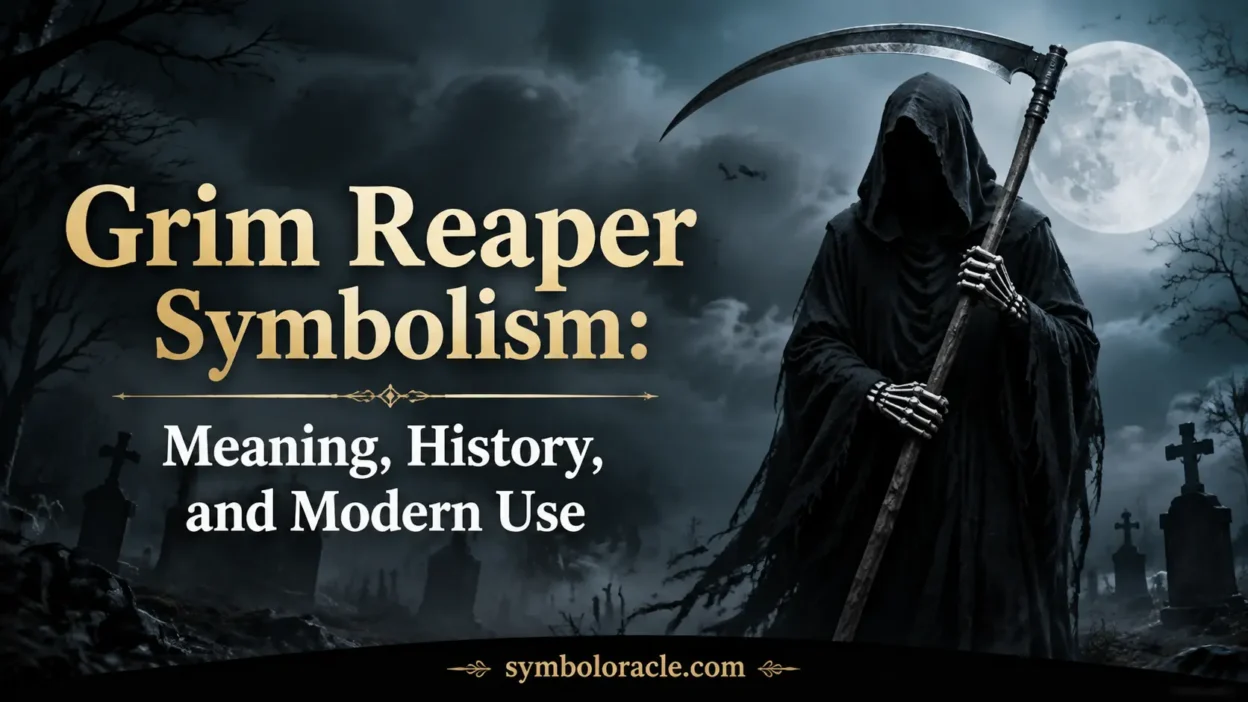
The grim reaper is traditionally depicted as a tall, skeletal figure wearing a dark hooded robe and carrying a large scythe. The skeleton represents the physical reality of death, while the robe creates a mysterious and human-like appearance. The scythe connects the figure to harvesting imagery, suggesting that lives are “collected” in the same way crops are gathered from fields.
People commonly encounter the grim reaper in American Halloween displays, horror films, video games, graphic art, tattoos, costumes, and fantasy-themed designs. Although the image is associated with fear, its visual appeal also comes from its simplicity: a single figure communicates a complex idea about human existence.
What It Commonly Means in the United States
In the United States, the grim reaper is most often understood as a symbol of death. However, Americans use the image in different ways depending on the context.
For some people, it represents fear of death or the unknown. In horror entertainment, the grim reaper creates suspense because it represents a force that cannot be avoided. In other settings, it represents acceptance of mortality and the importance of appreciating life.
The symbol can also represent endings beyond physical death. A person may use the image to represent leaving behind an old identity, overcoming hardship, or accepting major life changes.
| Context | Meaning in the USA | Common Associations | Notes |
|---|---|---|---|
| Halloween | Death and spooky traditions | Costumes, decorations, horror themes | Mostly entertainment-focused |
| Tattoos | Mortality and personal beliefs | Strength, survival, transformation | Often has individual meanings |
| Art | Reflection on human existence | Time, change, emotions | Used symbolically rather than literally |
| Pop culture | Fear or dramatic storytelling | Movies, games, fiction | Often exaggerated for effect |
| Personal identity | Acceptance of life’s limits | Resilience, rebellion | Meaning depends on the person |
Ancient Roots and Early Death Symbolism
The grim reaper did not appear suddenly as a single invention. Its imagery developed from older traditions that personified death as a figure rather than an abstract idea.
Ancient cultures often created representations of death through gods, spirits, or supernatural beings. These figures helped people explain the unknown aspects of dying and what might happen afterward. Although these earlier symbols were different from the modern grim reaper, they shared the idea of giving death a recognizable form.
The modern image became more established in medieval Europe, especially during periods when widespread disease and social upheaval made death a constant part of daily life. Artistic representations of skeletons and death figures became common reminders that all people, regardless of wealth or status, faced the same fate.
Medieval Origins of the Hooded Death Figure
The familiar grim reaper image is strongly connected to European medieval artwork. During this period, artists often used skeleton imagery to represent human mortality.
The “Dance of Death” tradition showed people from different social classes alongside death figures, emphasizing that death affected kings, workers, and ordinary citizens equally. These images were not only frightening; they also served as moral reminders about humility and the temporary nature of worldly success.
The scythe became connected with death because farming imagery was already associated with harvesting. Just as a farmer cuts crops when they are ready, death was symbolically viewed as gathering human lives at their appointed time.
The Grim Reaper and Religious Interpretations
Religious interpretations of the grim reaper vary widely. In many Christian-influenced cultures, death imagery has been connected with ideas about judgment, the afterlife, and spiritual preparation. However, the grim reaper itself is not a central religious figure in Christianity.
Some people view the figure as a reminder of human mortality and the importance of moral living. Others see it as a cultural image separate from religious belief, mainly used in art and storytelling.
Different faith traditions have their own ways of representing death, including angels, spirits, ancestors, or transitions between states of existence. The grim reaper is only one cultural interpretation among many.
Why Americans Associate It With Halloween
The grim reaper became one of America’s most recognizable Halloween symbols because the holiday embraces themes of ghosts, monsters, darkness, and the supernatural.
During Halloween, the image usually loses much of its serious historical meaning and becomes part of seasonal entertainment. Decorations featuring grim reapers often create a spooky atmosphere rather than express a serious belief about death.
American Halloween culture transformed the figure into a familiar character. It appears alongside pumpkins, witches, ghosts, and other symbols that represent mystery and imagination.
Emotional and Psychological Meaning
The grim reaper can represent different emotional responses to mortality. For some people, it reflects anxiety about death and the unknown. For others, it represents acceptance and the understanding that life has limits.
Psychologically, symbols of death can encourage reflection. Seeing a representation of mortality may remind people to consider their priorities, relationships, and personal goals.
The symbol can also represent overcoming fear. Someone who chooses a grim reaper tattoo, for example, may be expressing confidence in facing difficult realities rather than avoiding them.
Grim Reaper Symbolism in Tattoos and Personal Style
Grim reaper tattoos are popular because the image allows for many interpretations. Some people choose the design to represent survival after a difficult experience, while others connect it with strength, independence, or a reminder to live fully.
The meaning often changes depending on additional elements. A grim reaper with flowers may combine ideas of death and renewal. A grim reaper with a clock may represent time passing. A darker design may focus more on fear, while a simpler version may emphasize acceptance.
Because tattoos are personal expressions, there is no single universal meaning behind a grim reaper tattoo.
Modern Use in Movies, Games, and Popular Culture
Modern entertainment frequently uses the grim reaper as a character rather than only a symbol. Movies, television shows, books, and video games often portray death as a figure that interacts with humans.
These portrayals range from terrifying villains to humorous characters. Comedy sometimes uses the grim reaper because the serious subject of death can be made less intimidating through storytelling.
Popular culture has expanded the meaning of the figure. Today, many people recognize it not only as a symbol of death but also as a fictional character with personality and narrative purpose.
Cross-Cultural Views of Death Figures
Different cultures have created their own representations of death. Some traditions view death figures as frightening forces, while others see them as guides, protectors, or natural parts of existence.
For example, some cultures use ancestor traditions to maintain connections between the living and the dead. Others represent death through spiritual beings associated with transition or renewal.
The grim reaper reflects one particular cultural approach: turning death into a recognizable figure. Its meaning changes when viewed alongside other traditions around the world.
Common Misunderstandings About the Symbol
A common misunderstanding is that the grim reaper always represents negativity or evil. Historically, the figure has often represented inevitability rather than wrongdoing.
Another misconception is that people who use the symbol are celebrating death. In many cases, the image represents awareness of mortality, personal experiences, artistic interest, or appreciation for darker aesthetics.
The meaning depends heavily on context. A Halloween decoration, a historical painting, and a personal tattoo may all use the same image for completely different reasons.
How the Symbol’s Meaning Has Changed Over Time
The grim reaper has moved from a serious reminder of mortality into a flexible cultural symbol. In medieval Europe, it often served as a warning about life’s temporary nature. Today, it appears in entertainment, fashion, and personal expression.
Modern interpretations often focus less on fear and more on reflection. Many people use the symbol to discuss change, endings, resilience, or the importance of living intentionally.
This shift shows how symbols evolve as societies develop new relationships with old ideas.
Controversies and Misuse of the Grim Reaper Image
Because the grim reaper is associated with death, some people consider it inappropriate in certain settings. The symbol may create discomfort when displayed without considering cultural or personal sensitivities.
The image has also been used in some forms of aggressive branding, dark-themed marketing, or controversial artwork. These uses can sometimes make people associate it with danger or negativity.
However, historical meaning and modern misuse are not always the same. A symbol can have a complex background while being interpreted differently in specific situations.
Why the Grim Reaper Remains Relevant Today
The grim reaper continues to appear because death remains a universal human experience. Even as cultures change, people continue searching for ways to understand endings, uncertainty, and the passage of time.
In modern America, the figure exists between fear and curiosity. It can appear in entertainment, personal artwork, seasonal traditions, and philosophical discussions.
Its continued popularity comes from its ability to represent a difficult subject in a simple visual form.
Frequently Asked Questions
What does the grim reaper symbolize?
The grim reaper symbolizes death, mortality, and the unavoidable end of life. It can also represent change, transformation, and acceptance of life’s natural cycles.
Is the grim reaper a religious symbol?
The grim reaper is mainly a cultural symbol rather than a specific religious figure. Different religions have their own interpretations of death and the afterlife.
What does a grim reaper tattoo mean?
A grim reaper tattoo may represent mortality, survival, personal transformation, strength, or acceptance of life’s challenges. The meaning depends on the person wearing it.
Why is the grim reaper associated with Halloween?
The grim reaper became linked with Halloween because the holiday uses themes of death, ghosts, and the supernatural. In this setting, the figure is often used for decoration and entertainment.
Does the grim reaper always represent something negative?
No. While it can represent fear or loss, many people view it as a reminder to appreciate life, accept change, and recognize human limits.
What does the scythe represent in grim reaper imagery?
The scythe represents harvesting and is connected to the idea that death “collects” lives. It comes from agricultural symbolism where crops are gathered when their time has come.
Conclusion
The grim reaper symbolism represents more than death alone. It reflects humanity’s long effort to understand mortality, change, and the limits of human life.
From medieval artwork to modern tattoos and Halloween decorations, the grim reaper has changed from a warning about mortality into a symbol with many personal meanings. Today, it can represent fear, acceptance, transformation, or simply an interest in dark artistic styles.
Understanding the grim reaper means looking beyond its frightening appearance and recognizing the broader ideas it represents about life, time, and human experience.