Ladybugs are among the few insects that almost everyone recognizes with a smile. Their bright red shells, black spots, and gentle appearance have helped them earn a reputation that is very different from most bugs. Today, ladybug symbolism is commonly connected with luck, protection, happiness, and positive change, making the insect a favorite in American culture and beyond.
People encounter ladybugs in gardens, parks, children’s books, jewelry, clothing, and home décor. Unlike insects associated with fear or destruction, ladybugs are usually welcomed. Their beneficial role in nature has reinforced the idea that they bring something good wherever they appear.
The meanings attached to ladybugs did not develop overnight. They grew from centuries of farming traditions, religious beliefs, folklore, and observations of the insect’s behavior. Understanding those origins helps explain why the ladybug continues to symbolize optimism in the United States today.
Quick Answer
Ladybug symbolism most commonly represents good luck, protection, happiness, and positive change in modern American culture. Historically, the insect also became associated with divine protection, healthy harvests, and hope because of its helpful role in agriculture and its place in European folklore.
TL;DR
- Ladybugs usually symbolize luck and protection.
- Farmers valued them for protecting crops.
- Americans often view them as signs of good fortune.
- Different cultures connect them with blessings and prosperity.
- Modern designs use ladybugs to express optimism and joy.
What a Ladybug Looks Like and Why People Notice It
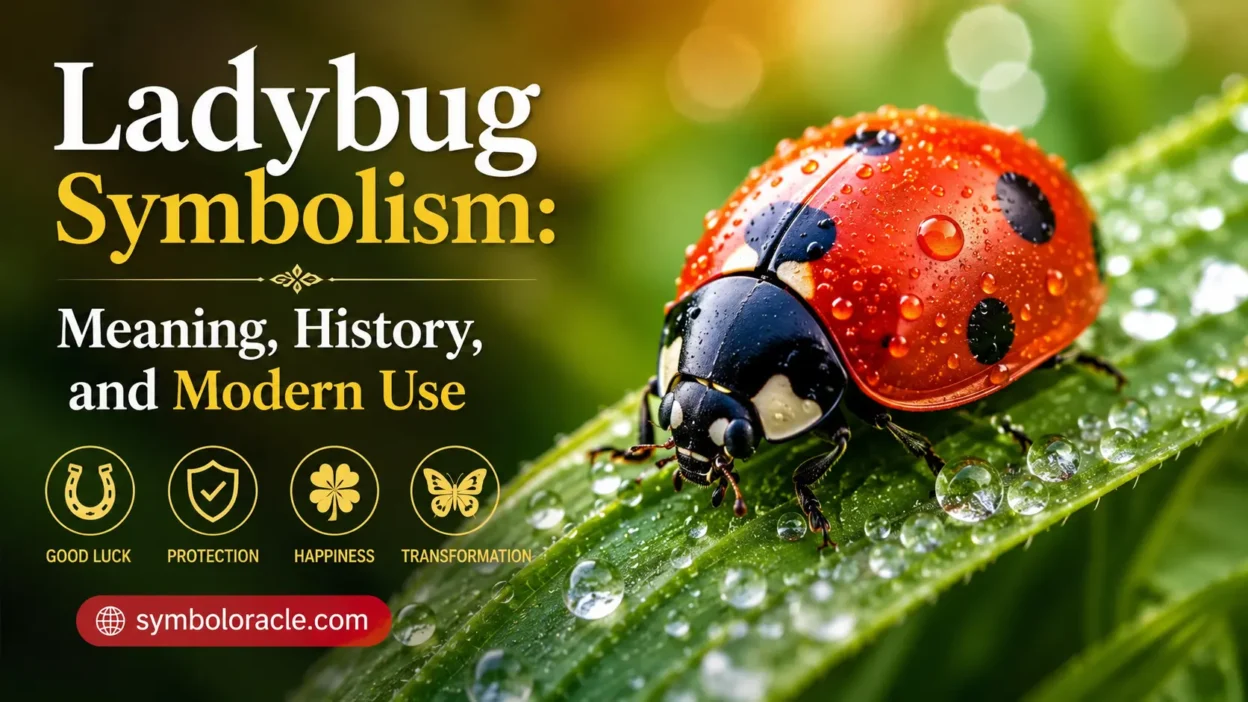
Ladybugs are small beetles with rounded bodies, short legs, and brightly colored wing covers. Although the classic image is a red shell with black spots, many species appear in orange, yellow, pink, or even black.
Their striking appearance serves a practical purpose. Bright colors warn predators that they taste unpleasant, helping protect the insect in nature. For people, however, those same colors make ladybugs appear cheerful and memorable.
Because they rarely bite humans and often land gently on clothing or hands, many people associate a ladybug encounter with friendliness rather than danger. This positive first impression has shaped much of the symbolism surrounding the insect.
The Core Meaning of Ladybugs Today
In the United States, ladybugs most commonly symbolize:
- Good luck
- Protection
- Hope
- New beginnings
- Joy
- Prosperity
- Positive change
Unlike symbols that carry both strong positive and negative meanings, ladybugs remain overwhelmingly associated with favorable outcomes. Many people believe seeing one before an important event is a lucky sign, whether starting a new job, moving into a home, or beginning a relationship.
Even people who do not believe in luck often view the insect as an encouraging reminder to stay hopeful.
How Ladybugs Became Symbols of Good Fortune
The connection between ladybugs and luck grew largely from agriculture.
Ladybugs feed on aphids and other insects that damage crops. Long before modern pesticides, farmers noticed that fields with healthy ladybug populations often produced better harvests because harmful pests stayed under control.
As a result, people naturally connected ladybugs with successful farming, plentiful food, and financial security. Over generations, these practical observations evolved into broader beliefs that ladybugs brought good fortune in many areas of life.
Rather than being lucky because of magic, ladybugs first earned their reputation by helping people solve real problems.
Religious Traditions Behind the Ladybug’s Name
The English name “ladybug” has religious roots.
In medieval Europe, many Christians associated the insect with the Virgin Mary. According to tradition, prayers asking for protection of crops were answered by the arrival of these beneficial beetles.
The insects became known as “Our Lady’s beetles,” referring to Mary. Over time, the phrase gradually shortened into “ladybird” in Britain and “ladybug” in North America.
Some traditional artwork connected the insect’s red shell with Mary’s cloak and the black spots with her sorrows, although interpretations varied by region and period.
Today, many Americans recognize the name without realizing its historical religious background.
Ladybugs in European Folklore
European folklore gave ladybugs additional symbolic meanings that spread through later generations.
Common traditions suggested that:
- A ladybug landing on someone predicted good news.
- Counting its spots could reveal future happiness.
- Allowing it to fly away freely would bring blessings.
- Killing one might bring bad luck.
These beliefs differed across countries, but nearly all portrayed the insect as beneficial rather than harmful.
As European immigrants settled in North America, many of these traditions traveled with them and gradually became part of American folklore.
What Ladybugs Symbolize in the United States
Modern American symbolism combines history with everyday experience.
Ladybugs often represent:
- Good fortune before important events
- Safe homes and healthy gardens
- Optimism after difficult times
- Childhood innocence
- Appreciation for nature
Parents frequently introduce children to ladybugs as one of the first insects that is safe to observe. Storybooks, classroom decorations, and educational materials reinforce their friendly image from an early age.
Gardeners also appreciate ladybugs because they naturally reduce harmful pests without damaging plants, strengthening their reputation as helpful visitors.
Cross-Cultural Meanings Around the World
Although details differ, many cultures view ladybugs positively.
| Culture or Context | Common Meaning | Typical Association | Notes |
|---|---|---|---|
| United States | Luck and happiness | New beginnings | Popular in gardens and gifts |
| Britain | Protection | Healthy crops | Often called ladybirds |
| Germany | Blessings | Prosperity | Connected with children’s folklore |
| France | Good fortune | Wishes coming true | Often considered a welcome visitor |
| Parts of Asia | Happiness and love | Positive relationships | Meanings vary by region |
While the exact stories differ, the insect’s helpful role in agriculture has influenced many of these interpretations.
Emotional and Psychological Symbolism
Ladybugs often communicate emotional reassurance.
Because they appear harmless and colorful, they evoke feelings of:
- Comfort
- Calm
- Optimism
- Playfulness
- Security
Psychologically, people tend to assign positive meaning to animals that help humans rather than threaten them. Ladybugs fit this pattern especially well because they contribute to healthy gardens while rarely causing problems themselves.
Their appearance during warmer months also connects them with growth, sunshine, and outdoor life.
Why Ladybugs Appear in Tattoos and Personal Style
Ladybug tattoos usually celebrate hopeful life experiences rather than dramatic personal struggles.
Common tattoo meanings include:
- Starting over
- Good fortune
- Personal resilience
- Family happiness
- Trust in better days
Small ladybug tattoos are especially popular because the insect’s simple shape works well in minimalist designs.
Ladybug jewelry carries similar symbolism. Necklaces, earrings, bracelets, and charms are frequently given as gifts to celebrate graduations, birthdays, pregnancies, or other milestones that mark fresh beginnings.
Fashion designers also use ladybug imagery to communicate playfulness and positivity, especially in children’s clothing.
Ladybugs in Home Décor, Gardening, and Popular Culture
Ladybugs appear throughout American daily life.
Homeowners decorate kitchens and gardens with ladybug themes because the insect suggests warmth and welcoming spaces.
Garden centers often feature ladybug imagery to represent healthy plants and environmentally friendly gardening.
Children’s television programs, toys, and educational materials frequently include ladybug characters because they naturally appear approachable. Their simple shape and bright colors make them easy for young children to recognize and remember.
Social media has also expanded their symbolism. Many people share unexpected ladybug encounters as small moments of encouragement or signs that something positive may be ahead.
Color and Spot Symbolism
Although most symbolic traditions focus on the insect itself rather than its appearance, people sometimes assign additional meanings to colors and spots.
Red commonly symbolizes:
- Energy
- Love
- Confidence
- Good fortune
Black often represents:
- Stability
- Protection
- Balance
Some folklore claims the number of spots predicts future events or indicates how much luck someone will receive.
Scientifically, however, the number of spots identifies different species rather than carrying symbolic meaning. Modern interpretations generally treat spot-counting as a playful tradition instead of a factual belief.
Common Misunderstandings About Ladybugs
Several popular beliefs deserve clarification.
One common misconception is that every spotted beetle is a ladybug. In reality, thousands of ladybug species exist worldwide, and they vary greatly in color and pattern.
Another misunderstanding is that ladybugs always bring supernatural luck. Historically, many positive beliefs developed because people observed their practical value in protecting crops.
Some people also confuse native ladybugs with invasive Asian lady beetles. While closely related, these insects behave differently and may gather inside homes during colder months, leading to mixed public opinions.
Understanding these differences helps separate biological facts from symbolic traditions.
How Ladybug Symbolism Has Changed Over Time
The meaning of ladybugs has gradually expanded.
Originally, people valued them because they protected crops and improved harvests.
Religious traditions then connected them with divine care and blessings.
Later, folklore added ideas about luck, wishes, and happy futures.
Today, Americans often see ladybugs less as religious symbols and more as reminders of optimism, resilience, environmental awareness, and everyday good fortune.
Despite these shifts, one theme has remained remarkably consistent: ladybugs are viewed as welcome visitors that make life a little better.
Why Ladybugs Continue to Matter
Many traditional symbols lose popularity as societies change, but ladybugs have remained widely appreciated.
Several factors explain their lasting appeal:
- They genuinely benefit gardens.
- Their appearance feels friendly rather than threatening.
- They are familiar across generations.
- They fit both religious and secular traditions.
- They symbolize hope without requiring specific beliefs.
Because these meanings are broad and accessible, people from many different backgrounds can appreciate the ladybug in their own way.
Frequently Asked Questions
What does a ladybug symbolize spiritually?
Many spiritual traditions associate ladybugs with protection, hope, and blessings. Modern interpretations often focus on encouragement during periods of change rather than predicting specific future events.
Are ladybugs considered lucky in the United States?
Yes. Most Americans view ladybugs as symbols of good luck, especially when one lands nearby or appears before an important life event. The belief is cultural rather than scientific, but it remains widely recognized.
What does a ladybug tattoo usually mean?
A ladybug tattoo commonly represents optimism, fresh starts, resilience, or happiness. Some people also choose the design to remember meaningful life changes or celebrate positive milestones.
Is there a religious meaning behind ladybugs?
Historically, yes. The insect became associated with the Virgin Mary in medieval Europe, and its English name developed from that tradition. Today, many people appreciate the symbol without connecting it to religion.
Do the number of ladybug spots have symbolic meaning?
Folklore sometimes assigns meanings to the spots, but there is no historical agreement or scientific basis for those interpretations. The spots primarily distinguish different species of ladybugs.
Can ladybugs have negative symbolism?
Negative symbolism is relatively uncommon. Some people dislike invasive lady beetles that enter homes, but this practical concern rarely changes the broader cultural view of ladybugs as positive symbols.
Conclusion
Ladybugs have earned one of the most consistently positive reputations of any insect. Their helpful role in agriculture, bright appearance, and centuries of folklore combined to create lasting associations with luck, protection, happiness, and new beginnings.
Today, ladybug symbolism continues to hold a special place in American culture, appearing in gardens, artwork, jewelry, fashion, children’s stories, and personal traditions. While individual beliefs vary, the enduring message remains remarkably consistent: even something as small as a ladybug can remind people to welcome hope, appreciate nature, and look forward with quiet optimism.