Symbols often come from unexpected places. A dead animal can represent sadness, change, memory, or the end of something important, and dead cat symbolism is one example of how people use a difficult image to explore emotions, beliefs, and life transitions. Cats have long been connected with independence, mystery, companionship, and intuition, so their death can carry meanings that go beyond simple loss.
In modern American culture, people encounter this symbol in different settings, including dreams, artwork, literature, tattoos, storytelling, and personal reflection. While some interpretations focus on grief or endings, others view it as a symbol of transformation, letting go, or accepting change.
Understanding this symbol requires looking at both the cat’s cultural history and the emotional reactions people have toward losing an animal that many consider a family member. A dead cat image may feel negative at first, but its meaning depends greatly on context, personal experience, and cultural background.
Quick Answer
Dead cat symbolism commonly represents loss, endings, emotional change, and the process of letting go in modern American culture. Historically, cats have been linked with independence, protection, and mystery, so a dead cat can symbolize the end of a personal chapter or a shift in identity.
TL;DR
- Dead cats often symbolize endings and emotional transitions.
- Cats represent independence, companionship, and intuition.
- U.S. interpretations often connect the symbol with grief and change.
- Ancient cultures viewed cats through spiritual and protective roles.
- Modern art uses the image to explore mortality and renewal.
What a Dead Cat Represents in Symbolic Meaning
A dead cat is an emotionally charged image because cats occupy a unique place in human life. Unlike many animals, cats are often seen as both independent creatures and close companions. Their death naturally creates a symbolic contrast between freedom and absence, presence and memory.
The most common interpretations include:
- Loss and grief: The death of a beloved cat can represent mourning, emotional pain, or missing someone important.
- The end of independence: Because cats are associated with self-reliance, a dead cat can symbolize losing confidence or personal freedom.
- Change and transition: Death in symbolism often represents a closing chapter before a new beginning.
- Hidden emotions: The image may represent feelings that someone has avoided or buried.
In American culture, where pets are frequently considered members of the family, a dead cat often carries a strong emotional meaning. It may reflect attachment, memories, and the difficulty of accepting change.
However, symbolic meanings are not fixed. The same image may represent sadness for one person and personal growth for another. Context determines interpretation.
The Physical Symbol: Why Cats Carry Strong Associations
Before exploring death symbolism, it helps to understand why cats themselves hold so many meanings.
Cats are recognizable for several traits:
- Quiet movement
- Independence
- Curiosity
- Night activity
- Hunting ability
- Strong personal boundaries
These qualities have shaped human interpretations for thousands of years. A cat can appear affectionate one moment and distant the next, creating an image of a creature that belongs to both the human world and the wild.
Because cats often choose when to interact, people have historically connected them with mystery and self-direction. Their death can therefore symbolize the disappearance of qualities associated with the living animal, such as confidence, curiosity, or independence.
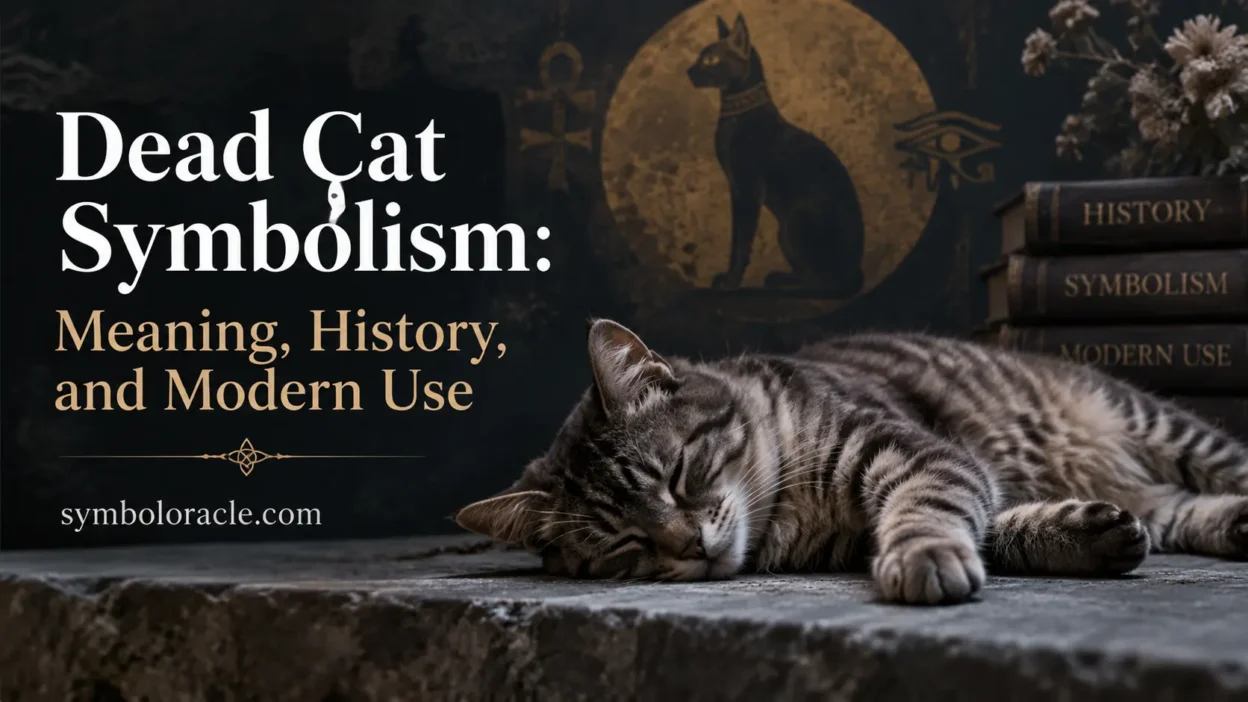
In visual art, a dead cat may be shown lying still, surrounded by symbolic objects, or placed in a dramatic setting. The surrounding details often determine whether the message focuses on mourning, fear, transformation, or memory.
Ancient Roots of Cat Symbolism Before Death Associations
Cats have carried symbolic meanings for thousands of years, especially in societies where they lived closely alongside humans.
In ancient Egypt, cats were respected animals connected with protection, fertility, and domestic life. The goddess Bastet was commonly represented with feline features and was associated with home, motherhood, and protection. Cats were valued companions, and harming them was considered a serious offense.
Because cats had protective associations, the death of a cat could be viewed as the loss of a guardian presence. The symbolic idea was not simply “an animal has died,” but “a protective force has disappeared.”
Other cultures developed different relationships with cats. In parts of Europe, folklore sometimes connected cats with mystery, nighttime, and supernatural ideas. Black cats especially became surrounded by conflicting beliefs, ranging from good fortune to suspicion.
These historical associations influence how people interpret cat-related symbols today. A dead cat image can combine older ideas about protection and mystery with modern feelings about grief and emotional attachment.
Dead Cat Symbolism in the United States
In the United States, the meaning of a dead cat is strongly influenced by the relationship many Americans have with pets.
For many households, cats are not viewed only as animals. They are companions that share daily routines, homes, and emotional experiences. Because of this connection, images of dead cats often immediately suggest themes of:
- Personal loss
- Memories of companionship
- Acceptance of mortality
- Emotional healing
- Life changes
Pet memorial practices also shape this interpretation. Many Americans create memorial spaces, keep photographs, save collars, or plant flowers in remembrance of deceased pets. These actions show that animal loss can involve genuine grief.
At the same time, the symbol appears in creative spaces. Writers and artists may use a dead cat image to discuss broader themes such as loneliness, aging, forgotten memories, or the temporary nature of life.
The American interpretation is usually less connected to superstition and more connected to emotional experience.
Emotional and Psychological Meaning of a Dead Cat Symbol
Symbols often reflect internal emotions. A dead cat may appear in artwork, dreams, or personal thoughts because it represents something a person is processing.
Common emotional interpretations include:
Grief and Attachment
The most direct meaning is grief. Losing a pet can create a strong sense of absence because animals become part of everyday life.
A dead cat symbol may represent:
- Missing a companion
- Remembering a past relationship
- Accepting separation
- Processing sadness
Loss of Personal Independence
Since cats are often associated with freedom and self-confidence, the image may represent a feeling that a person has lost control or independence.
For example, someone experiencing a major life change may connect with this symbol because they feel that an earlier version of themselves has ended.
Personal Transformation
In many symbolic traditions, death does not always represent a literal ending. It can represent transformation.
A dead cat may symbolize:
- Leaving old habits behind
- Moving beyond a difficult period
- Changing identity
- Starting a new stage of life
The meaning depends on whether the viewer focuses on the death itself or what comes after it.
Dead Cat Symbolism in Dreams
Dream symbolism is highly personal, and there is no universal meaning for seeing a dead cat in a dream. However, many people interpret such dreams through themes of change, emotion, and personal relationships.
Possible interpretations include:
| Dream Context | Possible Meaning | Common Association |
|---|---|---|
| Seeing a dead pet cat | Processing loss or memories | Grief and attachment |
| Finding an unknown dead cat | Awareness of change | End of a situation |
| Saving or protecting a cat that dies | Fear of losing something valuable | Emotional concern |
| Seeing multiple dead cats | Feeling overwhelmed by endings | Major transitions |
Some people associate dead cats in dreams with warnings or negative events, but these interpretations come from folklore rather than proven psychological rules.
Modern dream interpretation often focuses more on emotions. The important question is usually not “What does the cat predict?” but “What feelings does this image bring up?”
Dead Cat Symbolism in Folklore and Traditional Beliefs
Cats have appeared in folklore across many regions, creating a mixture of positive and negative associations.
In some traditions, cats were considered protectors of homes. Their presence was believed to guard against harmful forces. The death of such an animal could therefore symbolize the removal of protection.
In other folklore traditions, cats were associated with mystery because of their nighttime behavior and ability to move silently. A dead cat could represent the ending of something hidden or unknown becoming revealed.
Black cats especially developed complicated symbolism. Some communities viewed them as lucky, while others connected them with superstition. These conflicting beliefs show that symbols are shaped by culture rather than having one universal meaning.
Today, many Americans recognize these old ideas but usually interpret cat symbolism through personal feelings, art, and storytelling rather than traditional superstition.
Dead Cat Symbolism in Tattoos and Personal Expression
Tattoos often transform difficult images into personal statements. A dead cat tattoo may seem unusual at first, but people choose animal-related designs because they can represent important memories, experiences, or personal beliefs.
In modern tattoo culture, a dead cat image may symbolize:
- Remembering a lost pet
- Accepting change
- Surviving emotional hardship
- Honoring a meaningful relationship
- Understanding the temporary nature of life
For someone who has lost a beloved cat, the tattoo may serve as a permanent memorial. The design might include the cat’s name, dates, flowers, a portrait, or other personal details that connect the image to a specific memory.
Other people may choose the symbol in a more artistic way. A skeletal cat, ghost-like cat, or symbolic dead cat figure can represent themes such as transformation, humor, rebellion, or a connection with darker artistic styles.
The meaning depends on the person wearing it. In American tattoo culture, symbols are often individualized rather than following one fixed interpretation. A dead cat tattoo is usually less about death itself and more about what the person wants to remember, release, or communicate.
The Role of Dead Cat Symbolism in Art and Visual Culture
Artists frequently use animals to explore human emotions, and cats are especially effective symbols because people already associate them with personality and companionship.
A dead cat appearing in artwork may represent:
- The fragility of life
- The loss of innocence
- Memory and nostalgia
- Emotional isolation
- The relationship between humans and animals
In paintings, illustrations, and photography, the image can create emotional tension. A living cat often represents movement and curiosity, while a dead cat introduces stillness and finality.
Some artists use the image to challenge viewers. Instead of creating a simple message about sadness, they may ask questions about human relationships with animals, nature, and mortality.
Modern visual culture also uses animals symbolically in digital art and online communities. A dead cat image may appear in horror themes, dark humor, fantasy artwork, or emotional storytelling. The meaning changes depending on the creative purpose behind the image.
Dead Cat Symbolism in Literature and Storytelling
Animals in literature often represent human experiences. Cats have appeared in stories as companions, mysterious figures, magical creatures, and reflections of human behavior.
When a dead cat appears in a story, it can serve several purposes:
Representing Loss
A deceased cat may show that a character has experienced emotional pain or a significant change.
Showing a Shift in the Story
The death of an animal can mark a turning point. It may signal that a character is entering a new phase of life.
Exploring Human Morality
Stories sometimes use animal deaths to examine how people respond to suffering, responsibility, and compassion.
Because cats are commonly associated with homes and companionship, their loss often creates an immediate emotional reaction from readers. Writers use this connection to make larger points about relationships and human vulnerability.
Dead Cat Symbolism in Modern Pop Culture and Digital Media
Modern entertainment often uses animals as symbolic tools. Cats appear frequently in internet culture, films, animation, and social media because they have strong public recognition.
A dead cat image in modern media can communicate very different ideas:
- Dark comedy
- Horror themes
- Emotional storytelling
- Social commentary
- Fantasy concepts
Online culture has also changed how people interpret animal symbols. Memes and digital artwork can transform serious images into humorous or ironic ones.
However, context matters. A respectful memorial image and a fictional horror image may contain the same basic symbol but communicate completely different messages.
In American digital culture, symbolism is often shaped by the community viewing it. The same image may represent grief in one place and creative expression in another.
Cross-Cultural Interpretations of Dead Cat Symbolism
Cat symbolism varies greatly around the world. Understanding these differences helps explain why the meaning of a dead cat is not universal.
Ancient Egypt
Cats were strongly connected with protection, household life, and divine symbolism. A dead cat could represent the loss of a protective companion.
Japan
Cats have many symbolic associations in Japanese culture. The famous maneki-neko, or beckoning cat figure, is associated with good fortune and prosperity. A dead cat symbol would create a very different emotional meaning because it contrasts with the traditional image of luck and welcome.
European Folklore
European traditions developed mixed views of cats. Some communities respected cats as helpful household animals, while others connected them with superstition, especially black cats.
Modern Western Culture
Today, many Western interpretations focus less on superstition and more on emotional relationships. A dead cat often represents grief, memory, and change.
These differences show that symbols are created through human experiences. The same animal can represent protection, mystery, companionship, or loss depending on the culture.
The Connection Between Cats, Mortality, and Human Emotions
The symbolism of a dead cat is closely connected to how humans understand mortality.
People often find animal deaths emotionally powerful because animals represent innocence and trust. A pet cat depends on humans for care while also maintaining its own independent personality.
This creates a unique emotional relationship. When a cat dies, people may experience:
- A disruption of daily routines
- A feeling of emptiness at home
- Memories connected to shared experiences
- Reflection on aging and time
The symbol can therefore represent a larger human experience: the challenge of accepting that meaningful relationships can change or end.
Rather than only representing sadness, the image can also represent appreciation. Remembering a lost animal often highlights the value of the relationship that existed.
Positive and Negative Interpretations of Dead Cat Symbolism
Because death is involved, many people initially view this symbol negatively. However, symbolic meanings can include both difficult and constructive interpretations.
| Interpretation | Meaning | Emotional Focus |
|---|---|---|
| Loss | Something important has ended | Grief and remembrance |
| Transition | Life is changing | Growth and adaptation |
| Release | Letting go of the past | Acceptance |
| Memory | Honoring what existed | Appreciation |
| Warning | Awareness of change | Reflection |
Negative interpretations may include loneliness, fear, or the end of security. Positive interpretations often focus on healing, personal development, and accepting life’s natural cycles.
A symbol does not have to represent only one emotion. Many meaningful symbols contain both sadness and hope.
Common Misunderstandings About Dead Cat Symbolism
Because cats have been connected with folklore and superstition, some interpretations become exaggerated or misleading.
One common misunderstanding is that a dead cat always represents bad luck. This belief usually comes from specific cultural traditions rather than a universal meaning.
Another misunderstanding is that seeing a dead cat symbol predicts an actual death. Symbolic interpretation does not provide evidence that images or dreams predict future events.
Modern understanding usually treats the symbol as a reflection of emotions, experiences, and cultural ideas.
It is also important to separate fictional symbolism from real-world attitudes toward animals. A symbolic image in art does not mean a person supports harm toward animals. Context and intention matter.
How Dead Cat Symbolism Has Changed Over Time
The meaning of cats has evolved as human relationships with animals have changed.
In ancient societies, cats were often valued for practical reasons, such as controlling pests and protecting homes. Over time, they became increasingly viewed as companions.
Today, many Americans consider cats part of the family. This shift has changed how people interpret death-related cat imagery.
Older meanings often focused on:
- Protection
- Mystery
- Supernatural beliefs
Modern meanings more commonly focus on:
- Emotional attachment
- Personal memories
- Life transitions
- Identity and creativity
The symbol continues to change because human relationships with animals continue to change.
Dead Cat Symbolism in Home Decor, Fashion, and Design
Although less common than living cat imagery, dead cat themes appear in certain artistic styles, especially those connected with gothic, alternative, or dark aesthetic communities.
Design uses may include:
- Skull and animal artwork
- Halloween decorations
- Fantasy illustrations
- Gothic fashion
- Dark humor designs
In these contexts, the symbol may not represent personal grief. Instead, it may explore themes of mortality, humor, rebellion, or artistic identity.
The meaning depends on the surrounding design choices. A memorial piece communicates remembrance, while a fictional horror design communicates something very different.
Dead Cat Symbolism in American Holidays and Seasonal Culture
The strongest connection between dead cat imagery and American seasonal culture appears around Halloween.
Halloween traditions often include:
- Black cats
- Ghost imagery
- Skeleton designs
- Supernatural themes
Historically, black cats became associated with Halloween because of European folklore connections involving witches and mystery. Modern Halloween culture often uses these images as decorations rather than serious beliefs.
A dead cat image in Halloween settings is usually connected with fantasy, humor, or spooky entertainment rather than actual mourning.
This demonstrates how symbols can shift depending on the social setting where they appear.
Dead Cat Symbolism Meaning Table
| Context | Meaning in the USA | Common Associations | Notes |
|---|---|---|---|
| Pet loss | Grief and remembrance | Love, memories, attachment | Most personal interpretation |
| Dreams | Emotional processing | Change, fears, transitions | Depends on dream feelings |
| Tattoos | Personal meaning | Memorial, identity, transformation | Often unique to wearer |
| Art | Creative expression | Mortality, emotion, storytelling | Depends on artist’s message |
| Halloween culture | Spooky imagery | Mystery, fantasy, humor | Usually not literal |
Frequently Asked Questions About Dead Cat Symbolism
What does a dead cat symbolize spiritually?
A dead cat may symbolize endings, transformation, or the release of something from the past. Spiritual interpretations vary widely depending on personal beliefs and cultural background.
Is seeing a dead cat a sign of bad luck?
Not necessarily. Some folklore traditions connect cats with luck or superstition, but modern interpretations usually focus on emotions, change, and personal meaning rather than predictions.
What does a dead cat tattoo mean?
A dead cat tattoo can represent remembering a lost pet, accepting change, or expressing personal views about life and mortality. The meaning depends on the person’s experience and design choices.
Why are cats connected with mystery and symbolism?
Cats have often been associated with mystery because of their independence, nighttime activity, and unique behavior. These qualities influenced many cultural interpretations over time.
What does a dead cat represent in dreams?
A dead cat in a dream may reflect feelings about loss, change, or emotional transitions. Dream meanings are personal and depend on the dreamer’s experiences.
Is dead cat symbolism always negative?
No. While it can represent grief or endings, it can also symbolize acceptance, memories, transformation, and moving forward.
Why do artists use dead animals as symbols?
Artists use dead animals to explore themes such as mortality, relationships, change, and human emotions. The image often creates a stronger emotional response because animals are connected with innocence and companionship.
Conclusion
Symbols connected with death often reveal how people understand relationships, change, and memory. Dead cat symbolism commonly reflects loss, endings, and emotional transitions, but it can also represent acceptance, transformation, and the lasting importance of connection.
In the United States, the meaning is usually shaped by the close relationship many people have with their pets. A dead cat may represent grief after losing a companion, but it can also become a symbol of remembrance and personal growth.
The image reminds people that endings are part of life, and the memories created through meaningful relationships often remain long after those moments have passed.