Troll symbolism represents ideas connected with outsiders, hidden dangers, challenges, and the unknown. In modern American culture, trolls are often viewed through fantasy stories, internet culture, and entertainment, where they can represent conflict, disruption, or misunderstood characters.
The image of a troll has changed greatly over time. A creature once found mainly in Scandinavian folklore has become a familiar figure in books, movies, video games, toys, and online conversations. Understanding its symbolism requires looking at both its traditional roots and its modern interpretations.
People are drawn to troll symbolism because trolls often represent more than monsters or villains. They can reflect human fears, social boundaries, personal struggles, and the tension between civilization and the wild.
Quick Answer
Troll symbolism commonly represents outsiders, obstacles, hidden fears, and challenges in modern American culture, especially in fantasy, storytelling, and digital spaces. Historically, trolls were connected with Scandinavian folklore as mysterious beings associated with wilderness, danger, and the unknown.
TL;DR
- Trolls symbolize outsiders, challenges, and hidden fears.
- Scandinavian folklore shaped traditional troll meanings.
- American media often portrays trolls as complex characters.
- Internet trolls represent disruption and harmful behavior.
- Troll designs appear in fantasy, art, and collectibles.
What Are Trolls and Where Did Their Image Come From?
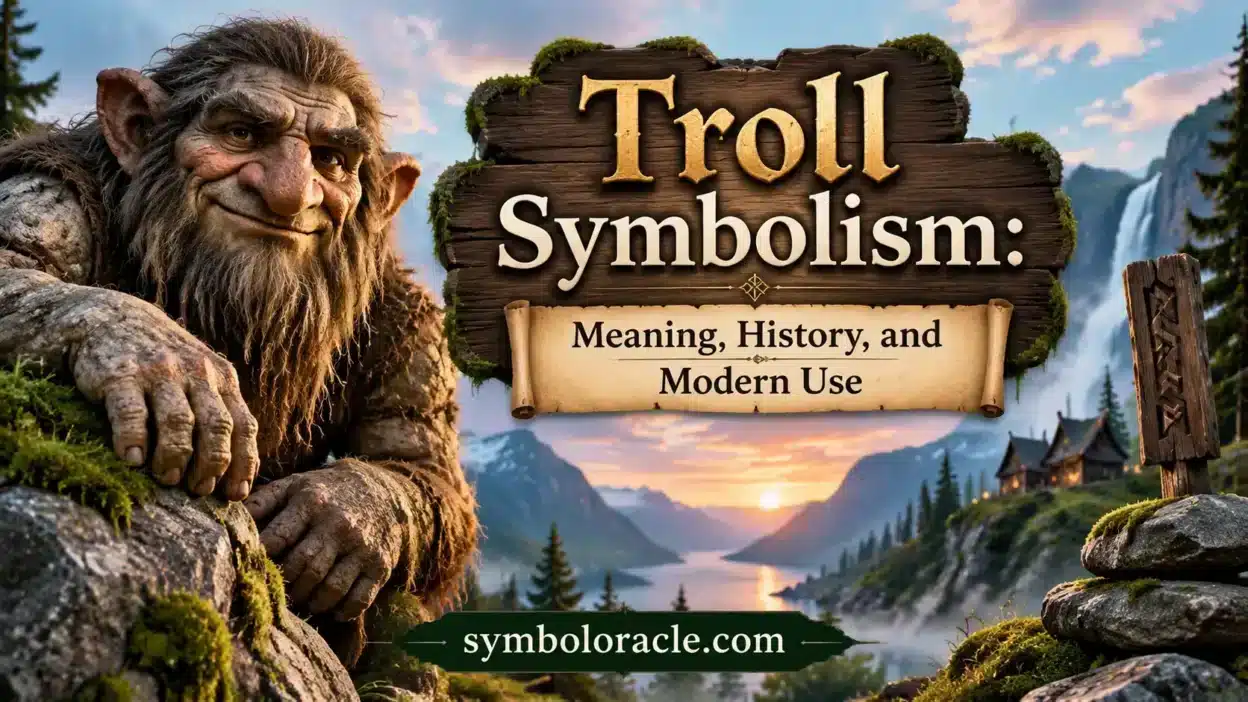
Trolls are mythical creatures traditionally associated with Scandinavian folklore, especially stories from Norway, Sweden, and Denmark. Their appearance varies depending on the source, but they are often described as large, rough-looking beings with unusual features.
Traditional trolls were commonly linked with mountains, forests, caves, and remote landscapes. Folklore often portrayed them as creatures living away from human communities, creating a symbolic connection between trolls and the unknown parts of nature.
Over time, artists and writers developed many different versions of trolls. Some imagined them as frightening giants, while others created smaller, more humorous creatures. Modern interpretations range from dangerous monsters to friendly fantasy characters.
The physical image of a troll often includes features such as:
- Large size or exaggerated body features
- Rough skin or unusual appearances
- Connection with caves, rocks, or forests
- A feeling of being separate from ordinary society
These visual traits helped shape the symbolic meanings associated with trolls.
The Core Meanings Behind Troll Symbolism
The meaning of trolls depends heavily on context. In folklore, they often represented threats beyond human control. In modern stories, they may symbolize personal struggles, social differences, or characters who exist outside traditional rules.
Common symbolic meanings include:
| Context | Meaning in the USA | Common Associations | Notes |
|---|---|---|---|
| Folklore | Fear of the unknown | Wilderness, danger, isolation | Based on Scandinavian traditions |
| Fantasy stories | Challenges and conflict | Heroes, quests, battles | Often used as obstacles |
| Character design | Difference or uniqueness | Outsiders, individuality | Can be positive or negative |
| Internet culture | Disruption or hostility | Arguments, online conflict | A modern meaning |
| Personal symbolism | Facing fears | Growth and resilience | Depends on interpretation |
A troll can represent something frightening, but it can also represent something misunderstood. Many modern stories use trolls to explore ideas about acceptance and belonging.
Ancient Roots and Early Symbolism in Scandinavian Folklore
The earliest troll traditions developed in Scandinavian oral storytelling. These stories often described trolls as beings connected with wild landscapes and forces beyond human control.
In older folklore, trolls were not always simple villains. They represented the unpredictable parts of existence: dangerous forests, dark mountains, storms, and places where humans had limited knowledge.
Some stories described trolls as creatures that avoided sunlight. This idea created a symbolic connection between trolls and darkness, secrecy, and hidden things. However, these stories varied widely across regions and generations.
Trolls also reflected social ideas. A creature living outside human settlements could symbolize the boundary between civilization and wilderness. Encounters between humans and trolls often represented tests of intelligence, courage, or morality.
Trolls as Symbols of the Unknown and Hidden Fears
One of the strongest meanings connected with trolls is the fear of what humans do not understand.
For early communities, forests and mountains contained real dangers. Unknown areas could represent threats from nature, unfamiliar groups, or forces people could not explain. Troll stories gave these fears a recognizable form.
In modern storytelling, this idea continues. A troll under a bridge, for example, often symbolizes an obstacle that blocks progress. The hero must overcome fear, solve a problem, or discover a hidden truth before moving forward.
This pattern appears in many fantasy stories where trolls represent:
- Personal fears
- Difficult decisions
- Barriers to growth
- Problems that require courage
The troll is often less about the creature itself and more about the challenge it creates.
Troll Symbolism in American Culture
Although trolls originated in European folklore, Americans have adapted the symbol in many ways. The meaning depends on whether the troll appears in entertainment, design, or online spaces.
In American fantasy culture, trolls often appear as fictional creatures in novels, movies, games, and animation. They may serve as villains, comic characters, or misunderstood beings.
Modern American audiences often see trolls as symbols of:
- Difference from the mainstream
- Strength despite unusual appearance
- Conflict between good and evil
- The struggle between nature and society
Children’s entertainment has also changed the image of trolls. Many modern portrayals show trolls as colorful, emotional, and friendly rather than frightening.
This shift demonstrates how symbols evolve when they enter new cultural settings.
Trolls in Mythology, Fantasy, and Storytelling
Fantasy writers frequently use trolls because they create immediate visual and emotional contrast. A troll can represent a physical threat, but it can also reveal something about the world around it.
In fantasy stories, trolls often appear as:
- Guardians of hidden places
- Powerful creatures testing heroes
- Beings misunderstood by humans
- Symbols of ancient knowledge
The fantasy genre expanded the troll from a folklore creature into a flexible storytelling tool.
Unlike traditional folklore, modern fantasy often gives trolls personalities, histories, and motivations. This allows audiences to see them as characters rather than simply monsters.
The Emotional Meaning of Trolls
Troll symbolism can connect with human emotions because trolls often represent feelings people experience in real life.
A troll may symbolize:
- Feeling excluded
- Being judged by appearance
- Facing something intimidating
- Protecting personal boundaries
- Learning to understand differences
For some people, the troll becomes a symbol of individuality. A creature considered strange or unusual can represent confidence in being different.
For others, trolls represent fears that must be confronted. The meaning changes depending on the story, artwork, or personal connection.
Trolls in Tattoos and Personal Style
Troll symbolism in tattoos is usually connected with individuality, imagination, and personal identity. Unlike traditional folklore interpretations that often focused on danger or fear, tattoo designs frequently use trolls as creative symbols of uniqueness and self-expression.
A person choosing a troll tattoo may connect with ideas such as:
- Being different from others
- Embracing unusual qualities
- Overcoming personal challenges
- Appreciating fantasy and folklore
- Finding humor in imperfections
The meaning depends on the design. A fierce troll may represent strength and protection, while a playful troll may represent creativity, humor, or a connection to childhood memories.
Fantasy-inspired tattoos often combine trolls with forests, mountains, stones, magical creatures, or mythical landscapes. These elements strengthen the connection between trolls and nature, adventure, and imagination.
Troll Symbolism in Jewelry, Art, and Home Decor
Troll imagery appears in collectibles, artwork, figurines, and decorative items. In these settings, trolls are often viewed less as frightening creatures and more as symbols of creativity and personality.
Small troll figures became especially popular as collectibles in American homes during the 20th century. Their unusual hair, colorful designs, and playful appearance helped transform the troll from a folklore monster into a decorative character.
Today, troll-inspired designs may appear in:
- Fantasy artwork
- Handmade crafts
- Character collections
- Children’s room decorations
- Gaming merchandise
- Holiday displays
In home decor, trolls may represent imagination, playfulness, or an appreciation for folklore. Some people display them because they enjoy fantasy worlds rather than because of a specific symbolic meaning.
Trolls in Internet Culture and Digital Communication
The word “troll” gained a newer meaning through internet culture. An online troll is someone who intentionally posts offensive, disruptive, or provocative content to create arguments or upset others.
This modern meaning developed separately from traditional folklore but still connects with older ideas about disruption and causing trouble.
Internet trolls are often associated with:
- Online conflict
- Provocation
- Attention-seeking behavior
- Social disruption
- Anonymous criticism
The digital meaning differs from the fantasy creature. A folklore troll is a mythical being, while an internet troll describes a type of behavior.
However, both meanings share a common theme: crossing boundaries and creating challenges for others.
Trolls in Movies, Books, and Popular Entertainment
American entertainment has greatly expanded how people understand trolls. Films, television shows, novels, and video games have introduced many different versions of these creatures.
Some portray trolls as dangerous enemies, while others show them as funny, emotional, or misunderstood characters.
Modern portrayals often explore themes such as:
- Acceptance of differences
- Friendship between unlikely characters
- Conflict between humans and nature
- Finding value in unexpected places
Animated entertainment has played a major role in making trolls more approachable for younger audiences. Colorful troll characters often focus on friendship, music, emotions, and community rather than fear.
This change shows how symbols can move from frightening folklore into positive or playful cultural expressions.
The Positive and Negative Meanings of Troll Symbolism
Troll symbolism does not have one fixed interpretation. It can represent both negative and positive ideas depending on the context.
| Interpretation | Symbolic Meaning | Example |
|---|---|---|
| Negative | Fear, danger, disruption | A monster blocking a hero’s path |
| Neutral | Difference and separation | A creature living outside society |
| Positive | Individuality and acceptance | A unique character embracing differences |
| Personal | Facing challenges | Overcoming a difficult situation |
Negative interpretations often come from traditional stories where trolls threatened humans. Positive interpretations usually come from modern stories that give trolls more personality and emotional depth.
The same image can communicate different messages depending on how it is presented.
Cross-Cultural Meanings of Troll-Like Creatures
Although the word “troll” comes from Scandinavian traditions, many cultures have stories about unusual beings connected with forests, mountains, or hidden places.
Across different traditions, similar creatures often represent:
- The unknown parts of nature
- Warnings about entering dangerous places
- Lessons about respect and humility
- Encounters with forces beyond human control
However, these creatures are not identical. Each culture developed its own stories, appearances, and meanings.
The Scandinavian troll remains one of the most recognizable examples of folklore creatures that represent the boundary between human society and the natural world.
Common Misunderstandings About Troll Symbolism
Trolls are sometimes misunderstood because modern interpretations mix together folklore, fantasy, and internet language.
One common misunderstanding is that all trolls represent evil. Traditional stories often showed trolls as dangerous, but their symbolism was more complex. They could represent challenges, isolation, or the unknown rather than simple cruelty.
Another misunderstanding is that internet trolls and folklore trolls have the same meaning. The online term borrowed the name because of the idea of causing trouble, but it refers to human behavior rather than mythical creatures.
It is also important to recognize that modern fantasy versions are creative adaptations. A friendly cartoon troll does not carry the same meaning as an ancient folklore creature.
How Troll Symbolism Has Changed Over Time
The meaning of trolls has shifted as societies changed.
In early Scandinavian stories, trolls often represented dangerous forces outside human control. They belonged to wild landscapes and mysterious places.
During later periods, literature and fantasy transformed trolls into recognizable fictional characters. Writers began giving them different personalities, roles, and motivations.
In modern America, trolls can represent many things:
- Fantasy and imagination
- Personal uniqueness
- Challenges to overcome
- Online conflict
- Humor and entertainment
This evolution shows how symbols are not permanent. Their meanings change as people use them in new cultural settings.
Why Trolls Continue to Interest People Today
Trolls remain popular because they combine familiar human concerns with fantasy elements. They represent questions many people still explore:
- What happens when we face something unfamiliar?
- How do we treat those who seem different?
- Can something strange become valuable?
- How do we overcome obstacles?
Modern audiences often connect with trolls because they are flexible symbols. They can represent fear, humor, creativity, conflict, or acceptance depending on the context.
Their continued appearance in entertainment and personal expression shows how old folklore ideas can adapt to new generations.
Frequently Asked Questions About Troll Symbolism
What does troll symbolism represent?
Troll symbolism commonly represents outsiders, challenges, hidden fears, and the unknown. In modern stories, trolls can also represent individuality, humor, and misunderstood characters.
What does a troll tattoo mean?
A troll tattoo may symbolize uniqueness, imagination, overcoming challenges, or an appreciation for fantasy and folklore. The meaning depends on the design and personal connection of the wearer.
Are trolls considered good or evil symbols?
Trolls can represent both positive and negative ideas. Traditional folklore often showed them as dangerous creatures, while modern stories frequently portray them as complex or friendly characters.
What is the difference between folklore trolls and internet trolls?
Folklore trolls are mythical creatures from traditional stories, while internet trolls are people who intentionally create online conflict. The two meanings developed in different contexts.
Why are trolls associated with bridges?
The bridge connection comes mainly from European folklore stories where trolls guarded or lived under bridges. Symbolically, a bridge troll represents an obstacle that must be overcome before moving forward.
Do trolls have religious symbolism?
Trolls are mainly associated with folklore rather than major religious traditions. Some stories connect them with ideas about nature, morality, and the boundaries between humans and the unknown.
Why are trolls popular in modern culture?
Trolls remain popular because they work well as flexible characters. They can represent fantasy, humor, difference, conflict, and creativity in books, movies, games, and art.
Conclusion
Trolls have moved from traditional Scandinavian folklore creatures into modern symbols used in stories, art, entertainment, and digital culture. Their meanings range from fear and obstacles to individuality, imagination, and acceptance.
Troll symbolism reflects how people interpret the unfamiliar. Whether shown as a mythical creature, a fantasy character, or an online reference, the troll continues to represent the challenges and differences that shape human experiences.
The lasting appeal of trolls comes from their ability to change with culture while still keeping their connection to mystery, imagination, and the unknown.